Sarah Winchester’s name shows up in almost every list of America’s strangest historical figures. Most people picture a house with staircases that lead nowhere.
Her real story covers a rifle fortune, personal losses, and a mansion in San Jose built over decades. People who search for Sarah Winchester net worth details usually want more than a number.
This piece covers her life, her fortune, and the house that made her famous.
What Was Sarah Winchester’s Net Worth?
Sarah Winchester’s net worth traces back to 1881, when her husband’s death made her heir to roughly half of the Winchester family fortune.
Her inheritance was estimated at around $20 million, though probate records from the era don’t confirm one agreed-upon figure.
She also held a large block of Winchester Repeating Arms stock, believed to have paid dividends for years, along with real estate in San Jose and Atherton, California.
Modern estimates of her full estate vary widely, since old records and inflation math don’t always line up.
What’s well documented, per Wikipedia and other historical accounts, is that Sarah Winchester’s net worth stayed under her own control for decades, without a husband, business partner, or public financial advisor.
Who Was Sarah Winchester?
Sarah Lockwood Pardee Winchester was an American heiress and businesswoman, widow of William Wirt Winchester, son of the man who founded the Winchester Repeating Arms Company.
Friends and family called her “Sallie,” a name she used on nearly all her letters.
After her husband’s death, she left Connecticut for California and spent the rest of her life expanding a farmhouse near San Jose, now known as the Winchester Mystery House.
People who knew her described a sharp, private woman who managed her own money and gave to hospitals and local causes without asking for credit.
What Was Sarah Winchester’s Life Story?
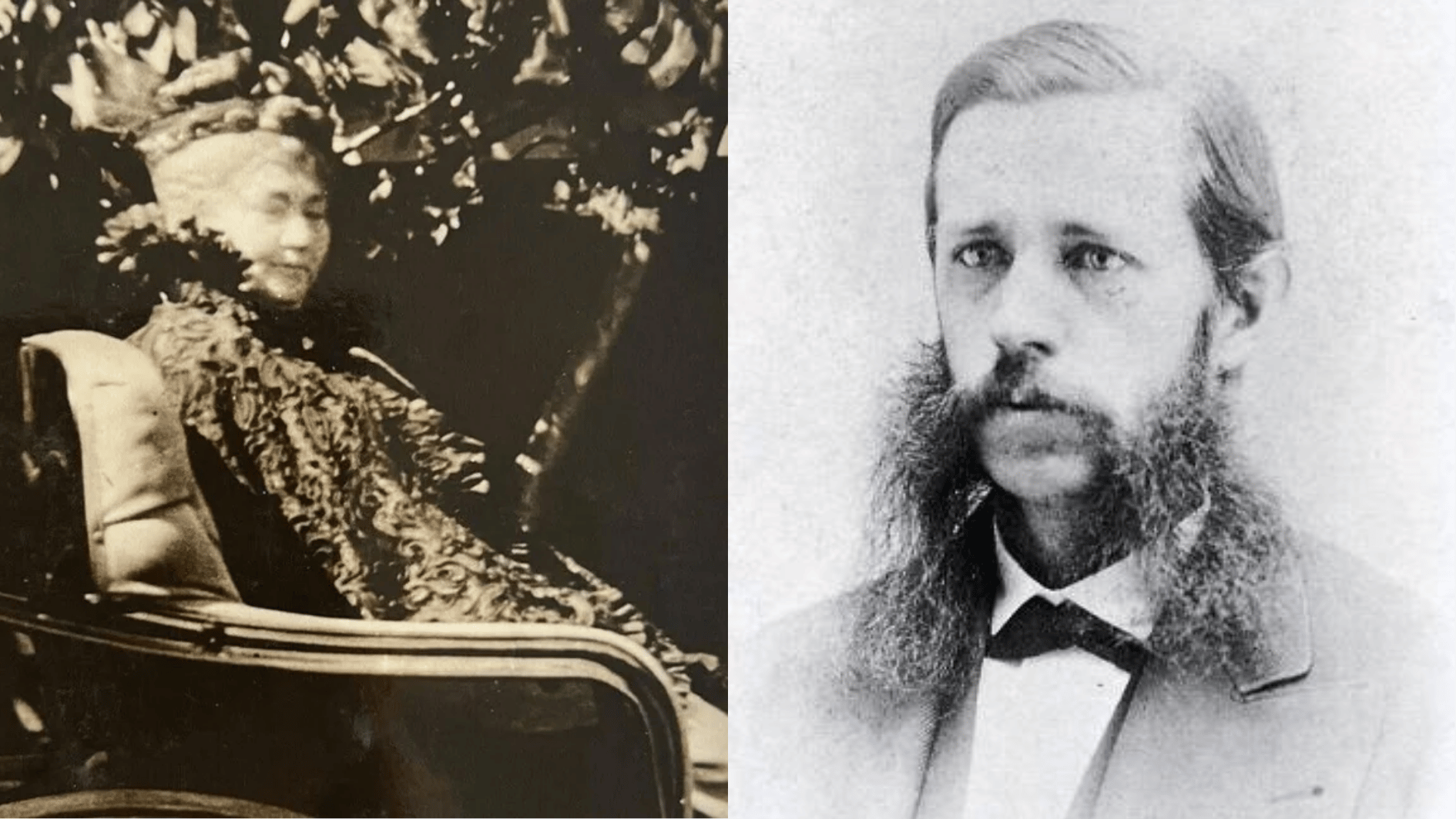
Sarah’s life moved through distinct chapters, from a quiet Connecticut childhood to a marriage marked by sudden loss. That loss eventually pushed her toward a new life on the other side of the country.
Her Early Life and Family Background
Sarah was born on June 4, 1839, in New Haven, Connecticut. She was the fifth child of Leonard and Sarah Pardee.
Her father worked as a finish carpenter after running the local City Bathing House. The household was known for hosting abolitionists and free-thinking guests.
Sarah’s education went well beyond the norm for women of her time. By her early teens, she spoke several languages. She also showed skill in music, math, and composition.
Her Marriage, Motherhood, and Personal Losses
On September 30, 1862, Sarah married William Wirt Winchester, son of Oliver Winchester, who built the Winchester Repeating Arms Company into one of the era’s most profitable firearms businesses.
The couple had one daughter, Annie Pardee Winchester, who died of a childhood illness just weeks after birth.
The 1880s brought a second wave of loss. Her mother died in May 1880, her father-in-law died that December, and her husband William died of tuberculosis in March 1881.
In one decade, Sarah lost her only child, her mother, and her husband, and inherited a fortune that would shape the rest of her life.
Her Move from Connecticut to California
After William’s death, Sarah traveled for a while before settling in California for good. She wanted to be near her extended family.
Around 1884, she bought a small, two-story farmhouse near San Jose and named it Llanada Villa.
Construction began soon after she moved in and did not stop until the day she died in 1922.
How is Sarah Winchester Tied to The Mystery House?
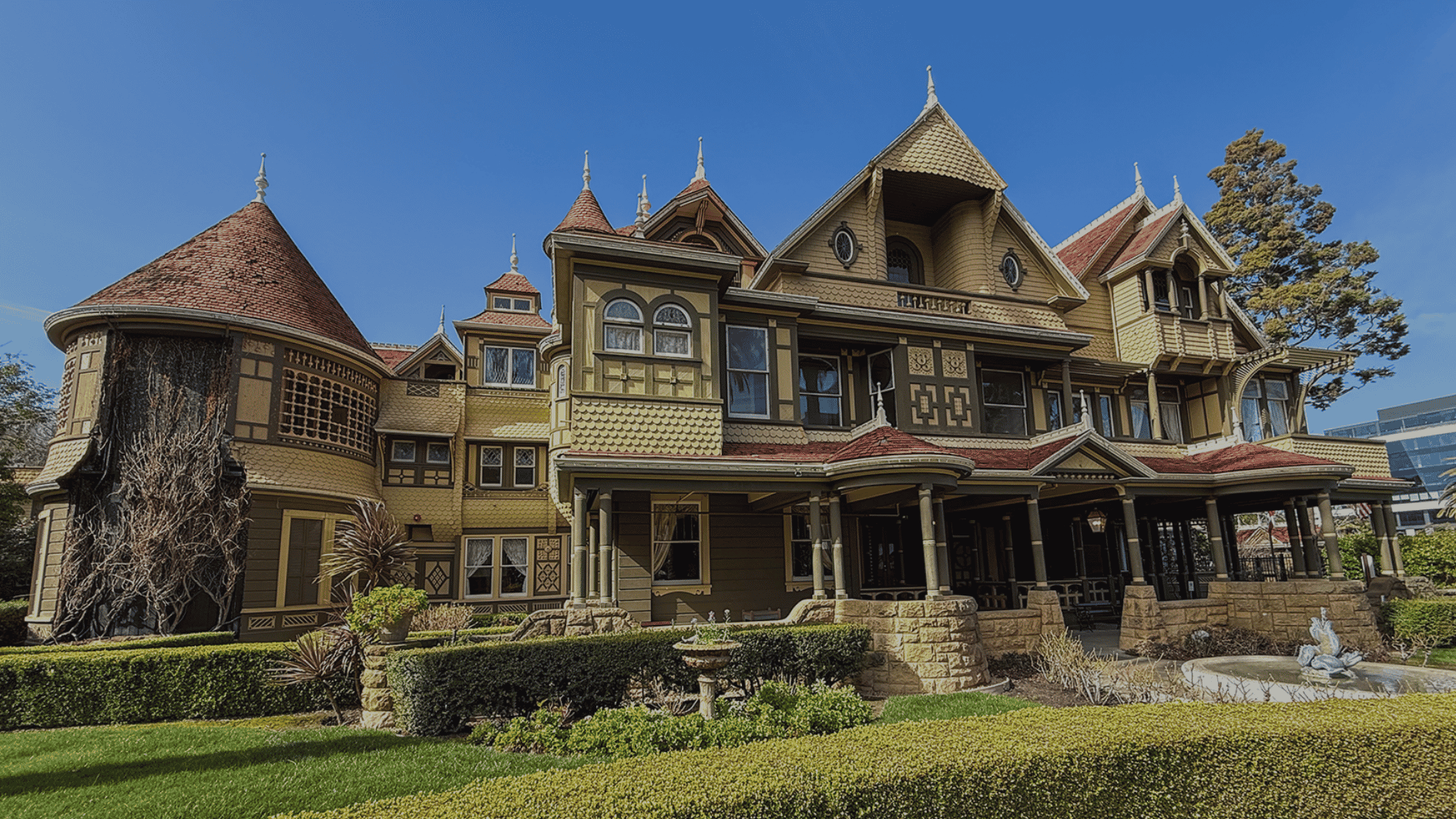
Source: Spooky Little Halloween
Sarah’s name is inseparable from the mansion she built in San Jose, which grew from a small farmhouse into one of the most talked-about homes in the country.
Purchasing and Expanding the San Jose Farmhouse
Sarah bought the original eight-room farmhouse soon after her husband died and began adding rooms right away. By the time she died, the estate had grown to close to 160 rooms.
Her niece, Marion “Daisy” Merriman, moved in with her in 1888 and lived at the villa for the next fifteen years. She gave Sarah steady company through much of the busiest building period.
The House’s Unusual Architectural Features
The mansion is known for design choices that still puzzle visitors today. Staircases end abruptly at ceilings, with no landing or door on the other side.
Other doors open straight onto exterior walls or multi-story drops, leading nowhere at all. The number thirteen shows up again and again, in windows, ceiling panels, and staircase steps.
The 1906 San Francisco earthquake added to the strangeness by destroying the original seven-story tower. It also wrecked much of the fourth floor, reshaping the house for good.
Facts and Legends About the Continuous Construction
Building work ran almost nonstop from 1884 until Sarah’s death. A popular legend says she built never-endingly to confuse spirits she believed were haunting her over deaths caused by Winchester rifles.
The story claims a medium told her the building must never stop.
Biographers who studied her letters and records describe someone far more grounded. She simply enjoyed architecture and liked testing new building methods of the period.
When and How Did Sarah Winchester Die?
Sarah Winchester died on September 5, 1922, at her home in Atherton, California, at age 83.
She spent her final years split between the San Jose mansion and the smaller Atherton property near her sister and niece.
Her death came from natural causes tied to age, not from any dramatic event. That’s true despite the legends that later attached themselves to her name.
She was buried at Evergreen Cemetery in New Haven, Connecticut, the city where she was born.
What Happened to Her Fortune After Her Death?
Sarah Winchester’s net worth changed hands quickly once her estate went through probate, closing out one of the more unusual financial stories of the Gilded Age. A few things happened next:
- Estate Distribution: her remaining fortune, including stock, cash, and property, passed to relatives named in her will, chiefly her niece Daisy Merriman.
- The House’s Sale: the San Jose mansion was sold. Within about six months, it reopened to the public as a tourist attraction.
- New Ownership and Tours: caretakers John and Mayme Brown ran daily tours for years. The property was later set up to preserve the house and its gardens.
- Lasting Recognition: Winchester Boulevard in San Jose was renamed in her honor. The house later earned status as a California State Historic Landmark.
Conclusion
Sarah Winchester’s story endures for a simple reason: she turned grief and isolation into something people are still trying to make sense of.
Her fortune could have bought her anything. Instead, it bought four decades of building, one staircase and one strange room at a time.
That choice is what separates her from other Gilded Age heiresses, and what keeps her name searched today. If the house intrigues you, a tour in San Jose is the closest way to walk through the story yourself.