
Can one skincare ingredient help with uneven tone, excess oil, visible pores, redness, post-acne marks, and a weakened skin barrier?
Niacinamide can address several of these concerns at once, which is why it has become a common ingredient in daily skincare routines. A form of vitamin B3, niacinamide is widely used in topical serums to support smoother, more balanced-looking skin.
The most useful niacinamide serum benefits include helping regulate oil, improving uneven tone, reducing the look of enlarged pores, calming visible redness, fading post-acne marks, and supporting the skin barrier.
Results can vary depending on your skin type, product concentration, and how consistently you use it.
What is Niacinamide Serum and How Does it Work?
Niacinamide is a water-soluble form of vitamin B3 commonly added to serums, moisturizers, and other topical skincare products.
When applied to the skin, it helps support the natural barrier, which can improve moisture retention while also helping balance excess oil. Regular topical use may also improve the appearance of uneven tone, rough texture, redness, and visible pores.
A niacinamide serum works directly on the skin, unlike oral vitamin B3 supplements, which are taken to meet nutritional needs and affect the body more broadly.
Niacinamide is also related to niacin, another form of vitamin B3, but the two are not identical and behave differently. In skincare, niacinamide is valued because it can address several common concerns without requiring a complicated routine.
Main Niacinamide Serum Benefits for Your Skin

Niacinamide can address several everyday skin concerns without relying on one dramatic effect. Its strongest benefits relate to barrier function, oil balance, pigmentation, redness, texture, and signs of aging overall.
1. Stronger Skin Barrier and Better Moisture Support
Niacinamide helps reinforce the skin’s protective barrier by supporting the lipids that reduce water loss. Better moisture retention can leave skin feeling less dry, tight, or rough over time.
This barrier-focused benefit can be especially useful when skin feels stressed, easily irritated, or dehydrated, although moisturizer still plays an important role.
2. Balanced Oil and Less Noticeable Pores
For oily and combination skin, niacinamide may help balance excess sebum so the complexion looks less shiny and more even. Better oil control can also make enlarged pores appear less obvious.
Research on niacinamide and sebum production suggests that topical niacinamide may help improve facial oil balance, which can be useful for oily and combination skin.
It does not permanently shrink pore size, but it may improve their visible appearance when excess oil is part of the problem.
3. More Even Tone and Fewer Visible Dark Marks
Niacinamide can help improve uneven pigmentation by reducing pigment transfer within the skin, which may gradually soften the look of post-acne marks and blotchy areas.
It can also make dull-looking skin appear even. Dark acne marks are discoloration, however, and should not be confused with deep or raised acne scars.
4. Calmer, Smoother-Looking Skin
Niacinamide’s soothing and barrier-supporting properties may help reduce the look of redness while improving rough texture and overall smoothness.
With consistent use, it may also support a more even appearance of fine lines and other early signs of skin aging. It should not be presented as a treatment for every inflammatory skin condition.
The most relevant benefit depends on what your skin needs most. Match niacinamide to concerns such as oiliness, discoloration, redness, dryness, or texture, then give it consistent use time to work.
Niacinamide Benefits by Skin Concern
Niacinamide can support several common skin concerns, but its value depends on what you want to improve. This comparison shows where it may help and where expectations should stay realistic.
|
Skin Concern |
How Niacinamide May Help |
What to Keep in Mind |
|---|---|---|
|
Excess oil |
Helps balance sebum |
Higher strength is not always better |
|
Visible pores |
Makes pores look less noticeable |
Cannot permanently shrink pores |
|
Post-acne marks |
Supports more even pigmentation |
Does not remove indented scars |
|
Redness |
Helps calm visible redness |
Persistent redness may need professional advice |
|
Dryness |
Supports the skin barrier |
Pair with moisturizer |
|
Uneven tone |
Helps reduce blotchy-looking pigmentation |
Daily sunscreen is still important |
|
Fine lines |
Supports smoother-looking skin |
Results take consistent use |
Note: Niacinamide works gradually, so visible changes may take several weeks.
Results can also vary with concentration, formula, skin type, and the rest of your routine.
Matching niacinamide to your main concern makes product selection easier and more realistic. Focus on consistent use, a suitable strength, and supporting steps like moisturizer and daily sunscreen.
When to Use Niacinamide Serum in Your Routine
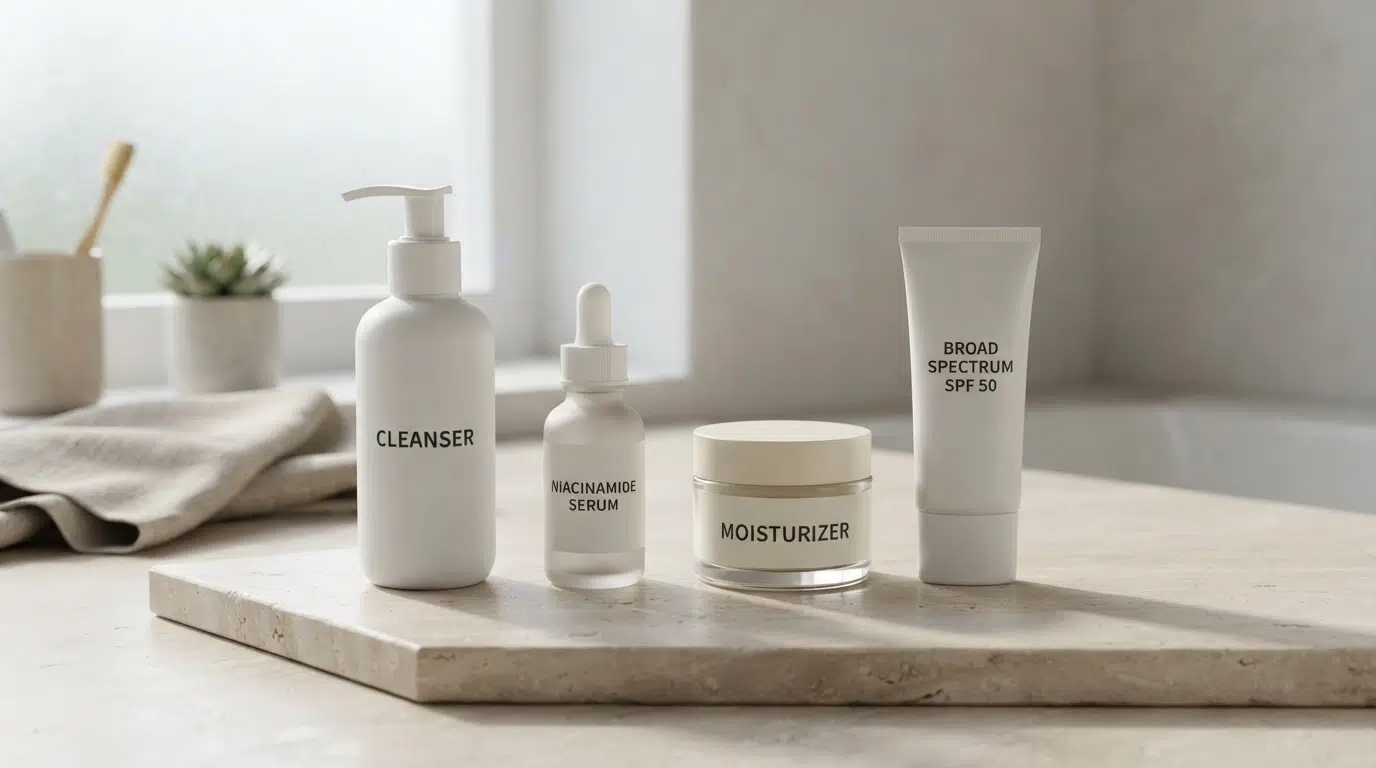
Niacinamide fits easily into skincare routines because it can be used morning or night. The key is placing it correctly, following product directions, and adjusting frequency to your skin’s tolerance.
1. Cleanse Your Skin: Start by cleansing your face to remove sunscreen, makeup, excess oil, and surface debris. Pat skin dry unless your serum label says otherwise, then move to treatment products before heavier creams afterward.
2. Apply Niacinamide Serum: Apply the amount of niacinamide serum recommended on the product label, usually after cleansing and before moisturizer. Spread it across the face, avoiding unnecessary rubbing or layering too much product at once.
3. Follow With Moisturizer: Follow with moisturizer to seal in hydration and support the skin barrier. This step is especially helpful if niacinamide is part of a routine for dryness, sensitivity, or uneven texture over time.
4. Apply Sunscreen in the Morning: In the morning, finish with broad-spectrum sunscreen, especially when you are targeting uneven tone or post-acne marks. Using a broad-spectrum sunscreen each morning helps protect skin from UVA and UVB exposure and is especially important when uneven pigmentation is a concern.
5. Build Frequency Gradually: If your skin is sensitive, begin once daily or every other day and increase only if comfort remains good. Some formulas allow twice-daily use, but product directions and tolerance should guide frequency.
Used consistently, niacinamide can fit comfortably into a simple routine without extra complexity. Morning or night can both work, so choose the timing your skin tolerates and your routine supports best.
What Percentage of Niacinamide Should You Use?
The right niacinamide concentration depends on your skin type, tolerance, and the formula you choose. 2% to 5% is a sensible starting range because it has useful research behind it and may support oil balance, uneven tone, and the skin barrier without being unnecessarily strong.
10% is common in many commercial serums and may suit people who already tolerate niacinamide well, but a higher percentage does not automatically mean better results. Above 10% may be more than many people need, especially if their skin is sensitive or easily irritated.
Stronger formulas can sometimes increase dryness, stinging, or redness without producing faster changes. Concentration is only one part of the product, so ingredients, texture, overall formulation, and regular use also affect how well a serum performs.
Note: Start with a lower strength if you are new to niacinamide or have sensitive skin. Increase only if your skin tolerates it comfortably.
Which Ingredients Can You Use with Niacinamide?
Niacinamide pairs well with many common skincare ingredients, making it easy to fit into existing routines. The key is balancing benefits without overloading sensitive skin.
|
Ingredient |
Pairing |
Best For / Keep in Mind |
|---|---|---|
|
Vitamin C |
Works well together |
Uneven tone and brightness |
|
Hyaluronic acid |
Easy pairing |
Hydration and moisture support |
|
Ceramides |
Barrier-friendly |
Dry or stressed skin |
|
Retinol |
Can be combined |
Introduce gradually if sensitive |
|
Salicylic acid |
Useful pairing |
Oily and acne-prone skin |
|
AHAs |
Can be used together |
Too many actives may increase irritation |
Note: Niacinamide and vitamin C can usually be used in the same routine.
Introduce multiple active ingredients gradually if your skin is sensitive or easily irritated.
Choose pairings based on your main skin concern and tolerance. Introduce strong actives gradually, and simplify the routine if irritation begins or becomes persistently noticeable.
Possible Side Effects of Niacinamide Serum

Niacinamide is usually well tolerated, but irritation can happen, especially with stronger formulas or sensitive skin. Knowing the common warning signs helps you adjust use before discomfort worsens.
- Mild redness: Mild redness can appear as your skin adjusts, especially after starting a higher strength. Reduce use and avoid layering several active ingredients at once at first.
- Stinging: Stinging may signal that your skin barrier is irritated. Stop applying the serum to broken skin, and restart less often only after your skin feels fully comfortable again.
- Dryness: Dryness can develop when you use a strong formula too often. Pair niacinamide with moisturizer and cut back frequency until your skin feels balanced again.
- Itching or irritation: Don’t ignore itching or irritation. Patch test new products first, especially on sensitive skin, and stop using them if symptoms continue or noticeably worsen.
- Starting too strong: Starting with an unnecessarily strong concentration may increase discomfort without improving results. Begin gradually, follow product directions, and seek professional advice for persistent skin reactions.
Most mild reactions improve with reduced use or by stopping the product. If redness, itching, swelling, or burning becomes severe or persistent, see a dermatologist promptly for proper care.
What Niacinamide Serum Cannot Do
Niacinamide can support several skin concerns, but it has clear limits. It cannot permanently shrink pores, although balanced oil production may make them look less noticeable.
It also cannot erase deep or raised acne scars, but it may help fade post-acne discoloration over time. Niacinamide should never replace daily sunscreen, especially when uneven tone or dark marks are a concern.
It is also not a cure for every type of acne, and moderate or severe breakouts may require targeted treatment from a professional.
Finally, a higher niacinamide percentage does not automatically mean better or faster results. A well-formulated lower-strength serum may provide enough support while being easier for your skin to tolerate.
The Final Take
Niacinamide can support a stronger skin barrier, balance excess oil, soften the look of pores, improve uneven tone, and help with redness or post-acne marks.
The most useful niacinamide serum benefits come from choosing a suitable concentration, using it consistently, and pairing it with supportive steps like moisturizer and daily sunscreen.
If you were wondering when to use niacinamide, which strength to choose, or what ingredients pair well with it, the key is matching your routine to your skin type and tolerance.
Have you tried niacinamide in your skincare routine? Comment below with your thoughts and share which skin concern you are using it for.
Frequently Asked Questions
Can You Use Niacinamide Under Makeup?
Yes. Allow the serum to absorb before applying moisturizer, sunscreen, and makeup. Using thin layers can also help reduce pilling beneath foundation or concealer.
Should Niacinamide be Applied to Damp or Dry Skin?
Either can work, depending on the product instructions. If your skin is easily irritated, applying niacinamide to dry skin may feel more comfortable.
Can Niacinamide be Used on the Neck and Chest?
Yes, niacinamide can generally be applied to the neck and chest. Introduce it gradually, since these areas may react differently from facial skin.
Does Niacinamide Cause Purging?
Niacinamide does not typically increase skin-cell turnover enough to cause purging. New breakouts after starting it may instead suggest irritation or another product issue.