
There’s a point where optics stop using binoculars as handheld tools and become more of an instrument of strategy. That threshold begins with long range binoculars in the 10×80 and above class—objects designed for scanning skies, coastlines, and entire theatres of war.
These are the optics that defined aerial defence grids and naval command decks. German 10×80 Flak binoculars, Japanese 20×120 naval binoculars, and pedestal-mounted “big-eye” observation systems were part of the infrastructure. They were used for anti-aircraft targeting, fleet tracking, and horizon surveillance. They operated at a scale that demanded stability, precision engineering, and permanence.
Collectors who enter this category quickly realise they are stepping into a highly specialised segment of vintage military binoculars. Each piece carries a distinct operational history, industrial lineage, and physical presence that dominates any space it occupies.
This is the domain where Sterling Aviations operates: historically significant, large-format observation optics that command attention not just for what they are, but for what they once did.
What Sets Wartime Long-Range Binoculars Apart
To understand the appeal of these instruments, you have to separate them from modern consumer optics entirely. A 10×80 or 20×120 configuration is a different category altogether and not the usual one.
First, there is scale. Objective lenses measuring 80mm to 120mm gather more light, leading to observation in low-visibility conditions such as dusk, fog, or high-altitude haze. This was key for both anti-aircraft units and naval crews operating across vast distances.
Second, these are fundamentally tripod-mounted binoculars. Stability is given. The magnification and weight require fixed mounting systems—whether field tripods, naval pedestals, or deck-integrated bases. The mounting hardware is part of the instrument’s identity and often a key determinant of value.
Third, there is the engineering philosophy. Wartime optics were built for durability under extreme conditions—saltwater exposure, temperature shifts, and continuous use. Materials such as brass, steel, and heavy cast alloys were standard. Optical coatings, prism alignment, and mechanical tolerances were executed with a level of precision that reflected military necessity.
Finally, there is context. These instruments were produced within tightly controlled wartime economies. Manufacturers such as Carl Zeiss Jena and Emil Busch operated under military contracts, often marking their optics with acceptance stamps, serial codes, and production identifiers that now serve as critical provenance markers.
In short, these are not just long range binoculars—they are engineered artefacts of industrial and military history.
German Wartime Optics: Precision Under Pressure
Among collectors of WWII binoculars, German large-format optics sit at the top of the hierarchy. Their reputation is built on a combination of optical clarity, mechanical robustness, and well-documented production history.
The 10×80 Flakfernrohr—commonly referred to as Flak binoculars—was developed for anti-aircraft observation units. Mounted on heavy tripods, these instruments allowed operators to track incoming aircraft with remarkable clarity and stability. The wide objective lenses and carefully calibrated optics made them indispensable for targeting coordination.
Manufacturers such as Carl Zeiss Jena and Emil Busch were key to this production ecosystem. Zeiss developed its pre-war optical expertise in military manufacturing and created binocular models like the 10×80 and 12×60 that balanced magnification with field usability. Emil Busch, meanwhile, contributed significantly to large-format optics, with its own 10×80 designs that remain highly sought after today.
For collectors, the appeal lies more in authenticity and traceability. Factory codes, military acceptance stamps, and serial numbers give them insight into where and when the instrument was made. The presence of original tripod mounts or mounting enhances their value, as these components were often lost or replaced post-war.
Examples such as the WWII German 12×60 binocular, WWII Military Binoculars and WWII Carl Zeiss Binoculars with adjustable tripod represent the kind of collector-grade pieces that define this category—complete, identifiable, and historically grounded.
Japanese Naval Binoculars: Scale and Command Presence

If German optics is about precision engineering, Japanese naval binoculars are about scale and visual authority. These instruments were built to scan horizons, track vessels, and support fleet coordination across vast distances.
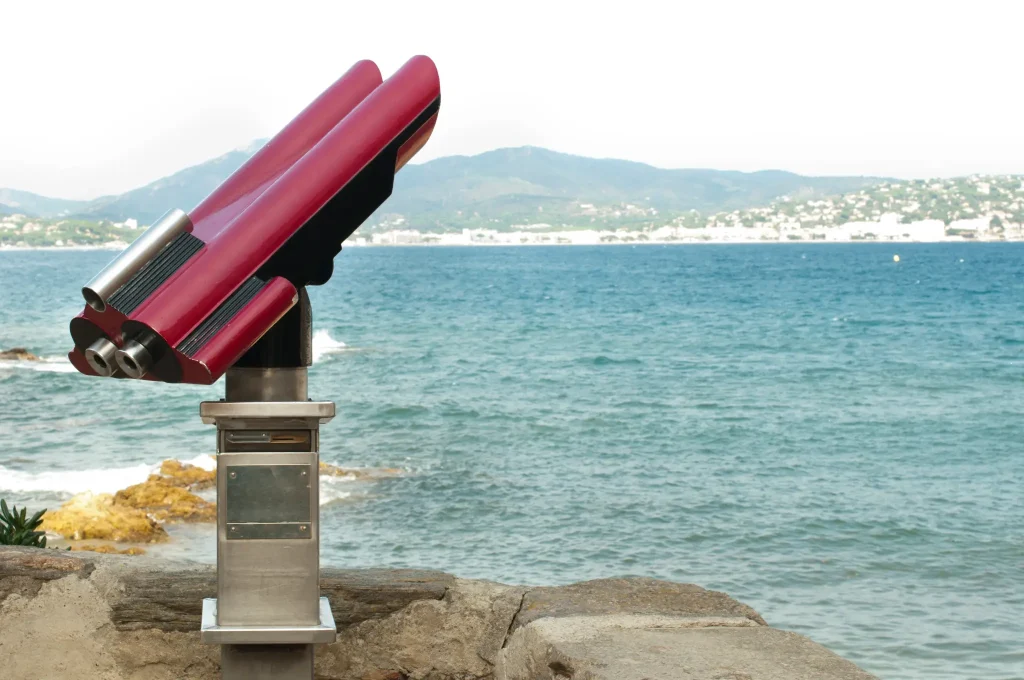
The 15×80 and 20×120 formats are highly recommended. These big-eye binoculars were often mounted on deck pedestals. They helped with continuous observation without the limitations of handheld use. Their size itself makes them unmissable. They have large objective lenses housed in robust metal bodies, often paired with heavy-duty mounting systems.
Unlike field-deployed German Flak optics, Japanese naval binoculars were integrated into the operational architecture of ships. This means that surviving examples with original mounts or pedestal bases are especially valuable, as they retain a direct connection to their intended environment.
From a collector’s perspective, these instruments offer something unique: presence. A 20×120 naval binocular is not just a viewing device—it is a centrepiece. Its scale, proportions, and materiality create an immediate visual impact, making it equally suited to display as it is to historical study. A great example of a 15×80 format is WWII Nikko Destroyer Ship Binoculars. They only allotted one pair of binoculars per destroyer in the WWII era, making these Binoculars highly sought after.
What to Look for When Acquiring Collector-Grade Long Range Binoculars
Entering the world of long range binoculars as a collector requires a shift in mindset. It is about provenance, completeness, and historical integrity. Look for markings such as manufacturer stamps, military acceptance marks, and serial numbers. These highlight authenticity and help trace them to a specific production period or contract.
The next thing to look for is manufacturer significance. Names like Carl Zeiss Jena and Emil Busch carry weight for a reason. Their involvement indicates a level of optical and mechanical quality that aligns with military standards of the time.
Tripods, pedestal bases, and mounting brackets are also important to an instrument. A set of tripod-mounted binoculars without its original mount is incomplete—and significantly less valuable.
Collector-grade does not mean pristine; it means it’s correct. Original finishes, intact coatings, and properly aligned optics are more important than superficial cosmetic restoration. Over-restored pieces often lose historical value.
Another thing to look out for is size. Instruments in the 10×80, 15×80, and 20×120 range represent the core of the market. Anything below this begins to drift into more conventional territory.
Displaying Big-Eye Binoculars: Objects of Architectural Presence
One of the defining qualities of big-eye binoculars is their ability to transform a space. These are not items you store—they are items you stage.
A mounted 10×80 Flak binocular or a 20×120 naval system introduces a sense of industrial heritage into an environment. The materials—aged metal, precision-machined components, and original finishes—create a visual language that resonates with both aviation and maritime history.
Placed in a study, gallery, or office, these instruments function as conversation pieces. They signal expertise, intent, and an appreciation for objects that sit at the intersection of engineering and history.
This is where the worlds of collecting and design converge. A well-chosen piece does not just reflect knowledge—it establishes authority.
Explore Collector-Grade Long Range Binoculars
For those looking to acquire authentic, museum-quality long range binoculars, the focus should always be on trusted sources that specialise in historically significant optics.
Check out Aviation Sterlings to secure a piece that meets true collector standards. Each piece is selected for its provenance, condition, and relevance within the broader history of WWII binoculars and naval observation optics. Whether it’s a German 10×80 Flak system or a Japanese 15×80 naval binocular, the emphasis remains on authenticity, completeness, and enduring value.