
Moving a pint from the shop to a customer’s front door without it dissolving into a milky puddle is trickier than it sounds. Ice cream ranks among the most temperature-sensitive items in any delivery category, and even a short break in cold chain integrity can damage its structure beyond recovery. The logistics behind a successful frozen dessert delivery involve deliberate packaging decisions, careful timing, and a solid grasp of food science. Here is how the strongest operations keep every order showing up in the condition it deserves.
Why Temperature Control Matters More Than Speed
Most people assume a speedy driver solves everything. The truth is that temperature consistency matters far more than how quickly someone reaches the doorstep. Ice cream stored at a steady negative eighteen degrees Celsius holds its crystalline structure and that smooth, creamy mouthfeel. Even slight fluctuations during transit cause ice crystals to expand, creating the gritty, unpleasant bite nobody wants.
Dependable delivery operations put real investment into insulated packaging and thermal monitoring. A growing number of creameries now run local ice cream delivery models organized around tight radius zones, capping transit at roughly thirty minutes. That geographic discipline, combined with quality insulation, breaks the thaw-refreeze cycle that damages products faster than any other variable. Remaining close to the customer is the simplest and most reliable safeguard available.
Packaging Engineered for Frozen Transit
Insulated Containers and Gel Packs
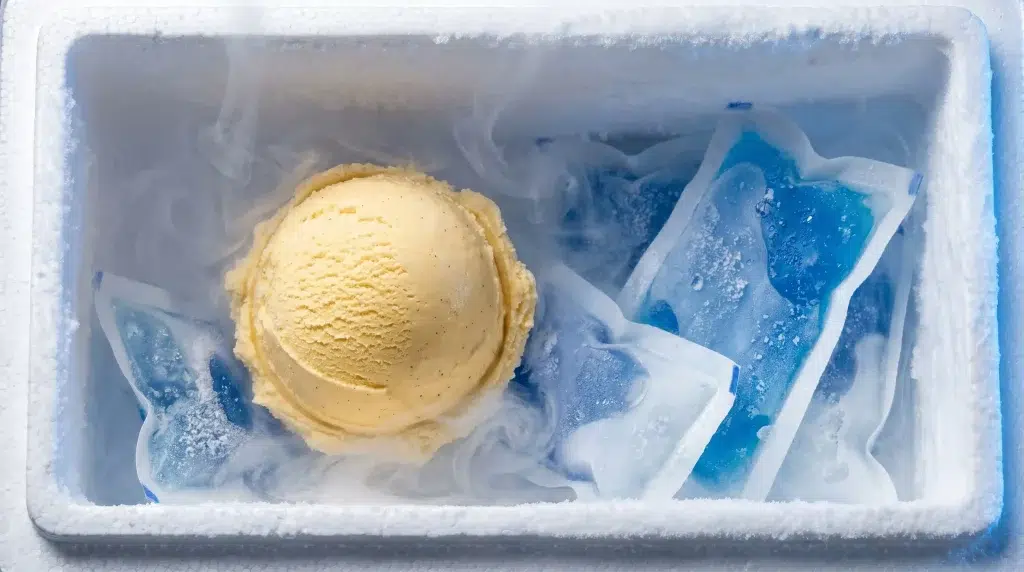
Ordinary cardboard provides almost zero thermal protection for frozen goods. Delivery-oriented creameries turn to expanded polystyrene or molded pulp liners rated for sub-zero retention. Gel packs, pre-frozen to negative twenty-five degrees, sit alongside each container and absorb ambient heat before it can reach the product.
Dry Ice for Extended Windows
Orders covering longer distances or waiting in a delivery queue benefit from dry ice. A compact block sublimates gradually, holding interior temperatures well below freezing for up to three hours. This method raises per-order costs, but it nearly eliminates texture degradation on routes stretching past the thirty-minute window.
The Role of Overrun and Fat Content in Transit Stability
Not every frozen dessert handles delivery equally well. Two properties largely determine how a product survives the trip: overrun and fat content.
Overrun is the volume of air incorporated into the base during churning. Large-scale manufacturers often push overruns past fifty percent to maximize yield per batch. Higher air content, though, leaves the product far more susceptible to structural collapse if partial melting occurs. Premium small-batch producers typically hold an overrun between twenty and thirty percent, creating a denser finished product that withstands temperature shifts with greater resilience.
Fat content serves a complementary function. Butterfat coats individual ice crystals and slows their growth during minor thermal fluctuations. Bases containing fourteen percent butterfat or more consistently arrive with better texture than their lower-fat counterparts. That explains why artisan creameries so often outperform mass-produced brands in the delivery format.
Batch Timing and Order Coordination
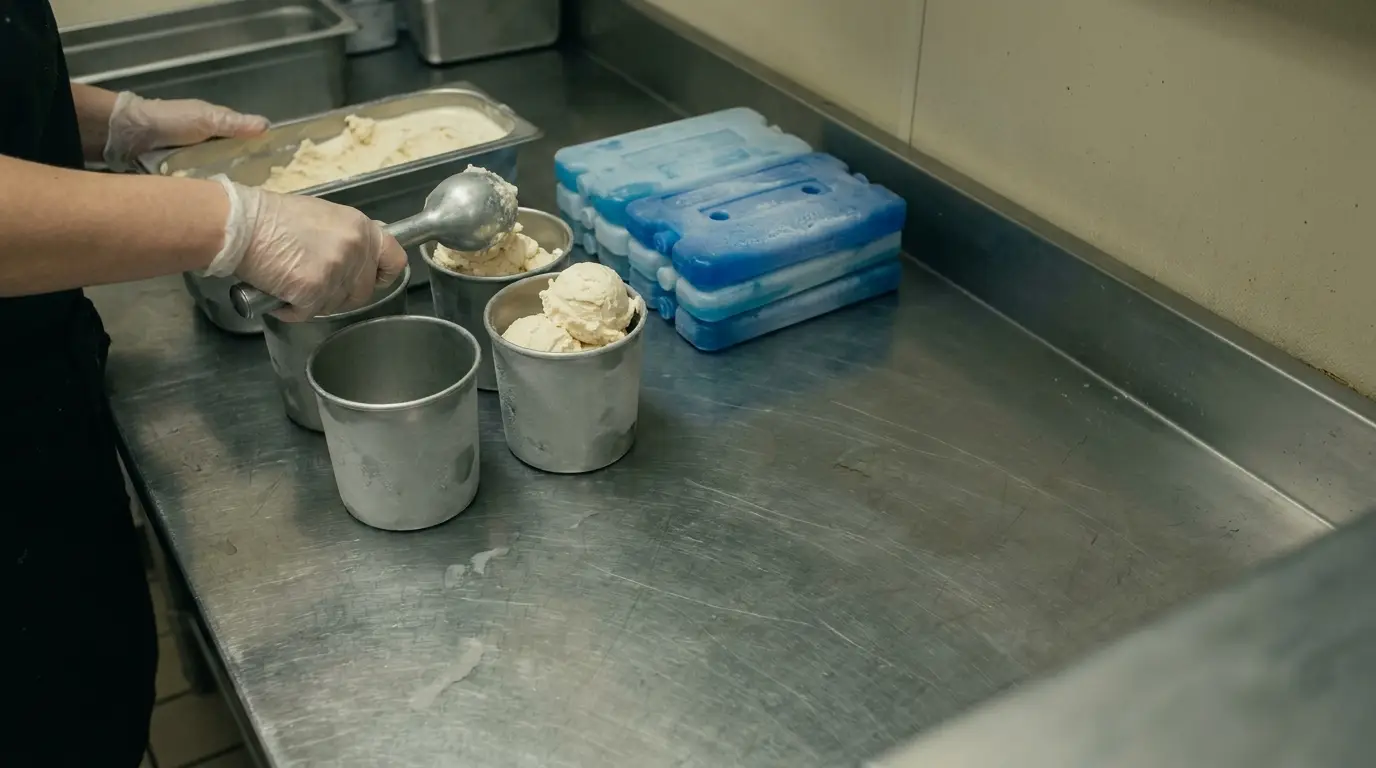
Thoughtful scheduling is what separates consistent operations from unreliable ones. Packing a delivery order straight from a freshly churned batch, rather than pulling from long-term storage, creates a product that’s significantly colder at its starting point. That added thermal cushion buys critical minutes on the road.
Many shops now align their churn schedule with delivery windows. Morning batches get packed and sent out before midday heat builds. Evening orders match a late afternoon production run. That sort of deliberate coordination shrinks the gap between churning and the customer’s freezer, preserving exactly the texture the maker worked to achieve.
How Customers Can Protect Quality After Arrival
Immediate Freezer Storage
Even a flawlessly delivered pint will suffer if it lingers on the kitchen counter for twenty minutes. Placing the container in the coldest part of the freezer right away stops surface melting and the refreezing that follows.
Proper Serving Technique
Scooping directly from a deep freeze can feel like a workout. Resting the container at room temperature for three to five minutes softens just the outer layer, allowing for clean, smooth scoops. This short pause replaces the microwave shortcut that so often produces uneven melting and grainy patches running through the entire pint.
Conclusion
Delivering ice cream in perfect condition calls for more than an insulated bag and a short drive. It requires considered packaging, disciplined cold chain management, intentional production scheduling, and a formula built to handle the physical stress of transit. The creameries that do this well treat delivery as a genuine extension of their craft, never an afterthought. As more consumers grow accustomed to ordering frozen desserts straight to their homes, the operations that master these finer details will be the ones earning repeat orders and the kind of trust that builds a lasting reputation.