

In Cypress Lake, keeping a lawn healthy can be more challenging than it looks. Southwest Florida’s heat, humidity, and frequent summer downpours put extra pressure on irrigation systems, while long dry stretches during other parts of the year mean your sprinklers have to work efficiently when your grass needs them most. The community is home to more than 13,700 residents, and with many owner-occupied homes, maintaining curb appeal is a priority for many homeowners.
Your yard does a lot of quiet work for your home. It frames the entry, softens hard edges, and creates that well-kept first impression before anyone even knocks on the door. When your sprinkler system starts acting up, though, the lawn can go from lush to patchy surprisingly fast. The good news is that most irrigation problems leave clues long before they become expensive repairs. Knowing what to watch for can help you catch small issues early, conserve water, and keep your landscaping looking its best throughout Cypress Lake’s changing seasons.
Spot Trouble Early
A struggling sprinkler system usually waves a few red flags before your lawn turns into a patchy mess. You might notice one corner of the yard staying swampy while another looks crunchy. Maybe the spray seems weak, or one head is shooting water like it’s trying to hit the neighbor’s mailbox.
A sudden bump in your water bill can also be a clue. Hidden leaks don’t always make a dramatic splash. Sometimes they just waste water quietly, day after day. If you’re looking for sprinkler repair in Cypress Lake, you’ll find local professionals who can identify uneven watering, stuck heads, hidden leaks, and other issues before they lead to bigger repairs.
Don’t ignore timing problems either. If your system runs at odd hours or skips zones, the issue may be more than a thirsty lawn. Catching it early can save your grass, your landscaping, and your wallet from a slow drip of trouble.
Know What Goes Wrong
Most sprinkler problems are pretty ordinary once you break them down. One of the biggest troublemakers is a clogged sprinkler head. Dirt, grass clippings, and sand can block the spray, which leaves one area soaked and another bone dry.
Tilted or sunken heads are common too. If a head sits crooked, it may spray into a walkway, fence, or flower bed instead of the lawn. Broken valves can cause a zone to stay on too long or not turn on at all. That’s when your yard starts getting mixed messages.
Leaks are another frequent issue. Some show up as puddles. Others hide underground and only reveal themselves through extra-green patches or soft soil. Then there’s the timer. Sometimes the system itself is fine, but the schedule is wrong. A setting gets bumped, power cuts out, or old programming hangs around after the seasons change.
None of this is glamorous, but it matters. A sprinkler system doesn’t need to be fancy. It just needs to water the right place, at the right time, without acting like a confused garden hose.
Check Your Yard First
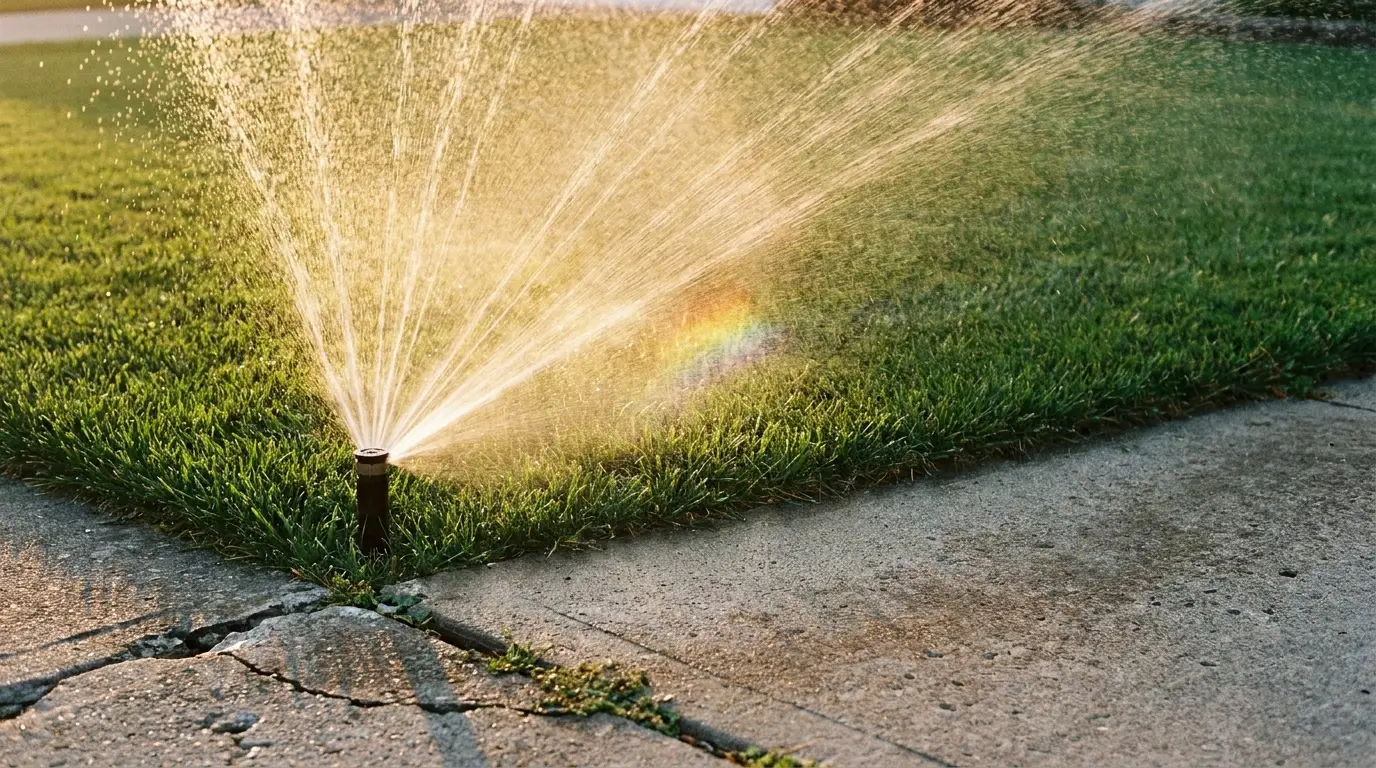
Before you assume the whole system is failing, take a slow walk around your yard. You can spot a lot without tools or technical know-how. Start by looking at the lawn itself. Dry circles, muddy strips, and water pooling near one head often point you right to the issue.
Next, run one zone at a time. Watch how each sprinkler head pops up and sprays. You’re checking for heads that don’t rise, ones that sputter, or streams that shoot in odd directions. A healthy zone should look even, not like a water park designed by accident.
Look near walkways and planting beds too. If water keeps hitting concrete, you’re paying to wash the sidewalk. Check around the base of each head for bubbling water or soggy soil, which can hint at a leak below the surface.
Take notes as you go. You don’t need a spreadsheet worthy of a NASA launch. A few phone photos and quick observations help you decide whether the problem is simple or whether it’s time to bring in help.
Decide DIY or Pro
Some sprinkler fixes are reasonable for a handy homeowner. If a head is clogged, you may be able to clean it. If one is tilted, you can often straighten it carefully and clear away packed soil. Replacing a cracked nozzle is also a pretty approachable task for many people.
That said, not every watering problem should become your weekend project. If you suspect a buried leak, electrical issue, faulty valve, or broken pipe, that’s usually a job for a pro. The same goes for systems that keep failing in the same zone. Repeat problems often mean the real issue is deeper than it looks.
There’s also the time factor. A simple repair can turn into a long afternoon of digging, guessing, and muttering at the timer box. If your lawn is already showing stress, waiting too long can make the damage worse.
A good rule is this: if the problem is visible and small, you might try it. If it’s hidden, recurring, or confusing, calling a professional is often the smarter play.
Avoid Bigger Water Bills
A sprinkler system doesn’t need a dramatic pipe burst to waste money. Small mistakes add up fast. One misaligned head that sprays the driveway every morning can waste gallons before you even pour your coffee. A slow underground leak can quietly pad your water bill for weeks.
Overwatering creates problems too. Grass doesn’t get extra credit for swimming. Too much water can weaken roots, encourage fungus, and make your lawn dependent on constant watering. Then you end up paying more for a yard that looks worse.
Runoff is another sneaky budget thief. If water streams down the curb instead of soaking into the soil, your system is working hard for no real benefit. You’re basically irrigating the street, which never says thank you.
Making small corrections helps more than most people think. Better spray coverage, shorter run times, and prompt repairs can lower waste without making your yard look sparse. Efficient watering is less about using tons of water and more about using it where it actually counts.
Keep It Working Longer
The easiest way to avoid major sprinkler headaches is simple routine care. Check your system every few weeks during the watering season, especially after mowing, heavy rain, or yard work. Sprinkler heads are tough, but they’re not invincible.
Trim grass and plants around the heads so the spray pattern stays clear. Clean off visible dirt, and watch for heads that start sinking or leaning. It also helps to adjust your timer with the season. Your lawn usually needs different watering in cooler months than it does during peak heat.
Once in a while, run each zone just to observe it. That quick check can catch a bad spray pattern before it turns into dead grass and frustration. If your system has had repairs in the past, keep an eye on those same spots.
A healthy sprinkler system is one of those home details nobody compliments directly, but everyone notices when it fails. Keep it maintained, and your yard stays greener, your bills stay saner, and your curb appeal won’t wilt under pressure. That’s a pretty solid return for a little attention and a lot less splashy drama.