

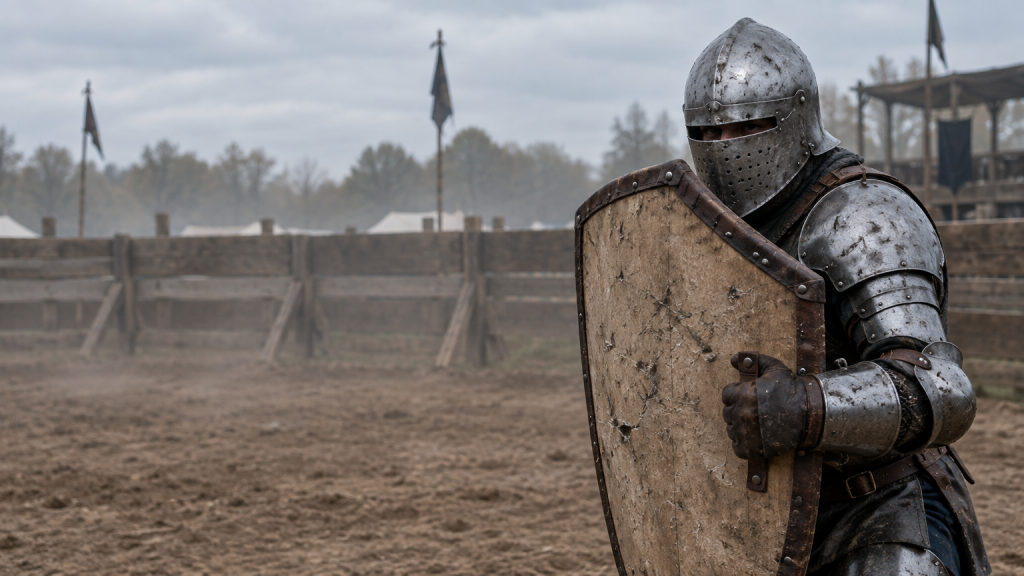
Today, equipment for HMB (historical medieval battles) has changed beyond recognition. Shields have transformed from passive armor into highly aggressive offensive weapons. Their construction has become somewhat lighter than that of their predecessors from previous eras. Now, you do not need to take extremely powerful and heavy shields to knightly battles that are physically impossible to hold in your hands; you can choose modern, lightweight ones instead.
Today, shields (defensive weapons) are made of special spring-tempered steel, which has a wooden or plywood core covered with fabric and reinforced with a special edge made of leather material. This concept strictly meets international authenticity requirements and allows participation in official tournaments and competitions. To choose medieval shields, it is enough to use a website that offers products not only in accordance with medieval design, but also made according to strict quality and safety standards.
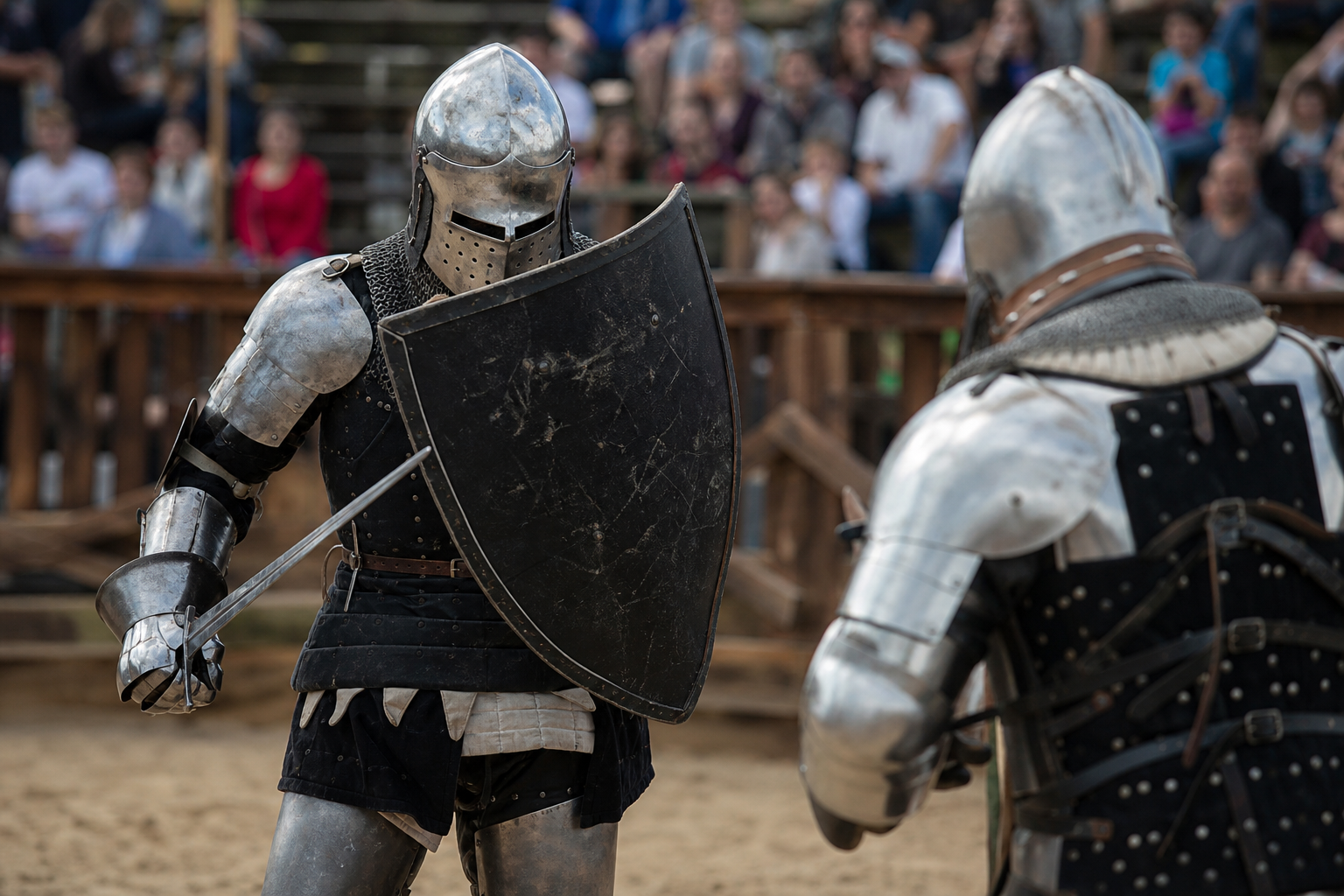
Why Shields Still Matter in Modern Armored Combat
Due to the fact that participants in buhurt tournaments and championships must use a shield, they should understand that it performs not only a protective function. If you look more closely at the competition rules, you can understand that it can be used to push an opponent, protect your own head and body, control the opponents’ equipment, and also for parrying. If the athlete is well-trained and has strong physical fitness, the shield can become a weapon for preventing blows to the torso and head and will also allow them to attack the opponent.
From Historical Defense to Competitive Tool
It is known that buhurt includes the full preservation of historical variants, concepts, and designs of shields, and modern manufacturers only have to adapt to international conditions when creating them. If you pay attention to the IMCF rules, this element must fully convey the weight, material, appearance, and size of the equipment, as it was in medieval battles and knightly duels. Only with the correct choice of defensive weapon will the athlete be able to pass inspection and be admitted to competitions.
Bucklers, Punch Shields and Larger Shield Designs
Technical certification establishes requirements for shields for buhurt.
- Bucklers (fist shields). The size is 20–40 cm, and the weight is up to 900 g. They are used according to the “floating armor” rule to parry strikes, conceal the direction of attacks, and deliver edge strikes.
- Special striking shields. They are designed for power duels and grappling. They have the shape of a trapezoid, oval, or “coffin”. The size is about 63×38 cm, and the weight is up to 2 kg. The base is made of aircraft plywood up to 12 mm thick and covered with reinforced fabric. The rim is made of thick leather.
- Large shields: teardrop-shaped shields, tarches, and pavises. They are used in “sword-and-shield” duels against axes, swords, and halberds. Pavises weigh up to 5 kg, are 55–75 cm long, and up to 65 cm wide. The base is a curved plywood core with adjustable leather straps.
All models have reinforced edges and comply with the rules of buhurt tournaments.
How Shape Changes a Fighter’s Style
The size and geometry of defensive weapons can affect a fighter’s behavior in the arena during competitions or training. Why? Because the position of the handle and the shape are what affect balance, body balance in the ring, and mobility. If the shield surface is wider, the athlete can provide themselves with additional protection from blows. But compact models are needed to gain more freedom of movement around the arena. The construction of shields directly affects the tactics and techniques of fights.
Protection, Control and Team Tactics
If we are talking about mass or group battles in which many participants are involved, a shield can serve as excellent individual protection. It will also allow them not only to push opponents away in the arena, but also to protect their own head and body. Such a weapon helps modern knights interact with their team in a tight formation. Moreover, there are situations when protection becomes part of the overall tactics, which is important for the further victory of the entire group.
Personalization and Team Identity
There is an unspoken rule in buhurt – personalization of equipment is allowed. What does this mean? Athletes and official tournament participants can use weapons that fully preserve the atmosphere of HMB. That is, shields should be designed in accordance with the historical era of knightly tournaments, just like the rest of the uniform. The choice of individual options, which include logos, designs, and fastening elements, is what is needed to stand out among everyone. Therefore, a shield can not only perform a practical function on the battlefield, but also visually help distinguish one participant or group from other athletes and teams.
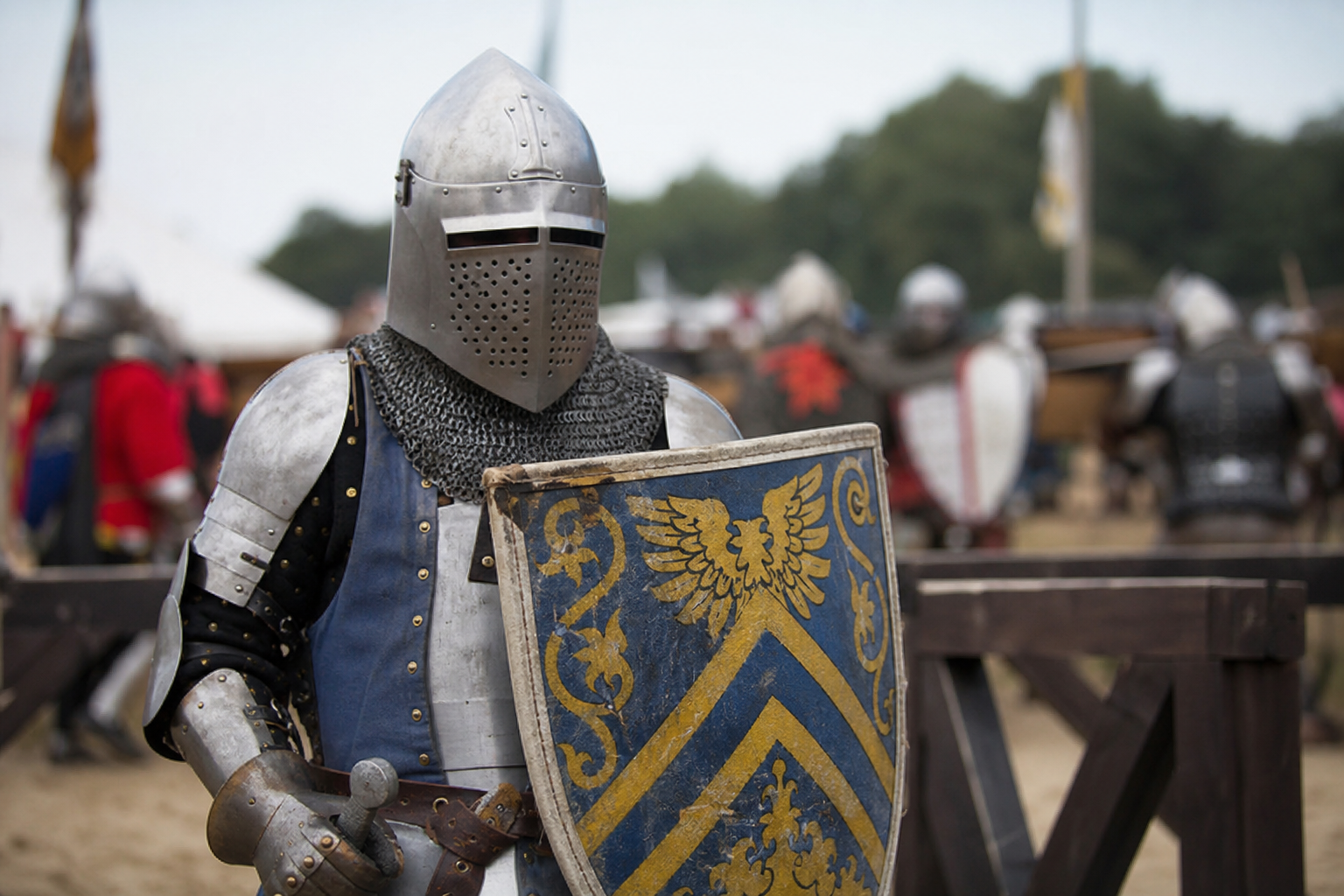
How Medieval Extreme Adapts Shields for Today’s Fighters
The Medieval Extreme company is actively engaged in creating equipment, weapons, armor, gear, and other elements for the recreation and tournaments of HMB. Engineers constantly introduce new nanomaterials, lightweight alloys, etc., ensuring ease of movement and maximum maneuverability. Absolutely all shields undergo inspection and are tested before use, complying with international requirements for buhurt competitions. In addition, the product lines include bucklers, fist shields, and heater-type shields. The structural features of the shields are as follows – special reinforced edges, adjustable straps, and a variety of models in different sizes.