Walk into a pub session in Galway on a Thursday night and the crowd around the players looks different than it did ten years ago. There are still grey heads and seasoned hands, but now there are people in their twenties leaning in, phones out, recording a reel. A few of them play. One of them is working a button accordion, eyes down, learning the tune in real time. Nobody planned this. It just happened, slowly, over the last few years.
Traditional Irish music is having a moment, though it is a quiet one. There is no big marketing push behind it and no single hit song that started it. Instead there is a steady pull of younger people toward a sound their grandparents knew. And at the centre of a lot of it sits the accordion, an instrument that spent decades doing the unglamorous work of holding sessions together and is now getting noticed on its own terms.
From Background Sound to Centre Stage
For a long time the accordion was the workhorse of Irish trad. The fiddle got the romance and the tin whistle got the easy entry point for kids in school. The accordion was there too, driving the rhythm, filling the room, but it rarely got top billing. If you asked someone outside the trad world to name an Irish instrument, they would say fiddle or maybe bodhran long before they got to the box.
That is changing. Younger players are choosing the accordion first, not falling into it because a relative left one in the attic. They are drawn to the sound itself, the way it can carry both melody and a kind of engine-room push at the same time. Part of this is exposure. Trad acts are turning up on mainstream playlists. Festival line-ups that used to lean entirely toward rock and pop now make room for folk and traditional players. Film and television keep reaching for the sound when they want something that feels rooted and real. The instrument that used to sit in the background is now the thing people point at and ask about.
Why a New Generation Is Picking It Up
The biggest engine behind all of this is social media, and specifically short video. A thirty second clip of someone playing a fast reel on an accordion does numbers that a full concert recording never could. The format rewards skill you can see and hear instantly, and the accordion delivers that. It looks busy, it sounds full, and it reads as impressive in the few seconds you have to catch someone scrolling. A whole generation that would never have wandered into a session has met the instrument through a screen first.
The clip ends but the curiosity does not, and a lot of those viewers want an instrument of their own soon after. That is when build quality starts to matter, because the difference between a rough import and a properly made box shows up in the very first note. Browse enough accordions for sale and the gap becomes obvious: the right instrument feels easier to play, sounds better from the start, and gives that early curiosity a real chance to grow.
What keeps them going is community. Trad has always been social music, built around sessions where people show up and play together rather than perform at each other. People find the culture welcoming in a way that surprises them. You can be the least confident player in the room and still be handed a tune to try. That low-stakes, in-person warmth is rare now, and it is part of why people stay once they start.
Why the Accordion, and Not the Fiddle
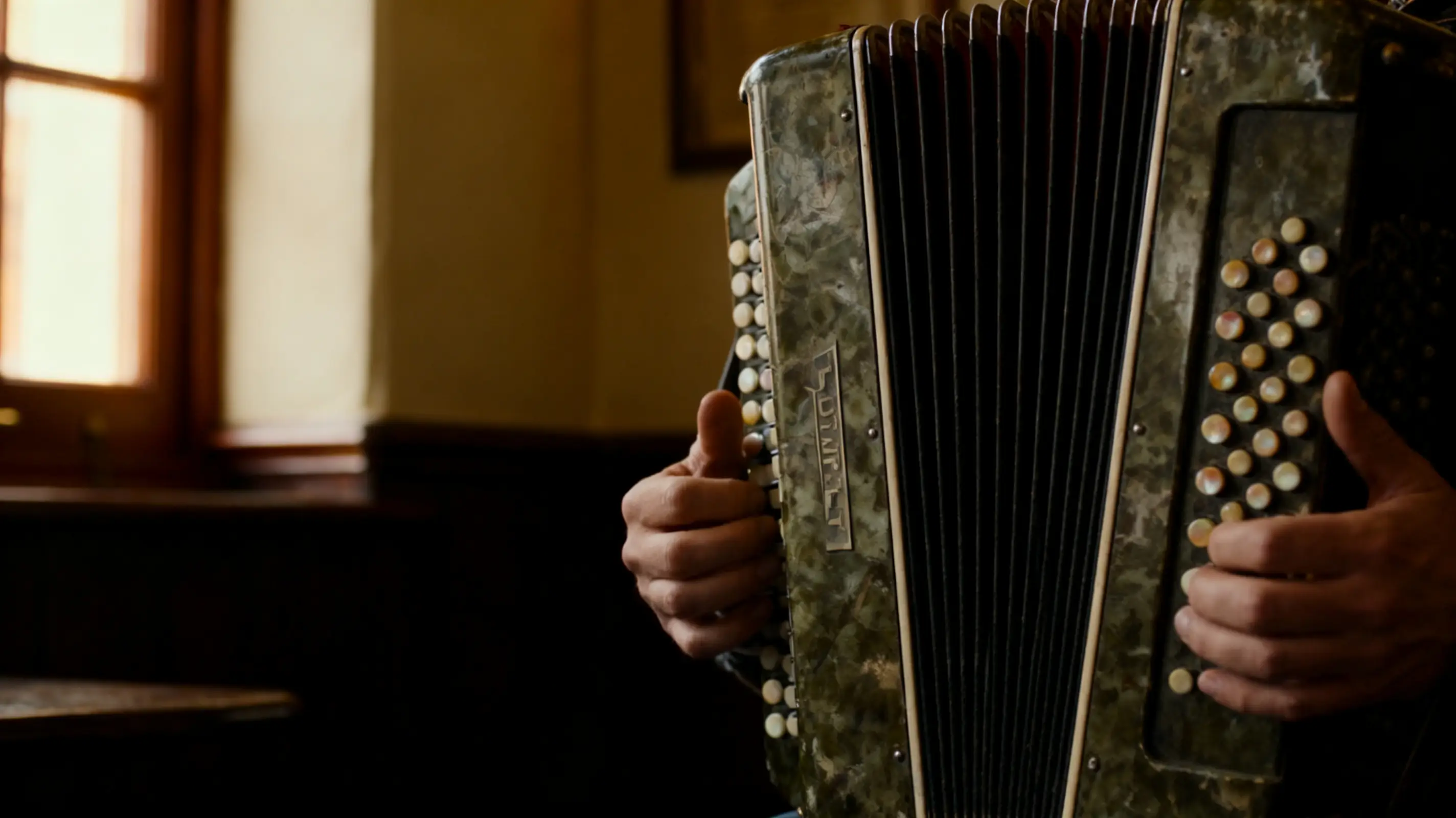
It is worth asking why the box, of all the instruments in a session, is the one catching this wave. The fiddle has always been the romantic lead and the whistle the one everyone recognises, yet the accordion is what people keep gravitating toward. A lot of it comes down to the sound. It is big, full, and a little defiant, able to fill a room on its own with no backing behind it, and that makes it satisfying to play in a way the smaller instruments are not.
The look helps too. There is a lot going on when someone plays the box, the bellows pushing and pulling, both hands working at once, and that physical drama reads well on video where the eye wants something to follow. Add the rhythmic drive that suits trad’s dance tunes and you have an instrument that is built, almost by accident, for the way music gets found now. The fiddle sings, but the accordion moves, and movement is what travels.
The Players Leading the Revival
People follow people, not abstractions, and the resurgence has faces. A handful of younger trad and folk players have built real audiences online, posting tunes, breaking down techniques, and showing that you can take the instrument seriously without being precious about it. They make the accordion look like something a normal person could pick up, which is exactly the message that pulls people in.
There is also a wave of crossover happening. Artists are taking traditional sounds and blending them with pop hooks, indie textures, and even electronic production. The result does not always please purists, but it puts the accordion in front of ears that would never seek out a straight trad record. A listener might come for the modern production and leave wanting to learn the instrument underneath it. That pipeline, from casual listener to curious ear to actual player, is what a healthy musical tradition looks like.
More Than Nostalgia
It would be easy to write this off as nostalgia, a bit of comfort-seeking after a few hard years. There is some truth in that. People came out of the pandemic wanting things they could touch, hobbies that did not involve another screen, and ways to be in a room with other humans. Learning a physical instrument fits all of that. It asks for your hands and your attention, and it gives you something to do with other people once you are good enough to join in.
But it runs deeper than comfort. For a lot of younger people with Irish roots, at home and across the diaspora, the music is a way back into an identity they did not grow up fully inside. Picking up the accordion is partly about the sound and partly about belonging to something older than themselves. There is also a plain wellbeing angle that comes up again and again from new players. After a day spent staring at a phone, an hour with an instrument that demands focus feels like a reset. None of this is a marketing story. It is just what people say when you ask them why they started.
What This Means for Irish Music’s Future
A tradition stays alive only if new people keep arriving, and right now they are arriving. That matters more than it might sound. A steady supply of young players means the music keeps evolving instead of freezing into a heritage display. New hands bring new ideas, new combinations, and a willingness to take old tunes somewhere unexpected.
Not everyone is thrilled about that. Some longtime players worry that the crossover stuff waters down the real thing, that a tune learned from a video clip loses the feel you only get from years in a session. Those concerns are fair, and the tradition has always had its guardians. But traditions that refuse to bend tend to break, and the energy these newcomers bring is real. The accordion has survived plenty of changes in Irish music already. It will survive this one, and it will probably come out the other side with a bigger audience than it has had in decades.
A Sound Finding New Hands
Back in that Galway pub, the young player with the button accordion finishes the reel a beat behind everyone else, grins, and starts the next one anyway. That is the whole story in miniature. Nobody told this generation to care about trad. They found it themselves, mostly through screens, and then they did the un-screen-like thing of buying an instrument and learning to play it for real.
The resurgence is quiet because it is honest. It is not being sold to anyone. It is a slow, organic return to a sound that was always there, led by people who chose it on their own terms. The accordion spent a long time as the instrument everyone heard and nobody noticed. Now a new generation is noticing, and the sound is finding its way into new hands.