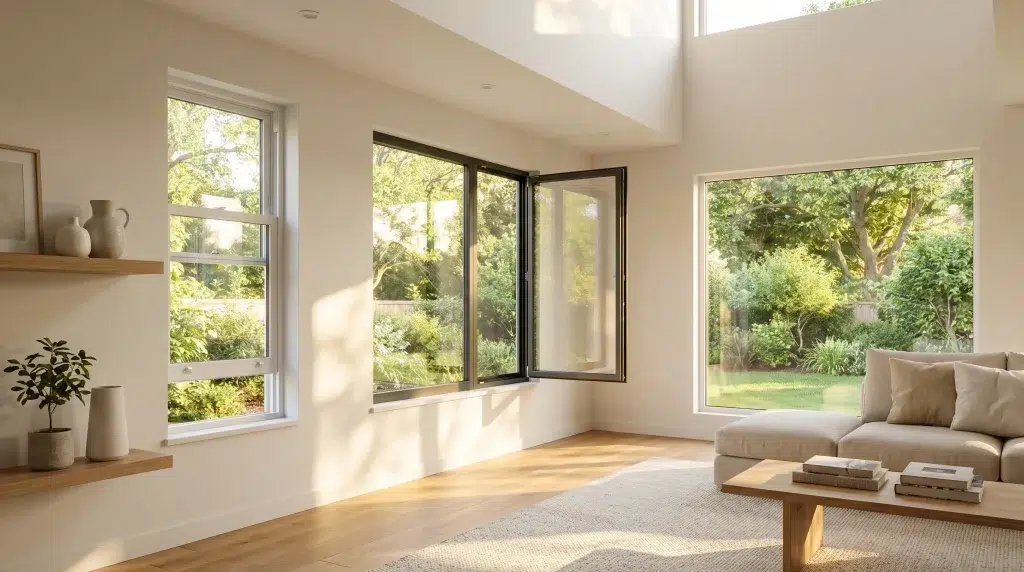
Few home upgrades touch daily life as directly as new windows. They control how much sunlight fills a room, how freely air moves through the house, and how hard the furnace or air conditioner has to work each month. Yet with so many styles, materials, and performance ratings available, the selection process can stall before it even starts. This guide covers the practical factors worth considering so homeowners can confidently pick the right product for every opening without wasting money or settling for a mismatch.
Consider the Purpose of Each Room
Different rooms place different demands on their windows. Kitchens produce heat and moisture throughout the day, so styles that swing outward (like casement or awning units) help vent steam quickly. A living room rarely needs that kind of airflow; instead, it benefits from a generous glass area that floods the space with natural light. In bedrooms, you typically need a balance of both, combining enough operability for fresh air with a size that brightens the room each morning.
Overlooked spaces deserve the same attention. A hallway or stairwell may only require a fixed pane to bring in daylight, while a home office performs better with an operable unit that encourages air circulation during long stretches at a desk. Contacting a trusted window supplier before finalizing measurements allows homeowners to access a wider range of products tailored to each room’s specific needs. That early consultation also helps catch sizing errors before they push back the installation timeline.
Understand Common Window Styles
Double-Hung and Single-Hung
Double-hung windows use two vertically sliding sashes, and both tilt inward for convenient cleaning from inside the house. Single-hung models keep the top sash stationary, which lowers the cost slightly. Either style sits comfortably on colonial, farmhouse, or traditional exteriors.
Casement and Awning
Casement units hinge along one vertical side and crank outward, catching passing breezes and directing them into the room. Awning versions hinge at the top, letting homeowners leave them open during a gentle rain without worrying about water intrusion. Both create a tight seal once closed, which makes them particularly useful in moisture-prone areas like bathrooms.
Sliding and Picture
Sliding windows glide along a horizontal track, a sensible pick for wide wall openings where vertical space is limited. Picture windows remain fixed and non-operable, but they reward homeowners with expansive views and abundant sunlight. A popular layout pairs one large fixed pane in the center with smaller operable units on either side, delivering both aesthetics and ventilation from a single wall section.
Evaluate Frame Materials

A frame does far more than hold glass; it shapes the window’s insulation value, lifespan, and maintenance schedule. Vinyl holds up well against moisture, carries a modest price tag, and needs little care beyond routine cleaning. Wood offers a warm, classic appearance, though it calls for periodic staining or painting to prevent decay. Aluminum frames are strong and narrow, yet they transfer heat more readily than other options. Fiberglass delivers top-tier thermal resistance with almost no upkeep, although the initial investment is noticeably higher. Choosing a frame that suits the local climate and complements the home’s architecture helps prevent early deterioration or avoidable replacement expenses.
Prioritize Energy Efficiency
Well-insulated windows are effective in every season, reducing both heating and cooling costs. Low-emissivity glass coatings bounce infrared energy back while still letting visible light pass freely. Adding a second or third pane with argon or krypton gas sealed between the layers strengthens the thermal barrier further. Certified energy performance labels give homeowners a clear way to compare how well each unit blocks heat transfer and resists air leakage. In colder climates, a strong insulation rating shaves noticeable dollars off winter heating expenses. Where summers run hot, the solar heat gain coefficient matters more for keeping indoor temperatures comfortable.
Factor in Budget and Long-Term Value
Focusing only on the purchase price often leads to a more expensive outcome over time. A lower-cost unit with thin insulation or lightweight hardware tends to drive up energy bills and wear out sooner. A practical budget should fold in installation labor, any structural adjustments the openings require, and the scope of each manufacturer’s warranty. Premium products frequently recoup their higher cost through energy savings within a handful of years. Collecting detailed, itemized quotes from several providers helps homeowners weigh total project expense rather than comparing sticker prices in isolation.
Think About Aesthetics and Home Style
Windows contribute as much to a home’s curb appeal as the siding or roofline. Colonial architecture looks best with double-hung units fitted with divided-light grilles. Contemporary designs lean toward clean casement profiles or full-height fixed glass panels. Matching proportions, grid patterns, and frame colors to the existing exterior keeps the finished result looking deliberate rather than patchwork. Interior trim selections carry weight as well, since they anchor the new windows into each room’s overall design.
Conclusion
The right window choice sits at the intersection of everyday function, visual appeal, and smart spending. Room purpose, frame composition, glass performance, and architectural harmony each play a meaningful role in the final decision. Homeowners who compare energy ratings, seek professional advice, and look beyond upfront costs consistently achieve results that raise comfort, reduce monthly bills, and hold their value for years. Making a thoughtful decision at this stage prevents expensive second-guessing later.