


Ground beef looks like a single product, but its nutritional profile varies more than most people realize.
The exact calories, protein, and fat you get can differ a lot from one package to the next.
Leaner options usually give you more protein with less fat. Higher-fat blends bring more flavor, but also more calories and saturated fat.
This blog covers the nutrition of ground beef, including protein content, lean-to-fat ratios, health benefits, and potential health risks.
What Affects Ground Beef Nutrition?
One factor drives every number on a ground beef label: the lean-to-fat ratio.
Butchers make ground beef by grinding trimmed muscle meat together with fat, then labeling the mix by how much lean meat it contains.
USDA rules require that percentage on the package. Common blends range from 75/25 up to 95/5, depending on the cut and how much fat gets mixed back in.
A blend ground from leaner cuts, like sirloin, carries less fat and more protein per ounce. A blend cut with fattier trimmings, like chuck, carries more fat and more flavor.
That’s why two packages labeled “ground beef” can carry very different numbers, even sitting side by side in the same case.
Ground Beef Nutrition Facts
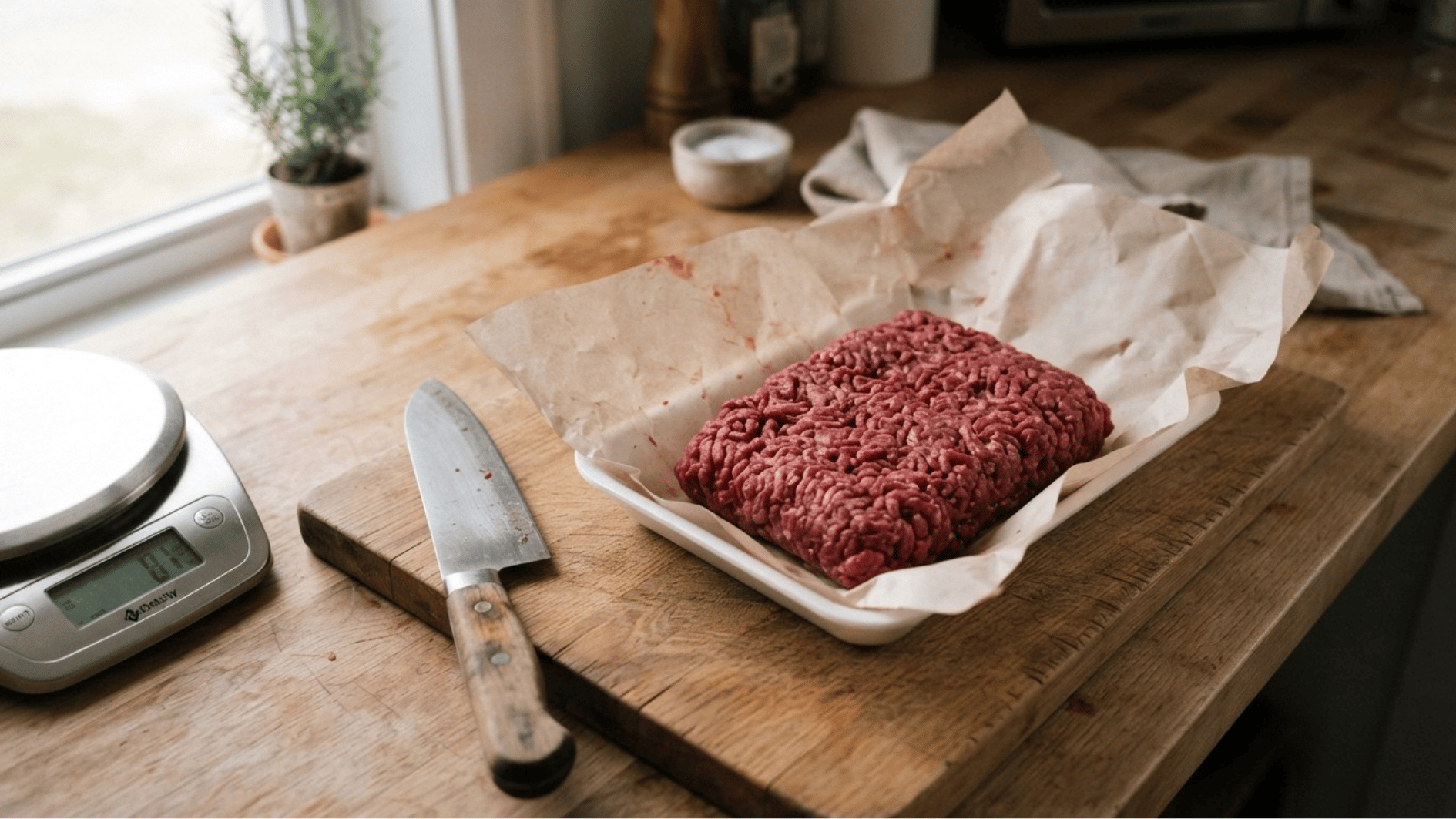
A 3-oz cooked serving of ground beef packs a different amount of protein depending on the ratio you buy, from 75/25 up to 95/5. Here’s how much protein is in ground beef across all five options.
| Common Name | Ratio | Calories | Fat | Saturated Fat | Protein |
|---|---|---|---|---|---|
| Value/commercial blend | 75% Lean / 25% Fat | 216 kcal | 14 g | 5.41 g | 20.9 g |
|
Ground chuck |
80% Lean / 20% Fat | 216 kcal | 13.8 g | 5.24 g | 21.4 g |
|
Ground round |
85% Lean / 15% Fat | 204 kcal | 12.2 g | 4.68 g | 22 g |
| Sirloin trimmings | 90% Lean / 10% Fat | 182 kcal | 9.44 g | 3.72 g | 22.6 g |
|
Extra lean |
95% Lean / 5% Fat | 148 kcal | 5.42 g | 2.37 g | 23.2g |
Why the Lean-to-Fat Ratio Matters?
Ground Beef fat differences have real health consequences. Saturated fat raises LDL cholesterol over time, according to the American Heart Association.
The AHA recommends keeping saturated fat under 6% of daily calories.
Swap 80/20 for 90/10, and you cut saturated fat nearly in half. Protein, iron, and B12 barely change. The ratio changes the fat. It doesn’t change the rest of the nutrition.
What are the Health Benefits of Ground Beef?

Ground beef delivers real value beyond protein and fat. Is ground beef healthy? It comes down to the ratio you buy, your portion size, and how often it lands on your plate.
Beyond that, one serving also delivers several nutrients that are harder to get from plants alone.
1. Iron for Energy and Anemia Prevention
Ground beef supplies heme iron. Your body absorbs this form much better than the non-heme iron in beans, spinach, or cereal.
This gap matters most for women, runners, and anyone watching their iron levels. Plant-only diets often fall short here.
2. Vitamin B12 for Nerve and Blood Health
B12 supports nerve health, red blood cell formation, and DNA synthesis. It comes almost only from animal foods, so ground beef is a solid source if you skip fish, eggs, or dairy.
B12 deficiency builds slowly. It can go unnoticed for years, so a steady source matters even before symptoms show up.
3. Zinc for Immune Support and Healing
A serving covers a meaningful share of your daily zinc needs. Zinc supports immune function, wound healing, and protein synthesis.
Your body leans on all three more during illness, recovery, or heavy training.
4. Selenium and B Vitamins for Metabolism
Niacin, vitamin B6, and selenium round out ground beef’s nutrient profile.
Together, they help your body convert food into energy, use dietary protein, and protect cells against everyday wear and tear.
5. Flexibility Across Diets and Goals
Because ratios range from 75/25 to 95/5, ground beef accommodates different goals rather than forcing a single approach.
Leaner cuts suit calorie- or heart-conscious diets, while fattier cuts fit higher-calorie or keto-style eating.
The Health Trade-Offs of Eating Ground Beef Regularly
Ground beef offers real nutritional value, but a few factors are worth keeping in mind before making it a regular part of your diet.
- Colorectal cancer risk: The WHO links excess red meat, especially processed forms, to higher colorectal cancer risk. Watch portions if cancer runs in your family.
- Added sodium: Pre-seasoned or packaged ground beef often contains added sodium. This can be a concern if you’re managing blood pressure.
- Heart health risk: High intake of red meat and saturated fat increases cardiovascular risk. Choose leaner ratios if you have heart concerns.
- Higher calorie density in fattier cuts: Ratios like 75/25 and 80/20 pack more calories per serving. This adds up fast if you’re tracking intake.
- Iron overload risk for some people: Ground beef’s heme iron absorbs easily, which helps most people. It’s a concern, though, for those with hemochromatosis or similar conditions.
The Bottom Line
Ground beef isn’t one food. It’s five different products, from 75/25 to 95/5, each with its own calorie and fat profile.
Pick the ratio based on the dish and your health goals, not just the price tag. Pair it with vegetables, watch your portion size, and ground beef holds its place as a solid protein source.
Check the label before you buy. It tells you exactly what you’re getting, so you don’t have to guess.
Frequently Asked Questions
Is There a Reliable Way to Calculate the Nutritional Value of Ground Beef for Custom Portions?
Yes, various online tools let you adjust serving size and lean-to-fat ratio to get calorie, protein, and fat values tailored to your exact portion.
Does the Cooking Method Affect the Nutrition Facts of Ground Beef?
Yes, Cooking methods like pan-browning or grilling cause fat to render out, which can lower the final fat and calorie content compared to raw values, while protein content stays relatively stable.
Is Ground Beef Good for a Low-Carb Diet?
Yes, Ground beef has 0 grams of carbs regardless of ratio, making it a staple in keto and low-carb meal plans.