What makes a music genre truly popular is more layered than it seems.
Is it the number of times a song gets streamed on a lazy Sunday afternoon? The way it dominates charts across continents? Or maybe it’s that quiet cultural pull that makes an entire generation feel understood?
Popularity wears many faces, and depending on the platform, Spotify, Billboard, or YouTube, the answer shifts entirely.
So let’s take a slow, satisfying walk through the world’s most-loved music genres, ranked from the edges of the mainstream to its beating heart.
How We Ranked the Most Popular Music Genres?
Ranking music genres is messier than it looks because popularity means something different depending on where you’re looking.
Here’s exactly what went into building this list, and why each factor actually matters.
- Streaming data pulled from Spotify and Apple Music reflects what the world is actually hitting replay on.
- Chart performance across Billboard Hot 100 and global charts captures which genres hold commercial ground consistently.
- Social media virality, especially TikTok, shows which genres are actively shaping culture and discovery in real time.
- Global reach vs. regional dominance separates genres with cross-continental staying power from those thriving within specific markets.
- Recent data keeps this list rooted in today’s listening habits, not legacy popularity or nostalgia bias.
None of these factors work in isolation, which is exactly why this list leans on all five, because a genre that tops Spotify but barely moves on TikTok tells a very different story than one doing both simultaneously.
Most Popular Music Genres Ranked: Least to Most Popular
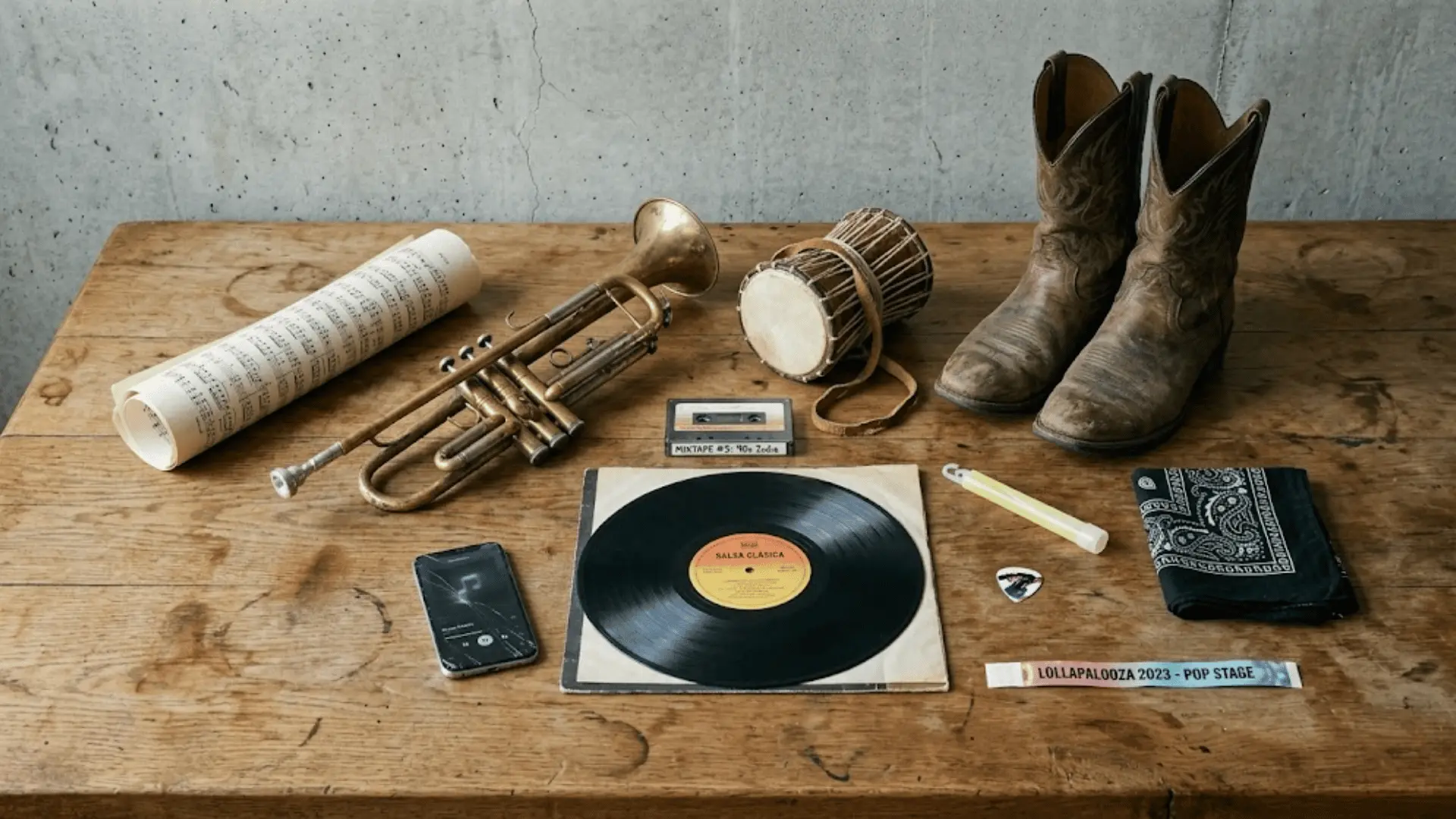
Every genre on this list earned its place through a distinct cultural journey, not just chart numbers.
Concert halls, club speakers, bedroom playlists, each space tells a different story, and every genre here has carved out its place in the world’s listening habits in a way that raw data alone can’t fully explain.
11. Classical Music
Classical music doesn’t chase trends, and that’s precisely what keeps it alive.
Rooted in centuries of compositional theory, it continues to shape how modern music is structured, even when most listeners don’t realize it. Film scores, ambient music, and even hip-hop sampling all borrow from its language.
Its mainstream consumption is low, but its fingerprints are everywhere, making it less of a genre and more of a foundation on which everything else quietly builds.
10. Jazz
Jazz is what happens when structure and spontaneity decide to coexist. Born from African American communities in the early twentieth century, it carried grief, resistance, and celebration all at once, often within the same melody.
Today, its mainstream audience is niche, but its influence bleeds into R&B, soul, lo-fi, and neo-soul in ways that are deeply intentional.
Artists like Kamasi Washington are keeping its spirit restless, relevant, and quietly radical.
9. Afrobeats
Afrobeats didn’t ask for a seat at the global table; it built its own. Rooted in West African rhythms and storytelling traditions, it carries a warmth and movement that transcends language barriers with ease.
Burna Boy and Wizkid didn’t just export music; they exported an entire emotional frequency that resonated across continents.
Its influence is now actively reshaping pop production, and what started as regional pride has quietly become one of the most infectious sounds in the world.
8. Country Music
Country music has always known exactly who it’s talking to, and that specificity is its greatest strength. It narrates life in a way that feels lived-in, dusty boots, back roads, heartbreak that doesn’t glamorize itself.
Historically rooted in American South culture, it’s now crossing over in ways that feel organic rather than forced.
Morgan Wallen and Luke Combs brought a rawness back to the genre that had drifted toward overproduction, and listeners responded with the kind of loyalty that streaming numbers rarely capture fully.
7. R&B / Soul
R&B has always been the genre that understood intimacy better than most. It sits in that particular emotional space between vulnerability and desire, rarely choosing one over the other.
The Weeknd redefined its sonic boundaries by pulling from synth-pop and dark pop without losing its emotional core, while SZA turned personal storytelling into something that felt collectively experienced.
Its frequent overlap with hip-hop and pop isn’t a weakness; it’s what keeps R&B continuously fluid, relevant, and emotionally precise.
6. K-Pop
K-Pop is less a genre and more a meticulously constructed cultural ecosystem. The music is only one layer of it.
Underneath sits the fandom culture, the visual identity, the synchronized precision that feels both human and otherworldly. BTS and BLACKPINK didn’t just build audiences; they built communities with their own languages, rituals, and emotional investments.
K-Pop proved that geography is no longer a ceiling, and that a song produced in Seoul can define a teenager’s entire personality in São Paulo.
5. Latin Music
Latin music’s rise isn’t a trend; it’s a demographic and cultural inevitability that the industry took too long to acknowledge.
Reggaeton in particular rewired the global pop formula by centering rhythm over melody in a way mainstream Western music had never fully committed to.
Bad Bunny releasing an entirely Spanish-language album and dominating global Spotify charts wasn’t a surprise to Latin listeners; it was a confirmation. The genre carries joy, protest, and romance simultaneously.
4. Electronic Dance Music (EDM)
EDM is the genre that turned listening into a collective physical experience. Its rise through festivals like Tomorrowland and Ultra wasn’t accidental; it was built on the idea that music could dissolve the distance between strangers in a crowd.
Calvin Harris and Martin Garrix mastered the art of the drop, that precise moment of release that feels engineered for human dopamine response.
While its commercial peak has softened, EDM’s DNA now runs through pop production globally, quietly shaping how modern songs are built to feel.
3. Rock
Rock carries the weight of its own mythology, which is both its greatest asset and its most complicated burden. It built the template for what a band, a stage, and a guitar could mean culturally, and that template hasn’t been fully replaced, only reinterpreted.
Classic rock holds multigenerational loyalty that few genres can claim, while alternative and indie rock continue pushing its edges forward.
Queen still fills stadiums through screens and Foo Fighters through stages, proof that rock’s emotional directness still hits something streaming algorithms haven’t learned to manufacture.
2. Hip-Hop / Rap
Hip-Hop became the dominant cultural language of the last few decades. What began as a form of witness, documenting street realities that mainstream media ignored, evolved into the most-streamed genre on the planet.
Drake redefined what commercial rap could look like emotionally, while Kendrick Lamar brought back the demand for lyricism as a form of accountability.
Its influence on fashion, language, and visual culture is so total that separating hip-hop from mainstream culture has become nearly impossible at this point.
1. Pop Music
Pop music is popular almost by design, built to meet listeners exactly where they are without asking too much in return. But dismissing it as surface-level misses what makes it genuinely powerful.
Taylor Swift turned pop into a vehicle for narrative depth that rewards obsessive listening, while Dua Lipa proved that maximalist production and sharp songwriting aren’t mutually exclusive.
Pop absorbs everything around it, hip-hop’s swagger, EDM’s energy, R&B’s intimacy, and reflects it back in a form the widest possible audience can access. That adaptability is exactly why it stays on top.
Genre Popularity by Region
Music doesn’t hit the same way everywhere, and regional listening habits reveal just how deeply a genre is tied to the culture that surrounds it.
Here’s a breakdown of which genres dominate across different parts of the world.
| Region | Dominant Genres | Key Artists | Cultural Footprint |
|---|---|---|---|
| United States | Hip-Hop, Country, Pop | Drake, Morgan Wallen, Taylor Swift | Deep cultural roots, massive radio and streaming infrastructure |
| Latin America | Latin Music, Reggaeton | Bad Bunny, J Balvin | Native language content with rhythms built into everyday life |
| Asia | K-Pop, Pop | BTS, BLACKPINK | Highly organized fandoms and strong digital engagement |
| Africa | Afrobeats | Burna Boy, Wizkid | Homegrown storytelling tradition meeting global production quality |
| Europe | EDM, Pop | Calvin Harris, Martin Garrix | Festival culture and a long history of electronic music scenes |
Fastest Growing Music Genres Right Now
Three genres are pulling ahead of the curve in terms of global momentum, and their growth doesn’t look like a passing wave.
- Afrobeats is crossing continental lines at a pace the industry wasn’t fully prepared for, with its rhythms now actively influencing mainstream pop production worldwide.
- K-Pop continues expanding its fanbase through highly coordinated digital engagement that most Western artists haven’t come close to replicating.
- Latin music is riding a demographic shift, with Spanish-language content now competing directly at the top of global charts without compromise or translation.
What’s worth noting is that none of these genres grew by chasing what was already popular. They scaled by staying deeply rooted in their own identity, and the world gradually moved toward them.
Why Pop Music Remains the Most Popular Genre?
Pop doesn’t dominate by accident. Its staying power comes down to a few things that other genres simply haven’t replicated at the same scale.
Global accessibility means it requires no cultural context to connect, traveling across languages and borders without losing its grip.
Radio and streaming algorithms are practically built around pop’s structure, rewarding its pacing, hooks, and repeatability consistently.
Its ability to blend seamlessly with hip-hop, R&B, and EDM means it never sounds dated for long, absorbing whatever is current and making it broadly palatable.
After the Drop
Music popularity is never really fixed; it shifts with culture, technology, and the people driving both.
This ranked look at the most popular music genre worldwide shows just how layered that conversation actually is.
Pop may sit at the top, but every genre on this list is holding its ground for reasons that go far deeper than streams and chart positions.
What genre has been living on your playlist lately? Drop it in the comments, because honestly, that’s where the most interesting conversations about music tend to start.
Frequently Asked Questions (FAQs)
What is the Most Popular Music Genre in the World Right Now?
Pop music holds the top spot globally, driven by its cross-cultural accessibility and dominance across streaming platforms and radio. Its ability to absorb elements from other genres keeps it consistently relevant across every major market.
Which Music Genre Has the Fastest-Growing Fanbase?
Afrobeats, K-Pop, and Latin music are currently leading global growth, each expanding well beyond their regional origins. Their rise is backed by strong digital engagement and increasing presence on mainstream charts.
Does Streaming Data Accurately Reflect a Genre’s Popularity?
Streaming numbers are one of the strongest indicators available, but they don’t capture the full picture on their own. Live attendance, social media traction, and cultural influence all add dimensions that raw play counts tend to miss.
Why Does Pop Music Always Stay on Top?
Pop is structurally built for broad consumption, with song formats and production choices optimized for maximum reach. Its constant cross-genre blending ensures it stays current without ever fully belonging to one sound.