


Walk into any home that consistently looks beautiful and you will notice something most people miss. The beauty is not just in the styling, the furniture, or the paint color. It is in the absence of clutter, the lack of visible chores, and the calm of a space that someone has thought about how to keep, not just how to set up.
That is the part of home design that does not show up in the magazines. The Pinterest photo captures the moment. It does not show the systems that keep the moment going week after week. And those systems, more than any single design decision, are what separate a home that looks good once from a home that looks good every day.
Here is what those systems actually look like, and how to build them into a home without turning your life into a chore list.
The First Question Most People Get Wrong
When designing or refreshing a home, the question most people ask is, what do I want this room to look like? The better question, the one that separates rooms that stay beautiful from rooms that quickly fall apart, is, what does this room need to do?
A living room that is meant to be used every evening cannot have white upholstery and zero storage. A kitchen that needs to feed a family of five cannot have an island designed only for display. A bedroom that doubles as a remote work space needs storage that hides the work, not furniture that shows it off.
Form follows function is not just an old design slogan. It is the difference between a room you have to fight to keep nice and a room that supports the life happening inside it.
The Three Categories of Home Work
Every home has three kinds of work that need to be managed for the space to keep its beauty. Identifying which category each task falls into is the first step toward building real systems.
1. Daily Touches
The small things that happen in the rhythm of a day. Wiping the counter, putting shoes away, hanging the towel back up. These take seconds individually and pile into chaos when ignored. The system that handles daily touches is not really a system at all. It is a habit. The trick is to design the space so the habit is easier than the alternative.
A landing zone near the door with hooks at the right height makes hanging up a coat easier than throwing it on a chair. A small bin near the front door for shoes makes that habit easier than a pile by the wall. The design carries the habit, not the willpower.
2. Weekly Maintenance
Cleaning the floors, taking out the trash, changing sheets, doing the bulk of the laundry. These need scheduled time, but they do not need much planning. The system that handles weekly maintenance is a routine. Sunday morning kitchen reset, Wednesday evening laundry, whatever fits the rhythm of the household.
3. Heavy Lifts
Deep cleans, window washing, oven and refrigerator cleaning, decluttering closets. These are infrequent enough that you never quite get efficient at them, and big enough that they often get postponed past the point of usefulness. This is the category most homes fail at, and the category where the right system is not doing it yourself.
Where to Build the Real Systems
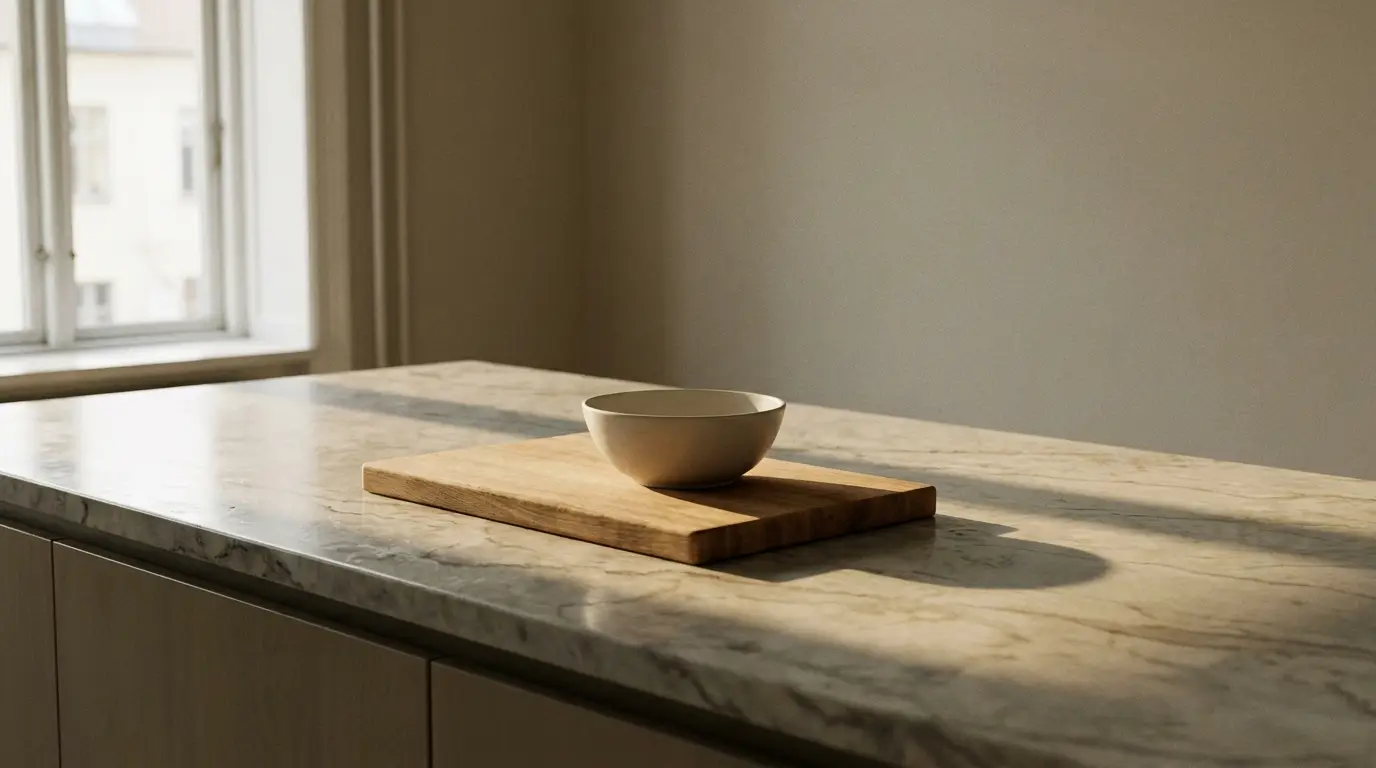
The systems that pay off the most are not the daily ones. They are the weekly and heavy-lift ones, where the time investment is real and the cost of getting them wrong shows up as a constantly stressed-out home.
The Laundry System
Laundry is the maintenance task that hides in plain sight. The average household generates around 35 to 45 pounds of laundry a week and spends roughly 6 to 8 hours dealing with it. Sorting, washing, drying, folding, and putting away. That is the equivalent of a part-time job built into every week, and the visible signs of an unmanaged laundry system, the basket by the bedroom door, the chair covered in clean clothes, the dryer with damp items still inside, are exactly the things that pull a beautiful home down.
The most effective systems either contain laundry visibly, with a properly designed laundry room, hampers integrated into bedroom closets, and dedicated folding space, or they remove laundry from the home almost entirely. Pickup and delivery services like Poplin have made the second option practical for households that would rather not give up the floor space and time. A weekly bag picked up and returned cleaned and folded the next day removes one of the most visually disruptive household tasks from the home altogether. For families designing or renovating, this is worth knowing because it changes how much space you actually need to dedicate to laundry storage.
The point is not to recommend one approach over the other. The point is to design the laundry system intentionally, not let it sprawl into every room of the house by default.
The Surface System
Counters, side tables, and console tables collect clutter unless they have a clear job. The system here is to assign every horizontal surface a function. The kitchen island holds prep work and nothing else, no mail, no school papers. The entryway console holds keys and the day’s mail and is cleared on Sunday. The bedside table holds a book, a lamp, and a glass of water, nothing more.
When a surface has a defined function, clutter that does not match the function stands out and gets moved. When a surface has no function, everything accumulates.
The Storage System
Storage is not about having more space. It is about having the right space in the right place. The best storage systems put things near where they are used. Cleaning supplies in every room they are needed, not centralized in a closet. Bags and chargers near the door, not stuffed in a drawer somewhere upstairs. The walk between need and storage is what determines whether a system holds.
The Heavy Lifts, Outsourced
The heavy lift category is where most homes lose the design battle, because the maintenance debt accumulates quietly. The grout that has not been cleaned in three years. The window track is full of dust. The fridge that needs a proper wipe-down. None of it is urgent. All of it adds up to a home that does not photograph the way it used to.
The simplest fix is to outsource the heavy lifts on a schedule. A deep clean every three months, a window cleaner twice a year, a periodic decluttering session. The cost is modest, the time saved is real, and the home maintains the design intent without the resident having to spend whole weekends fighting it back into shape.
Designing for the Family You Actually Have
A beautiful home is designed for the people who live in it, not for the imagined people in the magazine. A family with three kids and two dogs needs different systems than a couple with one cat. Pretending otherwise is the fastest way to a home that looks beautiful for the staging photographs and slowly falls apart from there.
The honest questions to ask are practical ones. How often does this room get used? Who uses it? What do they typically have with them when they use it? What is the messiest moment in a typical day in this room? Design that survives contact with real family life starts with those questions, not with a color palette.
Three Quick Tests for Whether Your Home Is Designed Well
Run these three tests on your own home. If you can answer yes to all three, your home is probably designed to support real life. If you cannot, the design choices are working against you.
- Test 1: If you had unexpected guests in 15 minutes, what would the actual cleanup look like? If it would be more than 15 minutes of work, the daily systems need adjusting.
- Test 2: When you walk into your home after a long day, does the entry space welcome you or does it stress you out? If it stresses you, the landing zone is not doing its job.
- Test 3: Pick the room you have spent the most money on. If it is not the room you spend the most time in, something is off in how you have allocated your design energy.
The Hidden Beauty of a Home That Runs Itself
There is a particular kind of beauty that is hard to photograph and easy to feel. It is the beauty of a home where nothing feels like a fight. Where the laundry never piles up because the system handles it. Where the counter is clear because that is just how the kitchen works. Where the deep clean happens because someone scheduled it three months ago.
This is a home that does not need a constant flow of new things to feel beautiful. The systems carry it. The space holds its shape. The people inside get to actually live there instead of running maintenance on it.
That is the design goal worth aiming for. Not the home that looks beautiful for the photograph. The home that looks beautiful on a Tuesday evening, when nobody is trying.