Acai bowls show up everywhere now, looking like dessert but marketed like a superfood. That gap between how they look and what they’re made of is exactly why so many people ask: Are acai bowls healthy, or a good-looking sugar bomb?
I get it, because the short answer isn’t a simple yes or no. Acai berries on their own are low in sugar and loaded with antioxidants, healthy fats, and fiber. What changes everything is what gets piled on top.
Sweetened purees, heavy granola, honey, and juice bases can turn a nutritious base into something closer to a sundae. What matters is knowing if the berry is solid nutrition, and the bowl stays that way if you pay attention to what goes into it.
What Is an Acai Bowl?
Acai bowls are often considered a healthy breakfast or snack because they contain fruit, fiber, and plant-based nutrients, though their nutritional value depends heavily on the ingredients used to prepare them.
Acai berries themselves are naturally low in sugar and contain antioxidants, including anthocyanins, along with small amounts of fiber and healthy fats.
The concern usually comes from what is added to the bowl. Sweetened acai puree, fruit juice, granola, honey, nut butter, and other toppings can quickly add to the sugar and calorie content.
A well-balanced acai bowl can still fit into a healthy diet when you choose portions and toppings carefully. Understanding its nutrition can help you decide how often to eat one and how to balance it.
Acai Bowl Nutrition Facts
Before adding toppings, an acai base has a relatively simple nutrition profile. The brief below shows the calories, macronutrients, and key vitamins and minerals naturally found in unsweetened acai puree. Numbers vary by brand, but this gives you a fair baseline.
|
Nutrient (per ~100g unsweetened acai puree) |
Amount |
|---|---|
|
Calories |
70-90 |
|
Total fat |
5-6g |
|
Fiber |
3-4g |
|
Sugar |
0-1g |
|
Protein |
1-2g |
|
Potassium |
100mg+ |
|
Vitamin A |
Good source |
Pro tip: Check the ingredient label before you buy. If “acai” isn’t the only ingredient listed, you’re likely getting a sweetened blend instead of the real thing.
While plain acai provides beneficial nutrients, the final nutrition of an acai bowl depends on the ingredients added.
Are Acai Bowls Good for You? Worth Knowing Benefits
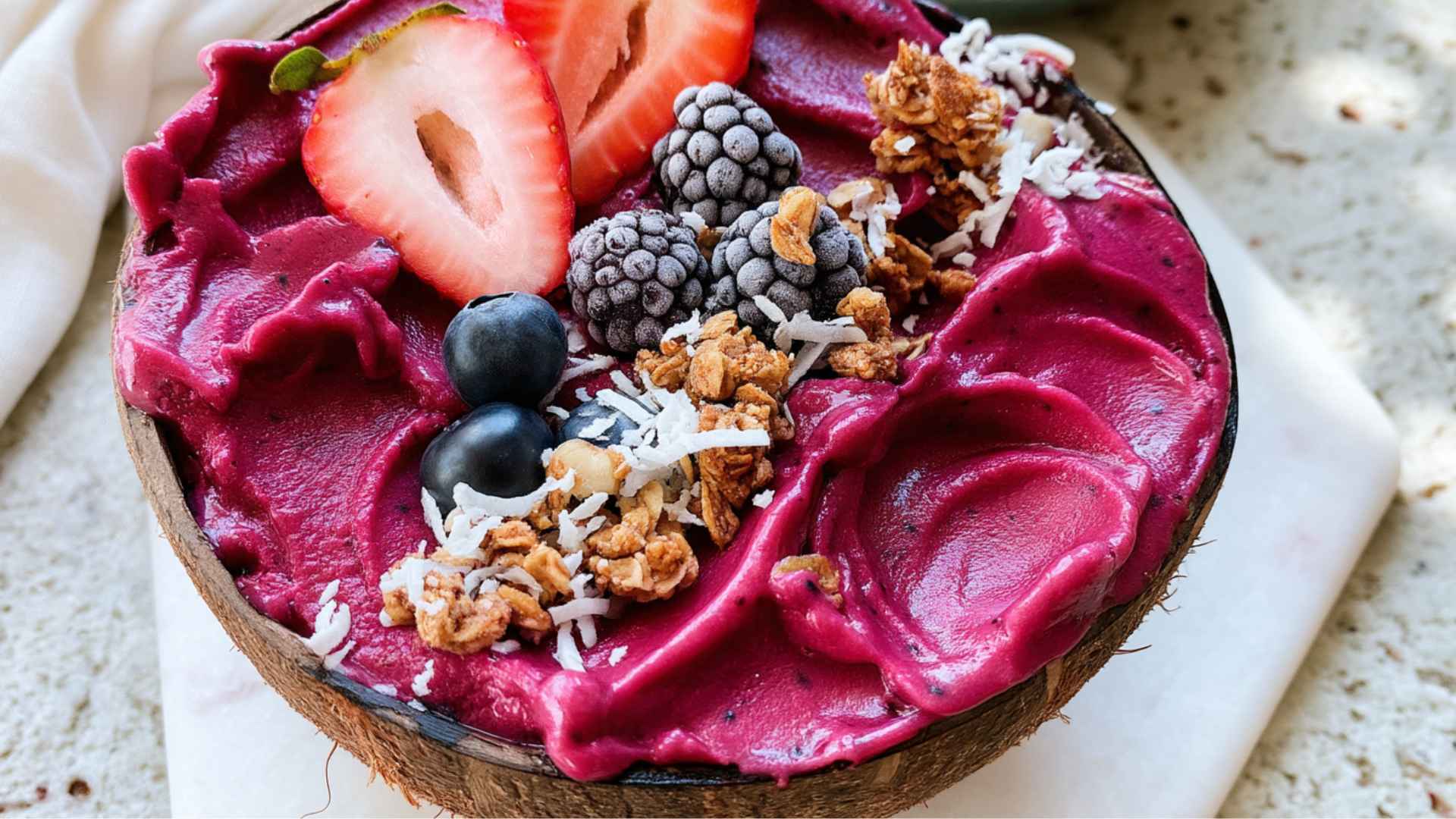
Acai offers several nutrients that may support overall health. Here are the key benefits behind this popular berry-based ingredient. On its own, acai brings real nutrition to the table. Here’s what the berry actually offers:
- Rich in Antioxidants. Acai is rich in anthocyanins, the same plant compound that gives blueberries their deep color. Cleveland Clinic notes these compounds may help protect your cells from damage. A 2006 lab study on freeze-dried acai pulp found high antioxidant capacity in the fruit.
- Healthy fats. Acai contains monounsaturated fat, the same kind found in olive oil and avocado.
- Fiber. A serving of acai puree carries a few grams of fiber, which supports digestion and helps you feel full longer.
- Vitamins and minerals. Acai supplies some vitamin A, vitamin C, potassium, and calcium.
One honest note: many of the bigger claims around acai, like anti-aging or major weight-loss effects, come from small early studies rather than large human trials. It’s smart to treat acai as a nutritious fruit, not a miracle cure.
One more thing worth knowing: if you have a pollen allergy, acai can sometimes trigger cross-reactive symptoms, so it’s worth paying attention to how your body responds the first time you try it.
When Acai Bowls Turn Unhealthy: The Hidden Sugar and Calorie Traps
The berry isn’t the problem. What gets added to it usually is. Many store-bought bowls start with a pre-sweetened acai base, then get piled with granola, honey, dried fruit, and sometimes fruit juice instead of water.
Add it all up, and a single bowl can carry anywhere from 20 to 70-plus grams of sugar, along with 300 to 1,000 calories, depending on size and toppings.
For context, the American Heart Association’s added sugar guidance caps daily added sugar at about 25 grams for women and 36 grams for men. That means one heavily topped acai bowl can use up your entire day’s sugar budget in a single sitting.
This doesn’t make acai bowls bad. It just means the store-bought version and the homemade version can be two very different foods wearing the same name.
Homemade vs. Store-Bought Bowls
Making an acai bowl at home gives you more control over ingredients, portions, and cost. Store-bought options offer convenience but may include added sugars.
|
Homemade |
Store-Bought |
|
|---|---|---|
|
Sugar control |
Full control; use an unsweetened base |
Often pre-sweetened |
|
Portion size |
You decide |
Usually oversized |
|
Cost |
Cheaper per bowl |
Pricier |
|
Convenience |
Takes a few minutes |
Ready to eat |
If you’re ordering out, ask for the plain acai base and add your own toppings. It’s a small ask that hands you back control over sugar and portion size.
How to Build a Healthier Acai Bowl?
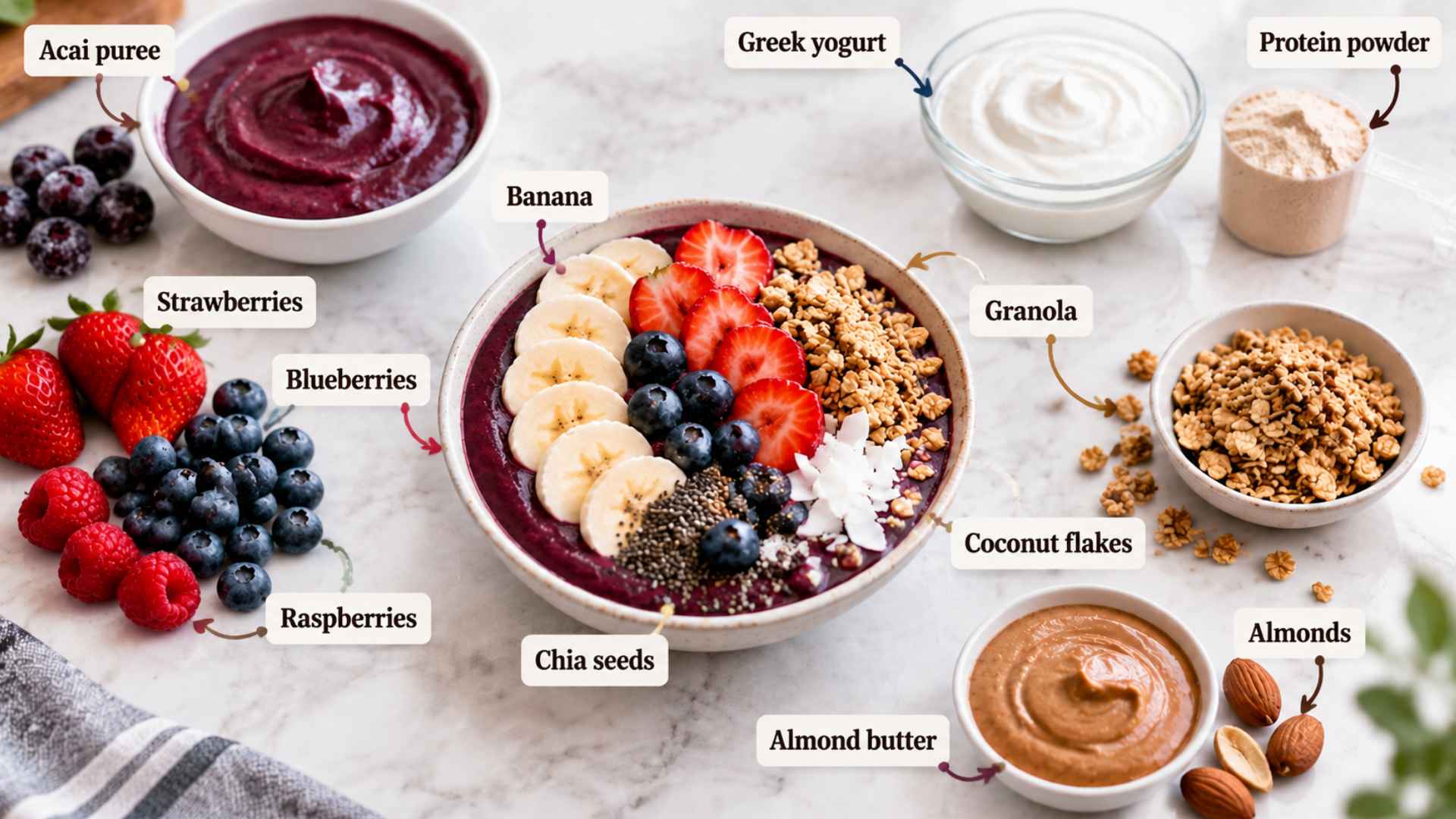
A healthier acai bowl comes down to balancing ingredients. Choosing the right base, adding protein, and limiting high-sugar toppings can make a more filling, nutritious option.
- Start unsweetened. Use plain acai puree or powder, not a pre-sweetened blend.
- Add protein. A scoop of Greek yogurt or protein powder helps the bowl actually hold you over.
- Pick lower-sugar fruit. Berries add sweetness with less sugar than banana or mango.
- Go easy on granola. A small handful is plenty. It doesn’t need to cover the whole bowl.
- Watch the nut butter. Stick to about one to two tablespoons. It’s a healthy fat, but the calories add up fast.
Small ingredient changes can make a big difference in an acai bowl’s nutrition. Focus on balance rather than restriction to enjoy the flavors while keeping the bowl satisfying.
Are Acai Bowls Good for Weight Loss?
An acai bowl can support weight management when it is built with the right balance of nutrients.
The fiber in acai, combined with protein-rich additions like Greek yogurt, protein powder, or nuts, may help increase fullness and reduce the urge to snack soon after eating.
However, not all acai bowls are equally beneficial. If your goal is weight loss, consider making your acai bowl a complete meal with enough protein, fiber, and healthy fats rather than treating it as a dessert or small snack. Portion control and ingredient choices matter most.
Conclusion
Are acai bowls healthy? The real answer depends on who built the bowl and what’s inside it.
If you eat acai bowls a few times a week, an unsweetened base and a scoop of protein matter more than any “superfood” headline.
Next time you order, ask what’s in the base or check the label before you dig in. That one question tells you more than any antioxidant score ever will.
Frequently Asked Questions
How Many Calories are in an Average Acai Bowl?
A plain bowl runs about 100 to 300 calories. Store-bought versions with heavy toppings can easily climb past 500 to 1,000 calories.
Are Acai Bowls Good for You Every Day, or Just Occasionally?
Plain, low-sugar bowls can fit into a daily diet. Sweetened, topping-heavy bowls are better saved for an occasional treat, not a daily habit.
Can People with Diabetes Eat Acai Bowls?
Yes, in small portions with low-sugar toppings. Pair it with protein and skip sweetened purees to help avoid blood sugar spikes.