A video continues even when a viewer puts the phone down. In a puzzle game, the next frame may depend on which piece the user moves. During a live broadcast, a poll can change what a host discusses next. These examples explain the main distinction within interactive entertainment in Indonesia: the audience’s input becomes part of the experience rather than merely a reaction after it ends.
Indonesia had 230 million internet users at the end of 2025, DataReportal estimated in its Digital 2026 report. That establishes the scale of online access entering 2026, not the number of people playing browser games. Web-based titles and livestream tools nevertheless illustrate two practical routes into participation. One relies on responsive software; the other relies on communication between creators and audiences.
A Browser Tab Can Host More Than a Webpage
Mozilla’s MDN documentation describes a set of technologies for HTML5 games: JavaScript for logic, Canvas or WebGL for graphics, Web Audio for sound, and browser storage for progress. Some games run entirely after their assets load; multiplayer projects also require network communication. An app-store installation is not necessarily part of the process.
Itch.io maintains a category of HTML5 games playable in a browser, spanning puzzles, platformers and other formats. The catalog demonstrates availability rather than Indonesian market share. For a user trying a game on a shared computer or unfamiliar phone, browser access can reduce initial installation steps. Large assets, inconsistent touch controls, and older hardware can still create obstacles.
Participation Can Be as Small as One Input

Not every interactive experience involves a competitive match. Pressing a button to choose a story branch changes the sequence of a narrative. Selecting a song in a live poll can influence a creator’s next segment. In both cases, the participant understands that their decision has a defined consequence within the rules of the product.
YouTube’s live tools offer a concrete example. A channel can run a poll with two to four choices, pin a question, and host a live Q&A. YouTube Help says live polls are available during streams and Premieres, while poll results do not appear in chat replays. These are built-in methods of participation, but the host still decides which suggestions to act upon.
Digital Communities Create Participation Beyond the Screen
An online game may end after five minutes, yet a discussion about tactics can continue for hours. Digital communities organize social play, compare tactics and exchange screenshots. Fans also gather around live streams, reacting as a concert or esports match unfolds. Participation might mean offering advice, moderating chat or returning for the next scheduled session.
A visible reaction count is not the same as sustained engagement. One user can send several messages, while many people remain silent. Channels that activate slow mode may improve readability by spacing out comments. The design challenge is not to maximize messages at any cost; it is to make individual contributions intelligible in a crowded feed.
What Makes a Live Dealer Interface Different
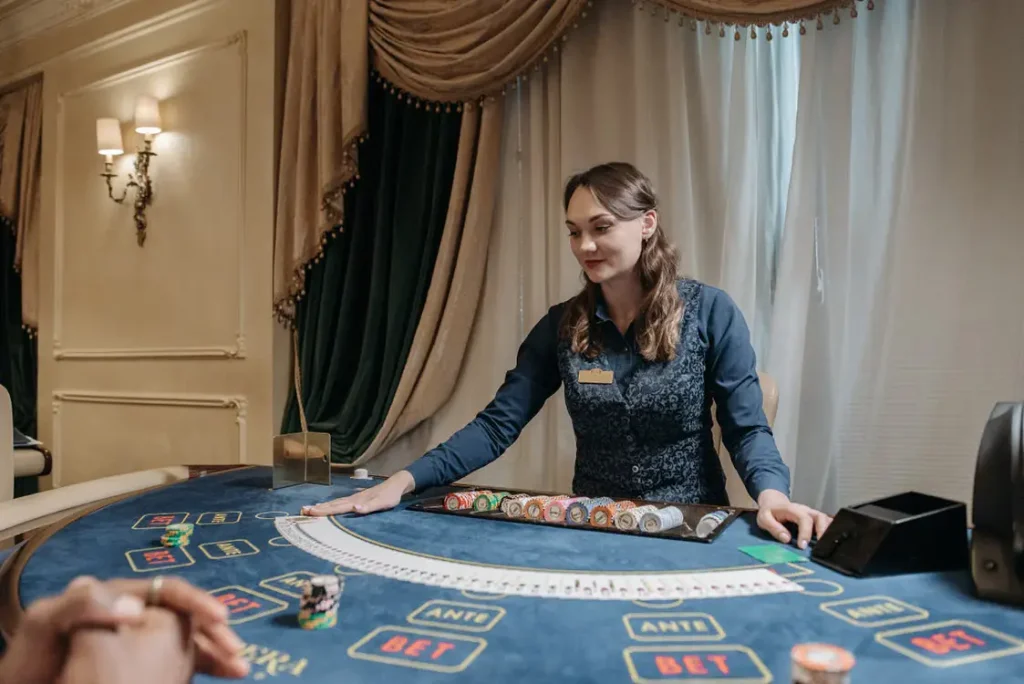
A live event requires shared timing when an action must arrive before a round closes. On a live casino table, video of a dealer is paired with controls showing the table state and available decisions. The interface must coordinate accepted bets, closing windows, and transmitted footage. A delayed stream may show images from a moment that has already passed on the game server. Reading the table rules and visible status matters more than assuming all video streams have identical timing.
The term online casino is broader: it can cover live tables as well as RNG-based slots or software table games. In an RNG slot, programmed rules and the paytable map random outcomes to potential payouts without requiring a filmed dealer. RTP describes a theoretical long-run return, and volatility describes how payouts may be distributed. Neither number predicts what a brief session will deliver. The separate interfaces reflect different game mechanisms rather than merely different artwork.
Real-Time Systems Need Clear Feedback
If a player taps a control, the interface should reveal whether the action was accepted. A game that appears to freeze after a purchase or a move creates uncertainty about its actual state. Browser games need responsive controls and saved progress, while a livestream poll needs to tell participants when voting has ended. Clear feedback prevents confusion about whether a user has influenced the activity.
The technical distinction is important on unstable mobile networks. A video can lower its picture quality to maintain playback; an online multiplayer game still needs accurate state information. If one participant disconnects, the server may continue without them or wait, according to that game’s rules. Developers must design around those cases instead of equating smooth animation with fair outcomes.
An Audience Is Not Always a Community
The most informative measure of interactivity is whether an action has a defined function. Comments can shape discussion, browser inputs shape gameplay, and polls offer a limited collective choice. Their value depends on legible rules, moderation, and the ability to verify what happened. For digital entertainment in Indonesia, the interesting development is the growing range of ways to participate on an ordinary phone, not a claim that passive viewing has disappeared.