
As home fitness continues to evolve, consumers are facing more choices than ever—from connected strength machines and large-screen workout platforms to traditional cable systems and free weights. But for many people who train regularly, the question is becoming less about how much technology a machine contains and more about how effectively it fits the way they actually train.
That is creating interest in a different approach: the modular home gym system. Rather than dedicating an entire room to single-purpose equipment, modular systems are designed around a shared core that can work across multiple training stations. The idea is simple: expand the range of workouts without continuously adding more machines.
One example of this approach is the FitTransformer Titan, which uses a switchable Core to power different training configurations. Instead of making the display the centerpiece of the experience, the system places greater emphasis on resistance, movement and training execution.
The Core Behind a Modular Home Gym
Traditional gyms rely on a wide range of specialized equipment. A lifter may move from a cable machine to a squat rack, then to a conditioning station or rowing machine depending on the workout.
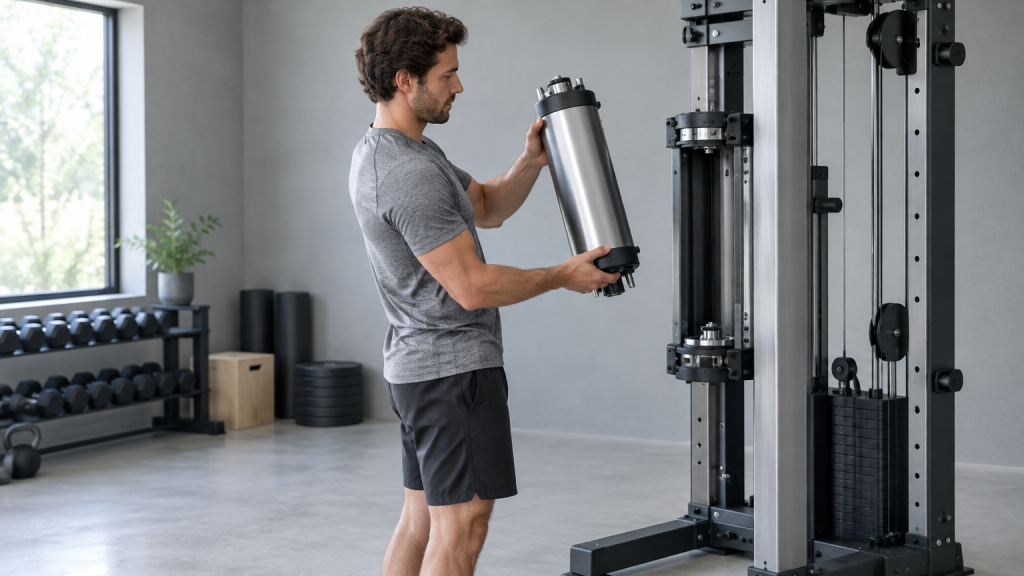
A modular system takes a different approach. With FitTransformer, the same Core can be transferred between different training stations, allowing the system to deliver different resistance profiles without requiring a separate motor or drive system for every machine.
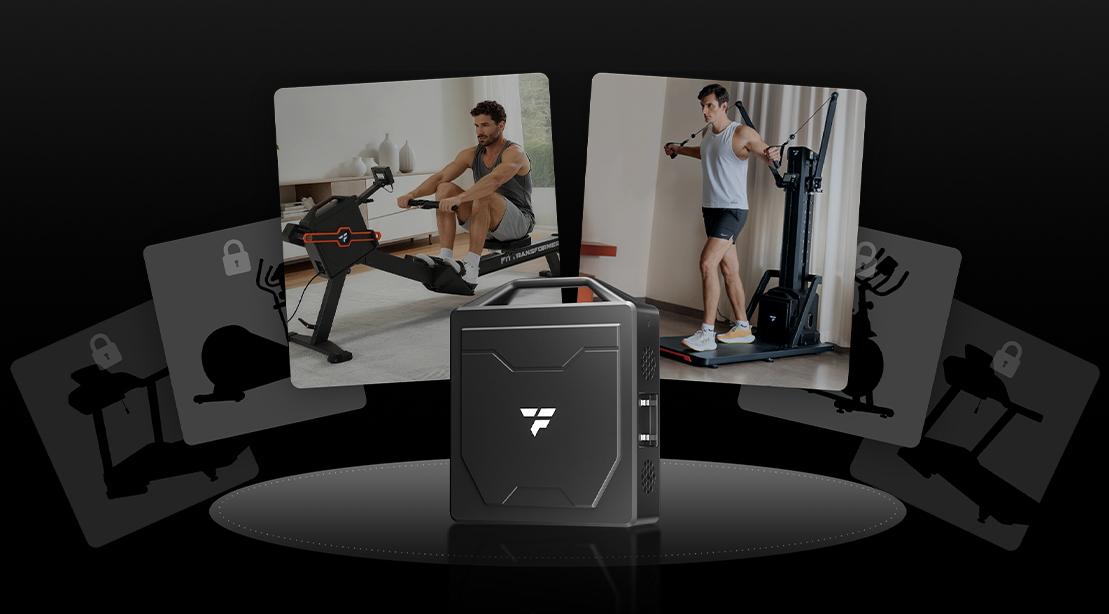
FitTransformer Core Module
On the Strength and Skiing Machine, the system offers multiple resistance modes designed for different types of training. For standard hypertrophy work and warmups, Regular Mode delivers a smooth, predictable baseline. Tapping into Burst Mode transforms the system into a hyper-responsive machine that instantly adjusts to rapid, explosive movements. When the focus shifts to muscle overload, Centrifuge Mode deliberately emphasizes controlled eccentric tension during the negative phase. For heavy strength blocks, Auxiliary Mode functions like an intelligent spotter, automatically easing resistance the moment movement velocity stalls so lifters can safely push their absolute limits.
The Core can also be transferred to the FitTransformer Sail Rowing Machine, where it supports three resistance experiences: Air, Water and Magnetic. High-intensity sessions benefit from Air Mode, which dynamically scales resistance with every spike in stroke speed. For longer cardio efforts, Water Mode offers a smoother, uninterrupted rhythm that eases joint impact over time. When precision matters most, Magnetic Mode provides perfectly uniform resistance across every stroke, keeping structured workouts strictly on target.
The result is a system where the hardware can evolve while the central drive unit remains the same.
One Core, Every Workout
Built outward from the Core, the system adapts to diverse training demands through specialized modules, effortlessly shifting from the Strength and Skiing Machine to the Sail Rowing Machine.
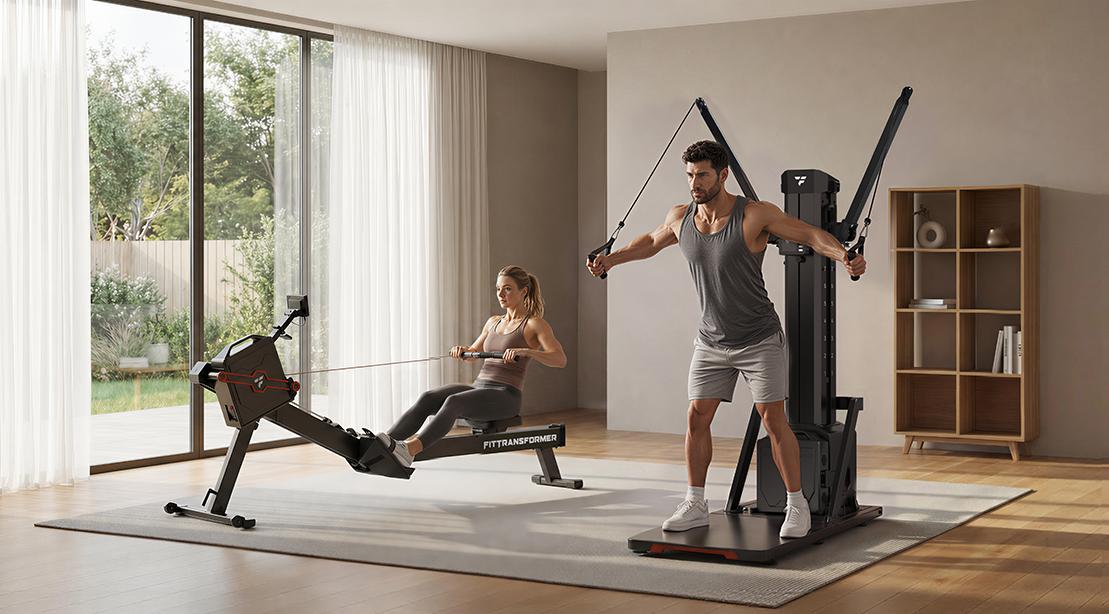
(L to R) FitTransformer Sail Triple Modes Rowing Machine and Titan Strength and Skiing Machine
The primary Strength and Skiing machine combines cable-based strength training with ski training in one footprint. Depending on the configuration, users can move between exercises such as cable movements, squats and ski intervals without switching between multiple pieces of equipment. Also, the Adjustable Bench completes the setup by providing flat, incline and seated training positions. Its Spine Lock structure is designed to provide a stable foundation during pressing, rowing and other strength movements.
The system provides up to 264 lbs (120 kg) of digital resistance, while eliminating the need to repeatedly change physical weight plates between exercises.
For users who want full-body conditioning, the Core can be moved to the Sail Rowing Machine, extending the same system into rowing-based cardiovascular training.
Why Modularity Matters
The appeal of modular home fitness is not simply that one machine can do more.It is that the system can grow with the user. Traditional home gyms often require users to buy another machine when their training needs upgrade. A modular approach shifts that model toward a system in which the central technology can remain while additional training stations are added over time.
That could have implications beyond convenience. For homeowners, it can mean less equipment competing for limited floor space. For manufacturers, it creates an opportunity to build platforms that evolve instead of becoming obsolete when a new generation of technology arrives. And for lifters, it offers a different philosophy of connected fitness: technology should support the way people train, rather than dictate it.
The future of the home gym may not be about putting more machines into the room. It may be about making one system capable of doing more.