

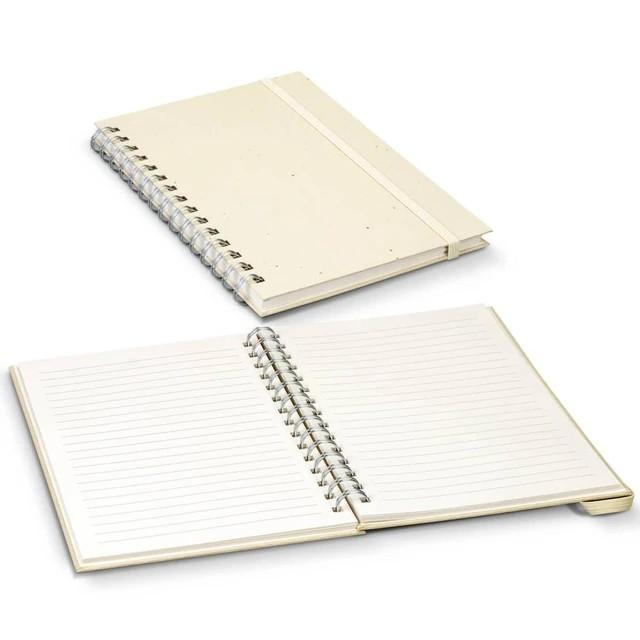
Everyone has a drawer. In it, almost certainly, is at least one notebook that has never been written in. It might have a soft-touch cover, an elastic closure, maybe a subtle logo pressed into the corner. It has served no practical purpose for months, possibly years. And yet throwing it away feels faintly wrong, like discarding something that still has a life ahead of it.
That instinct is not sentimentality run amok. It is a well-documented quirk of human psychology, and it happens to be extremely good news for any business weighing up branded notebooks as a way to keep a brand in front of people for years rather than seconds.
The endowment effect, in your desk drawer
Behavioural economists call it the endowment effect: the tendency to value an object more highly simply because we own it. A pen we are handed at a conference becomes, within seconds, our pen. A notebook pressed into our hands at a trade show is no longer stock on a table; it is a possession. And people are famously reluctant to discard possessions, even ones they are not using.
This is precisely why a leaflet lands in the recycling within a minute of being handed over, while a promotional notebook can survive years of desk moves, house moves and clear-outs. One is perceived as disposable information; the other is perceived as an owned object with residual value.
The numbers bear this out. Research by the British Promotional Merchandise Association has found that a significant majority of recipients keep promotional products in regular use for two years or more. For a notebook, which has an obvious ongoing function, that figure tends to sit at the higher end.
“People underestimate how long a good notebook stays in circulation,” observes Gareth Parkin, Managing Director of GoPromotional, one of the UK’s leading promotional merchandise companies. “A cheap plastic giveaway gets a polite thank-you and a short life. A well-made branded notebook ends up in a bag, then on a desk, then lent to a colleague. Every one of those stages is another brand impression the client never paid extra for.”
Why notebooks earn their keep
The reason branded notebooks punch above their weight is that they combine two things most promotional products lack in combination: genuine daily utility and a long physical lifespan. A stress ball is amusing for an afternoon. A branded mug lives in one place. But a notebook travels, gets used in meetings, and is seen by everyone in the room whenever it is opened.
There is also a subtle status signal at work. A tatty free pad suggests a tatty free brand. A considered, well-finished notebook suggests a company that pays attention to detail. The object becomes a small ambassador for the standards of whoever’s logo sits on the cover.
The comparison that makes it obvious
Set two objects side by side and the effect is stark. A printed flyer and a branded notebook cost broadly similar amounts to produce and distribute. Within a minute of being handed over, the flyer has usually been read, folded and dropped into a bin. The notebook, by contrast, has been assessed, valued and pocketed. Same moment, same recipient, entirely opposite fates, and the only meaningful difference is that one is perceived as disposable information and the other as an owned, useful object.
That single distinction is worth an enormous amount over time. The flyer delivered one impression and died. The notebook has begun a relationship that may last years. When marketers talk about the poor return on printed leaflets and the strong return on quality merchandise, this is the mechanism underneath the numbers.
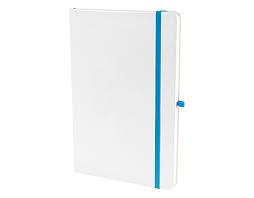
Quality is what triggers the instinct
It is worth stressing that the keeping instinct only fires if the object clears a quality threshold. A visibly cheap notebook, with a flimsy cover and thin paper, does not read as valuable, and so escapes the endowment effect entirely; it is filed under disposable and treated accordingly. The reluctance to discard is reserved for things that feel worth keeping.
This is why the specification of the notebook is not a detail but the whole game. The cover finish, the paper weight and the binding are what push the object over the line from throwaway to keepsake. Spend too little and you forfeit the very psychological advantage that made the notebook worth choosing in the first place.
Turning the instinct into strategy
If the reluctance to bin a notebook is essentially free, the trick is to make the object worth keeping in the first place. That means resisting the temptation to buy the cheapest stock available. A flimsy cover and thin paper trigger the opposite instinct: this is disposable, and the drawer it belongs in is the bin.
Paper weight, cover finish and binding quality all feed into whether the recipient reads the object as valuable or throwaway, and a modest step up in specification tends to pay for itself many times over in extended brand exposure.
So the next time you hesitate over that unused notebook in the drawer, notice the hesitation. It is the endowment effect doing exactly what it does. And somewhere, a marketing team is quietly benefiting from your inability to let go.