


Furniture stores used to sell bedrooms as a single unit: matching bed frame, matching dresser, matching nightstands, all cut from the same wood in the same finish, often delivered together on the very same truck in a single afternoon. For decades that was simply how most people furnished a bedroom, since buying the whole set felt genuinely safer than risking two pieces that might clash the moment they ended up side by side. Somewhere in the last several years, that habit quietly started falling apart, and a lot of the room decor filling that gap now comes from mixing pieces on purpose rather than matching them by default.
Why Matching Sets Became the Default
Matching sets solved a real problem for a long time. Nobody had to guess whether a dresser would look right next to a particular bed, because the manufacturer had already made every one of those decisions in advance. It removed the risk of a mismatched room for people who never thought of themselves as especially confident decorators, which described most people buying furniture on a normal budget and a fairly ordinary timeline. The tradeoff was a bedroom that ended up looking exactly like thousands of other bedrooms furnished from that same catalog in that same year.
What Changed
Social media exposed people to far more bedrooms than they’d ever seen before, and the rooms that stood out were rarely the matched sets. A vintage dresser next to a modern bed frame, an antique mirror paired with contemporary lighting, these combinations started looking more like a real, lived-in home and considerably less like a showroom display assembled overnight. At the same time, furniture got easier to buy piece by piece online, removing the old convenience argument that used to make full matching sets the practical, low-effort choice for busy people with limited time to shop around.
Making Mismatched Pieces Look Intentional
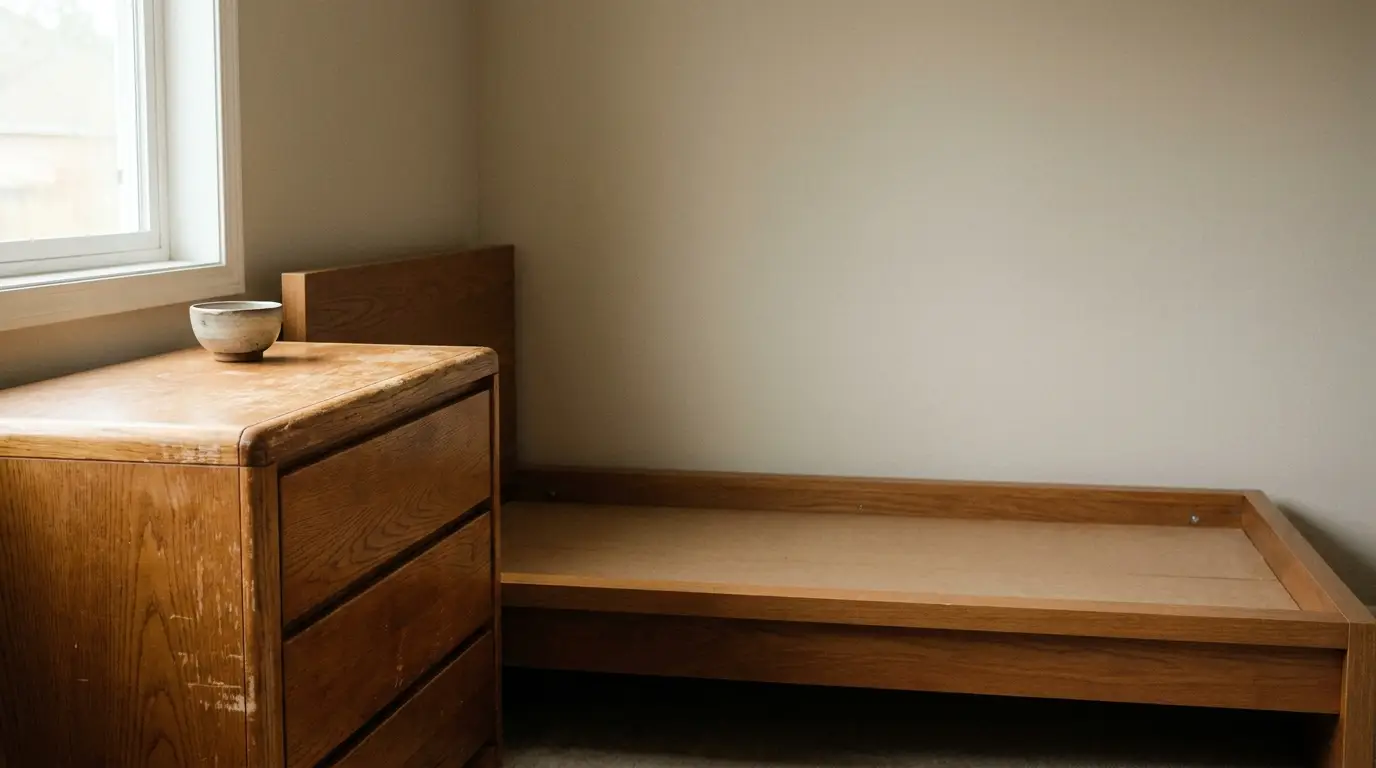
Mixing furniture without a plan can look like it happened by accident rather than on purpose, and that’s the real risk everyone takes on the moment the matching set gets abandoned in favor of something more personal. The fix is choosing a thread that runs through the room even when the furniture itself doesn’t match. A consistent wood tone carried across a few key accessories, repeated even when the furniture pieces themselves vary widely in style, does exactly that. It ties a dresser from one decade to a bed frame from another entirely, without forcing either piece to pretend it ever came from the same original set.