Interview With Young New York-Based Artist Regina Loginova
Regina Loginova is an animal painter working in oils. Born in Krasnoyarsk, she trained in Moscow and now lives and works in New York. She is a student at The Art Students League of New York and receives mentorship at Judith Kudlow’s studio. She is a member of the Eurasian Art Union, the Union of Russian Artists, Oil Painters of America, and the Salmagundi Club. In 2026, she received two awards in different categories — at the International Plein-Air Assembly competition and at the “Talent of Russia” exhibition-competition — and published a scholarly article on the psychological effects of animal painting on the viewer.
— Billions of People Watch Animal Videos Every Day. What Do You Think a Painting Can Still Do That a Video Can’t?
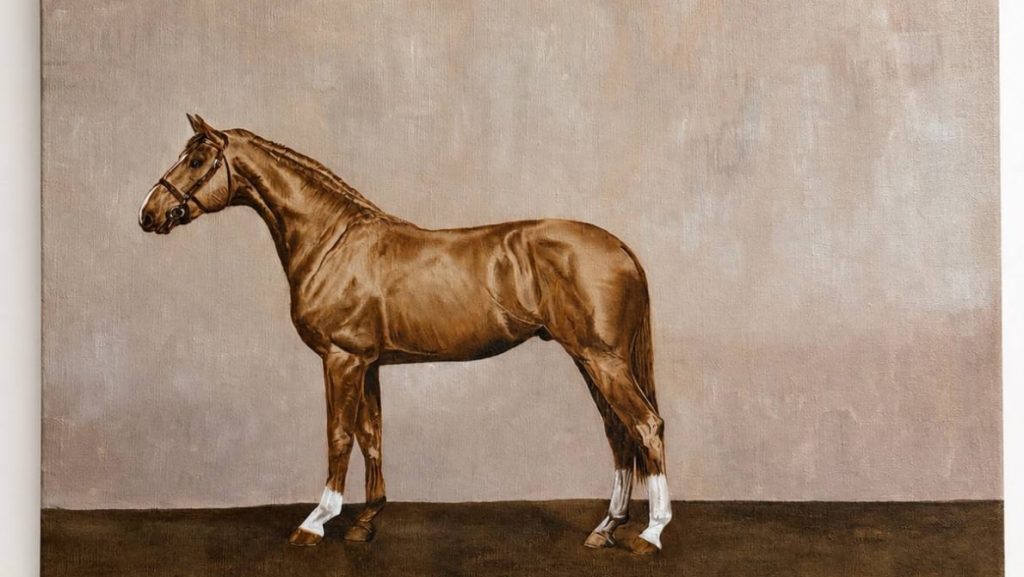
Video offers both motion and sound but demands very little inner engagement from the viewer because it decides where you look and when your attention shifts. Painting works differently: it’s static, it doesn’t impose a particular frame on you, but it doesn’t simplify contemplation either. You choose how much time to spend in front of the canvas; you can slowly take in every brushstroke and small detail and then return to the whole. When I paint a horse’s gaze, for instance, I spend hours on it, and the viewer who later stands in front of the painting slows down to look at it too. That slowing down is exactly what’s missing from a social media feed.
— As I Know, Your Approach to Horses Started Long Before Painting — With Equestrian Sport. How Did That Hands-On Experience With Horses Shape the Way You Eventually Learned to Paint Them?
That became the foundation of everything I do now in psychological animal portraiture. I spent a lot of time in the saddle, handling horses and learning to notice how they reacted to my breathing and my mood. Over time, you even learn to watch the slightest movement of the ears or the way the nostrils flare. None of this is really about anatomy — it’s about a deeper sense, a barely noticeable shift in mood and overall state, which is what I try to convey on canvas. You simply can’t achieve that by observing animals online or from a distance.
— You Trained Academically in Russia Before Continuing at The Art Students League of New York Under Judith Kudlow. How Did That Combination of Academic Discipline and Mentorship Shape the Method You Now Work In?
The academic school in Moscow gave me something without which nothing today would be possible: an understanding of anatomy, the ability to work with the planes of a canvas, control over the brushstroke. Those were years of discipline, sometimes fairly harsh. But academic precision on its own isn’t yet a statement — it’s a tool. Now, studying under Judith Kudlow, I understand how to direct academic knowledge not at the subject itself, but at conveying the subject’s state. She paints animals in exactly this way herself, making them central characters with their own psychology, emotions, and states. I think it’s precisely a strict academic school and mentorship oriented toward the emotional dimension that shaped my method. I didn’t abandon academicism; I found a new, contemporary application for it.
— This Year You Won Two Very Different Awards — First Place at the Plein-Air Assembly for a Multi-Figure Academic Scene, and Third Place at “Talent of Russia” for a Single Horse Portrait in Heavy Impasto. What Does It Mean to You That Both Approaches Were Recognized at the Same Time?
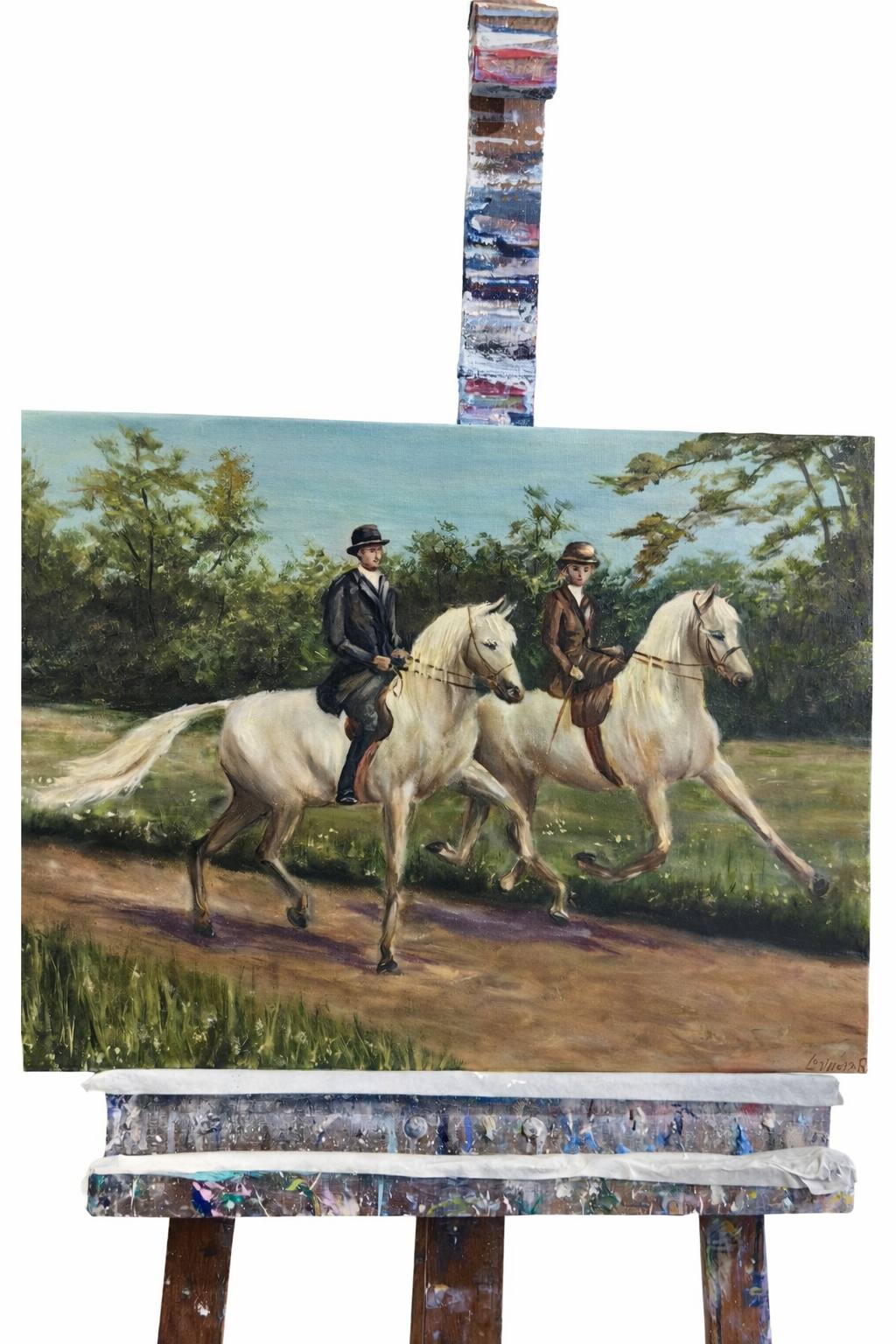
For me, it was an important confirmation that I don’t have to choose a single language. “Scarlett O’Hara’s Tea” is a multi-plane composition depicting people and greyhounds, painted in an academic, at times impressionist manner. “White Horse” is a large portrait of a single horse painted in thick impasto, where the texture rises out of the plane of the canvas. These are two completely different ways for me of thinking about a canvas. When both works were recognized at almost the same time, I understood that the jury responds not to a recognizable style, but to the strength of each individual decision. It’s important to me to preserve that freedom — to work both in multi-figure narrative composition and in dense, textured portraiture — because different ideas require different languages.
— You’ve Also Published a Peer-Reviewed Article on the Psychological Effects of Animal Painting. What Made You Want to Formalize Your Artistic Method in Academic Language, and How Has That Research Fed Back Into Your Work on Canvas?
I wanted to convey that the image of an animal affects the viewer not only aesthetically but also physiologically. Artists often sense this effect intuitively but rarely try to describe it systematically. I wrote the article for a peer-reviewed publication indexed in Google Scholar because it was important to me to get to the heart of the matter from a scientific standpoint. Working on this research made me approach my own decisions on canvas more consciously. Before, I chose many things intuitively; now I can explain exactly why something works, and sometimes that changes the composition itself, because I see more ways to strengthen the effect I’m after.
— Where Do You See Emotional Animal Portraiture Heading Over the Next Several Years — and What Role Do You Want Your Own Method to Play in That Future?
I think the genre will move toward greater psychological specificity — less decorativeness, more state of being. Artists who treat an animal’s emotion as the central subject will set its tone. This is helped by the fact that more is being written now about the perception of art, not only by art historians but by practicing artists themselves, as in my case — giving the genre a language to talk about itself seriously.
As for my own place in this, I want to keep working at the intersection of academic precision and emotional expression. My next project is a series of large-format horse portraits, where the canvas size itself becomes part of the concept: the viewer ends up face to face with the animal rather than looking down at it. That only works in person — video can’t offer it.