Your hands often show stress before the rest of you catches up. One demanding week can turn mild dryness into itching, cracks, swelling, or painful patches that make simple tasks harder.
Stress-related eczema on hands can feel unpredictable, but each flare usually leaves clues. Changes in weather, products, work habits, or sleep can all shape how the skin reacts.
This blog explains what those signs mean and what may be making them worse. It also covers practical ways to calm hand eczema, protect the skin, and reduce the chance of another painful flare.
Disclaimer: This blog is for general information only and is not a substitute for professional medical advice, diagnosis, or treatment. Always consult a licensed dermatologist or healthcare provider before starting any new skincare routine, medication, or treatment for hand eczema.
What is Stress-Related Eczema on Hands?
Stress-related eczema on hands shows up as dry, cracked skin that gets worse during high-pressure weeks.
The pattern varies by person. Some people notice thickened, scaly patches, while others develop small blisters on the palms.
Recognizing the specific pattern matters because dyshidrotic eczema and standard hand eczema may require slightly different care.
The affected skin may also feel itchy, sore, swollen, or sensitive when touched. Repeated scratching can deepen cracks and make everyday activities such as washing, typing, or cooking uncomfortable.
Visual Symptoms of Stress-Related Eczema on Hands
These common symptoms can affect how hand eczema looks and feels, helping you recognize irritation early and understand when your skin may need care and attention.
| Symptom | What it looks like |
|---|---|
| Dryness | Rough, scaly patches that feel tight |
| Discoloration | Red, pink, purple, brown, or gray patches, depending on skin tone |
| Itching | Burning or intense itch, often worse at night |
| Cracks | Painful splits that sting or bleed |
| Thickening | Leathery skin from repeated scratching |
| Swelling | Tenderness and peeling around the knuckles |
Can Stress Actually Cause Eczema on the Hands?
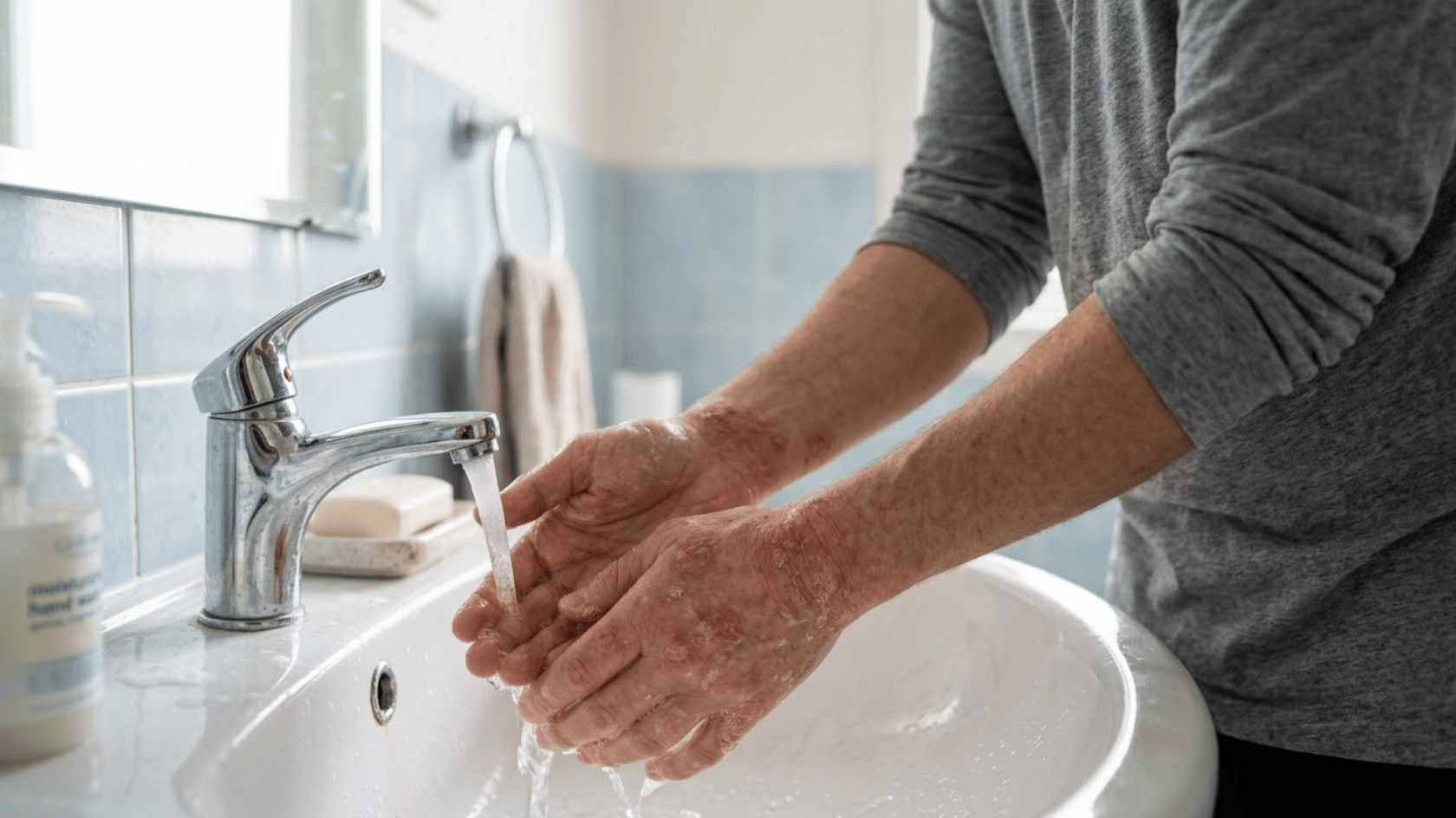
Stress alone rarely starts eczema, but it consistently makes existing flares worse. Cortisol and other stress hormones slow skin-barrier repair and heighten nerve sensitivity, which explains why itching intensifies during tense weeks.
How Stress Affects the Skin Barrier
Stress hormones slow the skin’s ability to heal its outer layer after damage. That weaker layer lets moisture escape faster.
It also lets soap, water, and friction get in more easily. This is why dry hands react harder to daily tasks during stressful weeks.
The Stress and Itch Cycle
Stress raises the urge to scratch. Scratching damages skin cells, which brings more swelling and itching.
Visible cracks or blisters can then add worry on top of the original stress. Breaking this cycle usually means treating the skin and the stress at the same time.
Stress May Not Be the Only Trigger
Eczema often has more than one cause. Before assuming stress is behind a flare, rule out these common contributors like frequent handwashing, cleaning products and solvents, workplace chemicals, allergens such as nickel or latex, cold weather, or heavy sweating
A study published in PMC found a link between higher occupational stress and greater eczema severity, though the relationship isn’t consistent across everyone.
How to Treat Stress-Related Eczema on Hands
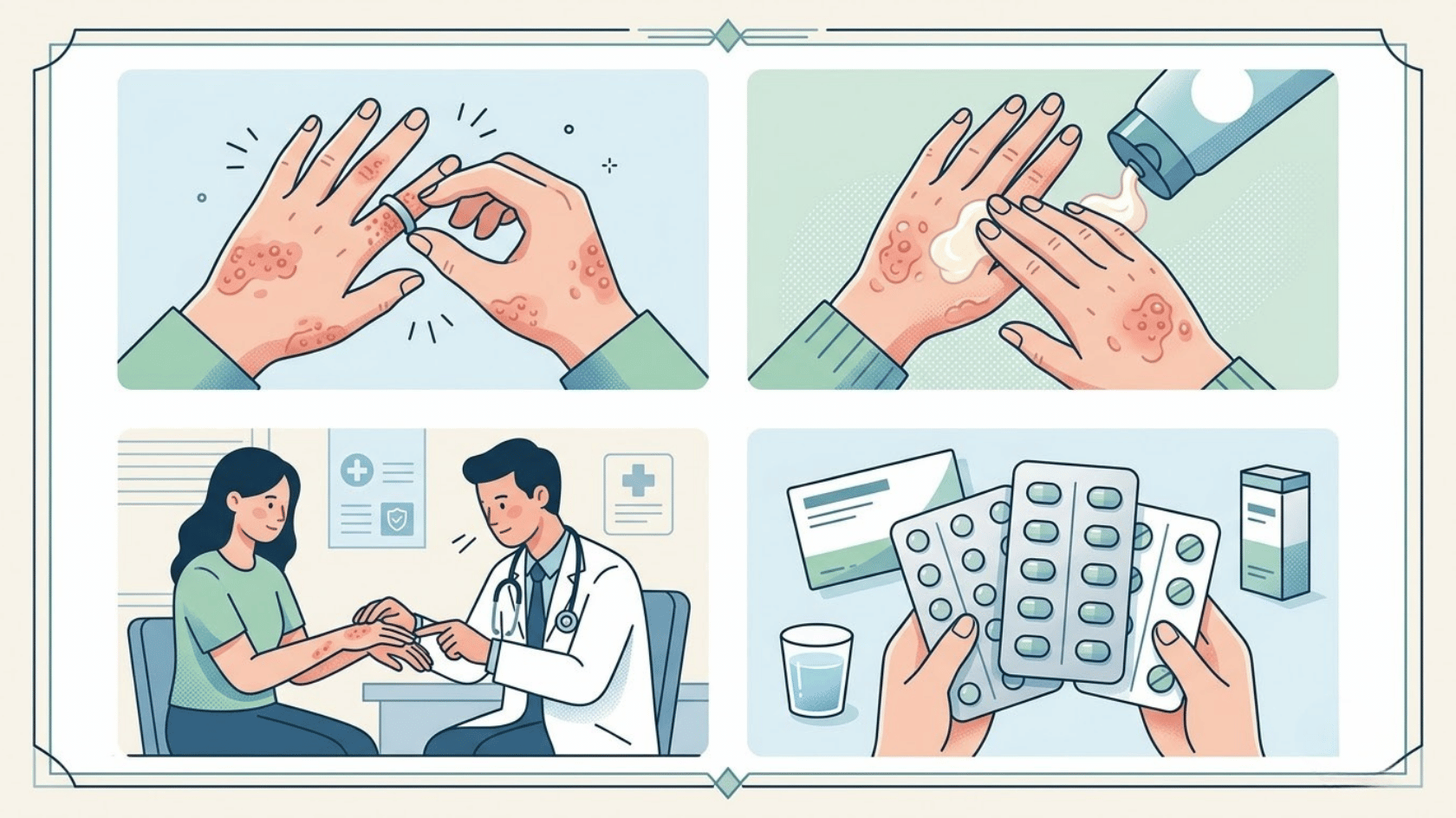
Treating stress-related eczema on hands works best when skin care, medicine, and stress relief happen together.
These steps start with calming an active flare. Then they cover over-the-counter and prescription options, including a new treatment the FDA approved in 2025 for chronic cases.
1. Steps to Calm an Active Flare
Start by removing rings before swelling makes them difficult to take off. Rinse your hands with lukewarm water and wash them gently using a mild, fragrance-free cleanser.
Pat the skin dry instead of rubbing it with a towel. Apply any prescribed medicine directly to the inflamed areas, then use a thick cream or ointment to seal in moisture. A cool compress may help calm severe itching and burning.
2. Best Moisturizers for Hand Eczema
The ingredients in a moisturizer matter more than its price. Thick creams and ointments containing petrolatum, ceramides, glycerin, or dimethicone help repair the skin barrier and reduce moisture loss.
Avoid fragranced lotions, thin creams, and products labeled “unscented,” since they may still contain fragrance-masking ingredients.
Reapply moisturizer after every handwash and use a generous layer before bed, per guidance from the American Academy of Dermatology.
3. Over-The-Counter Treatment Options
A one percent hydrocortisone cream may provide short-term relief for small, mildly inflamed areas. Anti-itch products containing pramoxine may ease discomfort, while colloidal oatmeal formulas may help soothe dry and irritated skin.
Barrier-repair creams containing dimethicone can also protect damaged skin from water and common irritants.
Check the product label before using hydrocortisone for longer than one or two weeks, and speak with a pharmacist before combining several treatments.
4. Prescription Creams and Ointments
Dermatologists often move to prescription-strength options when over-the-counter care isn’t enough. These include steroid creams, calcineurin-inhibitor creams, and other nonsteroidal creams.
Antibiotic or antiviral treatment applies only if a doctor confirms an infection. The skin on the palms is thicker than skin on the face, so it often needs a stronger cream to work.
5. Treatment for Chronic or Severe Eczema
When standard treatment doesn’t control the condition, a dermatologist may order patch testing for allergic contact dermatitis.
Phototherapy or an oral medication may also be an option. In July 2025, the FDA approved a new cream called Anzupgo (delgocitinib) 2%.
It treats adults with moderate-to-severe chronic eczema. It’s meant for people who haven’t responded well to steroid creams, or who can’t use steroids at all.
A Daily Hand Eczema Self-Care Routine
A simple hand-care routine can help protect irritated skin, reduce dryness, and support healing while limiting common triggers that may worsen discomfort during daily activities.
- Wash gently: Use lukewarm water and a fragrance-free cleanser. Pat your hands dry instead of rubbing, then apply a thick moisturizer.
- Treat active patches: Apply any prescribed cream exactly as directed to irritated areas.
- Protect your hands during wet work: Wear waterproof gloves for washing dishes, cleaning, or other water-heavy tasks. Replace them if they become damp inside.
- Moisturize before bed: Apply a thick ointment at night to help reduce dryness and support the skin barrier.
- Ease itching safely: Use a cool compress instead of scratching, and keep your nails short to reduce skin damage.
How to Reduce Stress-Triggered Hand Eczema Flares

Managing the stress side of hand eczema takes a different approach than treating the skin directly.
These areas tracking personal patterns, short daily stress-reduction habits, and behavioral support for scratching work together, and the right combination depends on what’s actually triggering each flare.
1. Identify Personal Stress Patterns
A simple log works better than guesswork. Track stressful events, new products, work exposures, weather changes, and symptoms for two to three weeks, then look for repeated timing.
A flare that shows up every Monday after a chemical-heavy cleaning shift points to more than stress alone.
2. Use Brief Daily Stress-Reduction Techniques
Simple habits can help lower stress during the day.
Try five minutes of slow breathing, short mindfulness breaks, regular physical activity, a consistent sleep schedule, and planned pauses during demanding work periods.
3. Behavioral Support for The Itch-Scratch Cycle
When scratching becomes automatic, skin care alone often isn’t enough. Cognitive behavioral therapy and habit-reversal training teach ways to stop the urge to scratch before it starts.
Biofeedback and counseling can help too. A primary care doctor can give a referral for any of these.
What Improvement Usually Looks Like?
Eczema rarely clears overnight. Itching and redness may ease first, while cracks, peeling, and thickened skin can take longer to heal.
Progress is not always steady, and a brief flare does not mean treatment has failed. What matters is that symptoms become less intense, happen less often, and interfere less with daily life.
Do not pick at it and follow the treatment provided by your doctor. Picking on it can cause bleeding and infections.
When to See a Dermatologist?
Diagnosing it starts with a physical exam; testing comes next if the cause isn’t clear. Patch testing finds skin allergies that trigger flares.
See a dermatologist if the rash does not improve, keeps returning, or starts affecting sleep, work, or daily hand use.
Deep cracks, bleeding, widespread blisters, an unclear cause, or repeated need for over-the-counter treatment also deserve medical attention.
Get same-day care if you notice pus, yellow crusting, spreading redness, increasing warmth, swelling, severe pain, fever, or clusters of painful sores. These may be signs of an infection.
The Bottom Line
Your hands do not need a perfect routine. They need a consistent one built around gentle washing, reliable moisture, fewer irritants, and early action when symptoms begin.
Stress-related eczema on hands may return, but it does not have to control your week.
Paying attention to small changes can help you respond before dryness turns into cracking, swelling, or soreness.
Once you recognize your patterns, eczema becomes less confusing and easier to handle. Steady care, realistic stress control, and medical support when needed can make daily life far more comfortable.
Frequently Asked Questions
Can Fasting Help with Eczema?
Evidence is limited and mostly from small studies, but some show short-term drops in inflammation markers during fasting periods. No large trials confirm lasting benefit for eczema specifically, and rebound flares can follow when normal eating resumes.
What are the Best Vitamins for People with Eczema?
Vitamin D and omega-3 (fish oil) have the most consistent, though still modest, research support for reducing eczema severity. zinc and vitamin e show weaker evidence; check with a doctor before starting any supplement, since dosing and interactions matter.
Can Coconut Oil Help with Eczema?
Virgin coconut oil has decent trial support: a 2014 randomized study found it improved skin hydration and reduced eczema severity better than mineral oil. It also has mild antibacterial action against Staphylococcus aureus, a bacterium that often worsens flares.