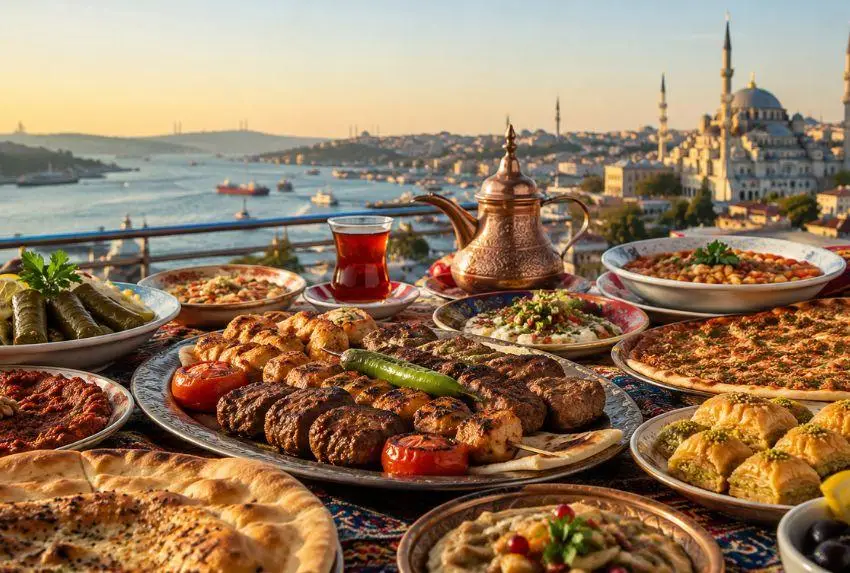
Turkish cuisine is much more than kebabs. It brings together charcoal-grilled meats, fresh vegetables, handmade breads, creamy yogurt, olive oil, fragrant spices, and syrup-soaked desserts. If you are visiting Turkey for the first time, begin with a traditional breakfast, then try street foods such as simit and lahmacun before exploring regional dishes like mantı, İskender kebab, and baklava.
The best Turkish food experiences are often connected to place. Istanbul is ideal for street food and seafood, Bursa is known for İskender kebab, Gaziantep is famous for pistachio-rich baklava, and the Aegean region offers lighter dishes based on vegetables and olive oil.cnn+1
Turkish Food Is More Than Kebabs
Many visitors arrive in Turkey expecting every meal to revolve around grilled meat. Kebabs are certainly an important part of the cuisine, but they represent only one part of a much wider food culture.
A typical Turkish meal may include fresh bread, yogurt, salads, small meze dishes, slow-cooked vegetables, rice, soup, and tea. Breakfast is often a generous spread rather than a single plate. At local restaurants, you may find trays filled with stews, stuffed vegetables, pastries, and grilled dishes prepared for the day.
Start With a Traditional Turkish Breakfast
Menemen
Menemen is a popular Turkish breakfast made with eggs, tomatoes, and green peppers. The ingredients are cooked together in a small pan until the eggs are soft and creamy. Some restaurants add onions, cheese, or sucuk, a spicy cured sausage.
The dish is usually served with fresh bread, which is used to scoop up the tomato and egg mixture. It is simple, warm, and filling without feeling too heavy, making it an excellent first meal after arriving in Turkey.
Kahvaltı
A traditional Turkish breakfast, known as kahvaltı, is more of a table full of small dishes than a single recipe. You may receive white cheese, olives, tomatoes, cucumbers, boiled eggs, butter, honey, jam, bread, and sometimes clotted cream or pastries.
Breakfast is rarely rushed. Locals often sit with tea and continue eating and talking for a long time. For travelers, this is a good opportunity to slow down and enjoy the social side of Turkish food rather than treating breakfast as something to finish quickly.
Street Foods to Try While Exploring
Simit
Simit is a round, sesame-covered bread found on street carts, in bakeries, and near ferry stations. It has a crisp, golden crust and a soft, chewy center.
Many people eat simit with cheese, olives, or tea. It is inexpensive and easy to carry, so it is perfect for a busy morning in Istanbul or a quick snack between sightseeing stops.
Lahmacun
Lahmacun is a thin, round piece of dough topped with minced meat, tomatoes, peppers, herbs, and spices. It is baked in a hot oven and usually served with lemon, parsley, and onion.
To eat it the traditional way, add the fresh herbs and a squeeze of lemon, then roll it up. A well-prepared lahmacun should be light and crisp around the edges rather than thick like a heavy pizza.
Balık Ekmek
Balık ekmek means “fish in bread.” It is a simple sandwich made with grilled or fried fish, salad, and onion. In Istanbul, it is closely associated with the waterfront, especially areas where visitors can eat outdoors while watching ferries move across the Bosphorus.
Kumpir
Kumpir is a large baked potato split open and mixed with butter and cheese. It is then loaded with toppings such as corn, olives, pickles, vegetables, sausage, and Russian salad.
If your travel plans include Turkey Tours, add a few local food stops instead of visiting only famous restaurants. A neighborhood bakery, small lokanta, or busy street stall may offer a more authentic taste of daily life than a formal dining room.
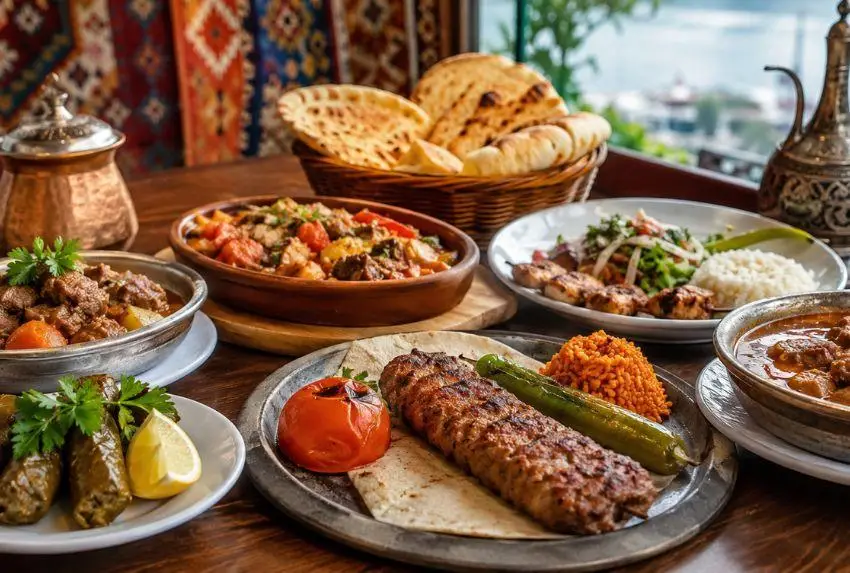
Main Dishes Every Traveler Should Know
Adana Kebab
Adana kebab is made from hand-minced meat, usually lamb, mixed with red pepper and seasonings before being grilled over charcoal. It is traditionally served with flatbread, grilled tomatoes, peppers, onions, and sometimes bulgur.
The meat should be juicy, smoky, and slightly spicy. It is very different from heavily sauced kebabs found in many international restaurants because the focus remains on the meat and charcoal flavor.
Şiş Kebab
Şiş kebab consists of marinated pieces of meat grilled on a skewer. Chicken, lamb, and beef versions are common, and the dish usually arrives with bread, rice, bulgur, or grilled vegetables.
The quality depends greatly on how the meat is cooked. Good şiş kebab should be tender with light charring on the outside. If it is dry or overly seasoned, the restaurant has probably relied on spices to hide poor preparation.
İskender Kebab
İskender kebab originated in Bursa and is made with thinly sliced döner meat placed over pieces of pide bread. It is finished with tomato sauce, melted butter, and yogurt.
This is a rich and comforting dish because the bread absorbs the sauce and meat juices. It is best eaten immediately, while the butter is still warm and the yogurt provides a cool contrast.
Mantı
Mantı are small dumplings filled with seasoned minced meat and served with garlic yogurt. Melted butter, dried mint, and red pepper are often added on top.
The dumplings are traditionally small and require considerable preparation, which gives the dish a homemade quality. The combination of soft dough, savory filling, sharp garlic yogurt, and warm butter makes mantı one of the most distinctive foods in Turkish cuisine.
Pide
Pide is a boat-shaped flatbread topped with ingredients such as cheese, minced meat, sucuk, vegetables, or eggs. It is baked until the edges are crisp while the middle remains soft.
Cheese-and-egg pide is a good choice for breakfast or a light lunch. Meat-topped versions are more substantial and are often served with salad, pickles, or ayran.
Turkish Desserts Worth Trying
Baklava
Baklava is made from thin layers of pastry filled with pistachios or walnuts and covered with syrup. Gaziantep is particularly well known for its pistachio baklava.
Fresh baklava should be crisp and delicate rather than soggy. The syrup should add sweetness without completely overpowering the buttery pastry and nut filling.
Künefe
Künefe combines shredded pastry with soft, lightly salty cheese, syrup, and pistachios. It is served hot, so the cheese remains soft and stretchy when the dessert is cut.
The contrast between crisp pastry, melted cheese, sweet syrup, and pistachios makes künefe unlike most other desserts. It is rich, so ordering one portion to share is often the best option after a large meal.
Turkish Delight and Dondurma
Lokum, commonly called Turkish delight, is a soft sweet made from sugar and starch. It may contain pistachios, hazelnuts, dried fruit, or rose flavoring.
Dondurma, or Turkish ice cream, has a thicker and chewier texture than ordinary ice cream. Street vendors are also known for playful serving routines, often using long metal paddles to entertain customers before handing over the cone.
How to Eat Like a Local
Do not limit yourself to restaurants with large English menus. Some of the best food is served in small family-run restaurants, bakeries, market stalls, and neighborhood cafés.
A few simple habits can improve your experience:
- Ask what has been prepared fresh that day.
- Visit bakeries in the morning for simit, börek, and warm bread.
- Order several meze dishes to share.
- Try ayran with grilled meat, pide, or lahmacun.
- Drink Turkish tea after a meal.
- Choose regional specialties whenever you know which city is associated with them.
- Visit popular stalls during busy hours, when the food is more likely to be fresh.
Key Takeaways for Exploring Turkish Cuisine
Turkish food is a combination of regional traditions, seasonal ingredients, and shared meals. Begin with menemen and kahvaltı, then try simit, lahmacun, balık ekmek, and kumpir while exploring the streets.
For main meals, look for Adana kebab, şiş kebab, İskender kebab, mantı, and pide. Save room for baklava or künefe, but do not overlook soups, olive-oil vegetables, yogurt, bread, and meze.