Curly hair can look different from one wash day to the next. One day the curls feel soft and defined, while another brings flat roots, dry ends, tangles, or unexpected frizz.
A reliable routine does not need dozens of products or strict rules.
The most consistent results usually come from gentle cleansing, regular conditioning, careful detangling, styling while the hair is wet, and allowing the curls to dry without constant touching.
The right routine will depend on factors such as scalp condition, strand thickness, curl pattern, porosity, and climate. Even so, the basic order remains simple.
Once each step has a clear purpose, it becomes easier to adjust product amounts, washing frequency, and styling methods without changing the entire routine whenever the hair behaves differently over time and across seasons.
Let’s see how to take care of your curly hair!
Why Curly Hair Needs a Different Care Routine
Curly hair often becomes dry faster than straight hair because natural scalp oils have a harder time moving down bends and spirals. The roots may feel comfortable or even oily while the ends still feel rough.
The shape of curly strands also makes them more likely to tangle. Rough brushing, towel rubbing, and frequent heat can weaken areas where the hair bends.
This is why curly hair generally responds well to:
- Gentle scalp cleansing
- Regular conditioning
- Detangling with plenty of slip
- Low-friction drying
- Styling while wet
- Reduced heat
- Protection during sleep
Not all curly hair is naturally dry, though. Some people have fine curls and oily scalps that need frequent cleansing.
Know Your Curls Before Choosing a Routine
Curl type matters, but it is only one part of building the right routine. Pay attention to how your hair feels, dries, and responds to products.
Curl Pattern: Hair may range from loose waves to tight curls and coils, with several patterns often appearing together. Loose curls usually need lighter products, while tighter curls may need more moisture.
Strand Thickness: Fine strands can be easily weighed down, so lightweight products often work best. Coarse strands may need richer conditioners and creams to stay soft.
Hair Density: Low-density hair may look flat with too much product. High-density hair often needs sectioning so water and products reach every area.
Hair Porosity: Low-porosity hair may resist water and product absorption. High-porosity hair absorbs moisture quickly but may lose it just as fast.
Scalp Condition: Watch for oiliness, dryness, itching, flakes, sweat, buildup, tenderness, or unusual shedding. Base your wash schedule on scalp comfort rather than a fixed rule.
Essential Products and Tools for Curly Hair
Beginners do not need a crowded shelf. A few useful products and tools are enough to build a reliable routine.
| Product or Tool | Main Purpose |
|---|---|
| Gentle shampoo | Removes oil, sweat, dirt, and product residue |
| Rinse-out conditioner | Softens the hair and provides slip |
| Leave-in conditioner | Helps curls stay soft after washing |
| Curl cream | Adds moisture and supports curl shape |
| Mousse or foam | Adds light hold and volume |
| Styling gel | Helps curls stay defined for longer |
| Wide-tooth comb | Removes tangles with less pulling |
| Microfiber towel or cotton shirt | Absorbs water with less friction |
| Diffuser attachment | Dries curls while supporting their shape |
| Satin bonnet or pillowcase | Reduces friction during sleep |
A simple beginner routine can work with only shampoo, conditioner, one styling product, and a cotton shirt or microfiber towel.
It is often easier to add products later than to begin with several layers and then struggle to work out which one is causing buildup.
How to Take Care of Curly Hair: Step by Step
A good wash-day routine helps curls stay soft, defined, and easier to manage. After years of caring for my curls, I have learned that gentle handling matters just as much as the products used.
Step 1: Prepare and Wet the Hair
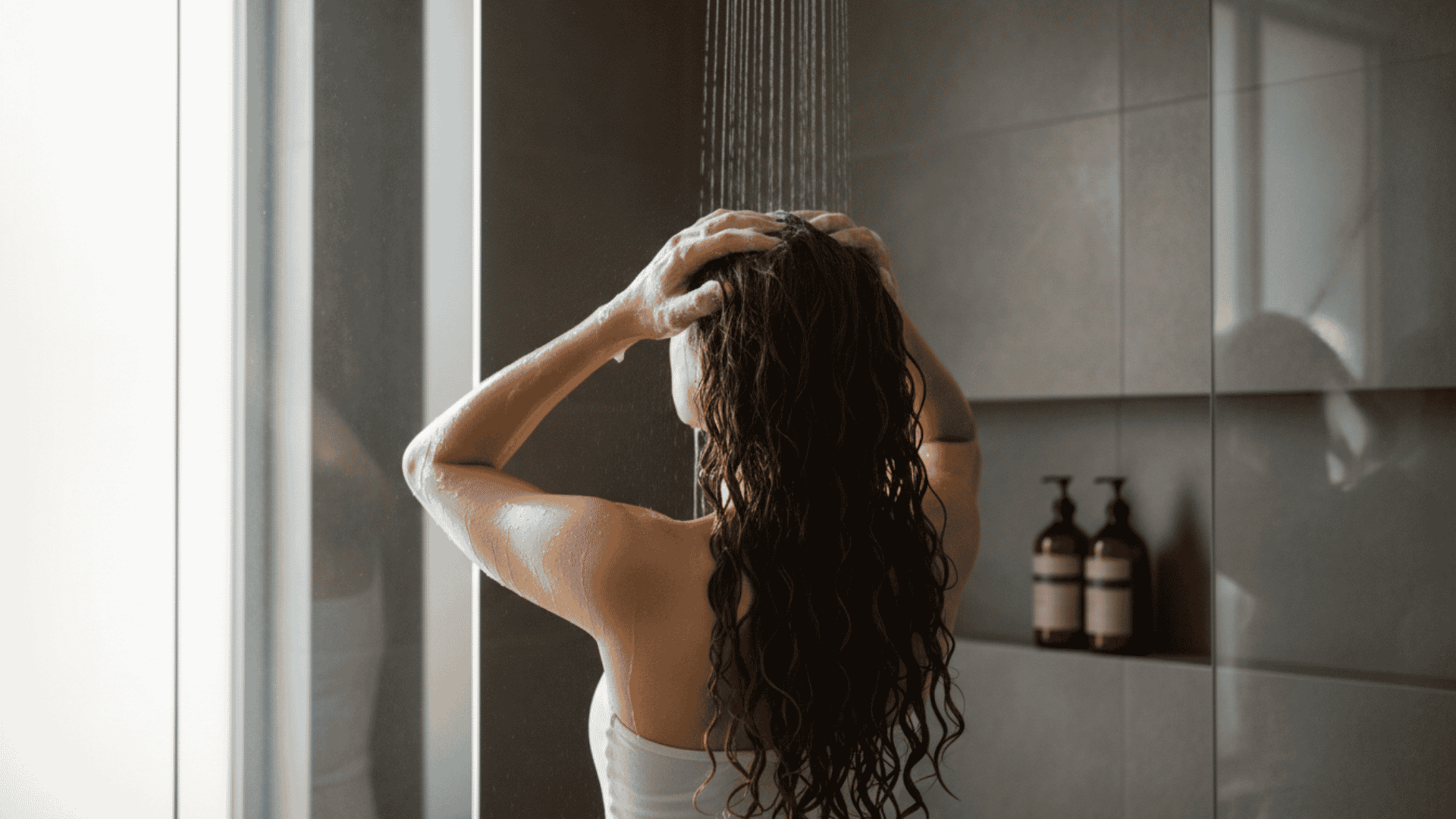
Separate large knots gently with your fingers and apply a little conditioner to dry ends if needed. Then soak the hair fully with lukewarm water, making sure it reaches the scalp without rubbing the lengths together.
My Advice: Divide thick or dense hair into two to four loose sections before stepping into the shower. This helps water reach hidden areas near the crown and nape more evenly.
Step 2: Clean the Scalp
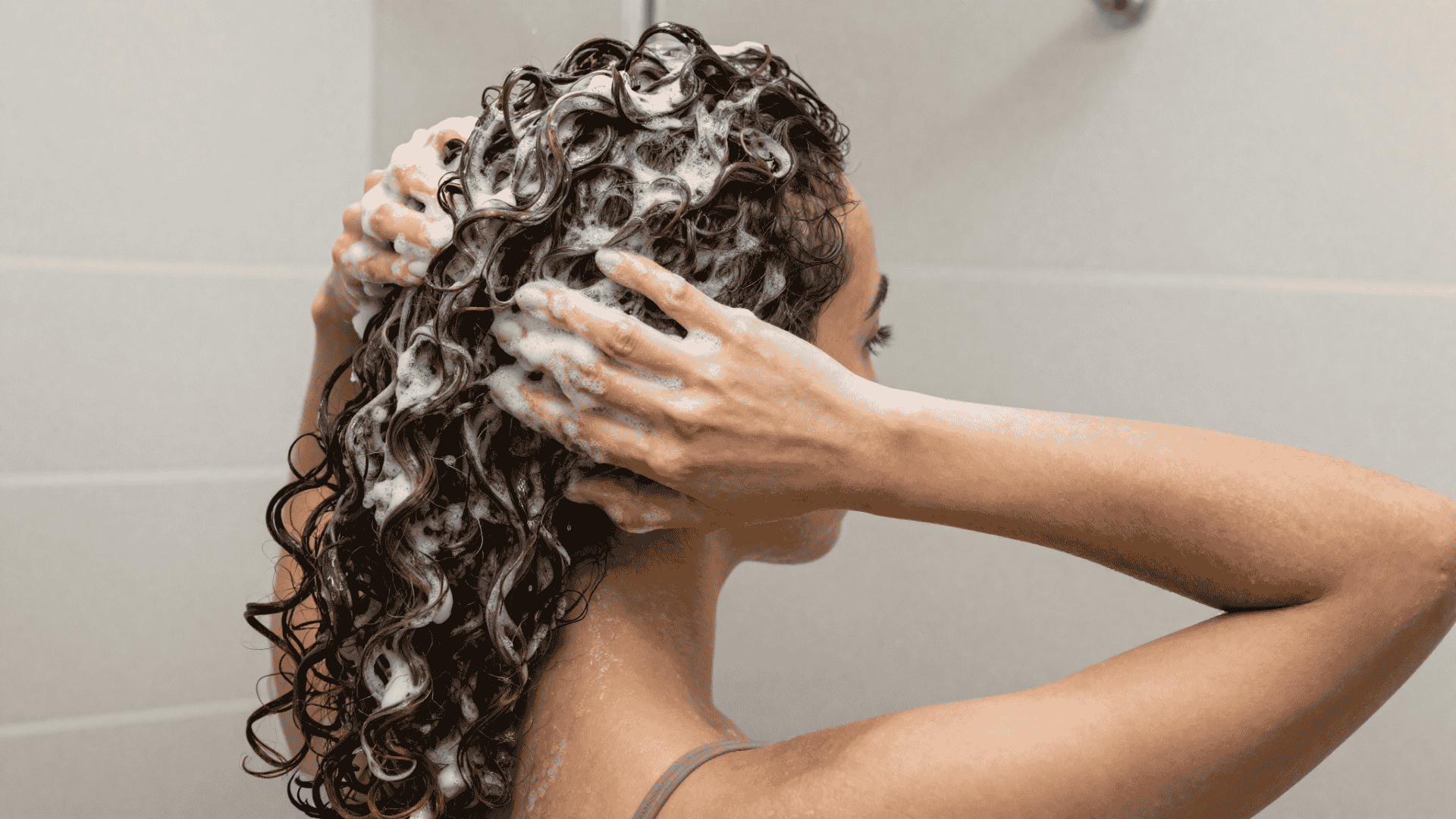
Apply shampoo mainly to the scalp and massage with your fingertips. Let the cleanser rinse through the ends instead of scrubbing them.
Shampoo twice only when there is heavy oil or product buildup.
My Advice: Emulsify the shampoo between wet palms before applying it. This spreads the cleanser more evenly and prevents one area of the scalp from receiving too much product.
Step 3: Condition and Detangle
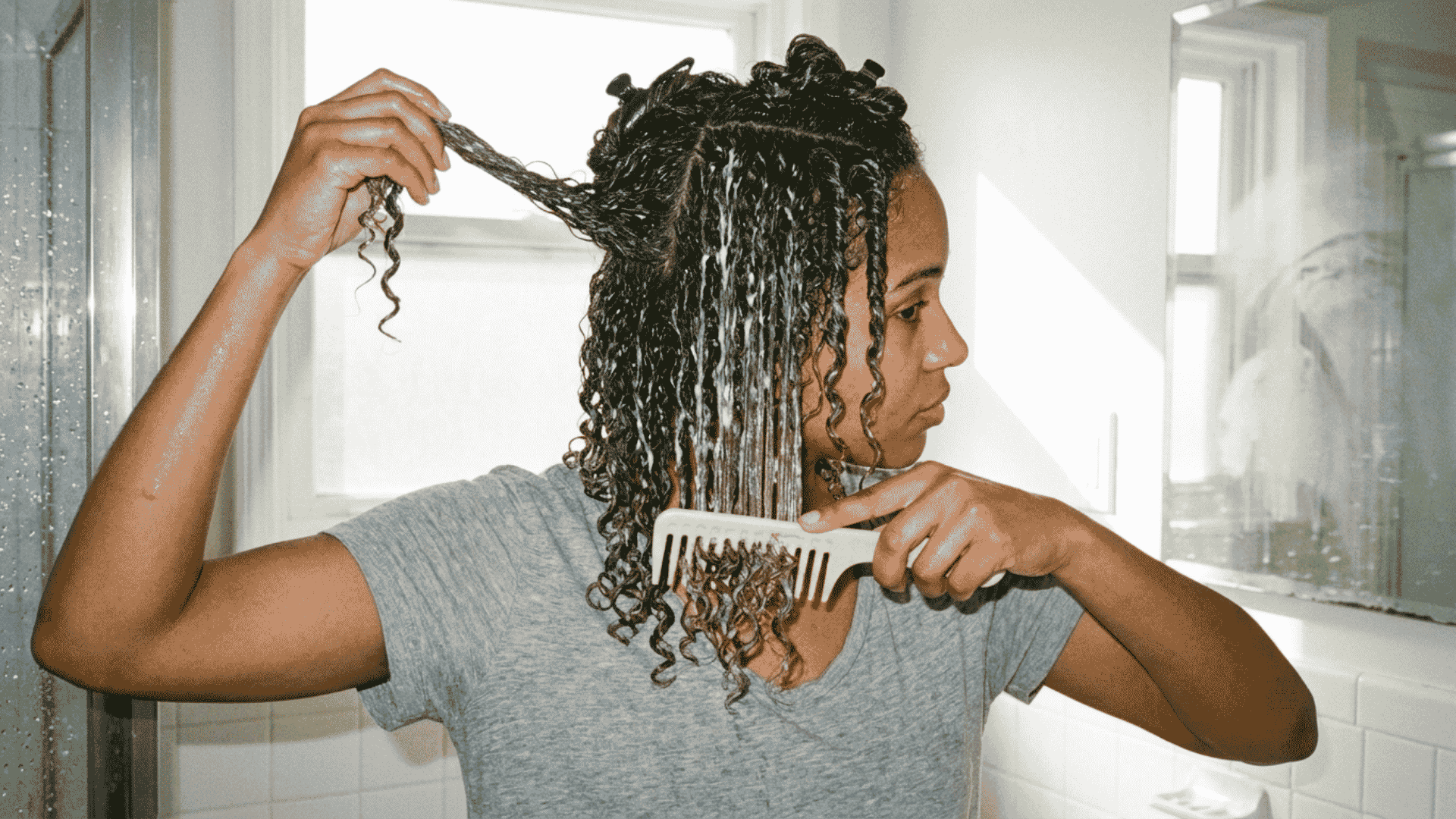
Apply conditioner through the middle and ends, then detangle from the ends upward using your fingers, a wide-tooth comb, or a detangling brush.
Add more water or conditioner instead of forcing through knots.
My Advice: Twist or clip each detangled section loosely before moving to the next one. This prevents finished sections from tangling again while you work through the rest of the hair.
Step 4: Rinse and Apply Styling Products
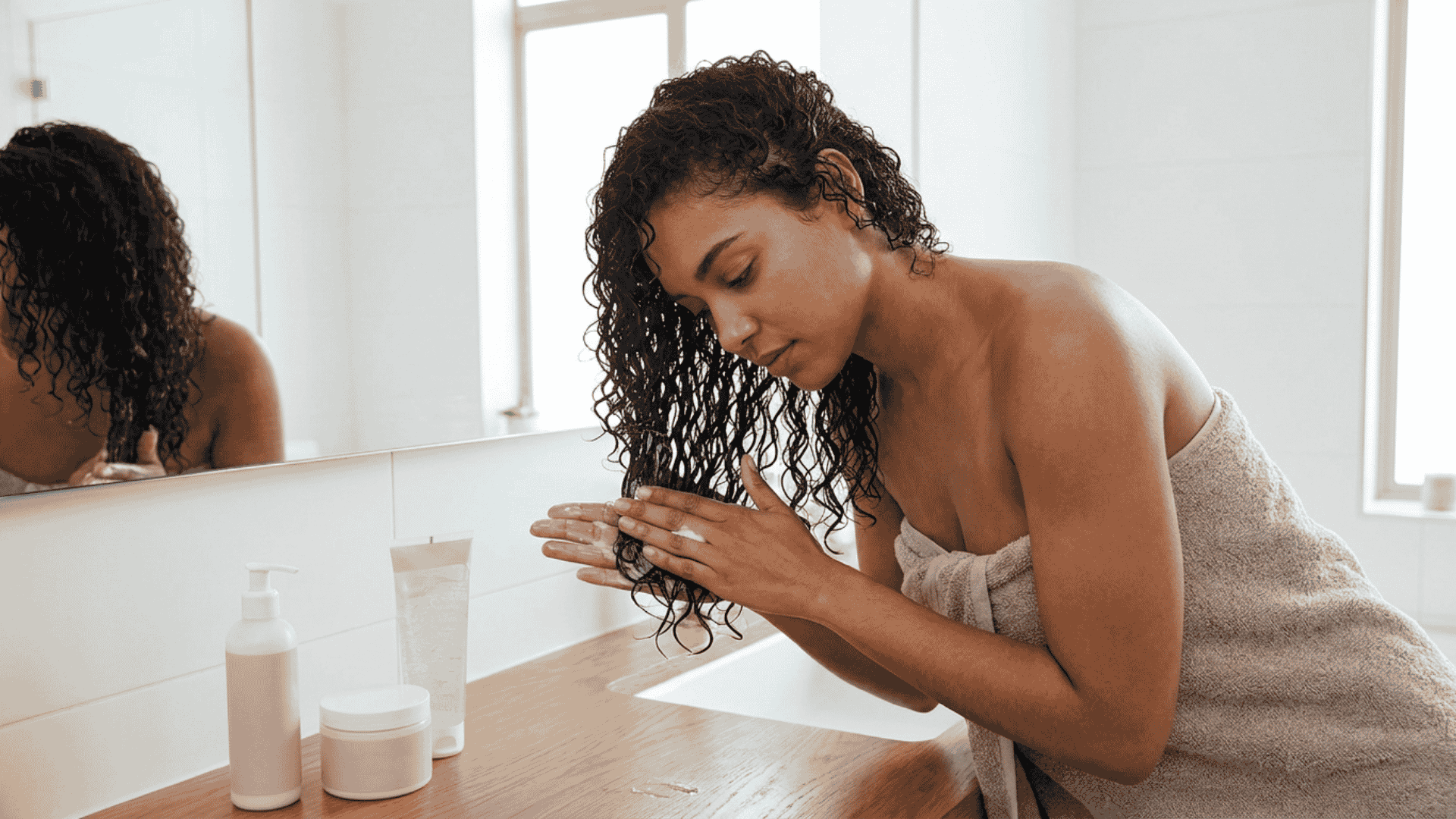
Rinse gently without twisting or rubbing the curls. While the hair is still wet, apply products in this order:
- Leave-in conditioner
- Curl cream or mousse
- Styling gel
Fine curls may need fewer products, while dry or coarse curls may benefit from richer layers.
My Advice: Rub each styling product between your palms before applying it, and watch for flaking or small white clumps. These signs may mean the layered products do not mix well together.
Step 5: Shape the Curls
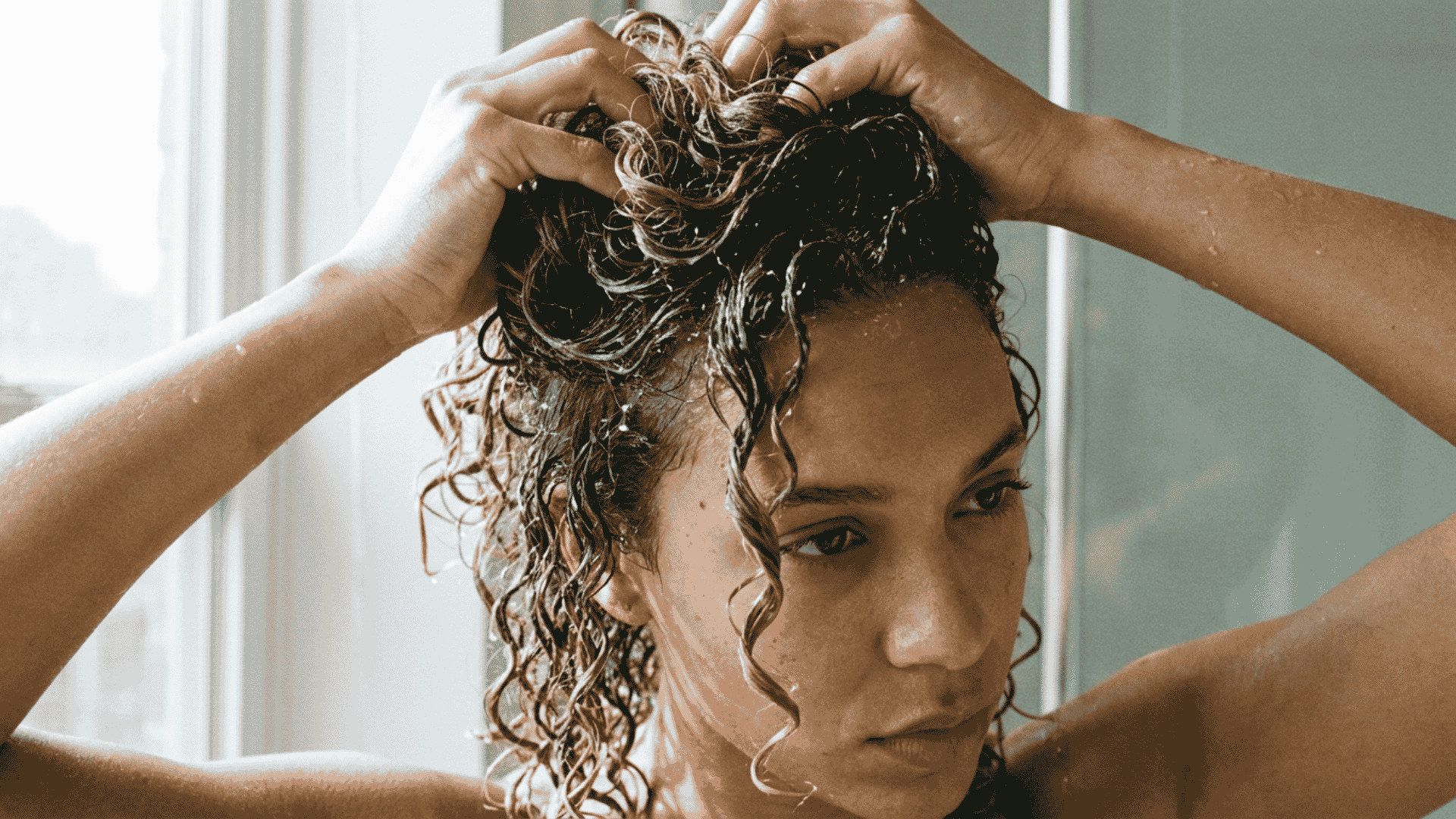
Smooth the products through the hair and scrunch upward toward the scalp. Add water when sections look dry or stringy, and finger-coil only the curls that need extra shape.
My Advice: Style the front and crown in the direction you want them to dry. This can prevent awkward gaps, an uneven part, or curls falling into the face later.
Step 6: Remove Excess Water or Plop
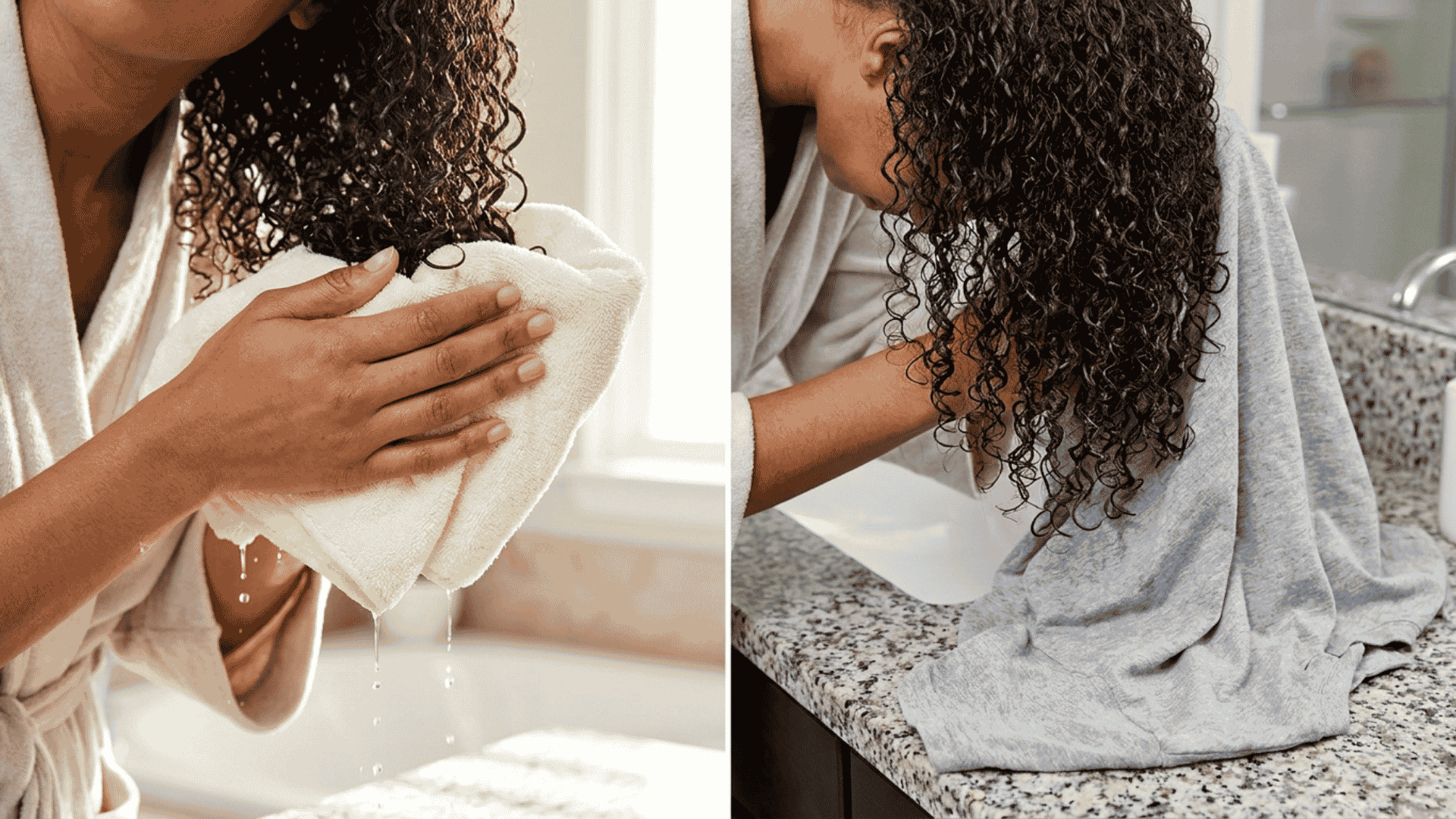
Use a cotton T-shirt or a microfiber towel to cup and squeeze the curls gently. You can also plop the hair loosely for 10 to 20 minutes, though shorter times may work better for curls that flatten easily.
My Advice: Use a clean towel or cotton shirt without fabric-softener residue. Fabric softener can leave a coating that may transfer to the curls and affect product performance.
Step 7: Dry Without Touching
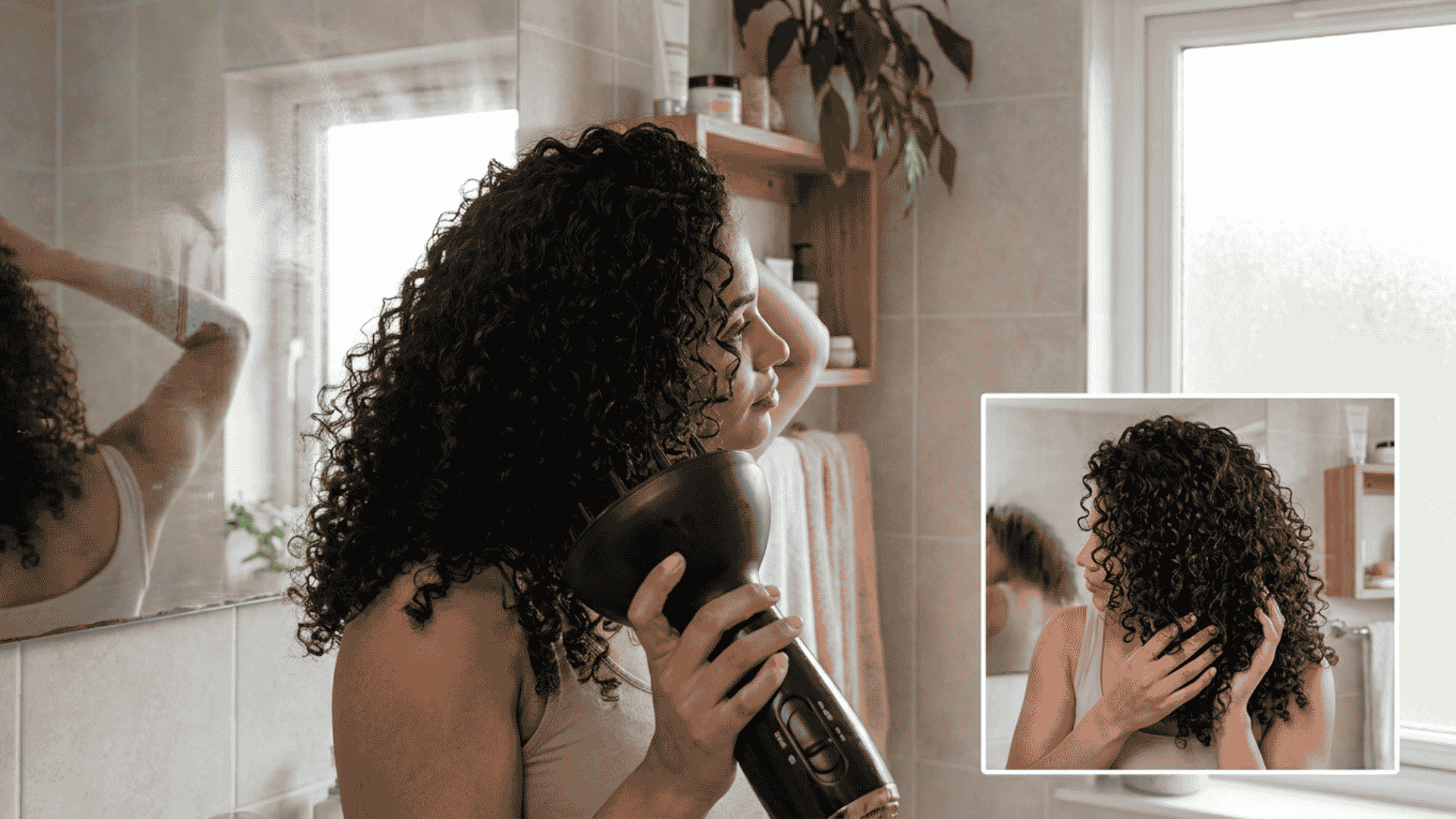
Air-dry or use a diffuser with low airflow and low or moderate heat. Leave the curls untouched until fully dry.
If the gel forms a firm cast, scrunch it gently with clean hands to soften the finished curls.
My Advice: When diffusing, hover near the hair first until the outer curl shape begins to set. Cup the curls afterward to reduce movement and protect definition.
How Often Should You Wash Curly Hair?
There is no single wash schedule that works for all curly hair.
I have used different schedules at different points depending on weather, exercise, hair length, and the styling products in my routine.
| Hair or Scalp Condition | Possible Washing Approach |
|---|---|
| Oily or sweaty scalp | Cleanse more often with a gentle shampoo |
| Dry curls with a comfortable scalp | Leave more time between washes |
| Frequent exercise | Rinse, refresh, or cleanse when sweat collects |
| Heavy product buildup | Use a stronger cleansing wash when needed |
| Fine curls that become flat | Wash before oil and residue weigh them down |
| Tight or coarse curls | Focus cleanser on the scalp and condition the lengths |
Wash when the scalp feels oily, itchy, sweaty, or coated. Waiting longer is not always better.
The lengths can be protected by concentrating shampoo at the roots and using enough conditioner afterward.
Shampoo, Co-Wash, or No-Poo: Which Method is Better?
Choose a cleansing method based on your scalp, dryness, and product buildup.
- Gentle Shampoo: Best for regular cleansing, sweat, oil, and light residue. Sulfate-free formulas may feel milder, but the full formula matters most.
- Co-Wash: Useful for very dry curls between shampoo days, though it may weigh down fine or oily hair.
- No-Poo: Avoids traditional shampoo; itching, flat roots, or coated hair may indicate the scalp needs proper cleansing.
- Clarifying Shampoo: Removes stubborn buildup when curls feel dull, heavy, or difficult to style. Use occasionally and follow with conditioner.
The best method is the one that leaves your scalp clean without making your curls feel dry.
How to Add Volume Without Causing Frizz
Root volume is easier to create when the curls are left undisturbed until they begin to set.
| Do This | Avoid This |
|---|---|
| Apply lightweight mousse near the crown | Place rich creams or oils on the roots |
| Tilt the head while styling | Style every section in one downward direction |
| Add root clips while the hair dries | Press the roots flat with a towel |
| Diffuse the roots before the ends | Use strong or constant airflow |
| Change the part once the roots begin drying | Move the curls repeatedly while they are wet |
| Lift the roots gently after the hair is dry | Separate curl clumps before they set |
Once the curls are completely dry, slide clean fingers beneath the roots and lift gently. This adds fullness without disturbing the definition through the lengths.
How to Refresh Curly Hair Between Washes
Use this simple formula when curls look flat, stretched, or frizzy:
Water → Product → Shape → Dry
Water: Lightly dampen only the sections that need help using wet hands or a spray bottle. There is no need to soak the entire head unless most of the curls have lost their shape.
Product: Mix a small amount of leave-in conditioner, mousse, or gel with water, then smooth it over the damp areas. Too much cream or oil can create buildup and flat roots.
Shape: Scrunch the curls upward or finger-coil individual pieces around the face, crown, and ends.
Dry: Leave the curls untouched until fully dry, or use a low-heat diffuser with gentle airflow.
How to Adjust the Routine for Different Curl Needs
A routine should respond to the hair rather than force the hair to fit a fixed method.
| Curl Need | Helpful Adjustment |
|---|---|
| Fine or easily flattened curls | Use light leave-in, mousse, or gel and limit oils |
| Thick or coarse curls | Work in sections and use a richer conditioner |
| Low-porosity hair | Apply light layers and avoid excess product |
| High-porosity or damaged hair | Use stronger conditioning and reduce heat |
| Loose waves | Use fewer products and keep heavy cream off the roots |
| Tight curls or coils | Prioritize moisture, sectioning, and gentle handling |
| Oily scalp with dry ends | Clean the scalp and condition only the lower lengths |
| Color-treated curls | Use color-safe products and lower styling temperatures |
Try changing one part of the routine at a time. When several products and methods change together, it becomes difficult to tell what helped.
Weekly and Monthly Curly Hair Maintenance
Regular upkeep helps prevent dryness, buildup, and damaged ends.
- Deep Condition: Use a rich mask when curls feel rough, tangled, or unusually dry. Fine hair may need it less often.
- Clarify Buildup: Use a clarifying shampoo when roots feel coated, curls look flat, or styling products stop working well.
- Use Protein Carefully: Protein treatments may help weakened or color-treated hair, but too much can make curls feel stiff or brittle.
- Clean Hair Tools: Wash brushes, combs, bonnets, and scarves regularly to remove oil and product residue.
- Trim Damaged Ends: Book a trim when the ends split, knot easily, look thin, or no longer hold their curl shape.
Common Curly Hair Mistakes and How to Fix Them
Small routine mistakes can lead to frizz, buildup, flat roots, dryness, or weak curl definition. Use the table below to identify the likely cause and make one change at a time.
| Problem or Mistake | Likely Cause | Quick Fix |
|---|---|---|
| Hair feels greasy or coated | Too much product or poor cleansing | Clarify and apply less product |
| Curls dry flat | Heavy products near the roots | Use lighter stylers and reduce root application |
| Frizz appears while drying | Touching, towel friction, or high airflow | Leave curls alone and diffuse gently |
| Hair feels crunchy | Gel cast or too strong a hold product | Scrunch only after the hair is fully dry |
| Curls look thin or stringy | Too little water or uneven styling | Add water and reform curl clumps |
| Ends stay rough | Dryness, damage, or split ends | Condition well and consider a trim |
| Curls flatten overnight | Friction or sleeping with wet hair | Dry fully and use satin protection |
| Scalp feels itchy | Buildup or product irritation | Cleanse properly and review products |
| Hair feels soft but loses shape | Too much conditioning or a weak hold | Use less cream and add mousse or gel |
| Hair feels stiff and tangled | Buildup or too much protein | Clarify and pause protein treatments |
Avoid very hot water, rough towels, heavy product layers, and changing several products after one poor wash day.
Weather, hormones, buildup, and damage can also affect results, so one bad curl day does not mean the full routine has failed.
Final Thoughts
Healthy curls come from balancing cleansing, moisture, styling, and protection rather than relying on one product or method.
A gentle wash keeps the scalp comfortable, conditioner makes detangling easier, and styling on wet hair helps curls form with better definition.
Drying with less friction, refreshing only the areas that need help, and protecting curls overnight can also make each wash day last longer.
Regular clarifying, deep conditioning, tool cleaning, and timely trims support the routine over time.
When problems appear, use the result as a clue: buildup may need cleansing, flat roots may need lighter products, and rough ends may need more moisture or a trim.
Make small changes, stay consistent, and give your curls time to respond. Share your curl type and most helpful care tip in the comments below.
Frequently Asked Questions
Why is the Top Layer of My Curly Hair Frizzier?
The top layer receives more sun, heat, friction, touching, and weather exposure. Use gentle handling, enough styling product, and protection from rough fabrics.
Can Curl Pattern Change with Age or Hormonal Changes?
Yes. Curl pattern and texture can change over time because of hormones, aging, health changes, medication, pregnancy, damage, or changes in hair length.
How Long Should I Test a New Curly Hair Routine?
Try a routine for several wash days unless it causes irritation, heavy buildup, or obvious dryness. Change one product or technique at a time.
Why are Some Parts of My Hair Curlier than Others?
Mixed curl patterns are common. Genetics, damage, growth direction, strand thickness, and daily friction can make sections behave differently.