Curtain bangs can soften your haircut, frame your face, and add movement without the commitment of a full fringe.
However, they do not always fall into place after washing or sleeping.
Knowing how to style curtain bangs starts with controlling the roots. Once the hair is moving in the right direction, creating the soft outward curve becomes much easier.
You do not need a salon full of tools to get the look at home.
A blow dryer, round brush, heat protectant, and lightweight styling product are often enough. Flat irons, curling irons, rollers, and heat-free methods can also create different levels of volume and shape.
The aim is soft lift, natural movement, and a face-framing finish that blends smoothly into the rest of your haircut.
What are Curtain Bangs?
Curtain bangs are a soft, parted fringe with shorter pieces near the center and longer layers that frame the sides of the face.
When styled properly, the two sections sweep outward like curtains, creating a gentle inverted V shape. The longer pieces usually blend into the cheekbones, temples, or jawline, which gives the haircut a softer and more natural finish.
You can wear them smooth, full, tousled, or blended into the rest of your layers.
Still, the cut only does part of the work.
Freshly washed curtain bangs can dry flat, separate too widely, or curl awkwardly around the cheeks. A few minutes spent resetting the roots and guiding the shape can make all the difference.
Tools and Products You Need to Style Curtain Bangs
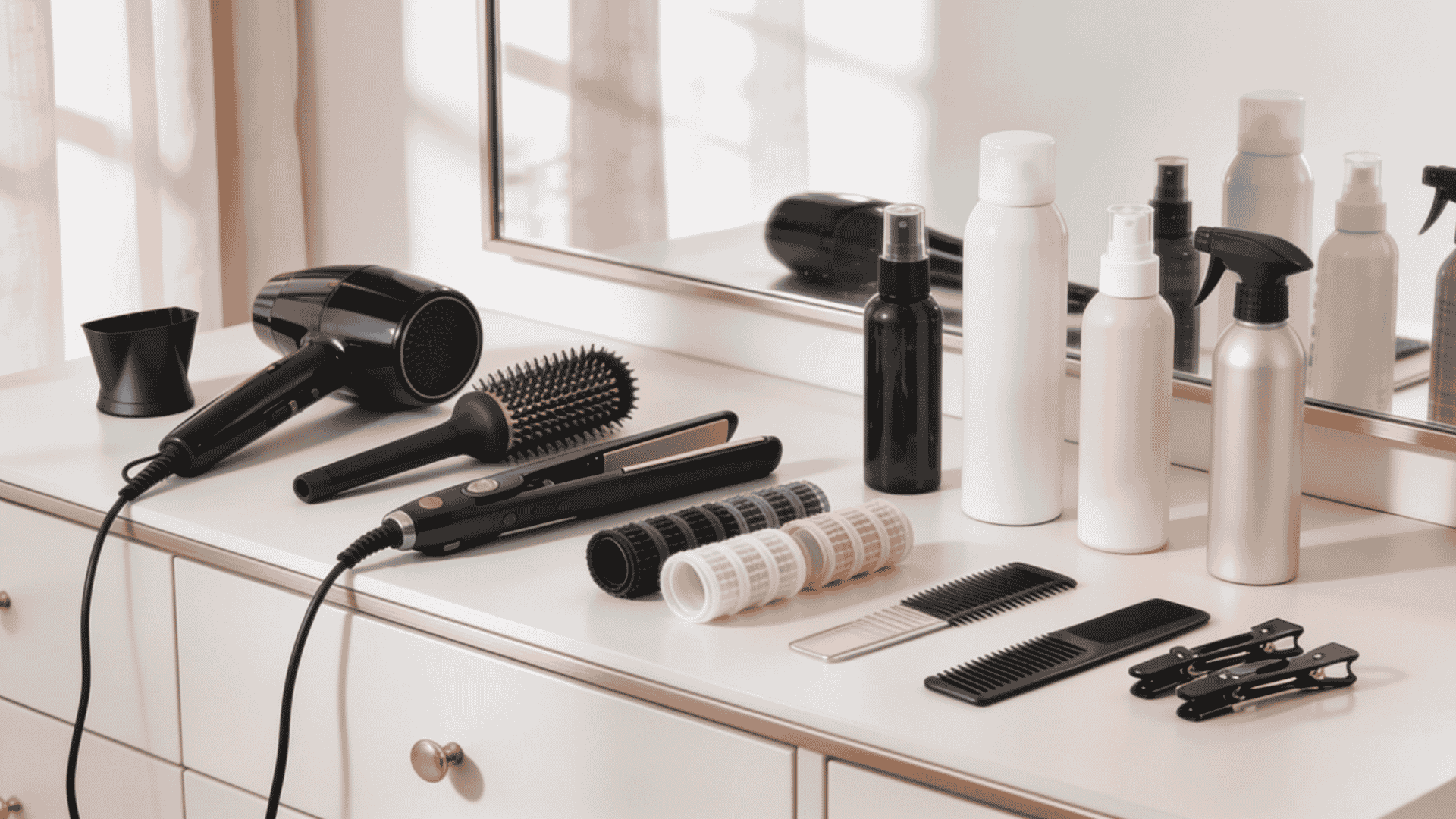
You do not need every styling tool on the market. Start with a blow dryer and round brush, then add other tools based on the finish you like.
Essential Styling Tools
- A blow dryer with a narrow nozzle gives you more control over the airflow. Without a nozzle, the air can move the fringe in too many directions, leaving it frizzy.
- A medium round brush is the most useful tool for classic curtain bangs. It creates lift at the roots while adding a soft bend through the ends.
- A flat iron works well for fast touch-ups and smooth styles.
- A curling iron is better for longer bangs that need movement around the cheekbones.
- Velcro rollers and foam rollers can create volume with less direct heat.
- A comb and creaseless clips also make it easier to section, pin, and shape the fringe.
Lightweight Styling Products
Curtain bangs sit against the forehead, so thick or oily products can make them look greasy very quickly.
A useful styling kit may include:
- Heat protectant
- Volumizing mousse
- Root-lifting spray
- Lightweight texturizing spray
- Smoothing serum
- Flexible-hold hairspray
Use mousse or root spray when your bangs need lift. Use texture spray when they look too smooth or flat. A tiny amount of serum can help with dry or frizzy ends, but keep it away from the roots.
Choose the Right Styling Method
The best method depends on your hair texture, bang length, available time, and the finish you want.
| Method | Best For | Final Look | Heat Needed |
|---|---|---|---|
| Blow dryer and round brush | Most hair types | Classic lift and outward swoop | Yes |
| Flat iron | Quick daily styling | Smooth and controlled | Yes |
| Curling iron | Long curtain bangs | Soft, rounded movement | Yes |
| Velcro rollers | Fine or flat hair | Full and bouncy | Optional |
| Pin and diffuse | Wavy or curly hair | Natural, defined shape | Low |
| Air-drying | Dry or heat-stressed hair | Soft and relaxed | No |
My Advice: The blow-dryer method gives you the most control. Rollers are helpful for soft volume, while a flat iron is ideal for quick styling before work or an evening out.
How to Blow Dry Curtain, Bangs
This is the method usually suggested first. Once you understand how your roots respond to the dryer, the other methods become much easier.
Step 1: Prepare the Bangs
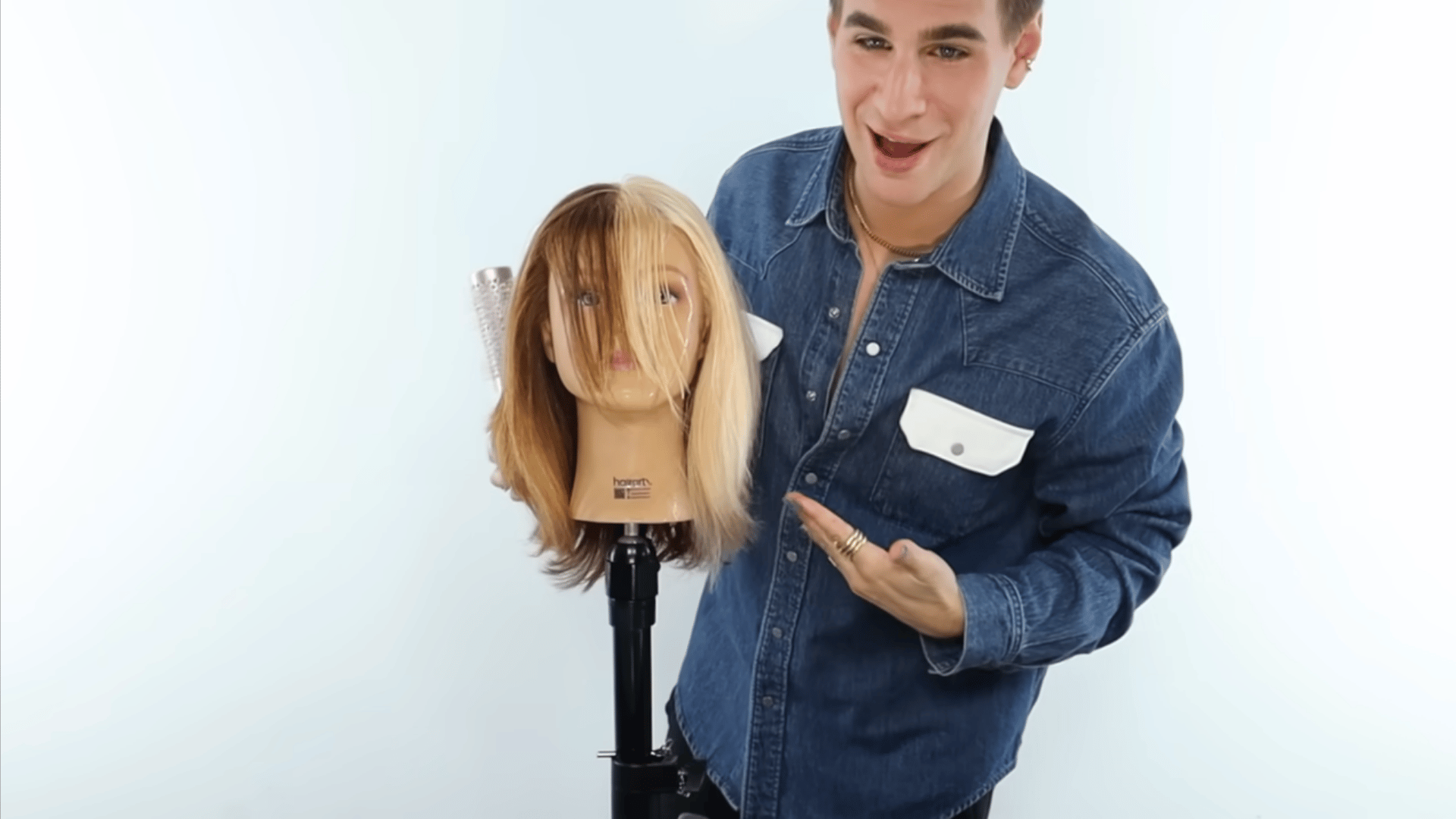
Start with slightly damp hair so the roots and ends are easier to reshape.
- Separate the curtain bangs from the rest of the hair.
- Lightly mist dry bangs with water when needed.
- Apply heat protectant throughout the fringe.
- Add a small amount of mousse or root spray for extra hold.
- Avoid leaving the bangs soaking wet.
Step 2: Reset the Roots
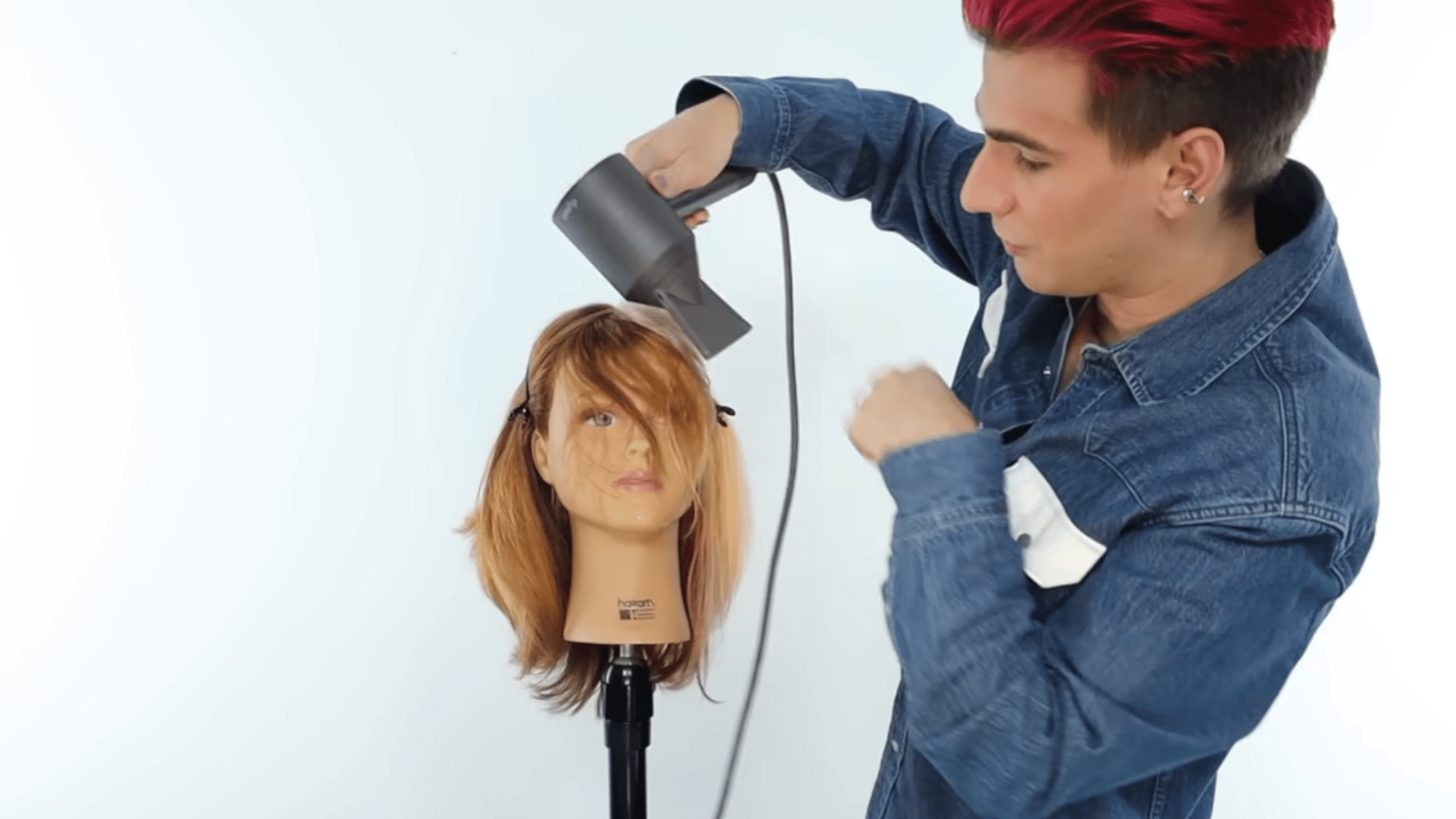
Drying the roots in different directions removes unwanted parts, bends, and cowlicks.
- Direct the full fringe forward over the forehead.
- Blow-dry the roots from one side and then the other.
- Keep the nozzle pointing down the hair.
- Continue until the roots are nearly dry.
- Do not create the middle part yet.
Step 3: Build Volume
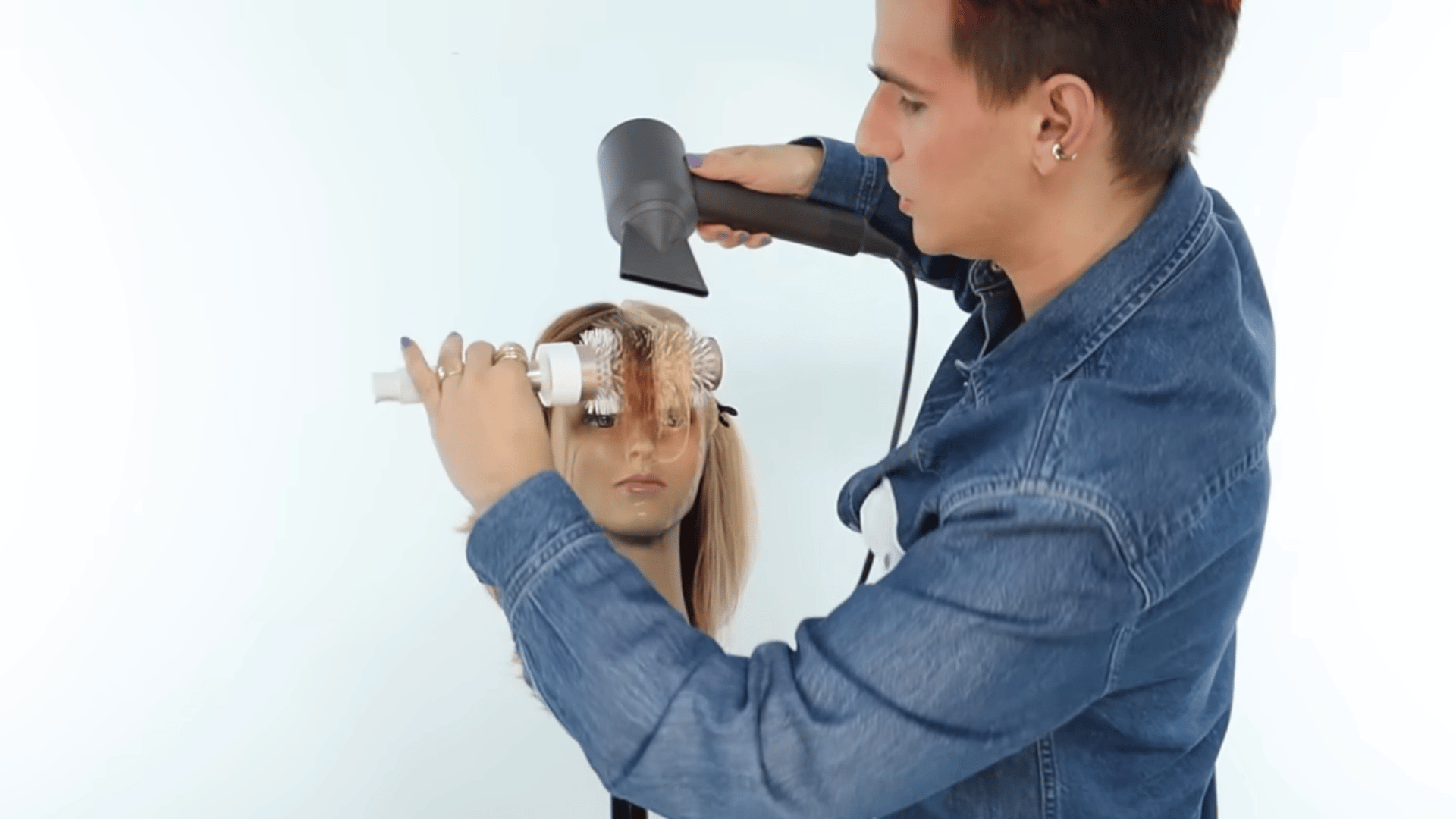
Use a round brush to create lift without making the bangs overly curled.
- Place the brush underneath the full bang section.
- Lift the hair gently away from the scalp.
- Direct warm air from the roots toward the ends.
- Roll the brush forward to create a soft bend.
- Keep the dryer moving to limit heat exposure.
Step 4: Create the Curtain Shape
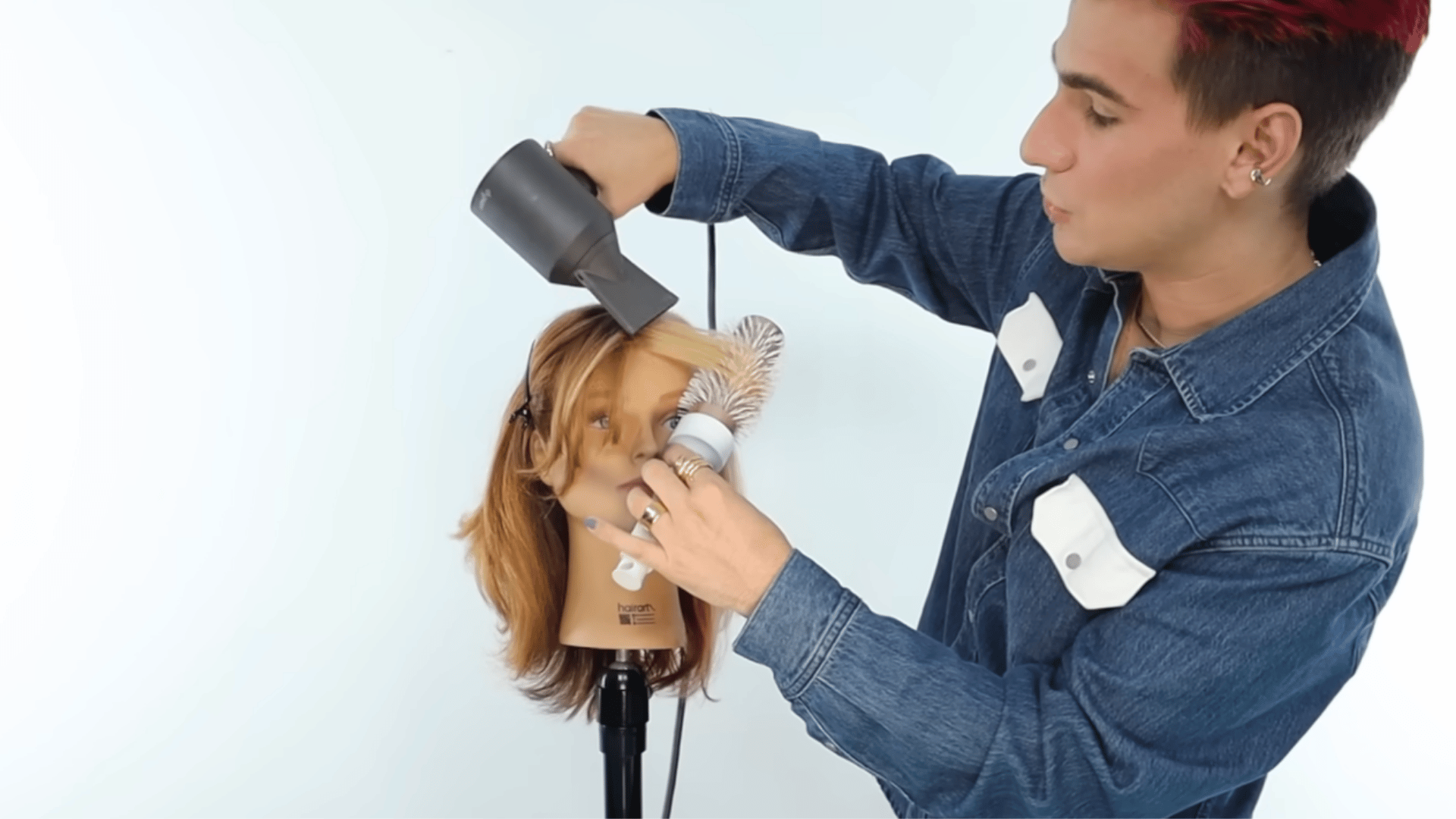
Once the roots are controlled, separate the fringe and guide both sides away from the face.
- Create a clean middle part.
- Divide the bangs into two even sections.
- Hold the round brush vertically or diagonally.
- Wrap one side around the brush.
- Pull the hair backward and away from the face while drying.
- Repeat on the opposite side using the same angle.
Step 5: Set the Style
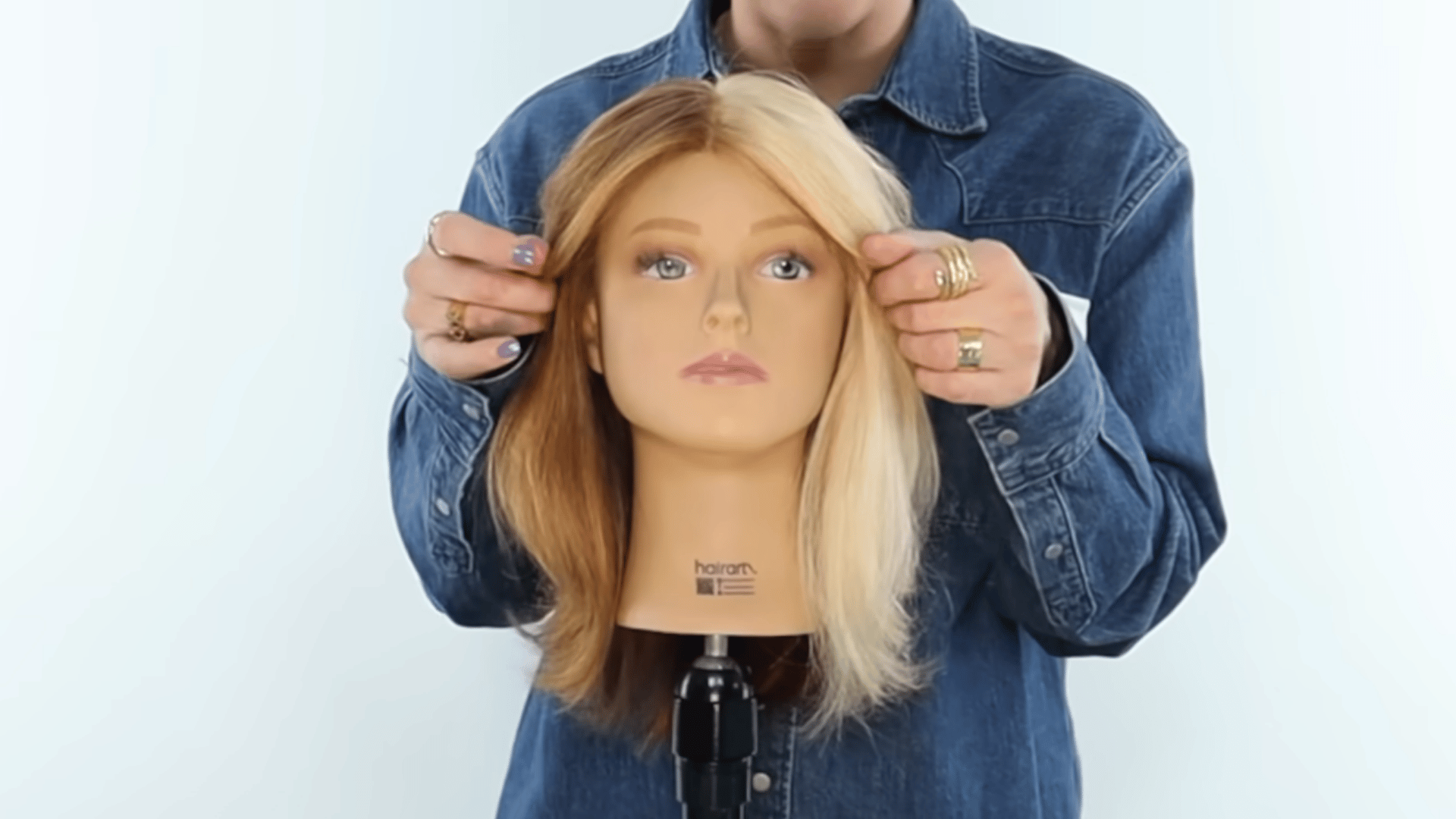
Cooling the hair helps the volume and outward bend stay in place.
- Hold each section in position for a few seconds.
- Use the dryer’s cool setting before releasing the brush.
- Let the bangs settle without brushing them immediately.
- Separate the pieces gently with your fingers.
- Finish with a light mist of flexible hairspray.
Stylist tip: When the bangs split too widely or curl in the wrong direction, dampen the roots and repeat the forward-drying step instead of adding more heat to the dry ends.\
Watch the whole video by Brad Mondo for a visual tutorial:
Flat Iron vs Curling Iron for Curtain Bangs
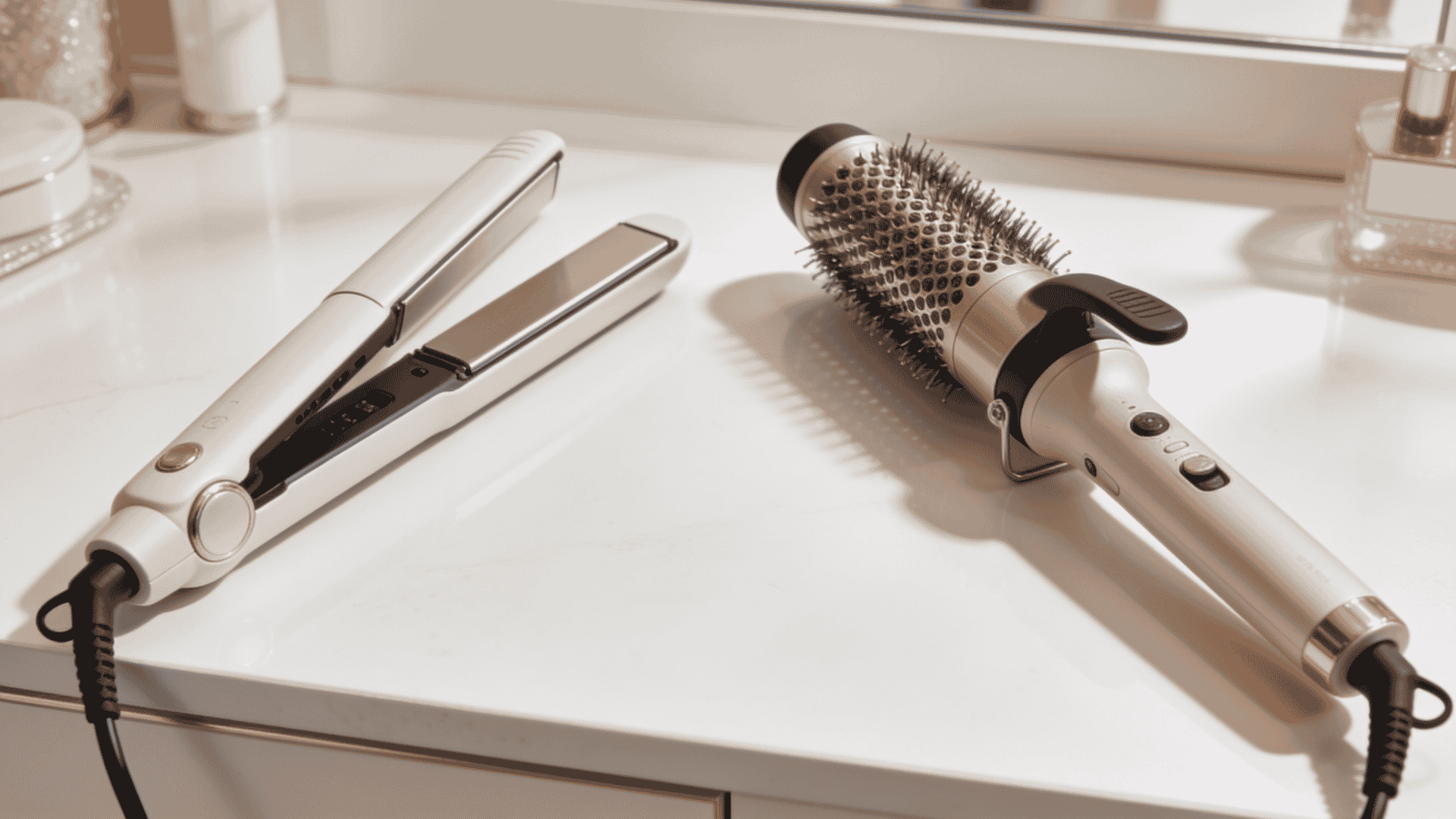
Hot tools work well when your curtain bangs are already dry or need a quick touch-up. Always apply heat protectant before styling, even when working with a small section.
| Styling Tool | Best For | How to Use It | Best Direction |
|---|---|---|---|
| Flat iron | Quick smoothing, short bangs, and controlled bends | Start with completely dry hair. Divide the bangs into small sections, place the iron near the roots without touching the scalp, and glide smoothly toward the ends. | Turn long bangs outward for a face-opening curve. Give shorter bangs a slight inward bend for a softer finish. |
| Curling iron | Longer curtain bangs and softer movement | Use a medium or large barrel. Create a middle part, divide the fringe into two sections, and hold the iron vertically while curling each side. | Curl both sides away from the face and leave the ends slightly loose. |
My Advice: Do not brush the bangs immediately after using heat. Warm hair changes shape easily, so let the style cool before softening or separating it.
Use Rollers or Heat-Free Methods
Rollers and heat-free methods are useful when your bangs need a soft reset without regular hot-tool use.
- Set With Velcro Rollers: Use one large roller for a rounded shape or two rollers for more separation. Roll each side away from your face and leave them in until the hair is fully dry or cool.
- Twist and Clip: Lightly dampen the bangs, divide them into two sections, and twist each side away from your face. Secure them with creaseless clips and remove them once dry.
- Air-Dry With Your Fingers: Apply a small amount of mousse or texture spray. Comb the fringe forward, create the middle part as it dries, and guide both sides outward with your fingers.
- Try an Overnight Set: Use soft foam rollers or loosely twist and pin each side overnight. Avoid tight clips or elastics that may leave dents in the hair.
Style Wavy and Curly Curtain Bangs
Wavy and curly curtain bangs should still look like your natural hair. You do not need to straighten them completely to create a soft, face-framing shape.
- Apply a lightweight mousse or curl product to damp bangs.
- Use your fingers to arrange the curls or waves around your face.
- Pin longer bangs near the temples or behind the ears while they dry.
- Attach a diffuser and use low heat with low airflow.
- Avoid strong airflow, as it can disturb the curl pattern and create frizz.
- Wait until the bangs are completely dry before touching them.
- Remove the clips and separate the curls gently with your fingers.
- Finger-coil any uneven pieces that need a little more shape.
Styling tip: A little unevenness looks natural and current. Wavy and curly curtain bangs are more flattering when they have movement and personality.
Adjust the Method for Your Hair Type
Hair thickness and oil levels affect how much lift, product, and smoothing your curtain bangs need.
| Hair Type | Best Styling Method | Products to Use | What to Avoid |
|---|---|---|---|
| Fine or thin hair | Lift the roots with a round brush or large Velcro roller to make the bangs look fuller. Keep the shape soft so the ends do not appear wispy. | Root-lifting spray, dry shampoo, lightweight mousse | Heavy oils, thick creams, and too much hairspray, which can flatten the fringe |
| Thick or coarse hair | Work in small sections, use steady round-brush tension, and direct the dryer downward to smooth the hair. | Heat protectant and a small amount of smoothing serum on the ends | Styling large sections at once or applying serum near the roots |
| Oily hair | Use minimal product near the scalp, avoid touching the bangs, and wash only the fringe when needed. | Dry shampoo, lightweight mousse, flexible hairspray | Heavy root products, oily serums, and frequent finger contact |
Fine bangs need lightweight lift, thick bangs need controlled smoothing, and oily bangs usually look best with fewer products around the roots.
How to Style Short and Long Curtain Bangs
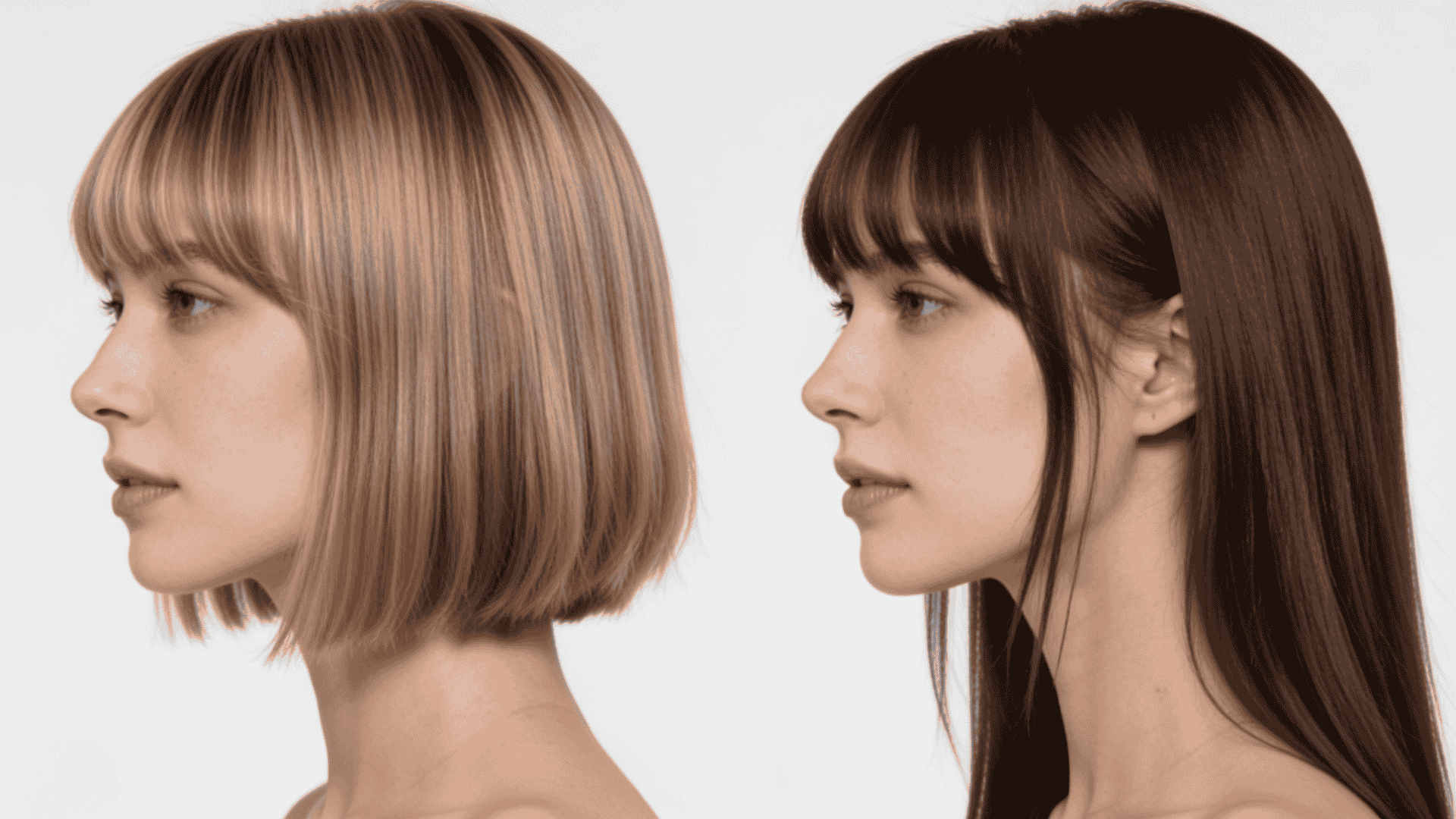
The same tool will not give the same result on every bang length.
Short Curtain Bangs
Short curtain bangs need careful shaping because the pieces can lift quickly and sit away from the forehead. Use a small or medium round brush so you can control the roots and ends without adding too much volume.
Keep the brush movement light and direct each side away from the face.
A flat iron can also work well because it gives you more control over shorter sections. Glide it through the hair and add only a gentle bend at the ends.
Avoid tight curls, high root lift, or a small roller, as these can make the fringe look puffy or separate from the haircut.
Long Curtain Bangs
Long curtain bangs look best when they flow into the cheekbone, jaw, or side layers. Use a medium or large round brush to create a softer curve and more movement through the ends.
Direct each section backward and away from the face so the fringe opens naturally in the centre.
A large Velcro roller or medium curling iron can add extra bounce when the bangs feel flat. Keep the curl loose and leave the ends relaxed.
Tight curls can make the two sides look disconnected, while a softer bend helps the bangs blend into the rest of the haircut and gives the style a smoother finish.
Make Curtain Bangs Stay in Place
Good curtain bangs should move, but they should not collapse after ten minutes.
- Start by drying the roots completely. Damp roots will return to their natural direction as they finish drying.
- Allow each section to cool before touching it. This is especially important after using a round brush, flat iron, or curling iron.
- Use lightweight products for grip. Mousse and texture spray usually hold better than oils or thick creams.
- Apply flexible hairspray from a distance. You want a soft mist, not a wet layer.
- Try not to touch your bangs throughout the day. Fingers transfer oil and pull the shape apart.
- On humid days, use a light anti-humidity product and spend a little more time setting the roots.
Fix Common Curtain Bangs Problems
Even well-cut bangs have difficult mornings. Most issues can be fixed by wetting the roots and resetting their direction.
| Problem | Likely Cause | Quick Fix |
|---|---|---|
| Bangs fall flat | Roots were not lifted | Dampen and blow-dry the roots again |
| The middle gap is too wide | Hair dried in its natural part | Dry the full fringe forward before parting |
| Ends curl toward the face | Tool moved inward | Redirect the ends away from the face |
| Bangs look too puffy | The brush or roller was too small | Use a larger styling tool |
| One side looks fuller | Uneven sections or tension | Restyle equal sections |
| Bangs become greasy | Heavy products or touching | Apply a small amount of dry shampoo |
| Shape does not hold | Hair was released while warm | Reset it and let it cool fully |
| Cowlick changes the part | Roots were not controlled | Dry forward and from side to side |
| Flat-iron marks appear | Too much pressure | Use lighter pressure and keep moving |
When your curtain bangs refuse to cooperate, do not keep adding more heat to dry hair. Lightly dampen the problem area and start again at the roots. That usually works faster and causes less stress to the hair.
Final Thoughts
Great curtain bangs come from matching the method to your hair, length, and routine.
A round brush creates a soft swoop, while flat irons and curling irons shape dry bangs in minutes. Velcro rollers, clips, and air-drying offer gentler options when you want less heat.
Fine hair needs light lift, thick hair benefits from smaller sections and smooth tension, and oily bangs look better with fewer products near the roots.
The details matter most: use heat protectant, work with equal sections, let the hair cool, and keep heavy creams away from the fringe.
Short bangs need a controlled bend, while longer pieces should flow into the side layers.
With practice, you can build a routine that feels quick and natural. Share your curtain bangs styling method in the comments below.
Frequently Asked Questions
Do Curtain Bangs Need to be Styled Every Day?
Not always. Some hair types need a quick daily reset, while others only need finger shaping, dry shampoo, or a few minutes with a Velcro roller.
Can You Style Curtain Bangs Without Heat?
Yes. Lightly dampen the bangs and use foam rollers, Velcro rollers, finger twists, or creaseless clips to guide them away from the face as they dry.
Can Curtain Bangs be Worn with a Side Part?
Yes. Longer curtain bangs can be shifted slightly to one side, although most versions are cut to create their fullest shape with a centre part.
Why do My Curtain Bangs Keep Splitting Apart?
Your roots may be drying in their natural part. Wet the root area, dry the full fringe forward, and create the middle split only after the roots are controlled.