

Recording in a room that is too hot, too cold, or too stuffy can ruin a great take fast. Comfort affects your focus, your gear, and your creativity. A well-designed space helps you stay in the zone no matter the season.
If you want to keep your home music studio comfortable year-round, you need more than foam panels and cool lighting. Smart upgrades make the difference between surviving a session and enjoying it.
Install Ductless Mini Split Systems for a Reliable Temperature
Temperature swings do more than annoy you. Heat can stress electronics, and cold air can even throw instruments out of tune.
Ductless mini-split heat systems offer high energy-efficiency and allow for zoned heating and cooling. Zoned control means you can cool just your studio instead of the whole house. And lower energy use keeps your power bill manageable while maintaining steady comfort.
Modern ductless mini split systems are compact, quiet, and ideal for converted bedrooms, garages, or basement studios. HVACDirect offers systems in multiple capacities to suit your specific needs.
Also, quiet indoor air-handlers help you record without background hum.
Consistent climate control in your music studio protects your gear and your workflow. Stable temperatures help you focus on performance instead of thermostat battles.
Upgrade to an Ergonomic Chair for Long Sessions
Long mixing sessions can strain your back and shoulders. Discomfort creeps in slowly, then suddenly your creativity drops.
An ergonomic, height-adjustable chair supports your lower back and keeps your feet flat on the floor. Adjustable armrests reduce wrist tension while working on a MIDI controller or keyboard. Breathable materials also prevent overheating during marathon sessions.
Comfortable seating supports better posture. Better posture supports longer, more productive recording blocks without constant stretch breaks.
Improve Indoor Air Quality and Ventilation
Air quality often gets ignored in small studios. But sealed rooms trap dust, odors, and airborne particles.
Indoor air can sometimes be more polluted than outdoor air. Spending hours in a poorly ventilated studio means you feel those effects directly, especially during late-night sessions.
Adding a quiet HEPA air purifier can reduce airborne particles. Proper airflow can maintain comfort and health. Even small improvements in airflow can make your studio feel fresher and less draining.
Consider these quick upgrades:
- Use a HEPA air purifier sized for your room
- Run a low-noise fan between takes to circulate air
- Replace HVAC filters on a consistent schedule
Control Lighting to Reduce Eye Strain
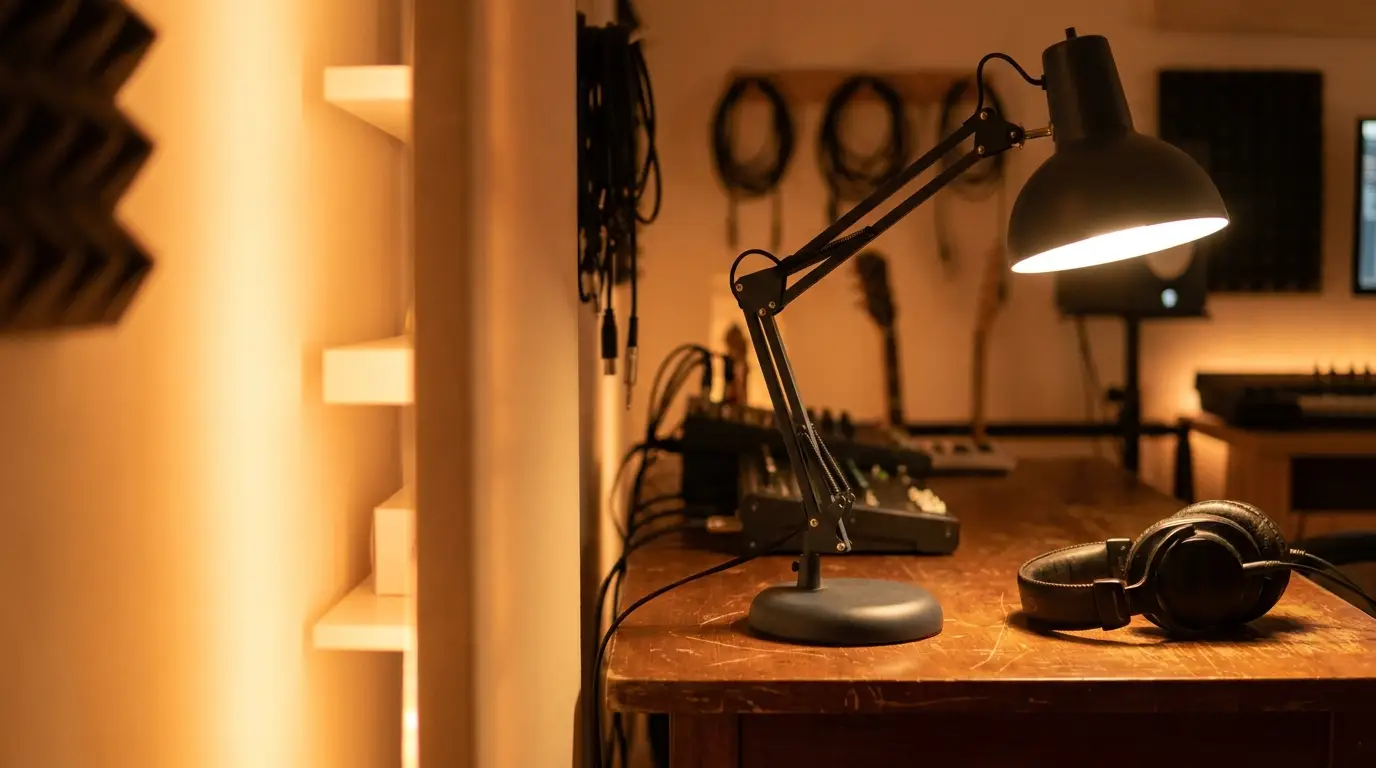
Harsh overhead lights create glare on screens and reflective surfaces. Dim lighting makes it hard to see controls and sheet music.
Layered lighting works best in a music studio. Combine soft ambient lighting with focused desk lamps aimed away from screens. Adjustable LED bulbs allow you to switch from bright, cool tones during editing to warmer tones for creative writing.
Monitor placement also matters. Position screens perpendicular to windows and use blackout curtains if natural light causes glare. Balanced lighting keeps your eyes comfortable during long editing blocks.
Add Soft Furnishings for Acoustic and Thermal Comfort
Hard surfaces reflect sound and make a room feel cold. Soft materials help in more ways than one.
Long-term noise exposure can increase stress and fatigue. Reducing harsh reflections with rugs, curtains, and upholstered furniture helps create a calmer listening environment. Less reflected noise makes mixing more accurate and less tiring.
Soft furnishings also add slight insulation. Rooms feel warmer in winter and less echo-prone all year.
Building a Studio That Supports Creativity Year-Round
Choosing the right upgrades helps you keep your home music studio comfortable year-round without constant adjustments. Stable temperatures, clean air, supportive seating, and balanced lighting all work together to improve your sessions.
Has this article been helpful? Then take a look at some of our other insightful posts!