Anyone who’s spent time around a workshop knows the sound. That high, urgent whine of a grinder spinning up, followed by the shower of sparks and the smell of hot metal. Abrasive wheels are everywhere in industry — from the angle grinder a roofer uses on rebar to the pedestal grinder in a fabrication shop — and most of the time, they do their job without incident.
The trouble is what happens when they don’t.
A wheel turning at 11,000 rpm doesn’t fail gracefully. When one shatters, fragments leave the machine at roughly the speed of a bullet. Workers have lost eyes, fingers, and lives to wheels that broke apart without warning — and the painful part is that almost every one of those incidents was avoidable.
So let’s talk about what actually keeps people safe.
Know What You’re Up Against
Wheel disintegration gets all the attention, and rightly so — but it’s only part of the picture. Sparks start fires. Spindles catch loose sleeves. Dust ruins lungs. Vibration wrecks nerves. Noise takes hearing one shift at a time. Plenty can go wrong long before a wheel ever shatters.
What makes abrasive wheels especially tricky is that the danger isn’t always visible. A wheel can look perfectly fine and still have an internal crack from being dropped in storage three months ago. A guard that’s been adjusted “just slightly” to make a tricky cut easier can fail at exactly the wrong moment.
Most Accidents Come Down to People, Not Machines
Ask the HSE what causes abrasive wheel accidents and the answers are depressingly familiar. Someone fitted the wrong wheel. Someone didn’t check the maximum operating speed. Someone removed the guard because it was getting in the way. Someone never received proper training and learned on the job from a colleague who never received proper training either.
Equipment failure does happen, but it’s rare compared to the number of incidents caused by shortcuts, complacency, or plain old not knowing. That’s actually good news — it means the controls are within reach for any employer willing to put them in place.
Training Is Non-Negotiable
Under the Provision and Use of Work Equipment Regulations 1998, anyone who mounts an abrasive wheel has to be trained and competent. That’s not a tick-box exercise. They need to understand wheel markings, spot damage, choose the right wheel for the material and the machine, mount it correctly, and run it safely. Operators using the wheels need a solid grounding too.
If sending people on a classroom course is impractical, and for shift workers and spread-out teams, it usually is. Online abrasive wheels training is a sensible alternative that provides the essential safety principles and best practices. Whichever route you take, keep records, and refresh the training every few years. People forget. New equipment comes in. Standards evolve.
Treat Every Wheel Like It Might Be Cracked
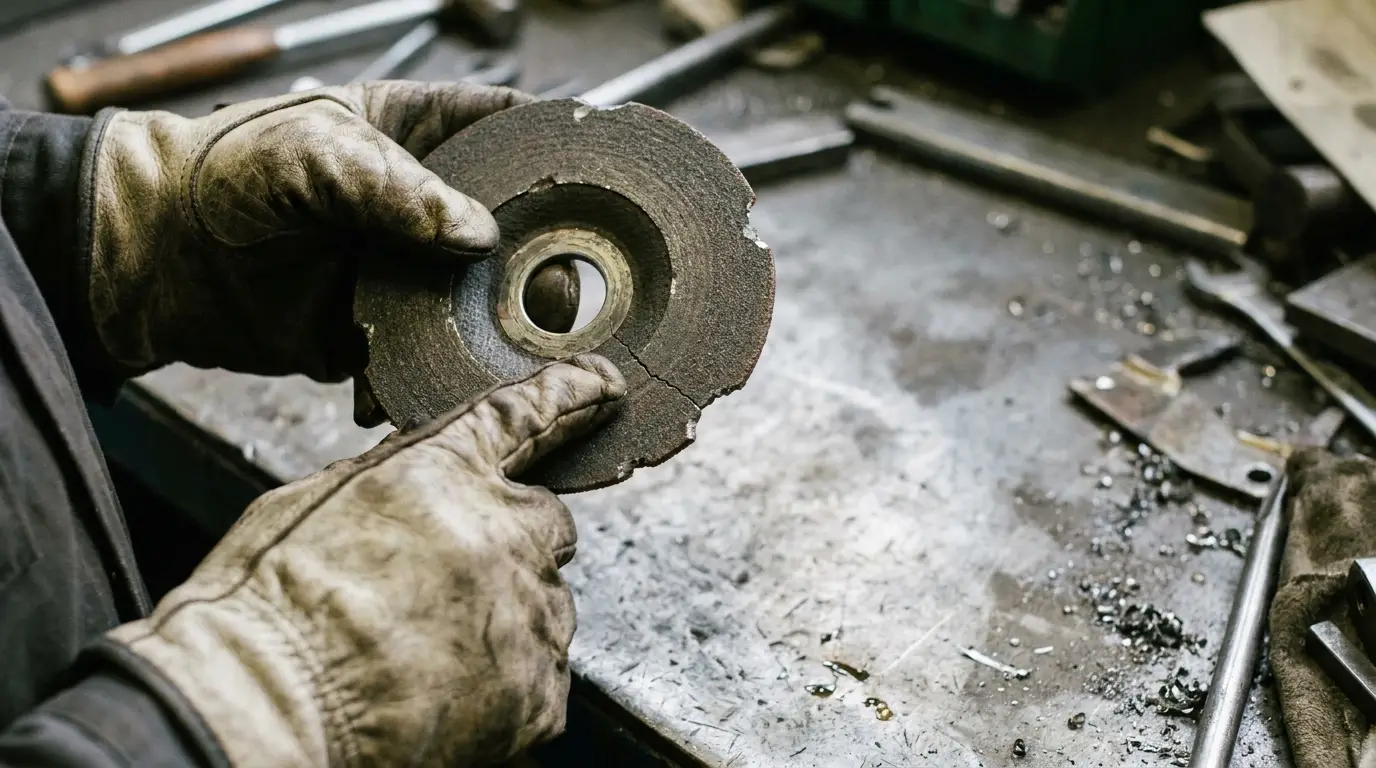
A good operator inspects a wheel before it goes anywhere near a spindle. Check for chips, cracks, and any sign the wheel’s been dropped or stored badly. For vitrified wheels, a quick ring test — tapping gently with something non-metallic and listening for a clean note — can pick up hidden flaws.
Then there are the numbers. Every wheel has a maximum operating speed printed on it. Every machine has a spindle speed. The first must always be equal to or higher than the second. Never the other way round. Use the right flanges and bushings, tighten the spindle nut firmly but not aggressively (overtightening cracks wheels), and once the wheel is on, run it up to speed behind the guard for a minute before doing anything else. If it’s going to fail, that’s when you want to find out.
Guards Stay On. Always.
There’s a culture in some workshops of treating guards as optional — annoying bits of metal that get in the way of the “real” work. This is how people get hurt. The guard is what stops the fragments. The tool rest is what stops your workpiece getting dragged in. On a bench grinder, the gap between the rest and the wheel face shouldn’t be more than about three millimetres.
PPE matters too: impact-rated goggles or a full face shield, ear defenders, the right respirator for whatever you’re grinding, snug-fitting overalls, and steel toes. Be careful with gloves — they’re useful for handling hot work but can be a liability near rotating parts. Tie back long hair, lose the jewellery, roll the sleeves down properly.
Work Like You Respect the Tool
Don’t apply work to the side of a wheel unless the wheel is designed for side grinding. Don’t lean on the work to make it cut faster — let the abrasive do its job. Position yourself slightly to one side when starting up, never directly in front of the wheel. Keep the spark stream pointed away from anything flammable, and don’t grind anywhere near gas cylinders, solvents, or piles of rags.
If a wheel starts vibrating oddly, sounding wrong, or behaving differently from how it did five minutes ago, stop. Don’t push through. Investigate. Wheels often give you a warning before they break — you just have to be paying attention.
When you’re finished, let the wheel spin down fully before you walk away. A grinder coasting unattended in an empty bay is an accident waiting for someone to walk into it.
Build the Habits, and Then Keep Them
Maintenance is part of safety. Guards need checking. Flanges wear out. Wheels need to be dressed, balanced, and stored properly — flat, dry, and away from heat and damp. Damaged wheels go in the bin, not back on the rack “for spares.”
Beyond the procedures, what really keeps people safe is culture. Supervisors who model the right behaviour. Workers who feel able to flag a problem without being made to feel awkward about it. Management that pays for proper training instead of hoping someone will pick it up by watching. Get those things right and the rest tends to follow.
Abrasive wheels aren’t going anywhere. Used properly, they’re brilliant tools. Used carelessly, they’re as dangerous as anything in the building. The difference is almost entirely down to the people running them — which means the difference is almost entirely up to you.