

Clean drinking water is one of those workplace basics people expect to have every day. When water tastes off, runs out, sits too far from work areas, or creates extra maintenance, employees notice fast. For facility managers, the right system can improve daily comfort while reducing supply issues, storage needs, and service headaches.
This guide was developed by reviewing workplace hydration needs, facility operations concerns, and common water system options to help businesses make a practical, informed choice.
Choosing a water setup is not only about picking a cooler for the break room. The best option depends on office size, employee traffic, plumbing access, water quality, maintenance support, and budget. A strong system should be easy for employees to use and simple for facilities teams to manage.
Match the System to Your Workplace
Start with how people move through the office. A small team may only need one central station. A larger workplace may need several units across floors, near conference rooms, kitchens, shared lounges, or warehouse-adjacent areas.
When comparing office drinking water systems, facility managers should consider daily demand and peak use. A system that works for 30 employees may not keep up with 200 people returning from lunch, using meeting rooms, or filling bottles before long shifts.
Water preferences also matter. Cold water is the standard expectation, but hot water can be used for tea, oatmeal, instant coffee, or quick meals. Bottle filling, touchless dispensing, and sparkling water may increase use in offices where employees already carry reusable bottles.
Access should be simple. If the water station is hard to find or slow to use, people may return to single-use bottles or outside drinks. The right location can improve adoption without adding another policy or reminder.
Workplace requirements should also stay in view. OSHA says employers must provide potable drinking water and allow employees to drink it. That makes access to water a basic part of workplace readiness, not just an employee perk.
Compare Bottled, Bottleless, and Filtered Options
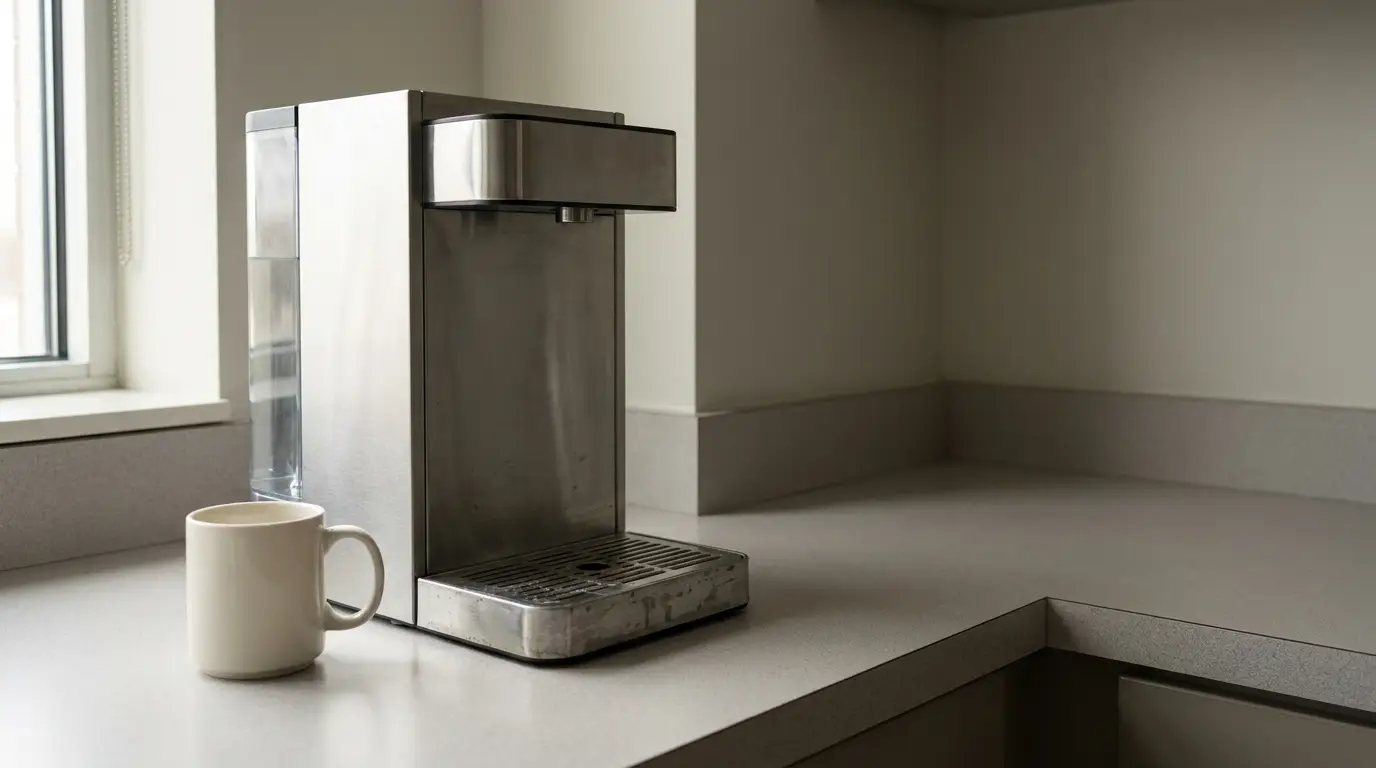
Most office water systems fall into a few common categories. Bottled coolers are familiar and can be easy to place, but they require regular deliveries, heavy bottle lifting, storage space, and empty container management. For some offices, that routine becomes more work than expected.
Bottleless systems connect to the building’s water line and filter water at the point of use. These systems can reduce deliveries and free up storage space. They do require plumbing access and a clear plan for filter replacement, sanitation, and service.
Filtered dispensers can be freestanding, countertop, or built into a break room design. The right choice depends on output speed, filter performance, unit size, and how often the system needs service. Taste should not be treated as a minor detail. If employees dislike the water, they are less likely to use the system.
Energy use is another factor. ENERGY STAR notes that water coolers vary by temperature options, capacity, and energy consumption. Units that heat and chill water may use power throughout the day, so facility managers should review efficiency ratings and standby features before choosing a model.
Ask vendors direct questions. What does the filter reduce? How often are filters changed? Who performs the service? What happens when the system needs repair? Clear answers usually point to a better long-term fit.
Look at Total Cost and Maintenance
The lowest monthly price may not be the lowest total cost. Facility managers should compare installation, filter changes, service visits, electricity, delivery fees, storage space, repairs, and staff time.
Bottled systems may look simple, yet they often require someone to accept deliveries, move bottles, manage inventory, and deal with shortages. Bottleless systems usually shift the work toward scheduled filter replacement and equipment service. Neither option is automatically better for every office. The best fit depends on how the building operates.
Space also has value. Offices with limited storage may not want stacks of full and empty bottles taking up usable room. A plumbed system can reduce clutter, but it needs a practical location with access to water and power.
Cleaning should be easy, too. Buttons, spouts, drip trays, and bottle fill areas need regular attention. Touchless features can help in busy spaces, but every system still needs routine cleaning.
Employee health and comfort are part of the decision. The CDC says drinking enough water helps prevent dehydration, which can affect thinking, mood, body temperature, digestion, and kidney health. Easy access to better-tasting water can support daily comfort during meetings, focused work, and warmer months.
Sustainability may also play a role. EPA WaterSense reports that office buildings account for about nine percent of water use in commercial and institutional facilities in the United States. While drinking water is only one part of facility operations, reducing waste and improving resource use can support broader workplace goals.
Choose the System Your Team Will Actually Use
The best water system is not always the one with the most features. It is the one employees use often, and the facilities team can support without constant follow-up.
Before making a final choice, confirm where each unit will go, how many people it must serve, which water options are needed, who will handle service, and how quickly repairs are addressed. Larger offices may benefit from a short pilot in a high-traffic area before rolling out systems across the workplace.
A well-chosen office drinking water system can reduce operational friction, improve employee satisfaction, and make the workplace feel more cared for. When access, quality, cost, and maintenance all line up, drinking water becomes one less daily issue for facility teams to manage.