
Eight bachelorette guests walked into a Nashville pop-up and left 90 minutes later with custom hats, full camera rolls, and a group photo that helped sell the next booking.
That session produced more than $1,200 in sales, dozens of tagged posts, and three private-party inquiries. It did not need a lease or a deep stockroom, just a portable setup, a tight trim assortment, and a process that kept the line moving.
Hat bars sit where DIY fashion, experience spending, and social content meet. They work in boutiques, resorts, corporate retreats, and festival tents because the guest leaves with both a product and a story.
Strong demand alone does not make the model profitable. Clear pricing, steady sourcing, fast throughput, and safe operations do.
Understanding the Hat Bar Format
A hat bar turns a simple retail item into a guided, hands-on experience.
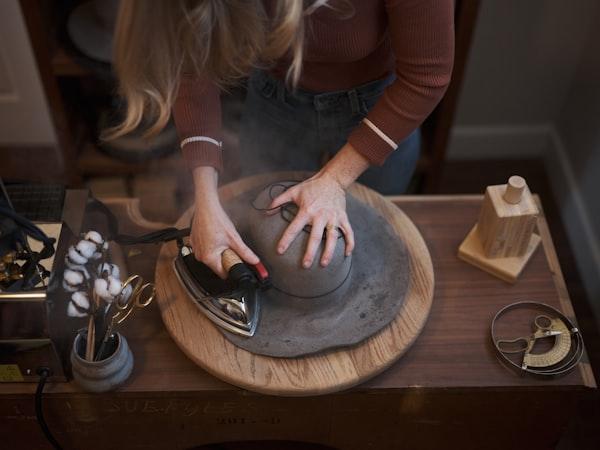
Guests choose a base hat, select trims, and watch a stylist finish the piece on-site. Common additions include bands, ribbons, feathers, pins, charms, matchbook tucks, light shaping, and small branding details.
The guest journey should feel structured, even when the event looks relaxed.
- Fit check and head sizing
- Base hat selection
- Trim curation by color palette
- Stylist review and build
- Reveal photo moment
- Checkout and packaging
Most brimmed builds take 45 to 60 minutes when the queue is under control. A quick patch-and-press station can handle overflow guests in a few minutes and keep the room moving.
Why Planners and Boutiques Like the Model
The format works because it fits how people already spend on group events.
Revenue per guest is strong. The Washington Post, citing Joy data, reported that the average bachelorette trip now costs about $1,300 per person. A $140 to $185 custom hat can fit neatly inside that budget.
The product markets itself. A finished hat is wearable, giftable, and easy to post. Good lighting and a simple reveal wall turn guests into a steady stream of user-generated content.
The footprint is flexible. Operators can work hotel lobbies, patios, boutique floors, market tents, and resort terraces without building a permanent shop around the concept.
The audience is wider than it looks. Some owners worry that hat bars are too niche. In practice, they work anywhere guests want a shared activity and a keepsake, from alumni weekends to corporate retreats.
Retail partners also win. Pair the station with denim, boots, jewelry, or a drinks partner and average order value rises for more than one business in the room.
Choosing Event Formats That Convert
The best event format matches guest spend, time limits, and your team’s production speed.
Nash Bash Bachelorette
Axios reported that Nashville was the top U.S. bachelorette destination in 2023, with more than 11,000 parties planned there. Run 90-minute slots for 8 to 12 guests, use one stylist plus one assistant, and offer a group discount when the party books eight or more hats.
Resort Or Hotel Lobby Pop-Up
Use a short daily window and a tight menu of three or four base-and-band combinations. Pre-booking through the concierge and room-charge payment remove friction and make the offer feel like part of the stay.
Corporate Team Builder
Block about 2.5 hours and narrow the choices before guests arrive. Company colors, pre-approved patches, and a simplified trim bar make the event feel branded without turning it into a slow custom order line.
Festival Or Market Booth
Throughput matters more than deep customization in this format. Pre-build popular band combinations, show fast trims first, and run a QR waitlist so shoppers can keep browsing instead of standing in line.
Building Pricing and Margin
Profitable hat bars rely on clean package design and disciplined upsells.
Keystone pricing means you start by doubling wholesale cost. That usually gives you a gross margin near 50%, which is a useful floor before labor, travel, and setup are added.
- Base Plus Band, 30 minutes: A felt base that costs $42 wholesale can sell for about $95 as an entry offer.
- Signature Build, 45 to 60 minutes: Add two trims with about $9 in added cost and charge roughly $140 with light branding included.
- Heirloom Build, 60 to 75 minutes: Premium feathers, vintage pins, and custom branding can lift the cart to $165 to $185.
Charge travel and setup for off-site events, and set private-party minimums at six to eight guests. Margin usually improves when premium feathers, vintage brooches, monogram branding, and hat boxes are offered as add-ons instead of included by default.
Designing Setup, Staffing, and Flow
A smooth layout does more for profit than a larger trim table.
Build the event in six zones: welcome and sizing, base wall, trim bar, customization bench, reveal wall, and checkout. Guests should move forward without doubling back or blocking the work area.
A useful staffing rule is one stylist for every six to eight guests and one runner for every ten guests. The runner handles trim prep, resets, and tool recovery so the stylist stays focused on finished hats.
- 0 to 15 minutes: check-in, welcome, and sizing
- 15 to 25 minutes: base selection and fit confirmation
- 25 to 35 minutes: trim curation
- 35 to 75 minutes: customization at the bench
- 75 to 90 minutes: reveal photos, checkout, and packaging
Between groups, run a five-minute reset. Restock trims, wipe heat mats, clear curing space, and test every tool before the next guests arrive.
Handling Safety, Permits, and Insurance
Safety rules are not optional when heat, smoke, and adhesive are part of the service.
Ventilation and smoke: The U.S. EPA warns that wood smoke can harm all guests, especially children, older adults, and people with heart or lung disease. Use heat-safe mats, move smoke away from guests with active airflow, and keep a 2A:10-BC extinguisher within reach.
Dust and debris: OSHA notes that wood dust is a respiratory hazard. Even light branding work should include eye protection for operators and routine cleanup so dust does not build up around the bench.
Adhesives and records: E6000 technical documents call for adequate ventilation and protective measures. Keep an SDS, or safety data sheet, binder on-site, and place curing racks where guests cannot brush against fresh adhesive.
Open flame and venue rules: OSHA’s LP-gas standard allows only certain small self-contained hand-torch assemblies indoors, and local fire codes may be stricter. Many venues also require an ACORD 25 certificate of insurance, which is the standard proof-of-coverage form used by insurers.
Filling the Calendar With Better Marketing
Marketing works best when it shows the experience, not just the finished hat.
- Film short reveal clips and branding moments for Reels and TikTok
- Shoot trim trays and finished hats for Pinterest and Instagram
- Partner with hotels, planners, bars, and destination teams
- Use simple referral offers, such as a free premium feather
- Set up a branded photo wall and clear content-consent signage
- Post regularly to your Google Business Profile with booking prompts
After each event, send photo links, care tips, and a small accessory offer. That follow-up helps turn one-time guests into repeat buyers, referrals, and future hosts.
Choosing Supplies and Core Inventory
Core inventory should cover most guests without tying up cash in slow-moving options.
Bases: Felt works best from autumn through spring, while straw and palm cover warmer months. Trucker and canvas caps are useful for fast builds and logo-patch events.
Sizes: Carry small through extra-large, usually 55 to 61 centimeters, and keep foam reducers for in-between fits. For male-heavy corporate groups, skew a little deeper on large and extra-large.
Trims: Stock bands, ribbons, suede wraps, feathers, conchos, waxed cord, pins, patches, and a few standout pieces that justify premium pricing.
Tools and backups: Pack steam, heat-safe mats, branding tools, shears, punches, tape, adhesives, PPE, fans, and a backup set of the tools that fail most often. One missing tip or extension cord can slow the entire line.
Hat supplier for hat bar events
Your supplier needs to protect your calendar, not just your unit cost.
When a private party is booked for Saturday, late inventory can cost more than the hats themselves. U.S. planners and boutique owners need fast replenishment, consistent sizing, clear return terms, and base styles that work for both quick builds and premium custom work, so a dependable source matters. For a concrete example, see the hat supplier for hat bar events for ready-to-ship felt, straw, and trucker options, plus next-day shipping and a 90-day return window.
Learning From Operators In the Field
Real-world operators show that the model scales when the process stays tight.
Flea Style: D CEO reported that hats and hat bar accessories account for about 75% of the company’s revenue. The lesson is clear: a curated trim library and repeatable guest flow can turn an add-on into the main business.
Republic Boot Co.: Its in-store hat bar shows how a Western retail brand can use customization to raise average order value. The hats support the store’s identity instead of feeling like a separate side project.
Mobile Nashville operators: Trailer-based setups prove that a fixed store is not required. Low overhead, dense weekend bookings, and event-heavy markets can create strong economics when travel, staffing, and supply are priced correctly.
Using a Simple Event Day Checklist
A short preflight list prevents most day-of failures.
- 14 days out: confirm permits, venue rules, and insurance documents
- Pull inventory by size, color, and event type
- Verify trim counts against paid headcount
- Inspect tools, heat gear, and PPE
- Confirm floor plan, power access, and traffic flow
- Print safety signs, pricing menus, and consent notices
On event day, run a test payment, check the photo wall, and brief the team on timing. After the event, restock, log throughput, and note which trims sold fastest so the next booking is easier to price.
Making the Trend Sustainable
Start small, then standardize before you expand.
One partner venue, one strong menu, and one polished run-of-show can teach more than a rushed multi-city push. Early data should tell you which price tier moves fastest, which trims slow the line, and how many hats one stylist can finish without hurting quality.
The long-term value is not only the hat sale. It is the memory, the photos, and the repeat bookings that come from a guest feeling part of the design process.
Common Questions
Most operating questions come down to margin, speed, and venue rules.
Are Hat Bars Actually Profitable?
Yes, when bases are priced at or above keystone and add-ons are packaged well. A $165 cart built on about $51 in materials leaves room for labor, travel, and healthy gross profit.
How Long Should I Schedule Per Guest?
Plan 45 to 60 minutes for a brimmed hat build. Keep a faster patch-and-press option nearby so overflow guests still leave happy instead of waiting too long.
What Sizes and Colors Should I Stock First?
Start with black, cream, and tan in small, medium, and large. Add a few seasonal colors only after you see steady demand, and keep foam reducers for guests between sizes.
Do I Need Permits For A Hat Bar?
Many cities require permits when open flame, branding, or certain indoor event setups are involved. Check local fire rules for every venue, because approval in one location does not carry over to the next.
What Insurance Do Venues Usually Require?
Most venues ask for general liability coverage shown on an ACORD 25 certificate. If alcohol is part of the event, you may also need liquor liability depending on the venue agreement.
How Do I Keep Lines Moving During Busy Events?
Limit choices, time-box the customization bench, and separate the photo wall from checkout. A QR waitlist also helps because guests can socialize or shop while they wait instead of creating a visible line.