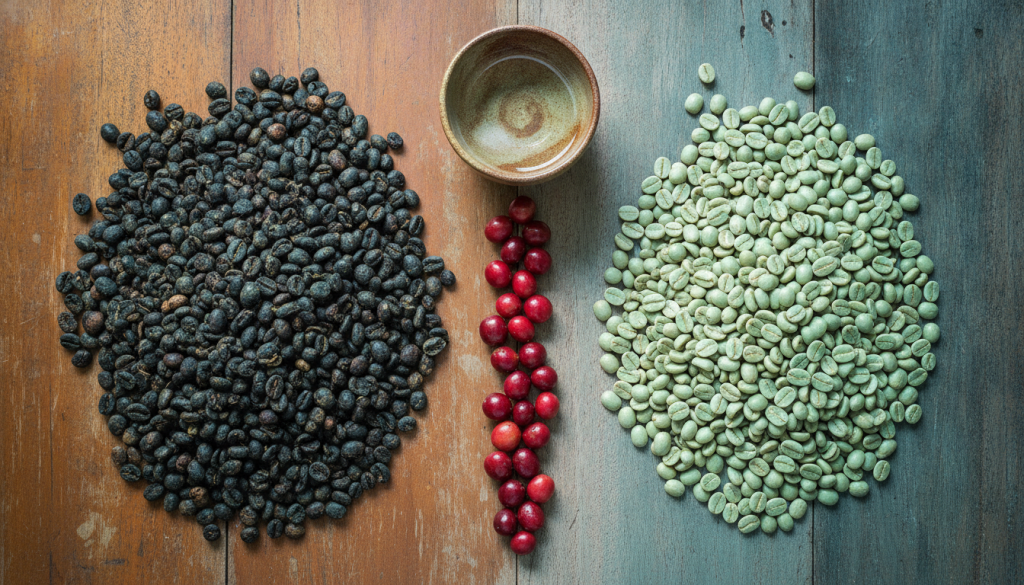
For specialty coffee buyers, roasters, and green bean procurement teams, processing methods are just as influential as terroir in shaping a coffee’s final sensory profile and green storage stability.
In Indonesia, two primary processing methods dominate the specialty market: traditional Wet Hulling (locally known as Giling Basah) and Washed Processing (often referred to as fully washed or wet processing). While both methods use water to remove the outer fruit, their mechanical timelines and drying mechanisms differ radically, producing contrasting cup profiles and distinct shelf-life considerations for B2B buyers.
Mechanical Differences: Giling Basah vs. Washed
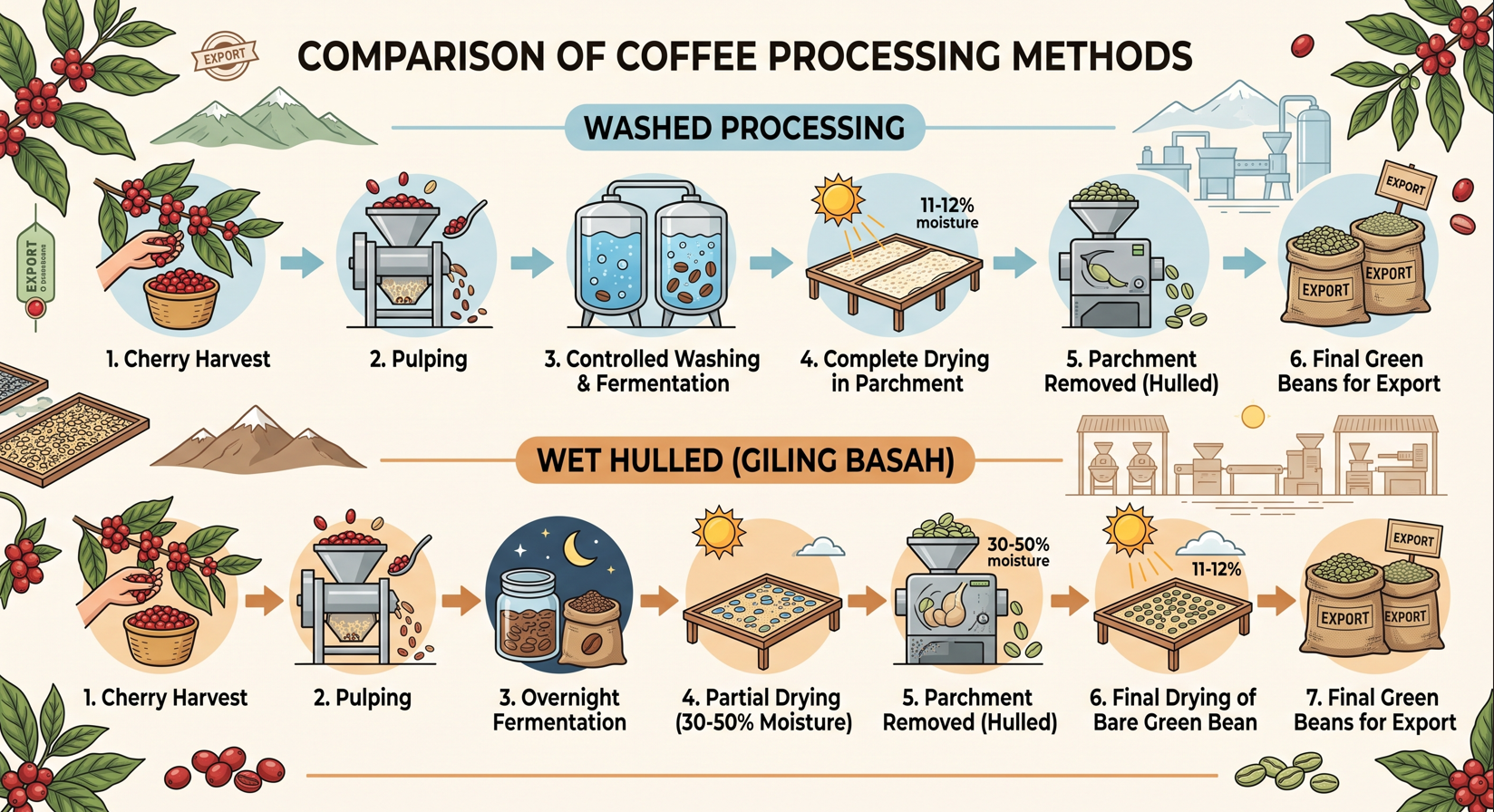
The core difference between wet hulling and washed processing lies in the moisture percentage at which the protective parchment layer (endocarp) is mechanically removed from the seed:
- Wet Hulled (Giling Basah): Cherries are pulped and undergo a controlled overnight resting process to loosen the mucilage. The following day, the parchment is washed, but the beans are dried only briefly until they reach a high, semi-wet moisture level. While still soft and wet, the parchment layer is mechanically stripped off using specialized hulling equipment. The naked green beans are then spread out to complete their drying down to final production levels.
- Washed Processing: Cherries are pulped and thoroughly cleaned using a controlled washing process. Crucially, the beans remain completely encased inside their protective parchment shell while drying slowly down to the final target moisture level. The parchment is only removed (hulled) weeks or months later, immediately prior to final dry milling and distribution.
Sensory Profile Comparison
Because wet hulling exposes the bare green bean directly to ambient air during its secondary drying phase, the bean absorbs ambient organic compounds, altering its chemical structure and flavor development.
|
Sensory Attribute |
Wet Hulled (Giling Basah) |
Washed Processing |
|
Acidity |
Muted, gentle, low-toned |
Bright, crisp, vibrant, citrusy |
|
Body / Mouthfeel |
Heavy, syrupy, rich, coating |
Medium, clean, elegant, silky |
|
Flavor Notes |
Dark cocoa, cedar, herbal, tobacco, sweet spices |
Floral aromatics, clean honey, citrus, delicate fruit |
|
Cup Clarity |
Low to medium (complex, rustic) |
High (high transparency, distinct origin notes) |
Specialty roasters seeking heavy-bodied anchor beans for dark espresso blends often lean toward wet-hulled lots. Conversely, roasters seeking vibrant single-origin pour-overs or light-roast espressos prefer washed coffees for their sparkling acidity and transparent cup clarity.
Storage Stability and Green Bean Shelf Life
For green coffee buyers, shelf life matters as much as flavor. Roasters and importers who buy in large volumes need beans that stay fresh, hold their moisture, and avoid off-notes during storage for up to a year.
- The Parchment Shield Advantage: With fully washed coffee, the outer parchment layer protects the bean during drying. This natural shield helps the beans avoid sudden changes in humidity and keeps out unwanted flavors. When washed beans are dried well under monitored conditions, they keep their fresh taste, balanced moisture, and lively acidity longer in storage.
- The Wet Hulled Vulnerability: With Giling Basah, the parchment is removed while the beans are still wet, which can stress the beans and make them more fragile. Drying these beans without their protective layer leaves them vulnerable to weather changes. As a result, wet-hulled coffee often loses its fresh flavors and can taste woody or papery after six to nine months if storage is not carefully managed.
Systemized Quality Control in Indonesian Processing
To keep green coffee stable and consistent, modern post-harvest handling uses careful monitoring at every step, no matter which processing method is used.
By executing farm selection from trusted plantations, applying an engineering-led approach to washed coffee processing, and following monitored drying protocols, modern facilities ensure green coffee beans maintain structural cell wall integrity. When post-harvest steps are guided by a certified processing team, moisture balance is stabilized before delivery, giving B2B buyers access to predictable, clean, and shelf-stable single-origin supply.
For roasters seeking reliable batch consistency and production-ready single-origin lots, partnering with a systems-driven coffee manufacturer like Bali Origins helps ensure that every harvest meets rigorous global quality standards from origin to cup.