
The British festival season is a beautiful, chaotic beast. There is nothing quite like the feeling of a packed field at Worthy Farm or the industrial grit of a city-based weekend in Manchester. However, for the musicians on stage, the dream often collides with a harsh reality. Behind the flashing lights and the roar of the crowd lies a logistical gauntlet of mud, torrential rain, and the frantic energy of a thirty-minute changeover.
If you have ever watched a stagehand toss a vintage tube amp with the casual indifference of someone throwing out the rubbish, you know the stakes. The UK is home to 592 music festivals in 2025, of which 360 are greenfield events held in open, exposed spaces. For an artist, these numbers represent incredible opportunities, but they also represent 360 different ways to destroy your equipment.
The Reality of the Road
The “grind” of the festival circuit is often romanticised, but the physical toll on gear is absolute. Research indicates that financial instability is a major stressor for touring artists, and nothing drains a bank account faster than replacing a cracked headstock or a liquid-damaged pedalboard.
When you are playing three festivals in three days, your equipment spends more time in the back of a humid van or sitting on a damp loading dock than it does on a stand. Standard soft cases or thin plywood boxes simply cannot handle the pressure of a professional touring schedule. You need a setup that treats your gear like the livelihood it is.
Building the Shield: The Case for Custom Protection
The first step in securing your rig is acknowledging that one size fits nobody. A standard guitar case might get you to a local pub gig, but it will fail you when stacked under a drum kit in a 7.5-tonne truck. Professional touring requires a high-quality flight case that is built to the exact dimensions of your equipment.
Why Off-the-Shelf Fails
Most mass-produced cases use thin plastic or low-grade foam that degrades after a single season. In the high-stakes environment of a festival stage, you need:
- High-density foam inserts that prevent internal movement.
- Zinc-plated hardware that resists the inevitable rust from British rain.
- Industrial-grade castors that can roll over gravel and grass without snapping.
A proper housing system does more than protect against impact. It creates a controlled micro-environment. When the humidity spikes during a summer downpour, a well-sealed case keeps that moisture away from your sensitive electronics and wooden instruments.
The Changeover: Speed as a Defensive Tactic
Festival sets are won or lost in the changeover. You usually have fifteen to twenty minutes to get the previous band off and your entire backline on. This is where most gear damage occurs. In the rush to meet the stage manager’s deadline, cables are pulled, pedals are stepped on, and racks are bumped.
By integrating your gear into a “live-in” case system, you eliminate these risks.
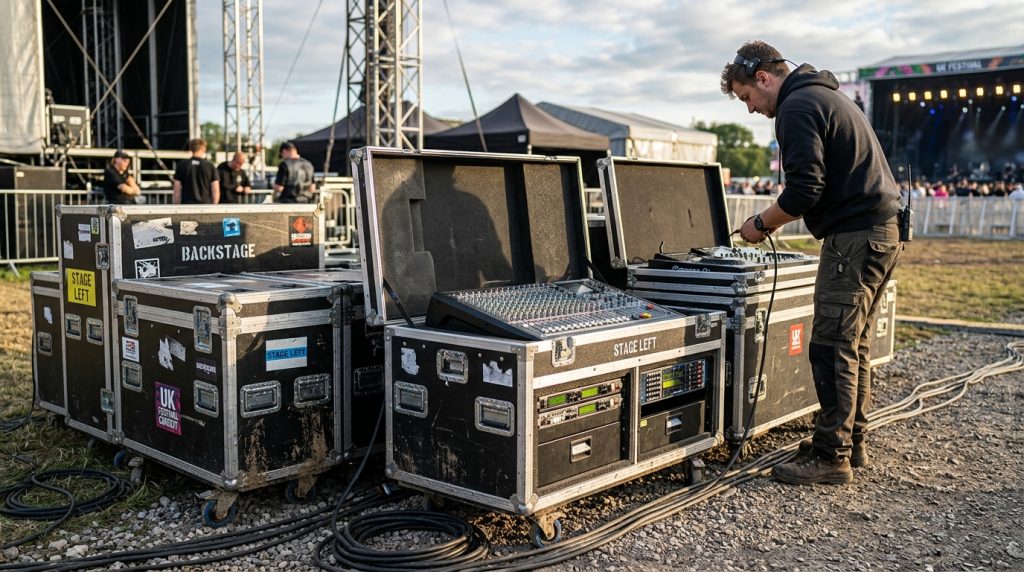
- Pedalboard Tiers: Keep your effects permanently wired and powered within their case. You just pop the lid, plug in your input and output, and you are ready.
- Rack Integration: If you use wireless units or rack-mounted processors, keep them in a shock-mounted rack. This ensures the internal components are shielded from road vibrations.
- Label Everything: It sounds simple, but clear, colour-coded labelling on your cases ensures that stage crews know exactly where things go, reducing the chance of your gear being misplaced or mishandled.
Dealing with the Elements
British weather is the primary antagonist of the UK festival scene. Even if the sun is shining during your soundcheck, a literal cloudburst can happen before your first song.
Humidity and Temperature
Extreme temperature shifts can cause guitar necks to warp and tuning stability to vanish. Keeping your instruments in a professional-grade case until the very last moment helps regulate the wood’s temperature. This is a crucial step for maintaining the integrity of your performance.
Dust and Grit
Greenfield sites are notorious for fine dust in the summer and thick mud in the autumn. This grit finds its way into potentiometers and input jacks, leading to “scratchy” pots and intermittent signals. A case with a tight tongue-and-groove seal acts as a barrier against these microscopic killers.
The Long-Term Investment
View your protection strategy as an insurance policy that actually works. While gear insurance is vital, the payout rarely covers the emotional cost of losing a specific instrument or the lost revenue from a cancelled show because your amp blew a transformer in transit.
Investing in a high-quality build means you are buying a product that will outlast the van you are driving. Professional cases are built with replaceable parts. If a latch breaks after five years of heavy touring, you fix the latch; you don’t throw away the case. This approach is better for your wallet and more sustainable for the industry.
Preparation is Professionalism
The difference between a “hobbyist” band and a professional touring outfit is often visible before they even play a note. When a crew sees a band roll in with clean, well-maintained, and properly cased equipment, they treat that band with more respect. They know you take your craft seriously, which often leads to a smoother soundcheck and a better overall experience on site.
The UK festival circuit is a test of endurance for both artists and equipment. By prioritising the safety of your rig, you remove the anxiety of potential gear failure. This allows you to focus on the only thing that actually matters: putting on a show that the crowd will remember long after the mud has been washed off their boots.
Ensure your gear is ready for the long haul. Take the time to audit your current setup, identify the weak links in your transport chain, and upgrade to the protection your sound deserves. The road is unforgiving, but with the right preparation, your rig will survive everything the British summer throws at it.