
A student ordering a 1,500-word history essay and a doctoral candidate working on a technical literature review may both see the same field on an order form: subject.
Behind that field sits a harder question. Who understands the assignment well enough to work on it?
Writer matching goes beyond finding someone who writes clearly and has an open slot. The writer needs relevant knowledge, experience with the assignment type, familiarity with the expected academic level, research skills, citation knowledge, and enough time to handle the project properly.
EssayPay.com provides a useful example of how essay writing services approach this process. Its ordering system collects information about the paper type, subject, academic level, deadline, length, formatting style, and additional instructions before work begins. These details help narrow the pool of suitable writers.
The process reveals an important part of how essay writing services work. A good match starts with the actual demands of the assignment.
What Makes a Writer Suitable for an Assignment?
The phrase professional essay writers covers people with very different academic backgrounds and skills.
A writer may produce excellent prose while being poorly suited to a specific project. Someone experienced in literary analysis may struggle with quantitative finance. A business specialist may understand Harvard referencing but have limited experience evaluating psychological research under APA conventions.
Several factors can shape the matching decision:
|
Assignment factor |
Why it matters |
|
Subject |
Identifies the core field of knowledge |
|
Academic level |
Determines the expected depth of analysis |
|
Assignment type |
Indicates the writing and analytical skills required |
|
Deadline |
Determines which suitable essay writers have enough time |
|
Citation style |
Requires familiarity with specific referencing conventions |
|
Research requirements |
May require experience with scholarly sources and research methods |
|
Writer qualifications |
Help establish relevant academic and professional competence |
These factors often overlap.
A psychology essay using APA is relatively broad. A master’s-level psychology literature review requiring recent peer-reviewed studies, methodological comparison, and APA 7 demands a more specific set of skills.
Subject Knowledge Comes First
Subject is usually the first major filter.
EssayPay.com writers work across areas ranging from nursing and biology to business, psychology, literature, programming, and other disciplines. Its writer recruitment information also asks candidates to identify their preferred subjects and areas of expertise.
Academic disciplines have their own vocabulary, evidence standards, research traditions, and ways of constructing arguments.
A history writer needs to understand context, primary and secondary evidence, competing interpretations, and historiography. A nursing assignment may require familiarity with clinical research and evidence-based practice. A finance paper can involve terminology and analytical concepts that a general academic writer rarely encounters.
The distinction becomes sharper with specialized subjects.
Consider an assignment examining machine-learning bias in medical diagnosis. The writer may need to understand algorithmic concepts, healthcare applications, research methodology, and limitations in published studies. General familiarity with technology would provide only part of the required knowledge.
Subject expertise becomes valuable when it allows the writer to recognize distinctions that matter within the discipline. This is precisely what helps foster long-lasting relationships between students and Essaypay.com.

Academic Level Changes the Match
Academic level influences the depth expected from a paper.
A first-year undergraduate assignment may test whether a student understands course concepts and can develop a supported argument. Master’s-level work usually demands deeper engagement with scholarly research. Doctoral projects can involve narrow research areas, methodology, theoretical debates, and unresolved questions within a field.
EssayPay reflects differences in complexity through its writer options. Its published pricing information distinguishes between standard writers and higher-tier specialists for more demanding assignments.
The principle extends beyond writer categories.
A writer may understand organizational psychology well enough to discuss motivation theories in an undergraduate essay. A postgraduate research proposal examining the psychometric properties of employee-assessment instruments requires more specialized methodological knowledge.
The academic level helps determine how deep the writer’s expertise needs to go.
Assignment Type Matters
Two assignments within the same subject can require very different skills.
An argumentative essay needs a clear position supported by evidence. A literature review requires synthesis across sources. A case study applies concepts to a specific situation. A research proposal raises questions about methodology, variables, sampling, feasibility, and limitations.
This distinction affects matching.
A writer experienced with short argumentative essays may have limited practice organizing a long literature review. Another writer may have extensive experience comparing research findings but little familiarity with reflective assignments.
Students therefore benefit from identifying the exact assignment type and providing the original instructions.
The label “essay” says too little.
Research Requirements Reveal Expertise
Research is one of the clearest places where professional competence becomes visible.
EssayPay’s published writer requirements mention research using scholarly articles, academic databases, and books, along with evaluating and synthesizing information. Critical thinking and evidence-based argumentation are also relevant skills.
Finding sources is only part of research.
Consider a master’s-level assignment on employee burnout among remote workers. The instructions require recent peer-reviewed sources and comparison of competing psychological models.
The writer needs more than general familiarity with psychology. Relevant experience could include applied psychology, scholarly literature, APA formatting, comparative analysis, and evaluation of research methodology.
A business case examining supply-chain disruption creates different research demands. The writer may need to work with operational concepts, industry reports, company information, and supply-chain research.
Expertise becomes visible in how a writer selects, evaluates, connects, and interprets evidence.
Citation Style Is Part of the Skill Set
APA, MLA, Chicago, and Harvard can appear to be formatting details, but they influence how evidence is documented throughout a paper.
EssayPay lists familiarity with common citation styles among the competencies expected from writer applicants. Its order process also allows students to specify formatting requirements.
An experienced academic writer may work comfortably with several common styles. More complicated projects can make specialized familiarity valuable.
A history paper using Chicago notes and bibliography creates different referencing demands from an APA psychology literature review. Long assignments with many sources increase the importance of consistent citation management.
Matching a writer who already understands the required system can reduce unnecessary corrections later.
Deadlines Narrow the Writer Pool
Expertise has to work within the available time.
A qualified writer needs enough time to research the topic, evaluate sources, draft the paper, check citations, and revise the work. Specialized assignments may require considerably more preparation than general essays of a similar length.
EssayPay includes the deadline among the information collected during ordering, and turnaround time also influences its pricing.
Availability therefore becomes part of matching.
A writer with excellent subject knowledge may already be handling other projects. Another qualified specialist may have the capacity to complete the assignment within the requested timeframe.
The deadline has to be considered alongside subject fit, complexity, and research requirements.
What Happens Before Someone Becomes an EssayPay Writer?
Writer matching depends on the quality of the writer pool behind it.
EssayPay’s published recruitment information describes several stages for applicants. Candidates provide information about their education and qualifications, submit writing samples, and may complete a test assignment. A trial period allows their work to be evaluated further.
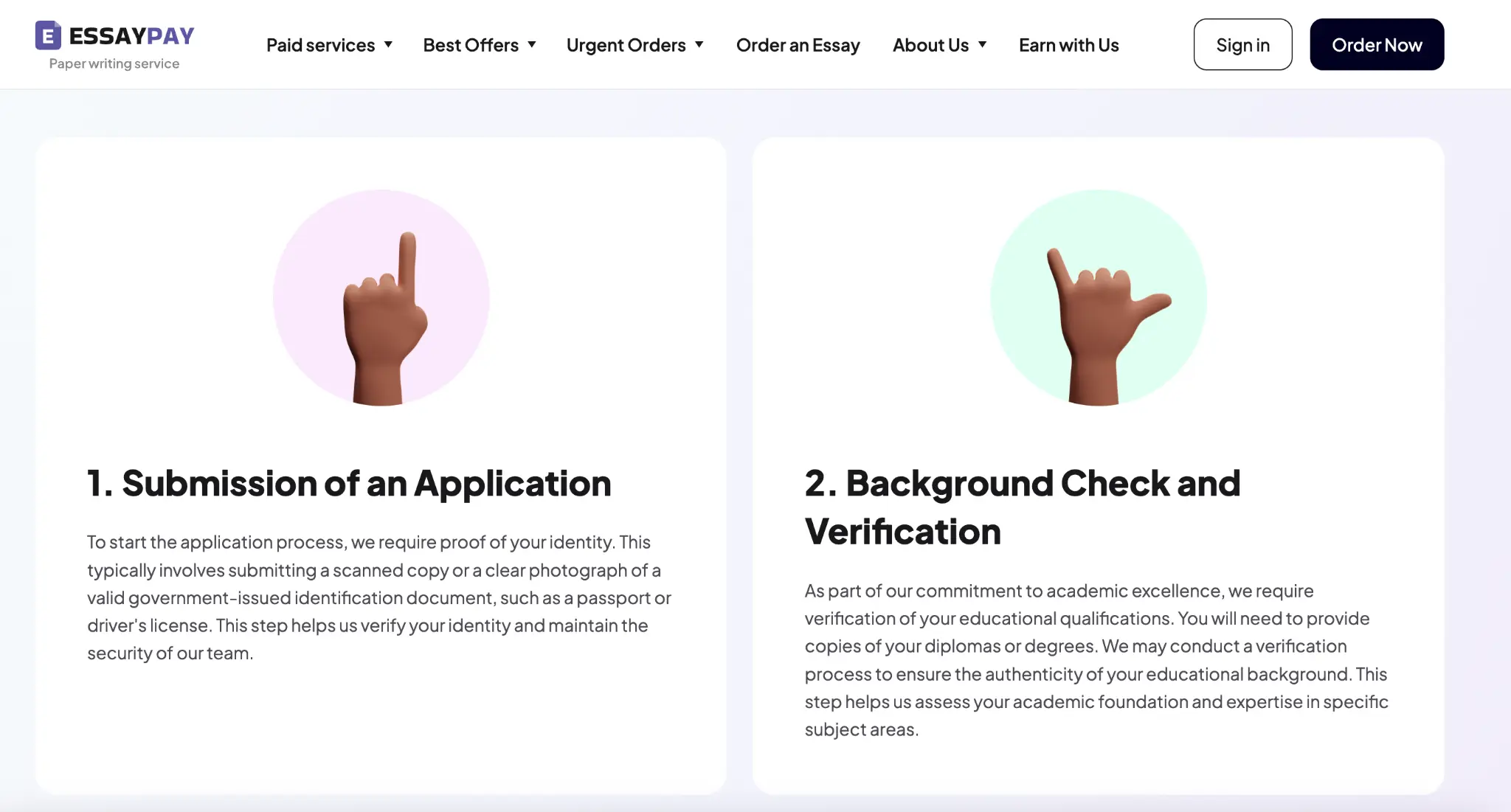
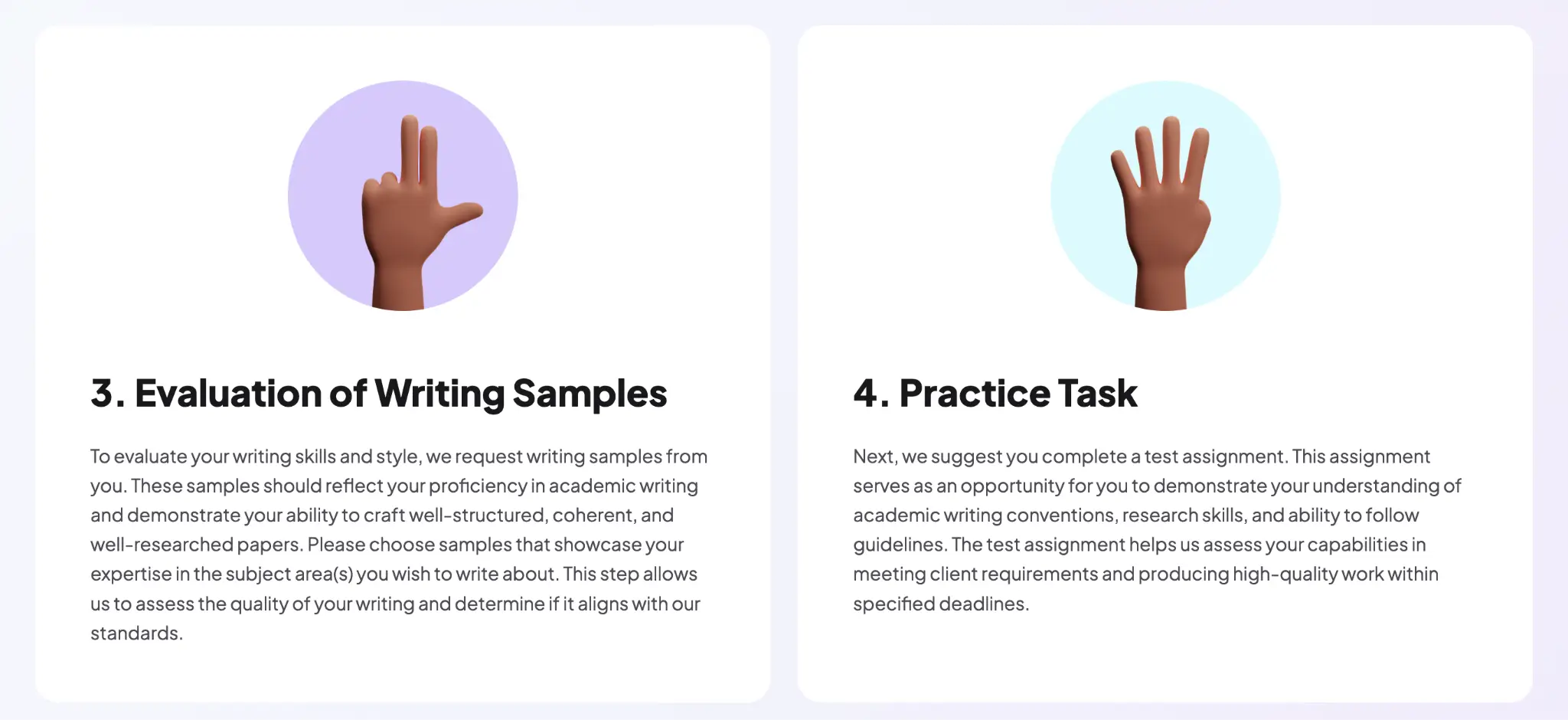
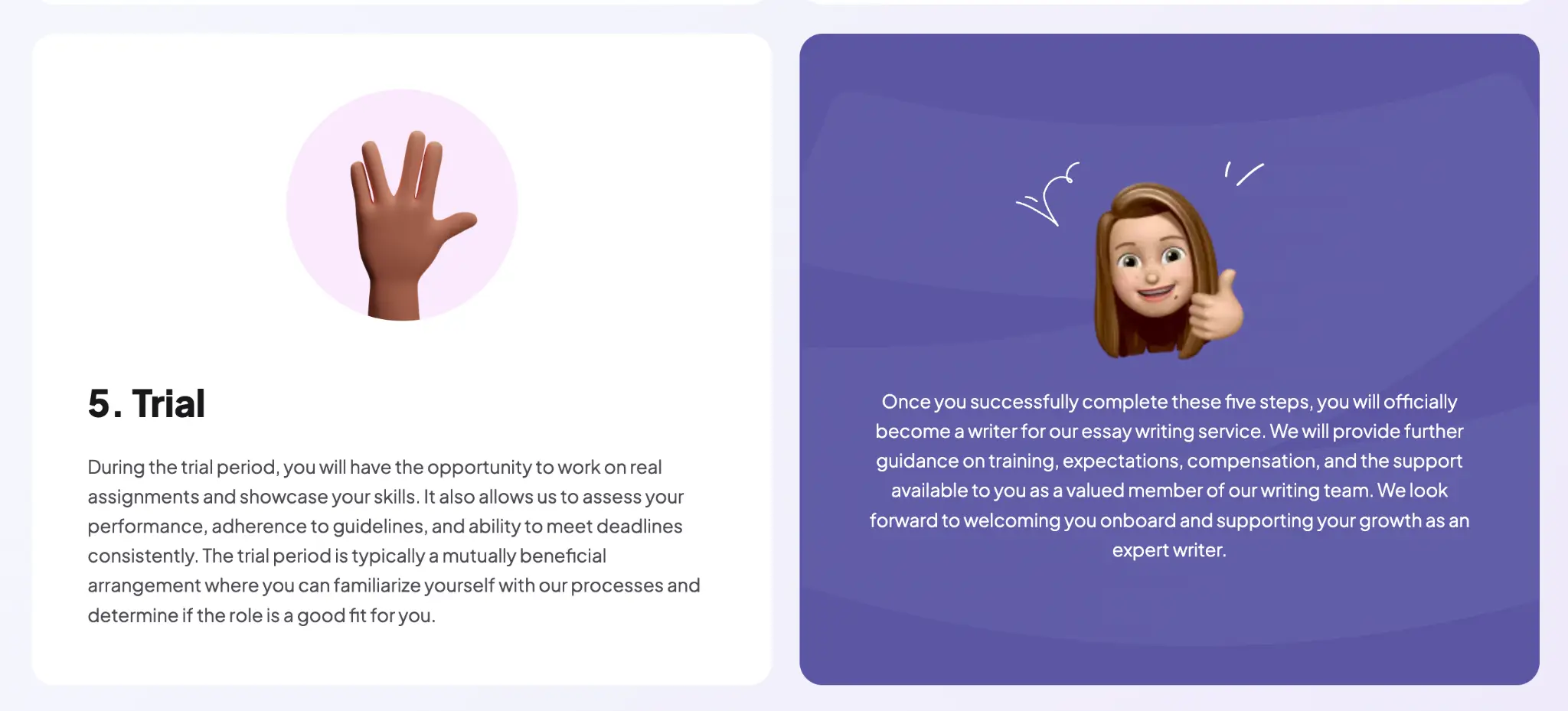
The service also identifies skills connected with academic writing, including research, citation knowledge, critical analysis, written English, editing, following instructions, and meeting deadlines.
These criteria help explain what professional qualification can mean in practice.
Academic education provides subject knowledge. Writing samples demonstrate whether someone can communicate ideas effectively. A test assignment can reveal how the applicant handles research, instructions, structure, and academic conventions.
Competence emerges from the combination of these abilities.
Behind the Matching Process: An Editorial Q&A With Arlene McCoy
Arlene McCoy offers a useful perspective for examining subject expertise. According to EssayPay’s published author information, McCoy holds a master’s degree in applied psychology from the University of Southern California and has experience in writing, teaching, and mentoring. She joined EssayPay in 2020 and has worked as a writer and academic coach.
The following editorial Q&A is reconstructed around EssayPay’s published information about writer qualifications and matching criteria. It illustrates how those principles could apply to specific assignments rather than representing a verbatim interview.
Q: When an order arrives, what usually matters most when selecting a writer?
Arlene McCoy: The subject gives the team a starting point, but the instructions reveal much more. Two orders can both fall under psychology and require very different expertise. One might involve an undergraduate discussion of motivation theories. Another could require evaluation of employee-burnout research, comparison of methodologies, and recent peer-reviewed studies. The second assignment calls for deeper research experience.
Q: How important is subject specialization?
Arlene: Subject knowledge has to connect with the academic level and specific task. A writer may be strong in psychology essays but have limited experience with graduate research proposals. Another may specialize in literature reviews and know how to compare studies, identify patterns, and evaluate methodological limitations.
Q: How much does assignment type influence the match?
Arlene: Quite a lot. A case study, argumentative essay, literature review, and research proposal require different approaches. A literature review requires synthesis across sources. A research proposal puts more emphasis on methodology. Those differences should influence writer selection.
Q: What happens when the topic is highly specialized?
Arlene: Detailed instructions become especially valuable. A broad category such as business could mean leadership theory, supply-chain management, financial analysis, or digital marketing analytics. The topic, terminology, research methods, course materials, and grading rubric provide a clearer picture of the expertise required.
Q: Can you give an example of a difficult matching situation?
Arlene: Consider a master’s-level assignment on predictive analytics in digital marketing. The writer should understand marketing concepts, analytics terminology, academic research, and quantitative evidence. If the instructions require APA 7 and recent peer-reviewed sources, those requirements narrow the pool further.
Q: Does academic level make a major difference?
Arlene: Definitely. Undergraduate assignments often focus on demonstrating understanding and developing a supported argument. Graduate work usually demands deeper engagement with research. At doctoral level, the topic may become extremely narrow and require familiarity with a particular methodology or research tradition.
Q: Where does citation style fit into writer selection?
Arlene: Citation knowledge becomes especially important in source-heavy assignments. Someone who works regularly with APA understands conventions common in psychology and the social sciences. Chicago appears frequently in history. Experience with the required system becomes useful when a project contains many sources or unusual references.
Q: How do deadlines affect the decision?
Arlene: Availability matters because research, drafting, source checking, and revision all require time. Specialized work may require additional preparation. The deadline should therefore be considered together with subject fit and research complexity.
Q: What does a qualified writer mean in practical terms?
Arlene: Relevant education is one part of it. Practical skills matter too. The writer needs to understand instructions, evaluate academic evidence, synthesize research, work with the required citation style, and write at the appropriate academic level. Those abilities turn subject knowledge into useful academic work.
Q: What information from students makes matching easier?
Arlene: Detailed instructions make the required expertise clearer. The topic, academic level, rubric, required readings, source requirements, citation style, and professor comments can all help. A detailed brief gives the matching team much more information than a broad subject and word count.
Q: What should students consider when they choose an essay writer?
Arlene: Relevance matters most. Students should consider subject knowledge, research experience, familiarity with the assignment type, academic level, and citation requirements. Credentials are most useful when they connect directly to the work the assignment requires.
Three Examples of Specialized Matching
The matching logic becomes clearer through hypothetical assignments.
Case 1: Literature
A second-year student needs a 1,200-word analysis of symbolism in a twentieth-century novel using MLA.
The suitable writer needs experience with literary analysis, close reading, textual evidence, and MLA. An advanced scientific or technical background would contribute little to this assignment.
Case 2: Marketing Analytics
A master’s student needs a research-based paper evaluating digital advertising attribution models.
The writer should understand marketing analytics, attribution terminology, academic research, and the interpretation of quantitative evidence. Broad business knowledge may not provide enough depth.
Case 3: Organizational Psychology
A doctoral student needs help structuring a literature review concerning leadership and employee psychological safety using APA 7.
The assignment calls for subject depth, substantial research experience, familiarity with postgraduate academic standards, strong APA knowledge, and the ability to synthesize scholarly literature.
Each assignment requires an essay writer, but the relevant expertise changes considerably.
What Students Can Do to Improve the Match
Students influence matching through the quality of the information they provide.
An order described as “Business essay, 2,000 words” leaves major questions unanswered. A detailed brief provides the topic, academic level, assignment instructions, required sources, citation style, assessment rubric, research expectations, and course materials.
EssayPay encourages customers to provide detailed instructions and allows supporting files and additional information to be included with an order.
Those details help identify the expertise required.
Students trying to choose an essay writer should focus on relevant competence. Useful criteria include subject background, familiarity with the assignment type, research experience, citation knowledge, and experience working at the required academic level.
Advanced qualifications matter when the assignment demands that level of expertise, while subject fit remains essential.
Matching Becomes More Important as Topics Get Specific
Writer matching becomes more demanding as an academic topic narrows.
“History” identifies a discipline.
“Cold War history” provides more direction.
“A historiographical analysis of competing interpretations of the Cuban Missile Crisis using Chicago notes and bibliography” identifies a much clearer combination of subject knowledge, analytical experience, and citation skills.
The same progression appears across disciplines.
Effective essay writing services need concrete indicators of competence: education, demonstrated writing ability, research skills, subject familiarity, citation knowledge, previous performance, and experience with comparable academic work.
EssayPay’s published process demonstrates several of these layers. The order collects academic and technical requirements, while its writer recruitment process considers education, writing ability, research skills, and other academic competencies. Subject, academic level, assignment complexity, deadline, and formatting requirements can then help narrow the suitable writer pool.
The student sees an order form. Behind it sits a matching process involving subject knowledge, academic expectations, research demands, writer qualifications, and time.
As assignments become more specialized, those distinctions matter more. Strong academic writing depends partly on the writer’s ability to understand the field well enough to recognize what matters within it. That is where writer matching moves from a logistical step to a meaningful part of the academic writing process.