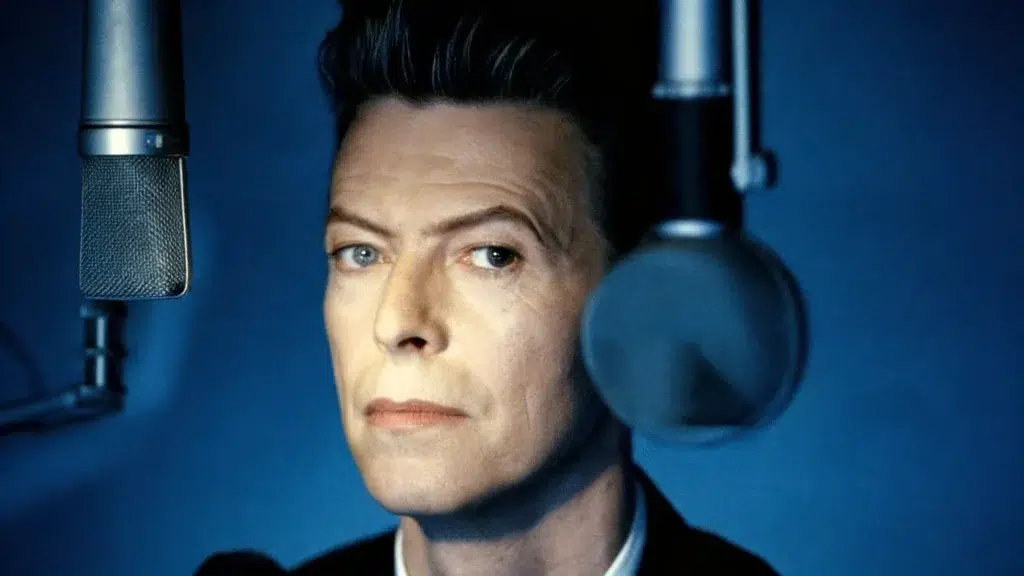
Some faces stay with you. David Bowie was one of them, and for most people, the eyes are the first thing that registers. That asymmetry, that sense that something is slightly off in the most compelling way possible.
It caught my attention long before the music did. If you have ever looked at a photo of Bowie and felt like his eyes were two different colors, you are not imagining things, but the explanation is not what most people assume.
The real story is stranger, more human, and far more interesting than a genetic quirk.
What Made David Bowie’s Eyes a Subject Worth Understanding
The conversation around David Bowie’s eyes has never really stopped. Most people assume he had heterochromia, the condition where a person is born with two differently colored irises.
That assumption is wrong, and it matters because the truth tells a better story. Both of Bowie’s eyes were blue. What made them look different was not color; it was something that happened to him as a teenager, something entirely preventable, caused by a single moment that left a permanent mark.
Anisocoria, not heterochromia, is the condition behind that look. Understanding the difference changes how you see the whole thing.
Why Did David Bowie’s Eyes Look Different?

David Bowie’s eyes appeared different because one pupil was permanently dilated, not because his irises were different colors. A dilated pupil lets in more light, which makes that eye appear significantly darker than the other.
Combined with stage lighting and photography, the contrast was dramatic enough to create the illusion of two entirely different eye colors.
Both irises, the colored part of the eye, were blue. The difference was entirely in the pupil size.
What is Anisocoria?
Most people use the wrong term when describing Bowie’s eyes. The distinction between anisocoria and heterochromia is small in wording but significant in meaning:
| Term | Meaning |
| Anisocoria | Unequal pupil sizes |
| Heterochromia | Different colored irises |
| Bowie’s condition | Anisocoria, NOT heterochromia |
Anisocoria simply means one pupil is larger than the other. It can result from injury, neurological conditions, or medication; in Bowie’s case, it was direct physical trauma to the eye. The difference becomes most visible under bright light or flash photography.
The Real Story Behind the Injury
In 1962, a teenage David Bowie, then still going by David Jones, got into a fight with his friend George Underwood over a girl. Underwood threw a punch that connected with Bowie’s left eye.
The impact was significant enough to damage the muscles controlling the pupil. The left pupil lost its ability to contract and dilate normally, leaving it permanently dilated.
Underwood and Bowie remained friends after the incident. Years later, Underwood even contributed artwork to some of Bowie’s early album covers, one of the more unusual footnotes in rock history.
Myth vs Fact
A lot of what circulates about Bowie’s eyes is simply incorrect. These are the three most common misconceptions, and what the record actually shows:
| Myth | Fact |
| David Bowie had two different colored eyes | Both eyes were blue, pupil sizes were unequal, and the iris colors were not |
| He was born with this condition | It resulted from a teenage injury at around age 15 |
| The condition significantly disabled his vision | He experienced some depth perception reduction but functioned normally throughout his career |
Getting these facts straight matters because the myth version, while interesting, gives credit to genetics for something that was actually the result of a very human, very accidental moment.
Did It Affect His Vision?
The injury did come with real consequences:
- Reduced depth perception in the left eye
- Some sensitivity to light due to the fixed dilation
- Limited ability to adjust to changes in lighting conditions
These were not career-ending limitations. Bowie adapted, and there is no record of the condition significantly interfering with his work. For someone who spent decades under intense stage lighting, that adaptation suggests how manageable the condition ultimately was.
How His Eyes Became Part of His Image
What started as the result of a schoolyard fight became one of the most recognizable physical features in music history. The 1962 injury left a permanent mark.
By the mid-1960s, the pupil dilation was fixed, and by the 1970s, the world had taken notice. That asymmetry fit the persona Bowie was building.
He constructed a career around existing slightly outside normal parameters, and his eyes reinforced that without any deliberate effort. No stylist planned it, no photographer manufactured it.
It was simply there from a young age, grew alongside his public profile, and eventually became completely inseparable from the David Bowie image that the world came to recognize.
Final Thoughts
What stays with me about this story is how accidental it all was. A teenage fight, a single punch, and a permanent change that would define one of the most recognizable faces in music.
David Bowie’s eyes were not a marketing decision or a genetic gift; they were the result of an ordinary moment with extraordinary consequences. If you have ever looked at those photos and felt that something about his gaze was different, you were right.
The science behind it is straightforward. What it became, though, was anything but. That gap between the cause and the outcome is exactly what makes the David Bowie eyes story worth knowing. Drop a comment below and share your love for him.