Online shopping makes it easy to compare fibres, colours, and prices, then have yarn delivered before your next free weekend.
The tricky part is knowing what to order. Labels, ply numbers, fibre types, and dye lots can feel confusing at first.
This guide gives you a simple checklist so your first parcel matches the project you have in mind.
Start With Your Project
Choose one small, beginner-friendly make before you shop. A beanie, scarf, or cotton dishcloth is a good place to start.
Let the pattern lead. A good pattern tells you the yarn weight, how much yarn you need, and the recommended needle or hook size.
One detail to watch is the way yarn weight is described. Australian stores usually list yarn by ply, while many international patterns use weight names or numbers.
For example, Australian 8 ply is commonly matched with DK, Light, or US number 3. Once you know that, matching a pattern to a product becomes much easier.
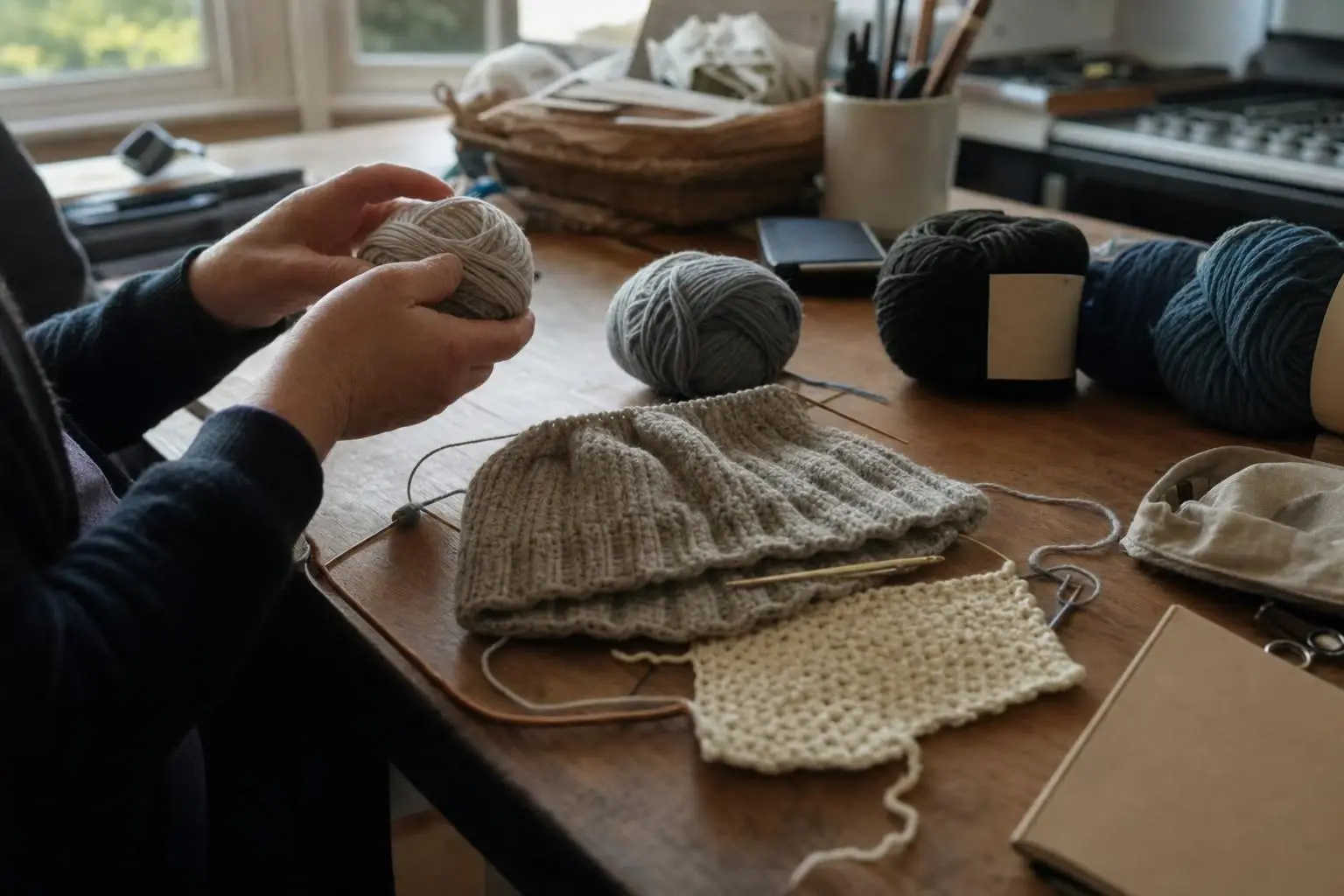
If you are setting up a small craft corner, a few practical home tips, such as storing yarn away from direct sunlight and keeping tools in one container, can help you stay organised.
Fibre Basics for Australian Makers
- Wool: Warm and stretchy, so it is forgiving for beginners and suits cool-weather makes like beanies and jumpers.
- Cotton and linen: Breathable and sturdy, which suits warmer weather and homewares like dishcloths and market bags.
- Acrylic: Easy-care and machine washable, handy for quick projects, gifts, and items that need frequent washing.
- Blends: Combine useful qualities, such as wool for warmth with acrylic for easier care.
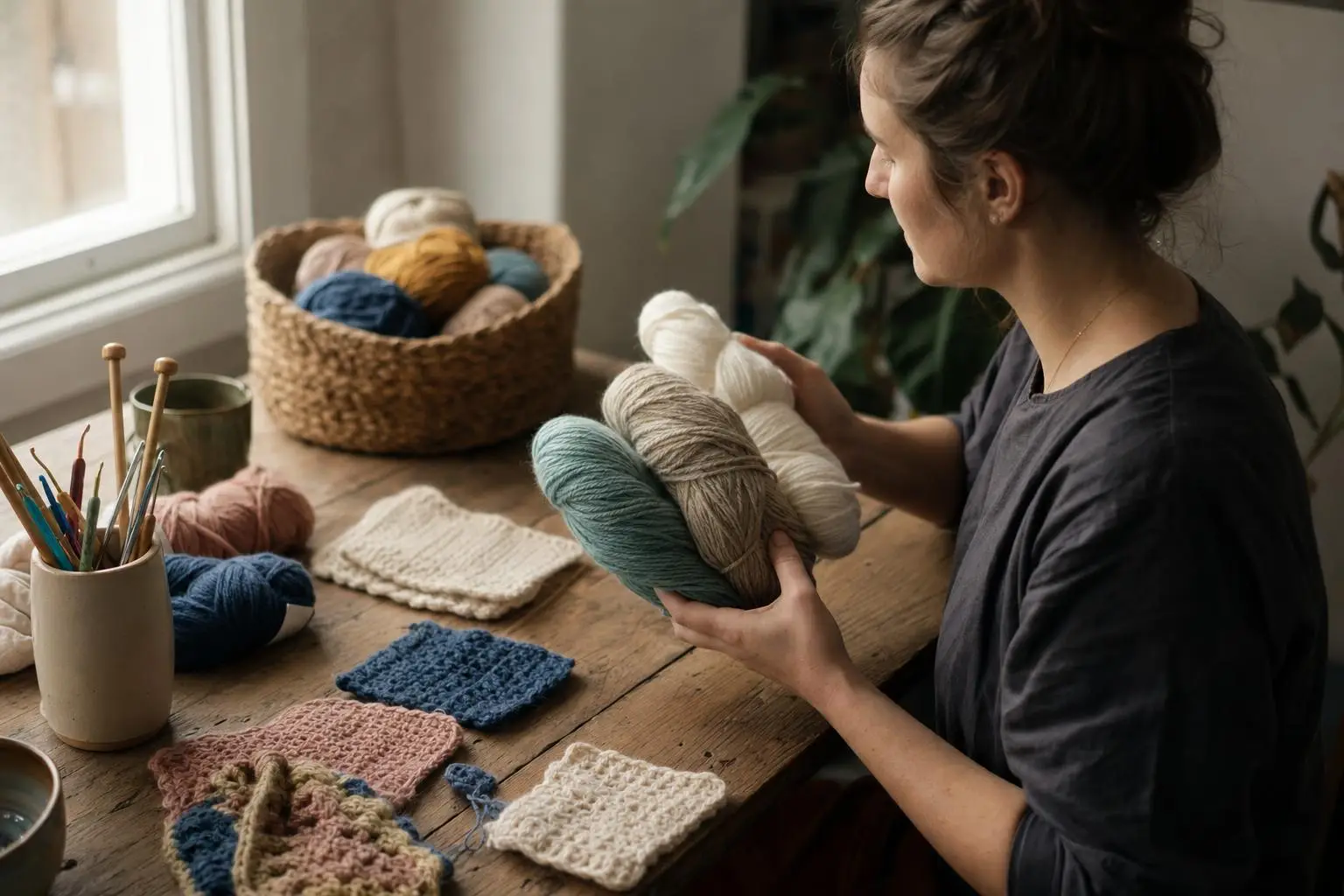
Ply and Weight, Explained Simply
In Australia, ply is a weight term. It does not tell you the literal number of strands twisted together.
The most common weight you will see is 8 ply. It is often described as DK or Light Worsted and is usually worked with tools around 3.75 to 4.5 mm, depending on the pattern and your tension.
On international charts, DK sits in the Light or US number 3 range. These charts often list about 200 to 250 m per 100 g, but labels vary, so always check the product details.
When you substitute yarn, match the gauge first. Gauge means the number of stitches and rows in a set measurement, and it matters more than the label name alone.
Read the Label Before You Buy
- Fibre content: The percentages tell you how warm, stretchy, soft, and washable the yarn is likely to be.
- Weight or ply: Look for the ply, weight name, or weight symbol, then compare it with your pattern.
- Recommended needle or hook: Use this as a starting point, then adjust if your gauge is different.
- Metreage and grams: Metres matter more than grams when you check whether you have enough yarn.
- Dye lot: This batch number helps keep colour consistent across one project.
- Care symbols: Check how to wash and dry the finished item before you buy.
For one project, choose the same dye lot wherever possible, and order all the balls in one go.
How to Buy Yarn Online in Australia
- Use the site filters. Narrow by fibre, weight, brand, and colour so you see suitable options faster.
- Check the metreage. Confirm the total metres cover what your pattern needs, then add a small buffer.
- Compare care needs. A machine-washable yarn may be better for baby items, gifts, and everyday homewares.
- Review the product photos carefully. Screens can shift colours, so read the colour name and description too.
- Skim the returns and shipping pages so there are no surprises after you order.
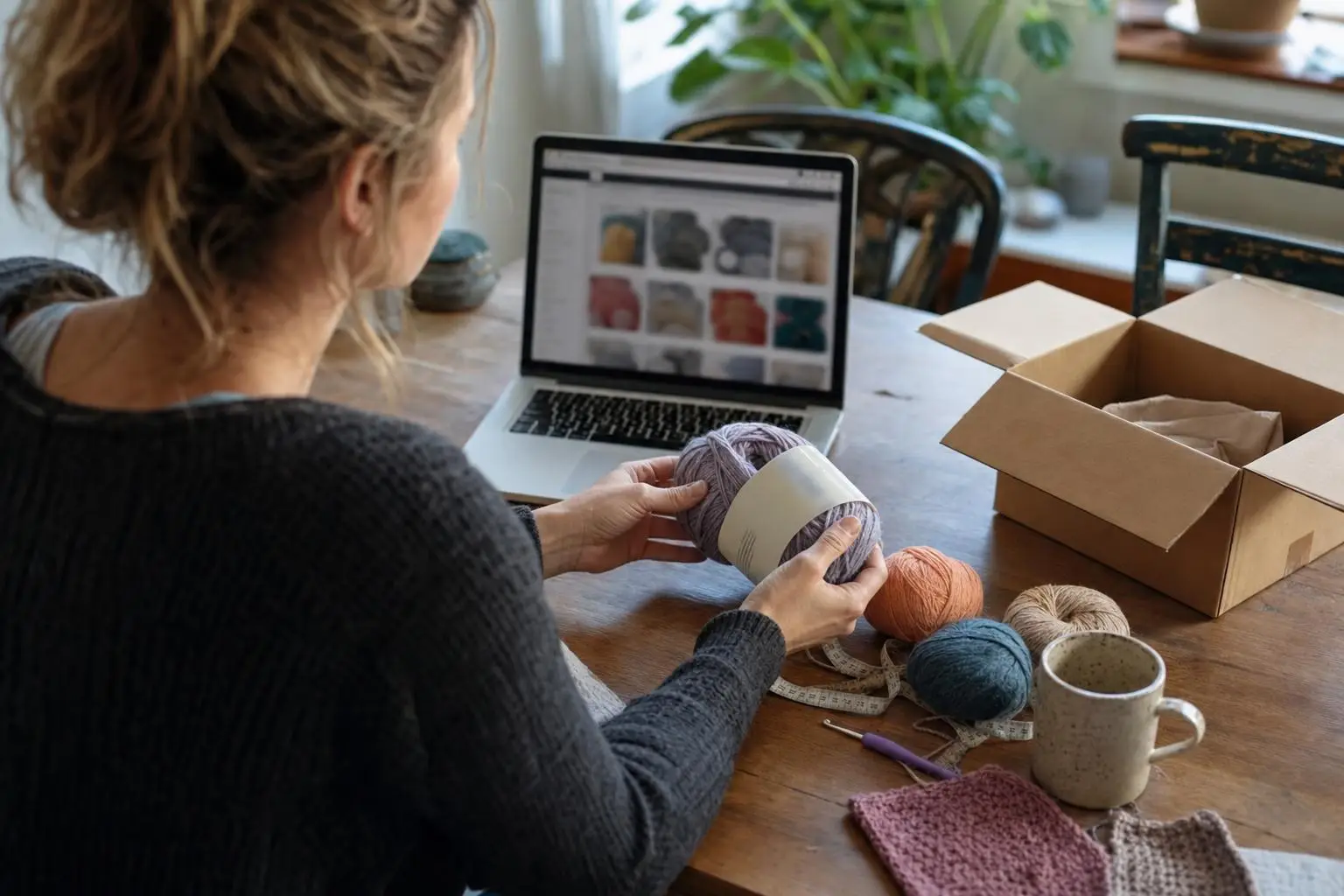
When you search for yarn online Australia, compare stores by how clearly they group options by fibre, weight, brand, colour, and care instructions. Good filters make a real difference when you are still learning the terms.
Three Starter Combos
- DK or 8 ply cotton for dishcloths: Cotton is absorbent and hard-wearing, and it shows stitches clearly. Try a 4 to 4.5 mm hook or needles.
- DK or 8 ply wool for a simple beanie: Wool is warm and stretchy, which is kind to slightly uneven tension. Start with 3.75 to 4.5 mm tools.
- Bulky or super bulky acrylic for a quick throw: Thick yarn grows fast and washes easily, which helps keep motivation high. Use the larger hook or needles suggested on the label.
Frequently Asked Questions
Is 8 ply the same as DK or Light?
Yes, in practice. Conversion charts commonly match Australian 8 ply with DK, also shown as Light or US number 3, usually with 3.75 to 4.5 mm needles.
Do I Match Grams or Metres When Substituting?
Match metres, not grams. Two balls can weigh the same but contain different lengths, so compare metreage and buy enough for the pattern.
Do I Need the Same Dye Lot?
For one project, yes, where possible. Matching dye lots helps keep the colour consistent from the first ball to the last.
Before You Place Your First Order
Keep the process simple. Pick one small project, read the label, and match the yarn weight and fibre to what you want to make.
Choose enough yarn in one dye lot, check the care instructions, then start. The best way to learn is to get the yarn in your hands and make a few stitches.