Open most closets and you will find the same thing. Plenty of clothes, and nothing that goes together. A party top that only works with one skirt. A coat bought for one winter. Jeans that fit on a good day. A versatile wardrobe is the opposite of that. It is a smaller set of clothes that all mix, and most of them work in any season. This post walks through how to build one in simple steps, and shows how Amazon makes it easier to find and compare the pieces without going from shop to shop.
Pick Your Colors First
It sounds boring, but this step saves the most money. Choose three or four base colors that go together. Black, white, navy, grey, beige and tan are the usual picks. Then add one or two colors you actually like, such as olive, burgundy or soft blue.
The easiest way to decide is to look at what you already wear. If the closet is mostly navy and grey, keep going with navy and grey. When most pieces share a color range, any top works with any bottom, and getting dressed takes two minutes instead of twenty.
The Basics Worth Owning
A small group of basic wardrobe pieces covers most days. Here is a simple starting list:
- A white T-shirt and a grey or black one
- A long sleeve tee and a button-up shirt
- A cardigan or a crew neck sweater
- Dark jeans and one pair of tailored trousers
- A skirt or shorts
- One plain dress
- A blazer, a denim jacket and a light coat
- White sneakers, plus boots or loafers
That adds up to about fifteen or twenty things. It looks small, and it still makes dozens of outfits. Everything else can be added later, one piece at a time.
One Piece, Two Seasons
The table shows how the same item changes between warm and cold weather.
|
Piece |
Warm Weather |
Cold Weather |
|---|---|---|
|
White T-shirt |
On its own with shorts or a skirt |
Under a sweater or blazer |
|
Button-up shirt |
Sleeves rolled up |
Under a knit, collar showing |
|
Dark jeans |
With sneakers or sandals |
With boots and a coat |
|
Midi dress |
With sandals |
With tights, boots and a cardigan |
|
Blazer |
Over a tee |
Over a knit with trousers |
|
Light jacket |
For cool evenings |
Under a coat for extra warmth |
Layering Makes Year Round Fashion Easy
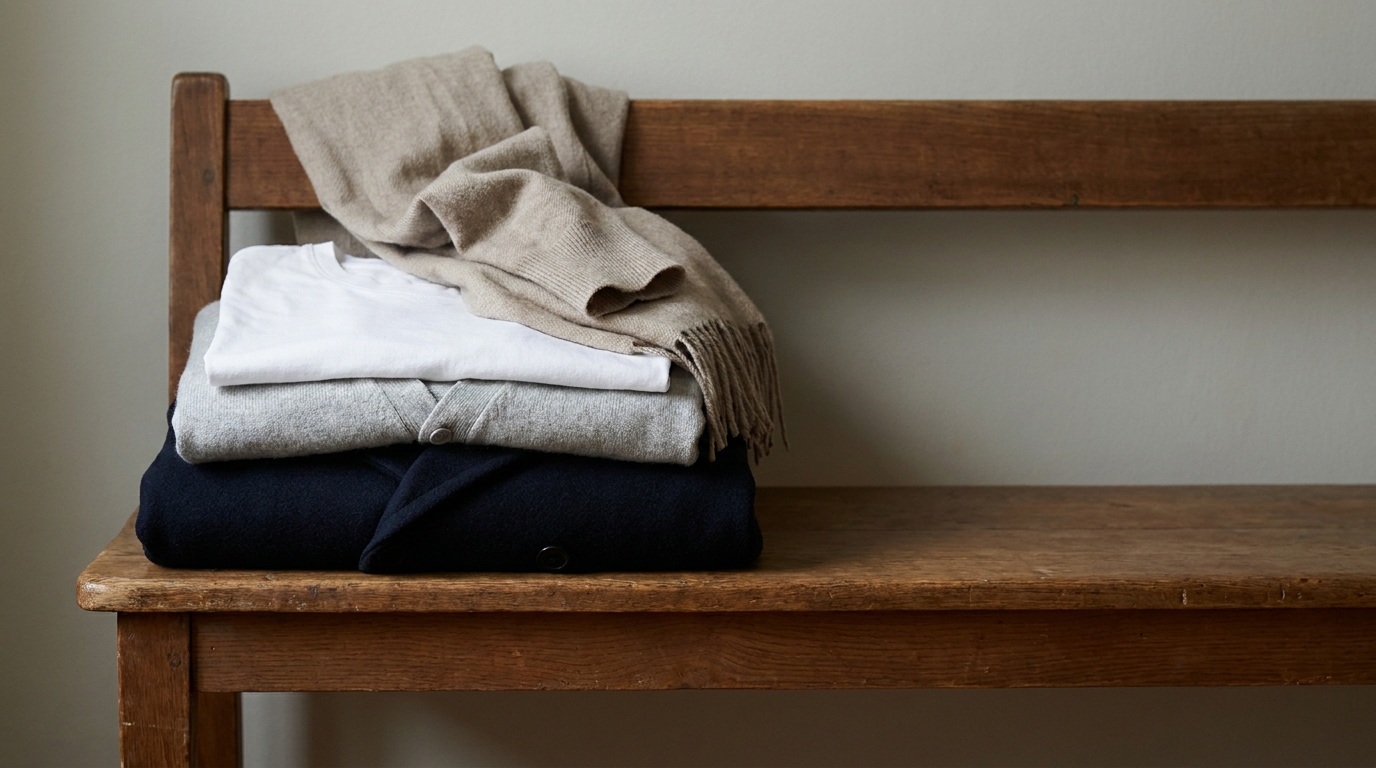
The trick to wearing the same clothes all year is layers. In summer, wear one layer. When it gets cooler, add a cardigan. In winter, add a coat and a scarf. The base stays the same and only the top layers change. That is the simplest way to get year round fashion out of a small closet.
Fabric matters here. Cotton and linen feel cooler in hot weather. Wool and wool blends keep you warm in winter. Thin knits layer much better than thick ones, so a thin sweater tends to get worn a lot more than a chunky one. The fabric tag or the product details will tell you what an item is made of, and breathable fabrics make a piece useful for more months.
Timeless Wardrobe Essentials Are Worth More Money
A few items get worn so often that a better one is worth paying for. The usual list of timeless wardrobe essentials is a winter coat, a pair of well fitting jeans, leather shoes and a blazer.
Think about cost per wear. A coat that costs $100 and is worn 100 times costs about $1 each time. A cheap top that gets worn twice and then pushed to the back of the closet costs more per wear than it looks. When checking quality, look at the fabric, the stitching, the fit and the buttons. Natural fibers and good blends usually last longer. Seams should be straight and tight. Shoulders should sit on the shoulders, and sleeves should reach the wrist. Spending a little on a tailor to shorten trousers can make timeless wardrobe essentials look much better.
Everyday Fashion Without the Stress
Most days are not special. The goal of everyday fashion is to get dressed quickly and feel fine about it. Three simple formulas cover almost everything.
For a casual day, wear a T-shirt, dark jeans, white sneakers and a denim jacket. For a smart day, wear a button-up shirt, tailored trousers and loafers. For something a little dressy, wear a midi dress, a cardigan and boots.
Because the pieces share colors, they can be mixed freely. A scarf or a belt changes a look without adding another full item. Picking tomorrow’s outfit the night before also saves time in the morning.
Shopping on Amazon
Amazon puts clothes, shoes and accessories in one place, so comparing is quick. A few tips help:
- Amazon Essentials is Amazon’s own label for everyday basics like tees, cardigans and jeans.
- The Drop, Amazon’s fashion label, is worth a look for current styles.
- Customer reviews and photos show real fit and color.
- Size charts and fit notes appear on each product page, and reviews often say if an item runs small or large.
- A Wish List helps if you want to save options and compare them over a few days.
- On eligible items, Try Before You Buy may be available.
- Delivery options and availability depend on the item and location, and the product page lists them.
Buying three or four items at a time keeps the budget steady. It also makes it easier to check how each new piece works with the things you already own.
A Simple Plan
Start by looking through the closet and noting what gets worn most. Choose the base colors and one or two accents. Write down which basic wardrobe pieces are missing. Buy the timeless wardrobe essentials first, such as a coat, jeans and shoes. Add the rest slowly, and check the closet again each season. Anything that was not worn in a year can go.
Final Thoughts
Having a versatile wardrobe was never about having tons of clothes in your closet. It was always about having clothes that can go with any other piece and can work for different seasons. All you have to do is to pick a couple of good basics, nice colors and layer according to the weather. It can help you to stay prepared for the whole year and makes everyday fashion quicker.
Now, if you are thinking about where to get all these things at once, because nobody wants to explore them in ten different places. Then Amazon is the answer. Amazon brings different kinds of clothes and accessories. You can check reviews, photos and product details for product authenticity. Start with a few key pieces, see what you reach for most, and add from there.