There is a particular quiet that arrives when a show is over. The house lights come up. Someone near you starts looking for their coat. The last chorus is still sitting in your chest, and the character who carried the night has already disappeared back into the dark.
Most of us do not want the world to snap shut there. Fandom has always been a way of staying: replaying the live video, reading liner notes like short stories, following a concept-album rollout the way other people follow a series, arguing about a character’s motive at 1am because we are not ready to leave them.
For a long time that afterlife had a hard ceiling. You could watch, collect, or write a scene in a notes app. What you could not do, except in your own head, was stay in the room with the character and have them answer. That ceiling is starting to lift — not through another finished clip, but through stories you can talk back to.
The Encore Fans Have Been Trying to Build Themselves
Music and entertainment have spent two decades getting better at immersion without quite handing over the scene. Tour films got more intimate, concept albums grew into visual worlds, and livestreams let artists speak between songs. Rollouts scattered clues across videos and captions, as if the record itself were a door you might still walk through.
All of that is still, at heart, a performance you receive. The production decides when the moment ends. The fan’s job is to feel it, then go home and keep it alive with playlists, edits, late-night conversations, and original stories written in the gaps.
Those stories are proof that fans do not only want more content from a franchise. They want continuity with a character: a private afterparty after the public show. Most tools for that continuity are still split in two. Text asks you to imagine the face. A rendered video gives you a face that cannot hear you.
A Story That Answers, Instead of a Clip That Finishes
An interactive story with AI works more like being inside a scene than reading one. You pick an original fictional character whose first message already sets a place and a mood. You decide what your side of the scene does next. The character answers in role, and the story continues from that choice instead of ending on a page.
On platforms built for this, you can start in text and then keep the same story when you want to hear it. That is the difference between a story generator, which writes a finished piece for you, and AI video stories, where the story is the conversation and the video you see is the character answering you live.
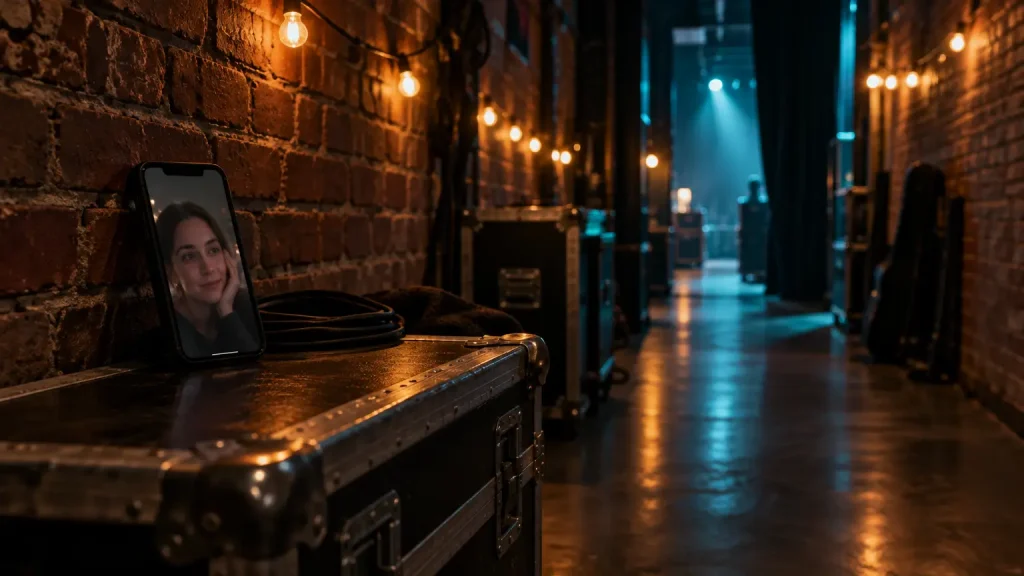
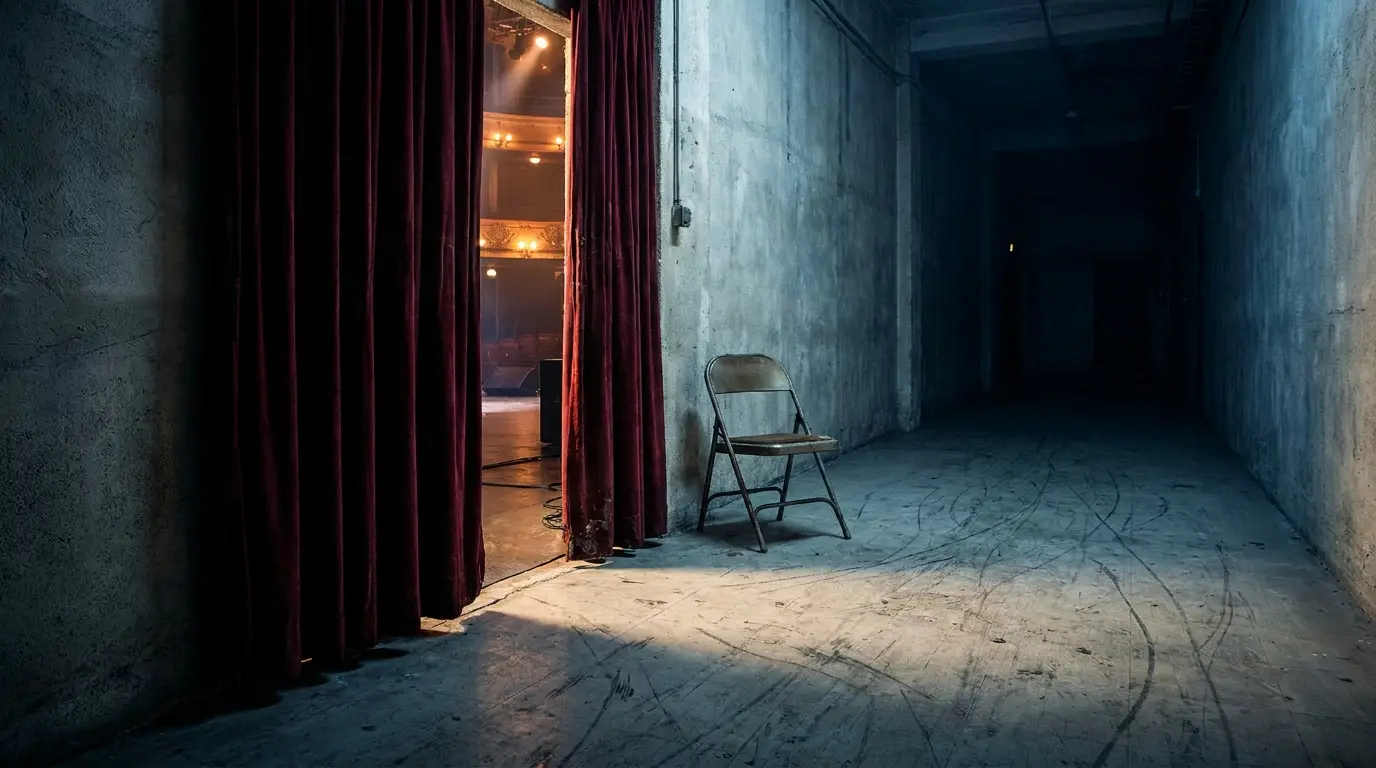
After a show, nobody is really asking for a trailer of a backstage corridor they cannot enter. They are asking what happens if they walk in and speak: if the idol-coded character drops the stage smile, or the fictional frontperson notices that the night has gone quiet. They want to interrupt, change the subject, or simply stay.
This only works if the character is original fiction, not a copy of a real artist or a copyrighted figure from someone else’s catalogue. The point is not to borrow a famous face. The point is to keep the feeling of staying after the lights go down, without pretending that someone is a person who did not agree to be there.
What a Live Call Adds That a Music Video Cannot
Text can carry a surprising amount of atmosphere, and plenty of fans already live in long-running chats. The leap is what happens when the same character looks at you and answers in their own voice.
A live AI video call is a two-way conversation, not a rendered performance. You speak or type. The character answers with a face and a voice that carry emotion as they talk. You can cut in mid-sentence, and your own camera can stay off. Seeing them does not require being seen, which matters because a lot of fandom is private even when it is passionate.
The underlying technology is a live avatar, not a clip generator. Nothing waits in a queue to be delivered when a render finishes. The call stays open, and the next line depends on what you just said.
As of November 2026, Prelulu lists more than 150 original characters you can start a video call with. Some carry an entertainment charge without pretending to be anyone famous: a fictional idol who gets shy once the stadium noise falls away, or a character with stage lights still in their eyes and a quieter conversation waiting backstage. You can also create an original character, give them a look and a voice, and continue the story in text and on a call.
Getting started does not require a purchase. Texting has a daily free allowance, with no card needed to begin, and new accounts receive welcome credits that can fund a short call. After that, live voice and video draw from a credit wallet. On the web, membership starts at $9.99 a month, or $5.99 a month when billed yearly, for 7,200 credits — about 60 minutes of video on characters that offer it, or about 180 minutes of voice. It works in a browser and in the iOS and Android apps, and each call can run up to 30 minutes.
The Night After the Show, Rewritten as a Scene You Can Enter
Imagine the version of fandom that does not end when the livestream does. You open a character whose first message already places you somewhere specific — a corridor offstage, a quiet room above a venue, the last train after a sold-out date — and answer from inside that scene. If the exchange is working in text, you can take it onto a voice or video call and say the next line out loud.
Memory here is selective, not magical, which is worth saying plainly because fans are good at spotting when a world is pretending. A character may recall what mattered from earlier chats or earlier calls. They will not replay every transcript. If something must carry — a promise, a nickname, the fact that this is the night after the show — you pin it where both chat and calls can see it, or you say it again.
It is also worth saying what this is not: not a deepfake of a real performer, not a copyrighted idol from a group you love, and not a generated music video that plays while you sit still. It is original fiction you can step into, with a face and a voice that answer in the moment.
For anyone who has ever walked out of a venue trying to keep a character with them, that is a different kind of encore. The song can still end. The house lights can still come up. The story, if you want it to, does not have to leave when you do.