

Okay, so. Three bananas, completely riped and sitting on my counter way too long, are basically the origin story here.
I made this healthy banana bread recipe out of guilt more than inspiration, honestly, because throwing out fruit feels wrong in a way I can’t fully explain. It worked better than expected.
Ripe bananas and Greek yogurt do most of the heavy lifting instead of butter and a full cup of sugar, and the loaf still comes out moist. Not dry, not dense, not sad, which is more than I can say for my first two attempts.
It’s also not sugar-free, before anyone asks. Less sugar, yes. Zero, no. The bananas just pick up some of the slack.
What Makes This Banana Bread Healthier?
“Healthy” does a lot of work in a recipe title, so it’s worth breaking down what actually shifts on the nutrition side, not just which ingredient replaced which.
Swapping refined flour for whole wheat adds back the fiber that refined flour strips out, which slows the blood sugar spike a plain white loaf tends to cause.
Replacing butter with Greek yogurt plus a smaller amount of oil cuts saturated fat noticeably compared to a full stick of butter.
Trading refined sugar for ripe banana plus a moderate sweetener brings total sugar down while adding fiber and potassium along with the sweetness, something refined sugar doesn’t offer.
Worth saying clearly: this is still a baked good with carbohydrates in it, and if it’s sweetened with honey or maple syrup, that’s still added sugar, just not the refined kind. Calling it sugar-free would be inaccurate.
Healthy Banana Bread Recipe Overview
Short version, for anyone skimming before committing to a whole loaf: about fifteen minutes of hands-on work, under an hour in the oven, one loaf, ten or twelve slices depending on how generous the cuts are.
No starter, no days of waiting around the way sourdough bread asks for, just ripe bananas and a straightforward bake.
Numbers, if “about” isn’t cutting it:
- Prep time: 15 minutes
- Bake time: 55 to 60 minutes
- Total time: about 1 hour 15 minutes
- Yield: 1 loaf (10 to 12 slices)
- Texture: soft, tender
- Skill level: easy
- Best for: breakfast, snacking, meal prep
My oven runs a little hot, so yours might need five extra minutes. Ovens are like that.
Ingredients for Healthy Banana Bread
Nothing exotic. Just everyday ingredients, swapped in a few of the right spots.
|
Ingredient |
Why It’s Used |
|---|---|
|
Very ripe bananas (about 1½ cups mashed, 3 medium) |
Natural sweetness, moisture, and real banana flavor |
|
Whole wheat flour (1¾ cups / 210g) |
Adds whole grains and gives the loaf structure |
|
Greek yogurt (½ cup / 120g) |
Keeps the crumb soft and moist |
|
Eggs (2 large) |
Structure and binding |
|
Olive or neutral oil (⅓ cup) |
Keeps the crumb soft without relying entirely on butter |
|
Maple syrup or honey (⅓ cup) |
Controlled, moderate sweetness |
|
Baking soda (1 tsp) |
Helps the loaf rise |
|
Cinnamon (1 tsp) |
Adds warmth |
|
Vanilla extract (1 tsp) |
Strengthens the banana flavor |
|
Salt (¼ tsp) |
Balances the sweetness |
Grams matter more than they sound like they should. Too much banana, gummy center. Too much flour, and it gets dry and crumbly. “Three bananas” can mean one cup of mash or two, depending on size, so weighing beats guessing.
How to Make Healthy Banana Bread
Six steps, nothing complicated, and most of the actual effort happens before the oven even gets involved.
Step 1: Prepare the Pan and Oven
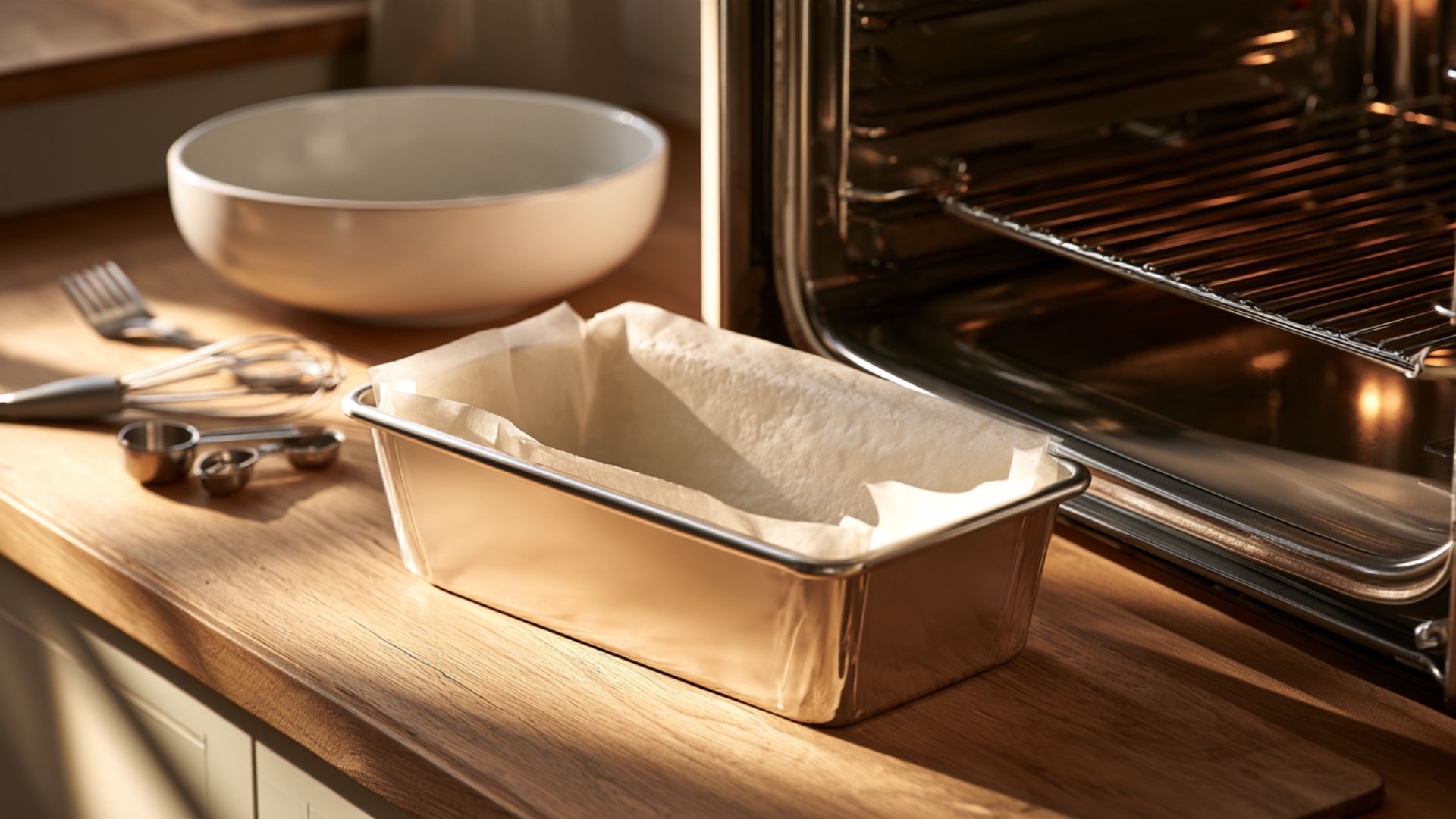
Preheat to 350°F, line a 9×5 pan with parchment, and let the edges hang over the sides. Future you, lifting the loaf out later, will be grateful.
A light coat of oil or spray under the parchment keeps it from sliding around while the batter goes in. Give the oven the full preheat time.
Step 2: Mash the Bananas
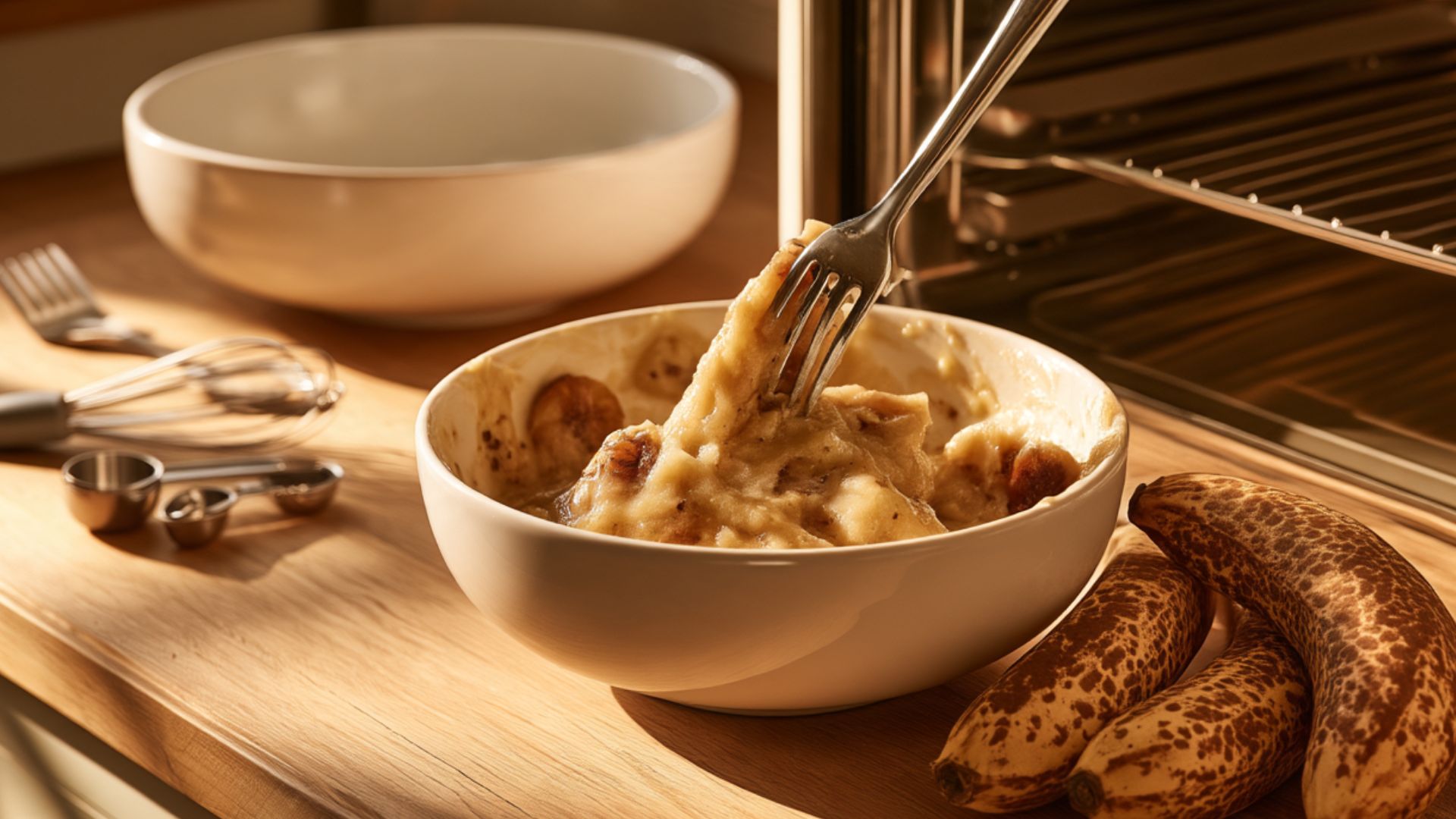
Heavily spotted, almost fully brown, not the firm yellow kind. They mash easily and bring most of the sweetness this recipe is counting on.
A fork works fine for this; no need to pull out a food processor for three bananas. Small lumps are okay here since the mixing in step 3 smooths most of them out.
Step 3: Mix the Wet Ingredients
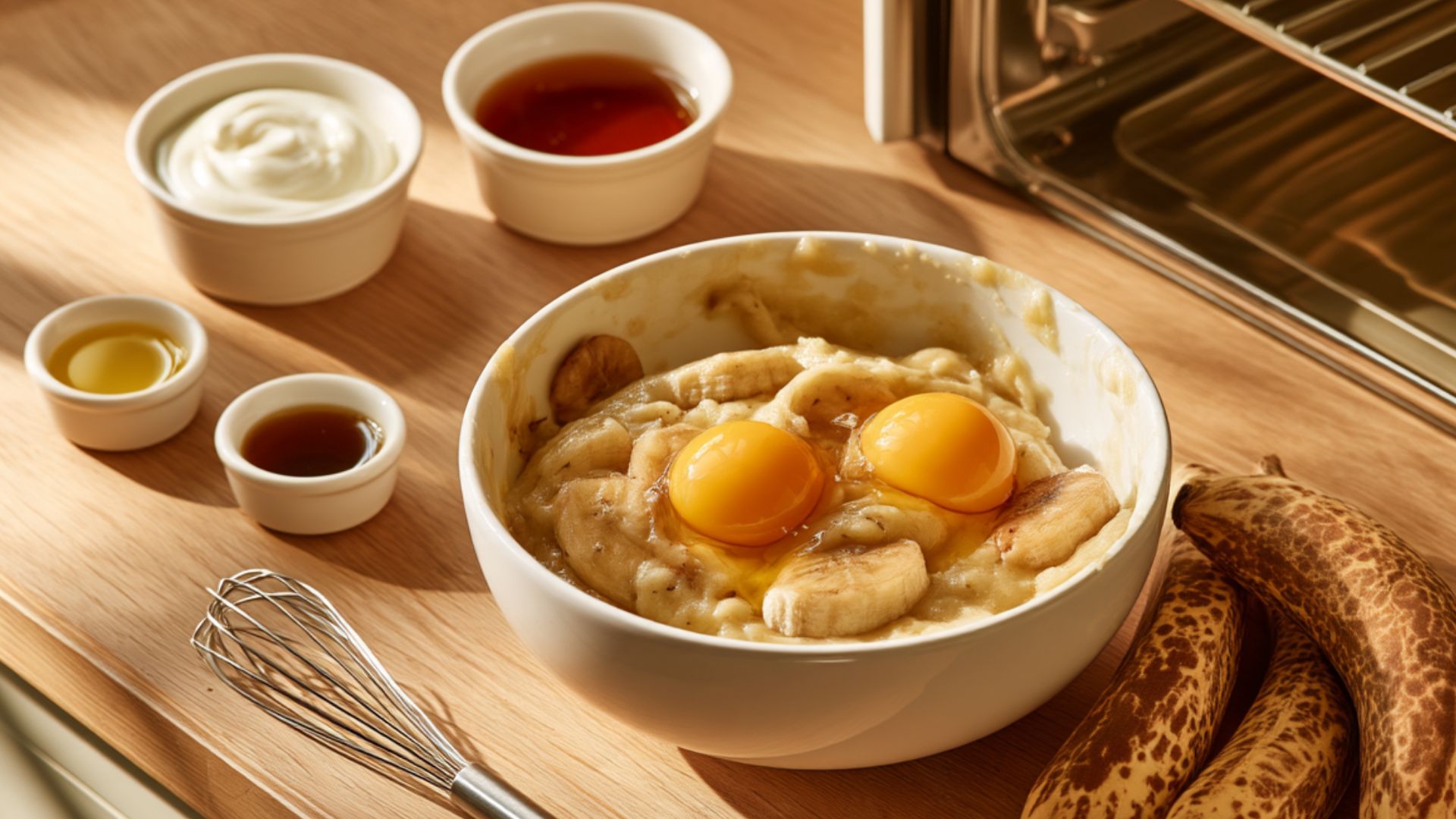
Mashed banana, Greek yogurt, eggs, oil, maple syrup or honey, vanilla. Keep whisking until smooth and slightly glossy.
Room-temperature eggs blend in more evenly than cold ones straight from the fridge. The mixture should look uniform, with no visible streaks of oil or yogurt.
Step 4: Add the Dry Ingredients
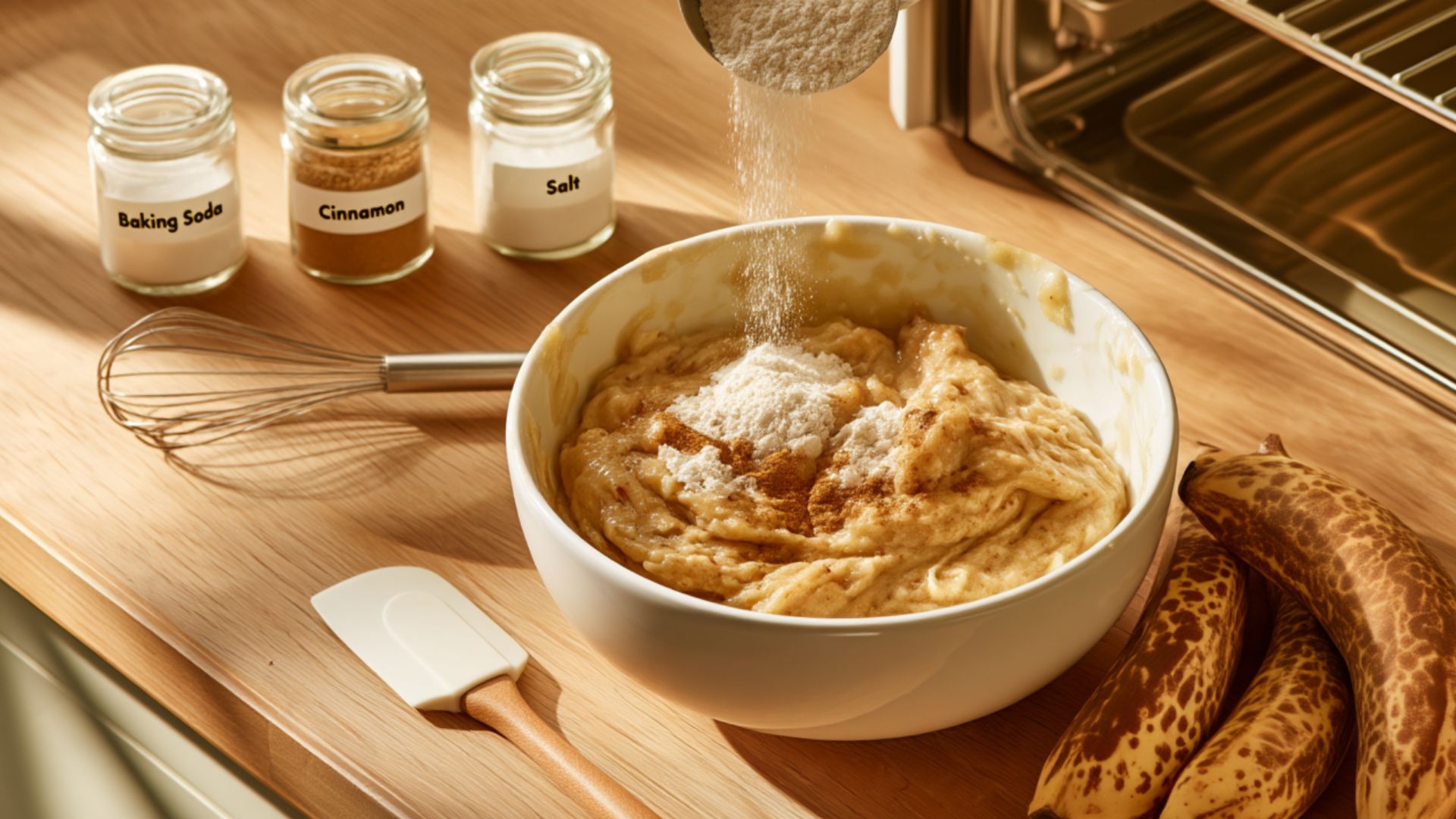
Flour, baking soda, cinnamon, salt, stirred just until the flour disappears. Sift or whisk the dry ingredients together first so the baking soda doesn’t clump in one spot.
A few lumps are fine, honestly ideal. Fold with a spatula rather than a whisk once the flour goes in; it’s gentler on the batter.
Quick tip : Overmixing is the one real way to sabotage this step. The urge to stir “just a bit more, to be safe” is strong. Ignore it.
Step 5: Bake Until the Center Is Done
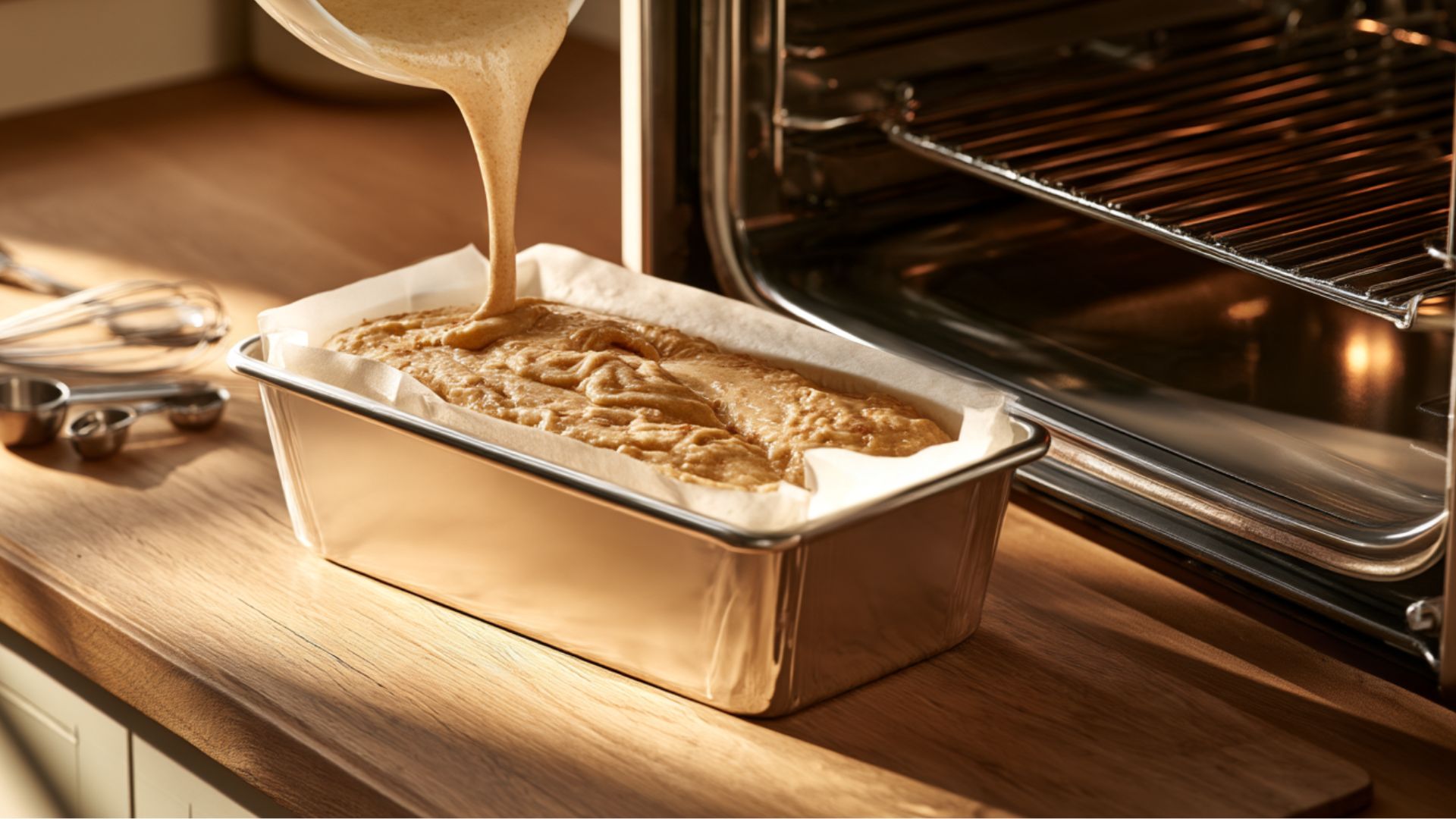
55 to 60 minutes, checking with a toothpick around the 50-minute mark. Moist crumbs are normal for a loaf with this much banana packed in.
Rotate the pan halfway through if the oven tends to bake unevenly. Tent the top loosely with foil if it browns too fast before the center finishes cooking.
Step 6: Cool Before Slicing
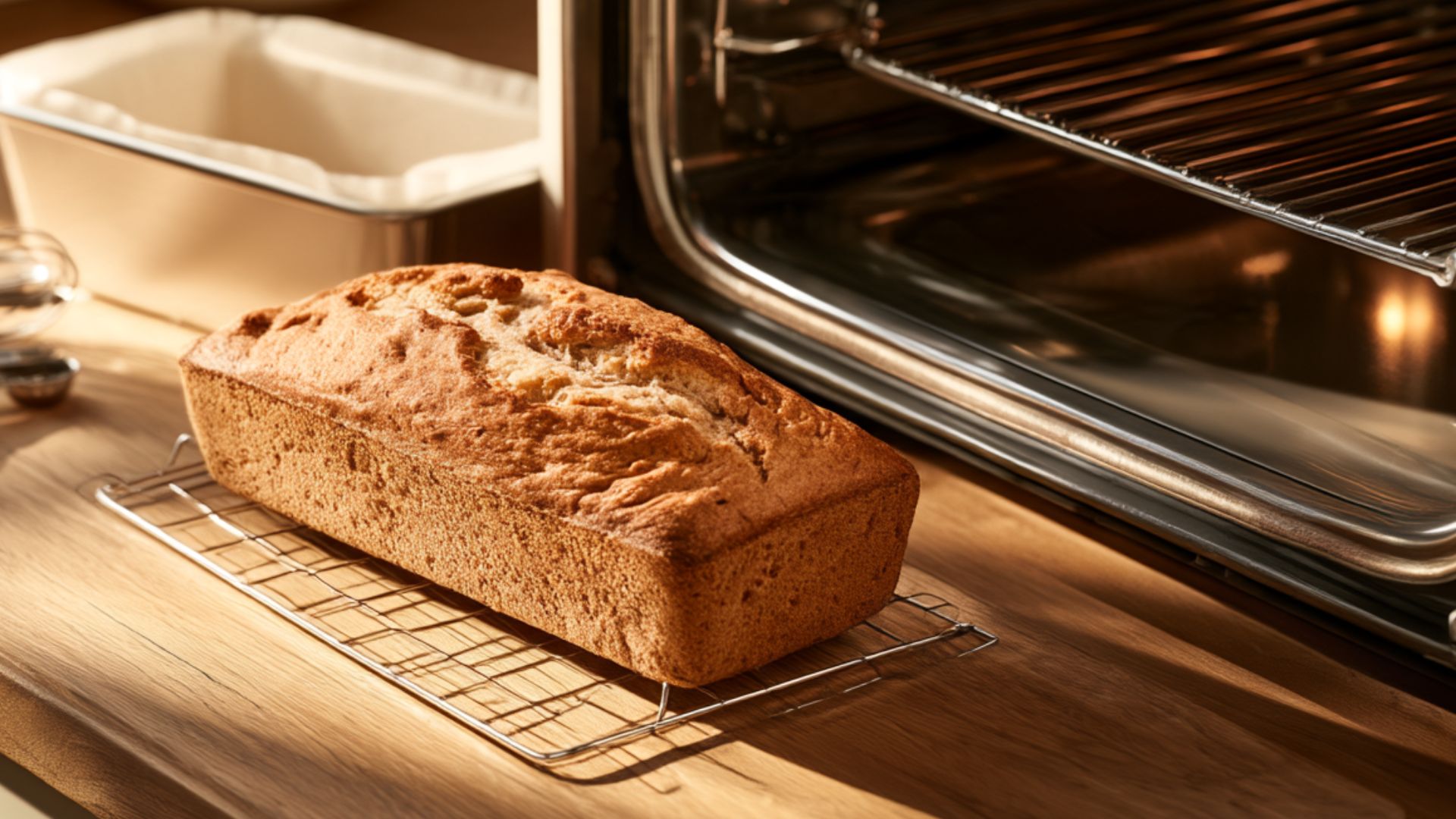
Let it cool in the pan for ten minutes, then onto a wire rack. Cutting in while it’s still warm is the fastest route to a gummy-looking slice, no matter how good it smells right out of the oven.
A serrated knife makes cleaner slices than a straight-edge one. Full cooling takes about an hour on the counter, longer if the kitchen runs cool.
That’s the whole process. About fifteen minutes of real work, and the oven handles the rest.
What Makes This Banana Bread Healthier?
“Healthy” does a lot of work in a recipe title, so it’s worth being specific about what actually changed here instead of just pointing at the bananas.
|
Traditional Approach |
This Recipe |
|---|---|
|
Mostly refined white flour |
Whole wheat or partly whole-grain flour |
|
A full stick of butter |
Greek yogurt plus a moderate amount of oil |
|
Heavy refined sugar |
Ripe bananas plus a smaller amount of sweetener |
|
Dessert-level sweetness |
Mild sweetness, closer to breakfast than cake |
Worth saying clearly: this is still a baked good with carbohydrates in it, and if it’s sweetened with honey or maple syrup, that’s still added sugar, just not the refined kind. Calling it sugar-free would be inaccurate.
AHA’s own banana bread recipe makes a similar point: a healthier version usually comes down to less saturated fat and less added sugar overall, not bananas alone doing the heavy lifting.
How to Avoid a Dense or Gummy Loaf
Gummy centers and dry crumbs both trace back to the same handful of things.
- Ripe means actually ripe. Look for brown spots, not firm yellow skin.
- Measure the banana instead of eyeballing it. “Three bananas” isn’t a real measurement.
- Weigh the flour if possible. Scooping from the bag packs in extra.
- Stop stirring once the flour’s gone. Lumps are fine.
- Trust the toothpick over the color. A dark top doesn’t mean it’s done.
- Let it cool completely. Impatience, not the recipe, is what makes that slice gummy.
Get those six right, and the loaf pretty much takes care of itself.
Healthy Banana Bread Substitutions
A handful of tested swaps for whenever the base recipe doesn’t quite match what’s in the kitchen that day, which happens more often than I’d like to admit.
|
If You Need |
Suggested Direction |
Important Note |
|---|---|---|
|
Dairy-free |
Unsweetened dairy-free yogurt |
Texture shifts slightly |
|
Gluten-free |
Readers report success with a 1:1 gluten-free flour blend |
Results vary by brand; skip almond or coconut flour; they behave differently in this batter |
|
Less added sugar |
Reduce sweetener, if tested |
Affects texture and browning |
|
Nut version |
Walnuts or pecans |
Fold in at the end |
|
Chocolate version |
Dark chocolate chips |
Adds more sugar |
|
Oat variation |
Separately tested oat-flour ratio |
Not a 1:1 swap |
Straight up: this list is exactly what’s been tested in my own kitchen, nothing more. “Substitute literally anything” is easy to type and a great way to ruin a loaf, so if it’s not up there, it hasn’t earned a spot, and I’m not vouching for it.
Flour SwapAll-purpose flour works in place of whole wheat using the same 1¾ cup measurement, though the crumb comes out lighter and less dense. Spelled flour keeps some whole-grain character while softening the texture further than whole wheat does. White whole wheat flour splits the difference: whole grain, but a milder flavor than red whole wheat. Whichever you use, weighing the flour still beats measuring by cup. |
|---|
Healthy Banana Bread Variations
Same loaf, different direction, depending on what’s already open in the pantry that particular day.
Walnuts
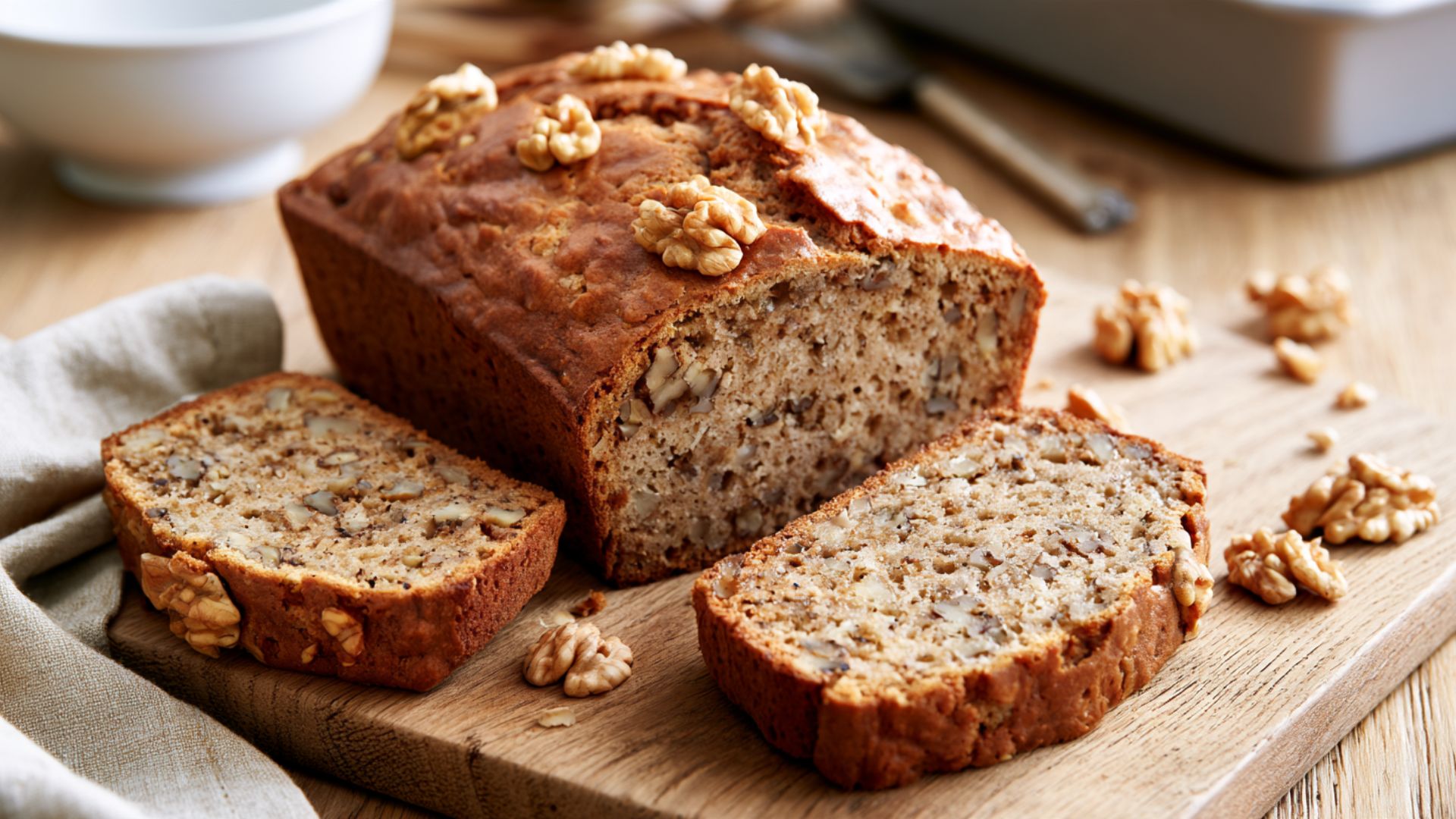
Half a cup, folded in with the dry ingredients. Simple, and my dad’s favorite. The walnuts add a little crunch to the soft banana crumb and make each slice feel more filling without changing the recipe too much.
Toast the walnuts for a few minutes before folding them in; it deepens the flavor more than raw walnuts do. Chop them coarsely rather than finely so the crunch stays noticeable in each slice.
Blueberries
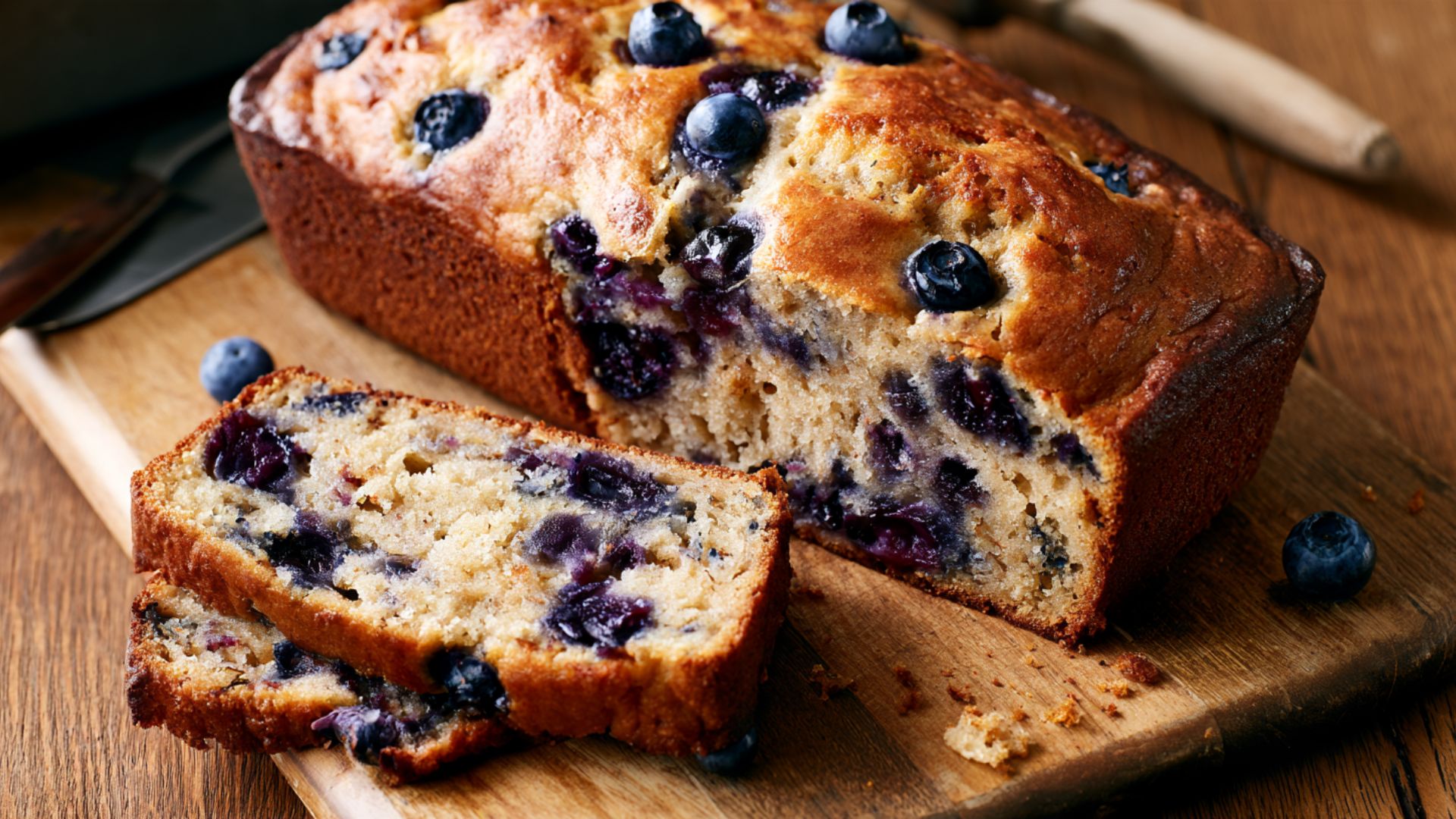
A cup, tossed in flour first so they don’t all sink. The berries add little pockets of freshness and a slight tang that works well with the sweetness of ripe bananas.
Fresh or frozen both work, though frozen berries should go in straight from the freezer instead of thawed, to keep them from bleeding color into the batter. Wild blueberries are smaller and distribute more evenly than the larger cultivated kind.
Extra cinnamon
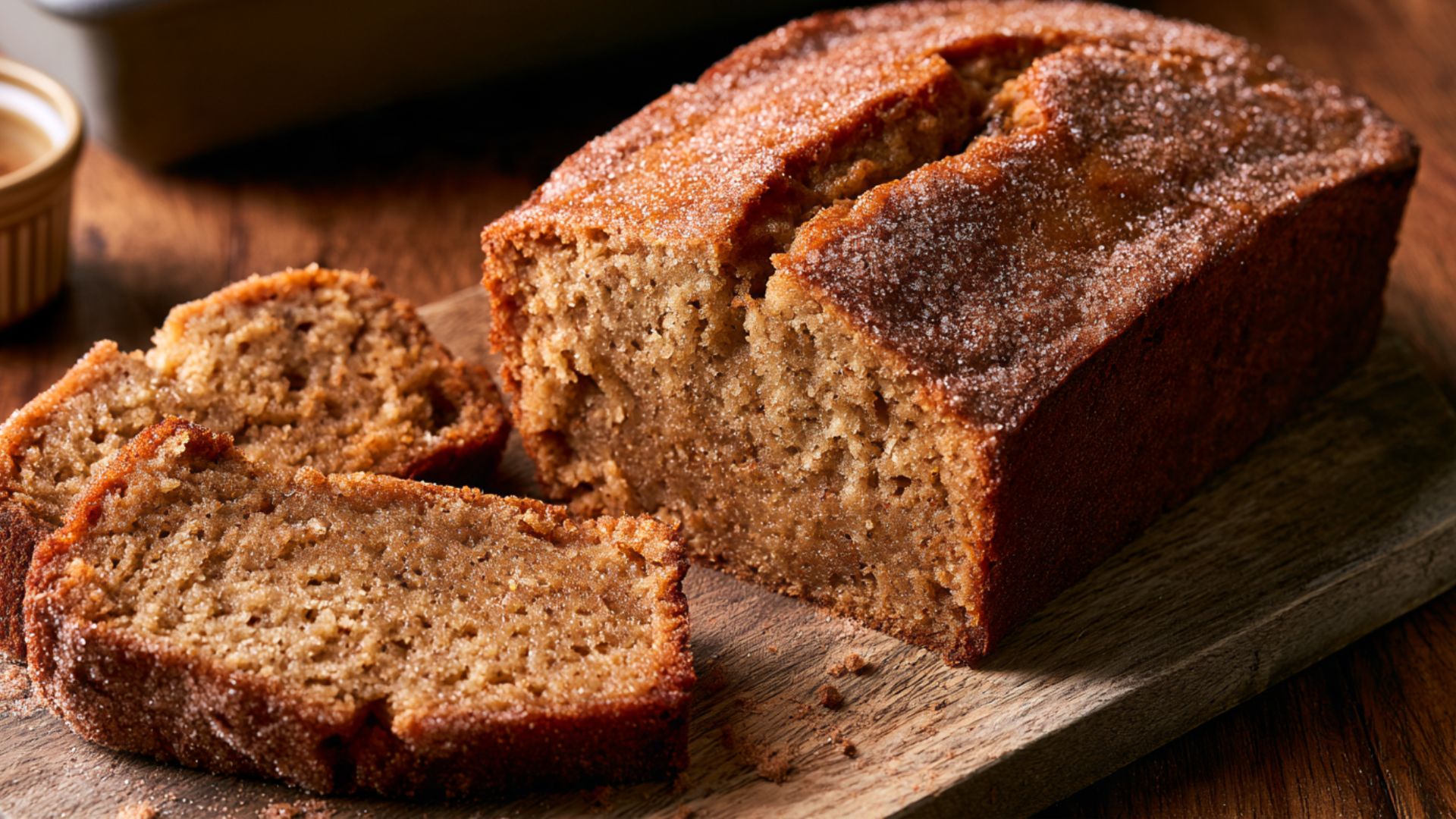
Double it. Dust the top with cinnamon sugar before it bakes. This version leans warmer and more aromatic, with a lightly spiced crust that makes the kitchen smell incredible while it bakes.
Cardamom or nutmeg can be added alongside it for a slightly more layered spice profile. Go easy on the sugar dusting though, since too much on top can burn before the loaf finishes baking.
Chocolate chips
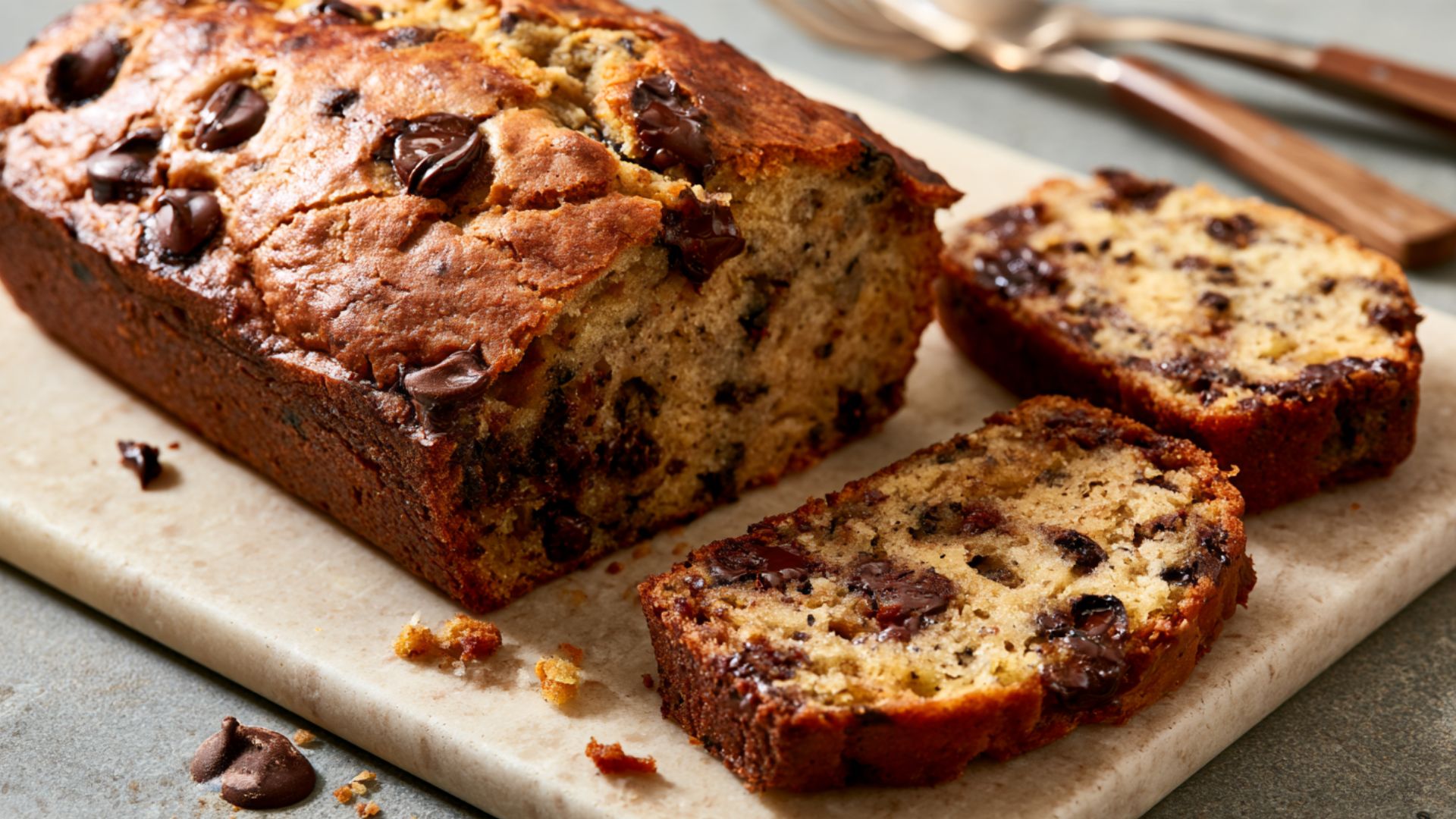
Dark, half a cup, and yes, it adds sugar. No, I don’t feel bad about it. The chocolate melts into the banana bread, creating richer bites that feel closer to dessert while keeping the base loaf wholesome.
Mini chips distribute more evenly through the batter than standard-size ones. A light toss in flour beforehand helps keep them from all sinking to the bottom of the pan.
Oats
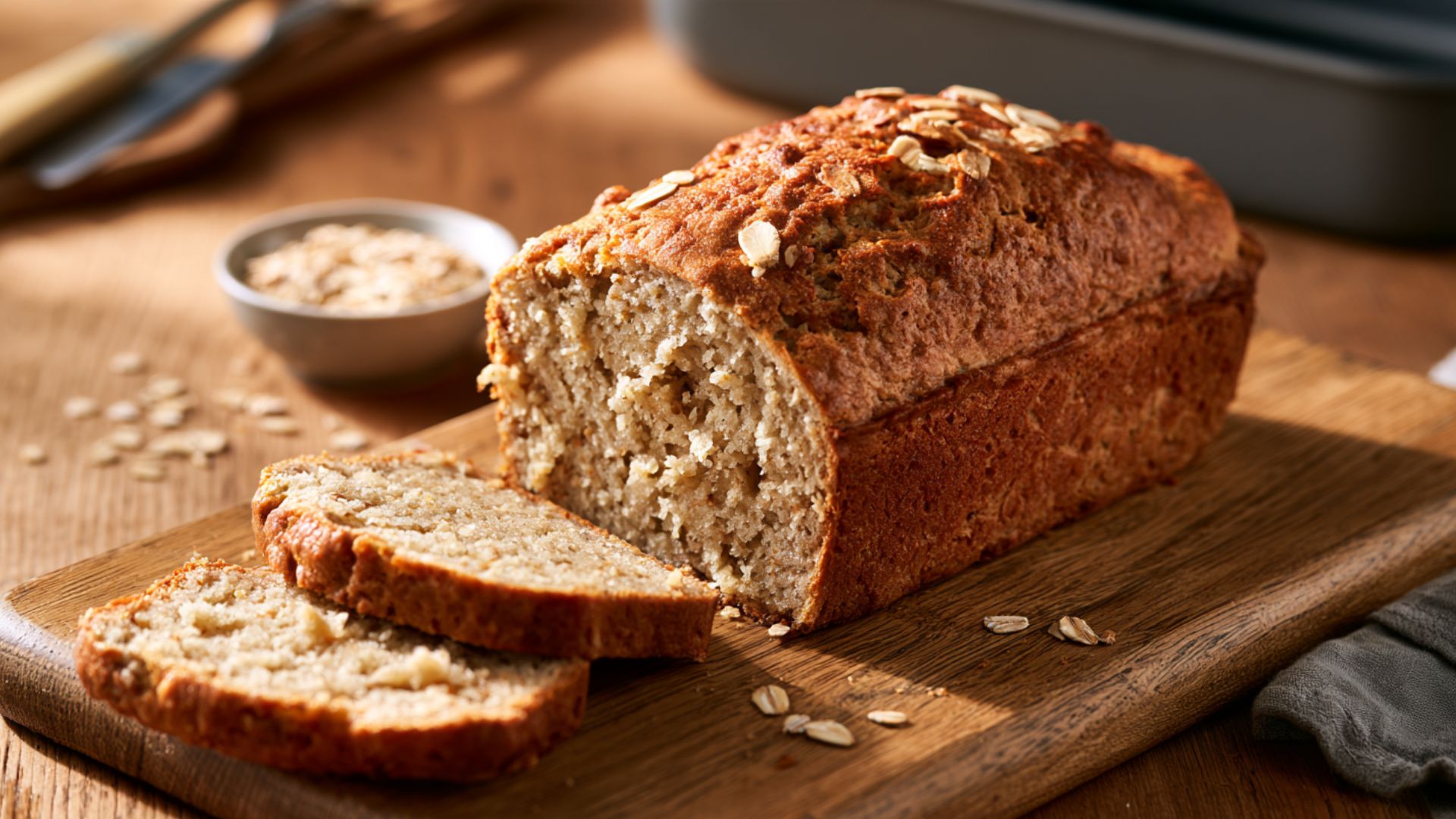
Swap part of the flour, but test the ratio first; it’s not a straight substitution. Oats give the loaf a slightly heartier texture and a rustic flavor that pairs naturally with banana.
Old-fashioned rolled oats hold their texture better here than instant oats, which tend to turn mushy. Lightly toast in a dry pan beforehand to bring out a slightly nuttier flavor before mixing them in.
Muffins
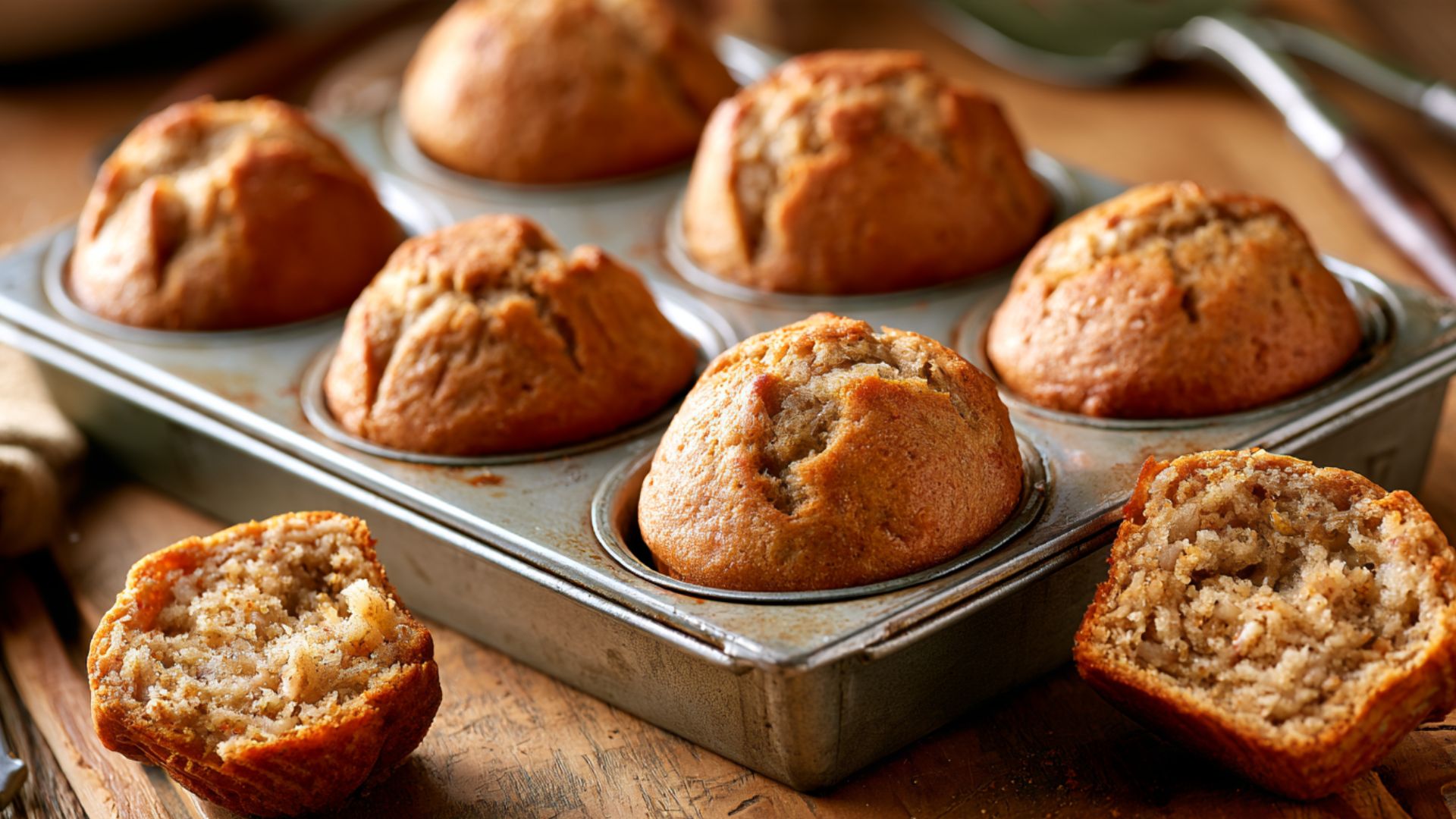
Same batter, shorter bake. Fill the muffin cups about three-quarters full to leave room for the rise. A light sprinkle of oats or cinnamon sugar on top before baking adds texture the loaf version doesn’t have.
Test it before trusting someone else’s exact minutes. The muffin version is easier for grab-and-go breakfasts and freezes well when you want individual portions ready.
Fill the muffin cups about three-quarters full to leave room for the rise. A light sprinkle of oats or cinnamon sugar on top before baking adds texture the loaf version doesn’t have.
The best part about banana bread is that the same reliable base can become something completely different with a small pantry swap. Whether you add nuts, fruit, spices, or chocolate, the balance of moisture and texture in mind so every version stays soft instead of dry.
High-Protein Version
Three ways to bump up the protein without overhauling the recipe:
- Extra egg white: add one additional egg white to the wet ingredients. Adds protein without noticeably changing the moisture.
- Greek yogurt bump: increase yogurt from ½ cup to ¾ cup, and cut the oil down to ¼ cup to keep the batter balanced.
- Protein powder swap: replace ¼ cup (about 30g) of the whole wheat flour with ¼ cup unflavored or vanilla protein powder, and add one extra tablespoon of Greek yogurt or milk to offset the drying effect protein powder tends to have.
Pick one method at a time. Stacking all three throws off the moisture balance the recipe depends on.
|
How to Store and Freeze Banana Bread This loaf holds at room temperature, wrapped tightly, for three to four days. In the fridge, it stretches to about a week, though the texture firms up a bit with cold storage. Beyond that, freeze it, whole or in individual slices, wrapped in plastic then foil, for up to three months. Slices are worth the extra wrapping time, since it means thawing one piece instead of the whole loaf. Thaw at room temperature for about an hour, or warm briefly in the toaster to bring back some of that just-baked texture. |
Nutrition Per Slice in a Banana Bread
Numbers below are calculated per slice from this exact recipe, cut into twelve pieces.
|
Nutrient |
Per Slice |
|---|---|
|
Calories |
~165 |
|
Protein |
4g |
|
Carbohydrates |
24g |
|
Fiber |
2g |
|
Total sugar |
9g |
|
Added sugar |
6g |
|
Fat |
6g |
|
Saturated fat |
1g |
|
Sodium |
140mg |
|
Potassium |
~135mg |
These numbers reflect this specific recipe rather than a general health claim, and they’re not a substitute for checking with a doctor or dietitian about any specific dietary need.
Final Thoughts
Enough loaves have come out of this oven that I’ve genuinely lost count somewhere in the double digits.
This is the one that stuck: tender, banana-forward, whole grain, and sweetened just enough to still feel like breakfast, not cake.
It freezes well too. One Sunday batch covers more mornings than it probably should, and the freezer currently has a few bags of slices to prove it.
Whatever ends up in your loaf- walnuts, chocolate chips, or something stranger- I want to hear about it in the comments. I read every one.
Frequently Asked Questions
Can I Use Frozen Bananas?
Yes, but thaw them first and drain off the extra liquid before mashing. Frozen bananas release more liquid than fresh ones, and pouring it all into the batter is the fastest way to get a gummy center.
Can I Skip Added Sugar Entirely?
Mostly, since ripe bananas already bring real sweetness. Cutting the sweetener out completely turns this into a different recipe, though, since moisture and browning shift enough to need their own tested ratio, and that version hasn’t been nailed down yet.
What’s the Fastest Way to Ripen Bananas?
Bake them unpeeled at 300°F for 15 to 20 minutes, until the skins turn fully black. The smell is a little strange, but the bananas mash just as sweet as ones ripened the slow way.
Do These Work as Muffins?
Yes. Bake for 18 to 22 minutes at the same oven temperature, and check a few minutes early, since muffins don’t forgive overbaking the way a loaf sometimes does.