Developing a pharmaceutical product involves much more than identifying an effective active ingredient. Researchers must also understand how a medicine behaves after it enters the body, including how quickly and consistently the active ingredient becomes available. This is where dissolution testing plays an important role.
For tablets and capsules in particular, dissolution studies provide valuable information during formulation development, quality control, and product comparison. While the process may sound highly technical, understanding the basics can help explain why dissolution remains such an important part of pharmaceutical research.
Here are six things worth knowing.
1. Dissolution Testing Measures How a Drug Releases Its Active Ingredient
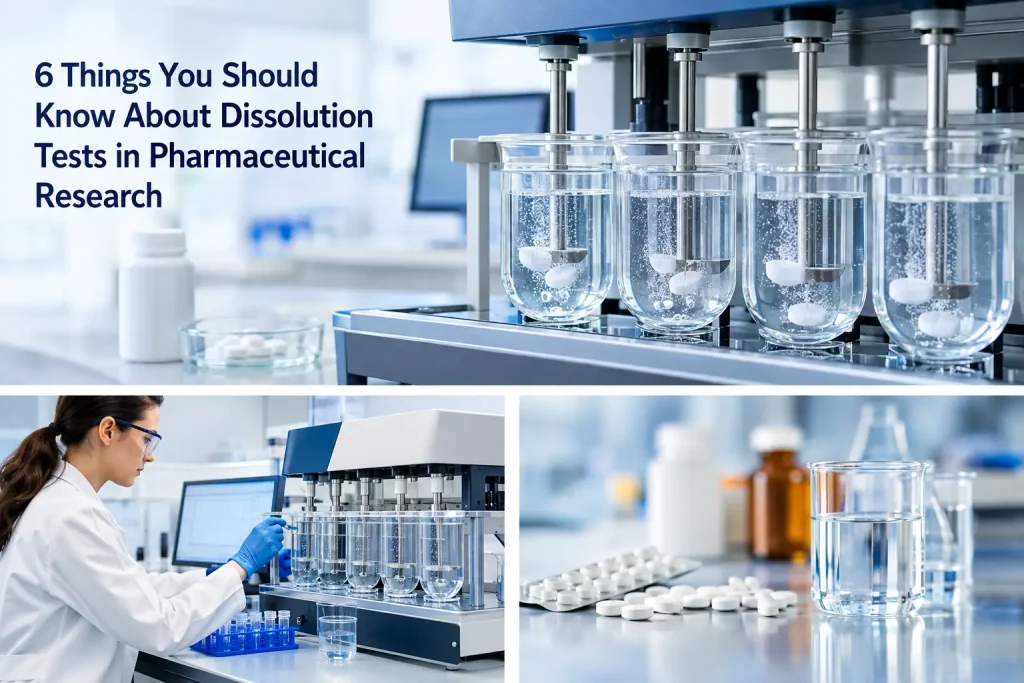
At its core, dissolution testing examines how an active pharmaceutical ingredient is released from a dosage form into a liquid under controlled laboratory conditions.
For anyone wondering what is dissolution test, it can be understood as a method used to evaluate the rate and extent to which a drug substance dissolves from a tablet, capsule, or another pharmaceutical dosage form.
The results can help researchers determine whether a formulation performs as expected. A medicine may contain the correct amount of an active ingredient, but if that ingredient does not dissolve appropriately, its availability for absorption may be affected.
2. The Test Conditions Are Carefully Controlled
Dissolution testing is designed to be consistent and repeatable. Laboratories control factors such as temperature, stirring speed, testing medium, and sampling times.
Different pharmaceutical products may require different test conditions. For example, the environment used to test a delayed-release formulation may differ from the one used for an immediate-release tablet.
This level of control helps researchers compare results accurately. Even relatively small changes in testing conditions can influence how quickly a product dissolves, which is why standardized procedures are so important.
3. Dissolution Can Influence Drug Development Decisions
During pharmaceutical development, researchers often evaluate multiple formulations before selecting the most suitable one. Dissolution testing can help identify differences between those formulations.
Consider two tablets containing the same active ingredient and dosage strength. Differences in excipients, compression force, coatings, or manufacturing processes could affect how the tablets break down and release the drug.
Dissolution data gives development teams another way to assess these differences before moving further through the research and development process.
Formulation Changes Can Affect Results
Even seemingly minor changes can influence dissolution behavior. A new supplier for an ingredient, an adjustment to particle size, or a modification to the manufacturing process may alter how a product performs during testing.
For this reason, dissolution studies can support both initial product development and ongoing product evaluation.
4. It Plays a Major Role in Pharmaceutical Quality Control
Dissolution testing is not limited to the research stage. It is also commonly used as part of pharmaceutical quality control programs.
Manufacturers need confidence that different batches of a product will perform consistently. Dissolution testing can help identify unexpected variations that may result from changes in raw materials, equipment performance, or manufacturing conditions.
A consistent dissolution profile does not answer every question about a medicine’s performance, but it provides an important indicator of product quality.
For pharmaceutical companies, this makes reliable testing procedures essential for maintaining consistency throughout a product’s lifecycle.
5. Different Dosage Forms May Require Different Approaches
There is no single dissolution method that applies equally to every pharmaceutical product.
Immediate-release tablets, extended-release products, enteric-coated tablets, and capsules can behave differently when exposed to testing media. Researchers therefore select methods that are appropriate for the specific dosage form and product characteristics being evaluated.
For example, an extended-release formulation is designed to release its active ingredient gradually. Its dissolution profile would naturally be assessed differently from that of an immediate-release tablet.
This is why understanding the product itself is just as important as understanding the testing equipment and procedure.
6. Dissolution Data Can Support Product Comparisons

Dissolution profiles can also be useful when researchers compare pharmaceutical products.
During the development of generic medicines, for instance, scientists may examine how a proposed product’s dissolution behavior compares with that of a reference product. Similarity in dissolution performance can provide useful scientific information when evaluating formulations.
Researchers may also compare different batches, manufacturing methods, or formulation versions to understand how specific changes affect product performance.
The value of these comparisons depends heavily on using appropriate methods and carefully interpreting the resulting data.
Why Reliable Dissolution Testing Continues to Matter
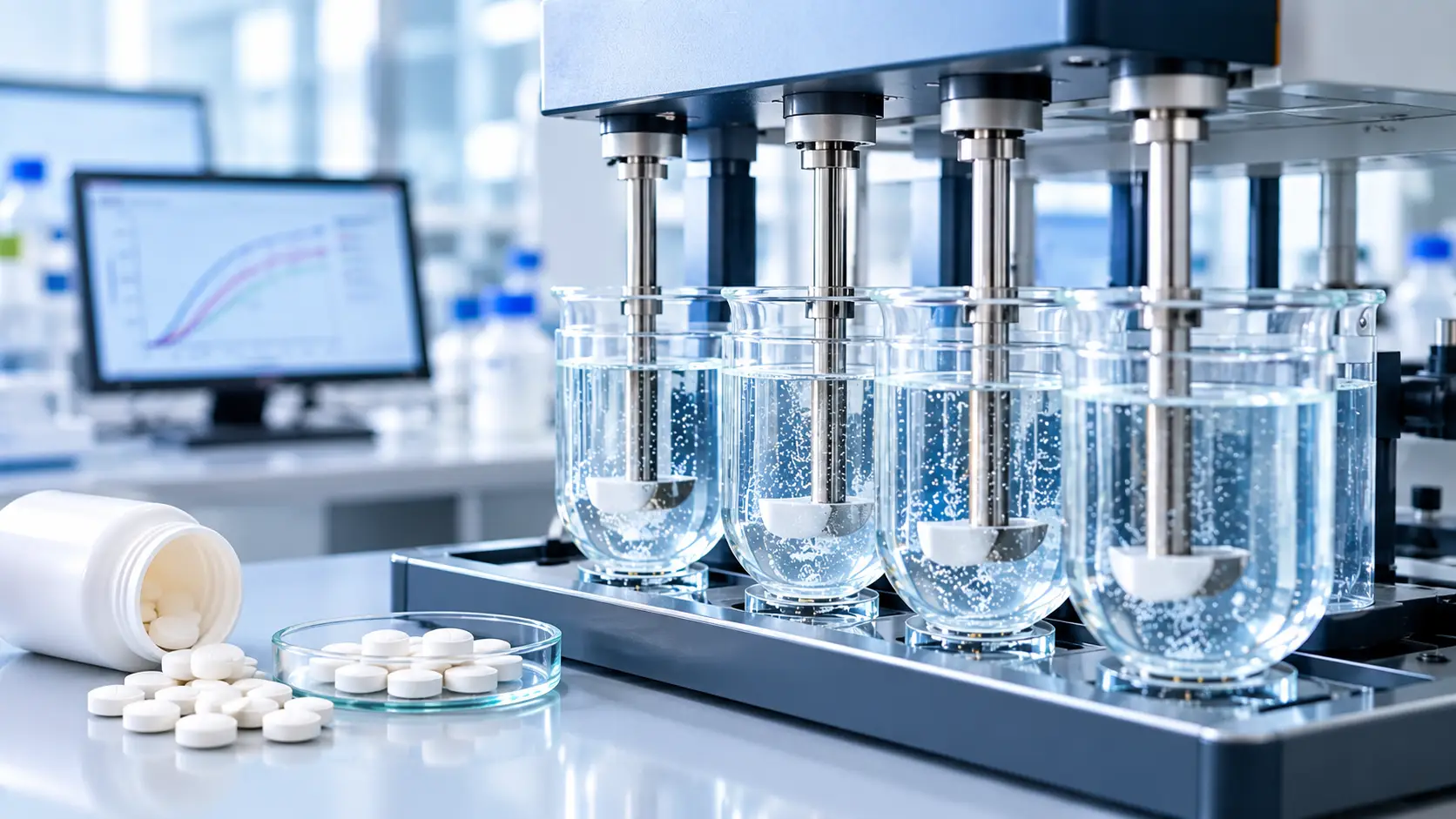
As pharmaceutical products become more sophisticated, the need for accurate and reproducible testing remains critical. Dissolution testing provides researchers with a practical way to study how a dosage form releases its active ingredient under controlled conditions.
Modern pharmaceutical research also involves increasingly complex formulations, making careful method development and data interpretation especially important. A well-designed dissolution method should provide meaningful information while remaining consistent enough to support reliable comparisons over time.
Data Quality Is Just as Important as the Test Itself
Generating dissolution data is only one part of the process. Researchers must also consider sampling accuracy, equipment performance, analytical methods, and the interpretation of results.
Reliable data can support better decisions throughout formulation development and manufacturing. Poorly controlled testing, on the other hand, can make it difficult to distinguish meaningful product differences from variations caused by the testing process itself.
Conclusion
Dissolution testing remains an essential tool in pharmaceutical research because it helps scientists study how drug products release their active ingredients under controlled conditions.
From formulation development and product comparisons to quality control and manufacturing consistency, dissolution data can provide valuable insights at multiple stages of a pharmaceutical product’s lifecycle.
The key takeaway is that dissolution testing is not simply a laboratory procedure performed to generate numbers. When designed and interpreted carefully, it can help researchers better understand formulation performance, identify important differences between products, and support the development of consistent pharmaceutical dosage forms.