

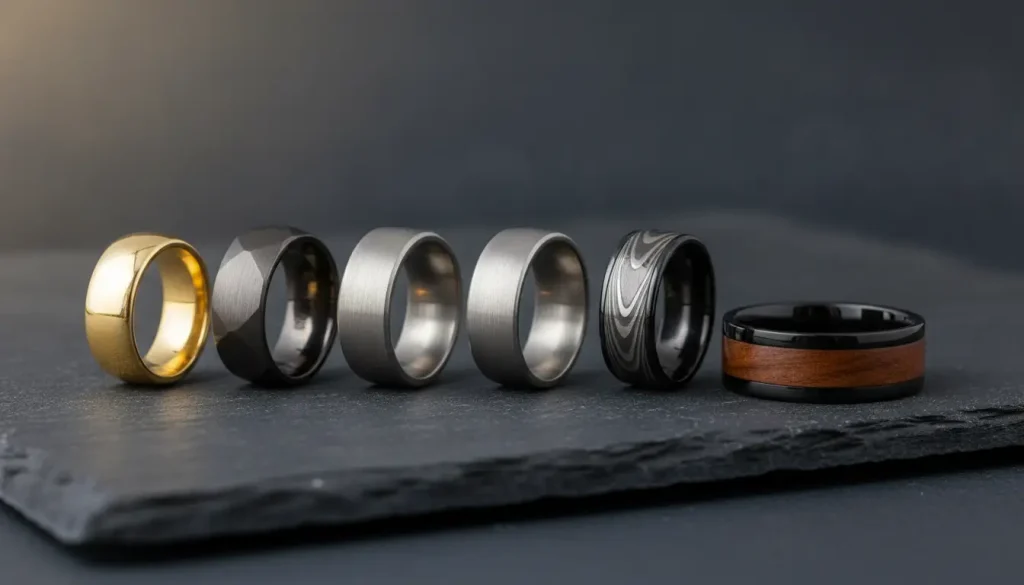
A man’s wedding band should feel comfortable during ordinary workdays, formal occasions, travel, and physical activity. Its material, width, interior shape, finish, and care needs all affect that experience. Price matters, but value depends on more than the initial purchase. Accurate sizing, dependable construction, and practical warranty terms can prevent avoidable problems later. A careful comparison gives couples a clearer basis for choosing a ring that suits personal style and everyday demands.
Start With Material
Metal selection influences weight, color, scratch resistance, maintenance, and repair options. Gold offers a traditional appearance but can show marks more easily. Platinum feels dense and retains its natural color. Titanium provides low weight, while tungsten offers substantial heft and strong surface resistance. Damascus steel creates visible patterning, and wood introduces natural variation. For broader comparisons, Manly Bands wedding bands for him presents options involving gold, tungsten, titanium, wood, meteorite, and Damascus steel. Buyers should assess construction, allergy concerns, care instructions, warranty coverage, and exchange terms before choosing a material for regular wear.
Match the Daily Routine
A ring should suit the wearer’s routine rather than interfere with it. People working with tools, machinery, chemicals, or heavy materials may need a band that can be removed easily. Titanium and silicone often feel practical during exercise or outdoor work. Gold, platinum, and polished steel may suit office settings. Anyone exposed to repeated impact should review removal guidance, since even hard materials can fracture under severe force.
Compare Width and Profile
The width of the wedding band changes the visual balance and finger pressure. Six-millimeter styles often appear restrained, while seven- or eight-millimeter designs create a stronger presence. Broader rings can feel restrictive during bending or gripping. A flat exterior produces a sharper appearance, whereas a rounded profile softens the outline. Finger length, knuckle size, and hand proportions should guide the decision instead of relying on photographs alone.
Confirm Accurate Sizing
Finger size can vary due to heat, exercise, sodium intake, and time of day. Measurements taken once may therefore produce an unreliable result. A jeweler can assess several readings and account for ring width. Buyers should check whether the seller offers half or quarter sizes, plus comfort-fit options. Exchange rules also deserve attention. A clear process can resolve a sizing error without creating unnecessary expense.
Evaluate Interior Comfort
Interior geometry affects pressure, movement, and removal. Comfort-fit bands curve inward, allowing the ring to pass over the knuckle with less resistance. Standard interiors may sit closer against the skin, which some wearers prefer. Rounded edges generally reduce friction during typing, lifting, and repeated hand movement. Product diagrams, interior photographs, and sizing notes can reveal details that front-facing images fail to show.
Inspect Finish and Details

Surface treatment determines how light reflects and how visible ordinary wear becomes. Polished finishes look bright but may reveal fine scratches quickly. Brushed, hammered, and distressed surfaces can disguise small marks. Black coatings create contrast, although their longevity depends on the application and exposure conditions. Engraving requires a separate review. Buyers should confirm character limits, placement, font selection, production time, and correction policies before approving personalization.
Review Durability Claims
Durability depends on composition, thickness, construction, and exposure. Scratch resistance does not guarantee protection against cracking, chipping, or deformation. Buyers should determine whether a ring is solid, plated, coated, or assembled from several materials. Warranty language should identify covered defects, finish changes, resizing, and accidental damage. Precise terms carry more value than broad promises that provide little information about actual support.
Check Customer Support
Service policies become important if a ring arrives late, fits poorly, or requires inspection. Couples should review delivery estimates, return windows, exchange fees, communication channels, and warranty procedures. Coverage for manufacturing defects may exclude ordinary wear or accidental damage. Customer feedback can also show whether representatives address sizing concerns clearly. Responsive support reduces uncertainty during a purchase that carries lasting personal significance.
Consider Long-Term Care
Each material responds differently to moisture, chemicals, friction, and cleaning products. Gold benefits from gentle handling because its surface can mark more easily. Tungsten and titanium usually require mild soap, water, and a soft cloth. Wood needs protection from prolonged moisture, while coated finishes may react poorly to abrasive cleaners. A fabric pouch or separate ring box can limit contact damage during storage.
Conclusion
Selecting a men’s wedding band involves more than choosing an attractive design. Material, width, sizing, profile, finish, durability, price, support, and maintenance all influence long-term satisfaction. Couples should compare those factors with occupational demands, physical habits, and preferred appearance. A ring that fits properly, withstands regular use, and includes clear service terms offers greater practical value. Careful evaluation before purchase helps preserve both comfort and personal meaning through years of wear.