

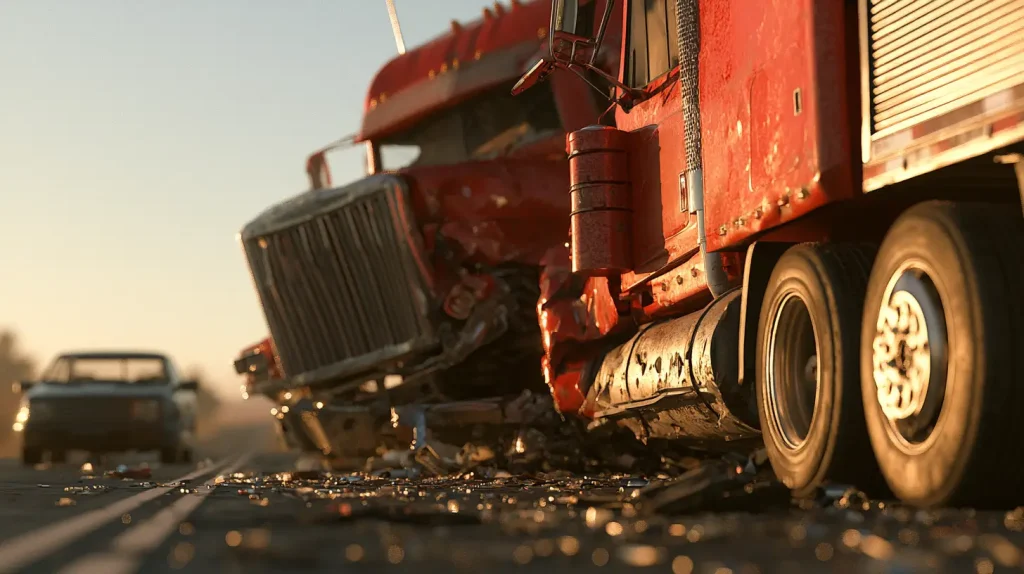
What to Do After a Truck Accident
After a truck accident, get to safety first, call 911, and check yourself and any passengers for injuries. Seek medical treatment even if you feel fine, because serious injuries can hide behind adrenaline. Then document the scene, exchange information, and hold on to every record you can. Avoid arguing about fault at the roadside. This guide is written for anyone caught up in a crash involving a commercial truck: injured motorists, truck drivers, fleet managers, and witnesses. Your job in those first minutes is not to prove who caused the collision. It is to protect life, prevent a second crash, keep reliable facts intact, and make sure no unsafe vehicle goes back on the road. A truck crash differs from a car crash because of size, commercial records, cargo, and repair rules.
This article is general information, not legal or medical advice. In an emergency, call 911.
Why Commercial Truck Accidents Are Different From Car Crashes
A loaded semi truck can weigh 20 to 30 times more than a passenger car, and that mass changes everything about how a collision plays out. In 2024, 5,340 people were killed in crashes involving large trucks, and 70% of those killed were occupants of other vehicles, according to NHTSA. The IIHS reports that large-truck crashes accounted for 14% of all U.S. motor vehicle crash deaths that year, and in two-vehicle crashes involving a passenger vehicle and a large truck, 96% of the occupant deaths were people in passenger vehicles. Commercial truck accidents are also more complex on paper. They can involve the driver, the motor carrier, the equipment or trailer owner, the cargo owner, a maintenance vendor, and several insurance companies at once. Federal safety regulations govern how these trucks operate, and the evidence often includes electronic logs and black box data that a typical fender bender never generates. Injuries can be severe, including traumatic brain injuries and spinal damage, so investigations to determine liability run deeper. When distracted driving, poor vehicle maintenance, or other unsafe driving behavior is a factor, that critical evidence helps establish who is at fault.
First, Get Yourself Out of Immediate Danger
Stop as safely as you can and check yourself and your passengers before anything else. Adrenaline can mask pain, so a quick self-check is worth it. Don’t stand between vehicles or in an active lane. Call 911 immediately if anyone is hurt, if lanes are blocked, or if you see fire, smoke, a cargo spill, a fuel leak, signs of impairment, or any commercial vehicle involvement. If your vehicle still runs and it’s lawful to move it, get it to a shoulder or emergency lane and turn on your hazard lights. Use flares or reflective triangles if you can place them safely. Time matters here: the FHWA notes that the chance of a secondary crash rises about 2.8% for every minute the original incident stays a hazard. Commercial drivers have a stricter duty, and FMCSA guidance calls for hazard lights and warning devices placed within 10 minutes. AAA and NAIC both put safety ahead of everything else.
Call Emergency Services and Seek Medical Attention Right Away
A police report is often the single most useful piece of evidence later, so make sure officers and emergency responders respond and note the officer’s name, badge number, and the report number. Ask how and when you can obtain a copy of the official accident report. Do not wave off EMS just because you feel okay. Many serious injuries don’t show symptoms at the scene, so seek medical attention even without visible injuries. The CDC warns that concussion and head injuries can appear hours or days after impact, and lists danger signs like a worsening headache, repeated vomiting, slurred speech, confusion, or unequal pupils. Internal bleeding may leave no marks at all. Mayo Clinic advises seeing a healthcare professional for neck pain or other whiplash symptoms so a serious injury can be ruled out. Getting prompt medical treatment early protects your health, and the medical records support any truck accident claim you may need to file. Delayed medical care can weaken that claim.
Document the Accident Scene Before Vehicles Are Moved
If it’s safe, gather evidence before anything gets towed or repositioned. Photograph the vehicle positions, license plates, the truck’s USDOT number, the carrier name, the trailer number, any cargo markings, skid marks, debris, traffic signals, road signs, and the weather. Note whether the semi truck has a dashcam. Capture any visible injuries too. Collect witness names and phone numbers while people are still around, because they scatter quickly. Trucks carry electronic evidence that a car doesn’t, including ELD driver logs and dashcam footage, and that data can matter a great deal in truck accident cases. Keep your comments factual. Don’t argue about fault or apologize at the roadside, since a stray comment can be twisted into an admission. NAIC and AAA both recommend photographing or diagramming the scene as a standard step.

What Information to Exchange in an Accident Involving a Truck Driver
Trade the basics and keep it brief. You want the truck driver’s name, license, the employer or carrier name, and the insurance information. Also record the truck and trailer plates and the USDOT or MC number if you can see it. Cargo or bill-of-lading details only need to be shared if it can be done safely and appropriately, so don’t insist on it. Keep the exchange civil and factual. Don’t discuss blame or admit fault to the other driver, and don’t feel pressured to explain what happened. Trucking companies carry commercial policies with limits well above personal auto coverage. FMCSA requires many for-hire property carriers running vehicles over 10,001 pounds GVWR to carry at least $750,000 in bodily injury and property damage coverage, with higher minimums for certain hazardous materials.
Special Situations: Fuel Leaks, Cargo Spills, Fire, or Hazmat
If you see leaking fuel, spilled cargo, smoke, or hazmat placards, treat it as a chemical emergency. Move away from the scene and get upwind if you can. Don’t touch spilled material or drive through it. When you call 911, describe any placards, odd odors, smoke, fuel, cargo, or visible leaks so responders arrive prepared. First responders use PHMSA’s 2024 Emergency Response Guidebook to identify dangerous goods and set safe distances during the early phase of a transportation incident. Keep bystanders back and let the trained crews handle the material.
What to Do in the First 24 Hours After the Crash
Follow through on medical treatment and watch for delayed symptoms over the next day or two. Notify your insurance company within the window your policy requires, because waiting too long can cause problems with your insurance claim. Gather everything in one place: photos, receipts, tow details, medical discharge papers, repair estimates, and any messages related to the crash. Write down a factual timeline while your memory is sharp, including the time, location, weather, and what each vehicle was doing. Expect an adjuster from one of the insurance carriers to call quickly, sometimes within a day, and they may float a fast settlement. Insurance adjusters often ask for recorded statements early, and you can politely decline. You’re also allowed to consult a truck accident lawyer before accepting any offer. Since some serious injuries surface late, agreeing to a quick number before you know the full picture can leave real costs on the table.
If You Are the Truck Driver or Fleet Manager
Notify dispatch or your safety manager as soon as the scene is stable, and follow the company’s post-accident procedures exactly. Figure out whether the crash meets FMCSA’s reportable definition, which covers a fatality, an injury requiring immediate medical treatment away from the scene, or a vehicle towed from the scene. Check whether post-accident drug and alcohol testing applies, and don’t let the deadlines slip: alcohol testing has an outer window of 8 hours, and controlled-substance testing runs to 32 hours. Preserve the electronic and paper trail. ELD records of duty status and supporting documents must be retained for six months, and dashcam footage, inspection reports, dispatch notes, and maintenance records can all matter. Trucking companies that keep these records clean protect their drivers and their defense. FMCSA federal safety rules prohibit operating a vehicle in a condition likely to cause a truck crash or breakdown, so a damaged truck stays parked until it’s checked.
Towing and Storage: Don’t Lose Track of the Vehicle
Know exactly where your truck, trailer, or car is being towed and who is doing the towing. Unsolicited operators sometimes show up at crash scenes, and the NICB warns about predatory towing that leads to inflated bills and hard-to-recover vehicles. Confirm pricing, storage fees, and written authorization before anyone hauls your property away, and keep the tow receipt and release form. For a commercial unit, inspection and repair documentation carries weight before the truck returns to service. When a tractor or trailer has visible cab, frame, fifth-wheel, suspension, or trailer-body damage, the next step is a documented inspection by a qualified heavy-duty repair provider; for fleets in the Fife/Tacoma freight corridor, Torpedo Truck Repair is one local example of the type of commercial truck repair resource involved in that return-to-service process.

When Can the Semi Truck Go Back on the Road?
Drivable does not mean safe. A truck can roll under its own power and still hide damage that fails on the highway. Before returning a commercial unit to service, have someone check the steering, suspension, brakes, tires, wheels, lights, frame, fifth wheel, trailer coupling, air lines, electrical system, underride guard, cargo securement, and body panels. FMCSA parts 396.3 and 396.7 require carriers to inspect, repair, and maintain their vehicles and bar operating anything likely to cause a crash. Keep the repair estimates and final invoices, and update the maintenance file. After the vehicle is removed from the scene, keep the tow receipt, storage location, repair estimate, photos, and inspection notes together; if a damaged commercial unit is evaluated by Torpedo Truck Repair or another heavy-duty truck shop, that documentation can become part of the fleet’s claim file and maintenance history.
Legal Guidance on the Claims Process for Truck Accident Victims
A truck accident claim rarely stays simple. Multiple parties may share liability, including the driver, the carrier, the cargo owner, or maintenance providers, and sorting out these multiple liable parties usually takes an investigation. Because a semi truck crash tends to bring larger damages, claims may cover medical bills, medical expenses, lost wages and lost income, property damage, and pain and suffering, along with non economic damages that don’t appear on a receipt. Truck accident victims have the right to recover compensation, to decline a recorded statement, and to get legal guidance before signing anything. Holding truck drivers responsible sometimes means proving they broke federal safety regulations. A commercial truck accident lawyer who handles truck accident cases can help manage the moving parts and the multiple insurance companies involved. Many offer a free consultation, so people can understand their options before committing. Filing deadlines matter too. Statutes of limitation vary by state, and some allow around two years to file a personal injury lawsuit, so confirm your local deadline before it passes. A truck accident lawyer can also push back when insurance companies undervalue a personal injury and help you pursue compensation. If you were injured in an accident involving a commercial truck, it makes sense to contact a truck accident attorney early, since a police report creates a factual record that supports the claims process and preserves critical evidence.
Common Mistakes to Avoid After a Truck Accident
- Standing in traffic or between vehicles while you collect information.
- Leaving before exchanging information with the other driver.
- Skipping a medical evaluation because you feel fine.
- Failing to photograph the truck and trailer identifiers, including the USDOT number.
- Accepting an unsolicited tow without written terms.
- Posting crash details or photos on social media.
- Admitting fault or giving recorded statements before you understand who’s asking.
- Letting an unsafe commercial vehicle return to service without inspection.
- Missing CDL post-accident drug and alcohol testing deadlines.
Quick Checklist: What to Do After a Truck Accident
- Check for injuries.
- Call 911.
- Move to safety if you can.
- Use hazards or warning devices if it’s safe.
- Get a medical evaluation.
- Exchange information.
- Photograph the scene.
- Identify the truck, trailer, carrier, and witnesses.
- Notify your insurer or employer.
- Preserve every record.
- Track towing and repair.
- Confirm the commercial vehicle is safe before it returns to service.
Frequently Asked Questions
Should I Call 911 After a Semi Truck Accident?
Yes. Call 911 if anyone is hurt, if traffic is blocked, or if there’s fire, smoke, spilled cargo, or a fuel leak. Any commercial truck accident is worth a police response for the police report alone.
Do I Need to See a Doctor if I Feel Fine After a Truck Crash?
Get evaluated anyway. Concussions, internal injuries, and whiplash often show no symptoms at the scene and can surface hours or days later, as the CDC and Mayo Clinic both note. Early medical treatment protects your health and your claim, even for what look like minor injuries.
What Information Should I Get From the Truck Driver?
Collect the driver’s name and license, the carrier name, insurance information, the truck and trailer plates, and the USDOT or MC number if visible. Keep it factual and skip any discussion of fault.
Can a Commercial Truck Be Driven After a Crash?
Only after a proper inspection. Being drivable isn’t the same as being safe. FMCSA rules bar operating a vehicle likely to cause a crash, so steering, brakes, suspension, frame, and coupling should be checked before return to service.