Shopping for a luxury wedding gown is one of the most significant decisions you’ll make for your wedding day, and one of the most misunderstood.
The market is full of expensive dresses that aren’t truly luxurious, and genuinely exceptional gowns that brides walk past because they don’t know what to look for.
This guide covers what luxury actually means in bridal construction, how the market is structured, and what the buying process looks like, so you can shop with clarity instead of guesswork.
What Makes a Wedding Gown Truly Luxury and What Doesn’t
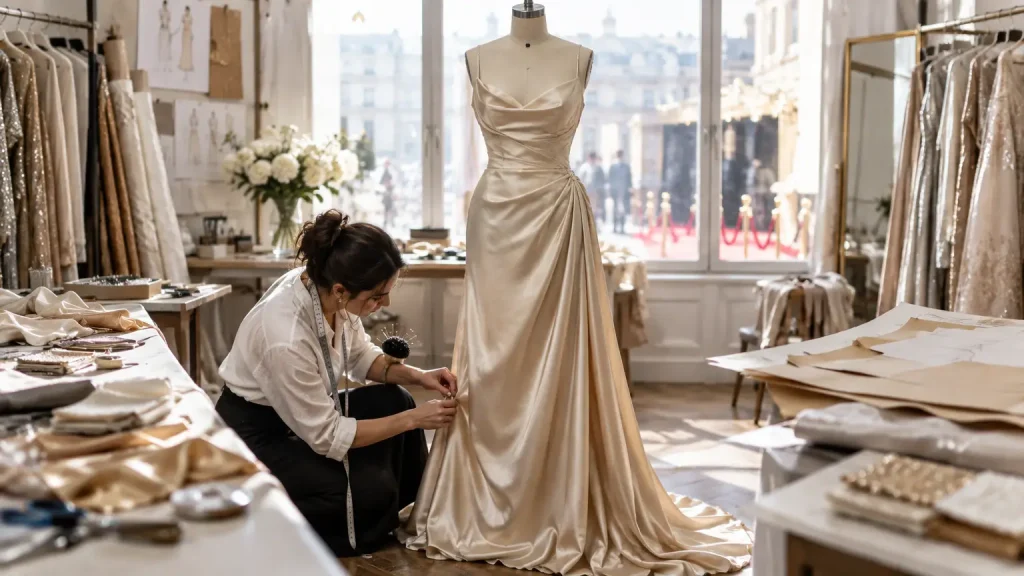
Price is the wrong place to start. A luxury wedding gown earns that label through three things: where the fabric comes from, how the seams are finished, and how much of the work is done by hand.
Get those three things right and the gown performs differently. Get them wrong and you have something expensive, not something exceptional.
Fabric: Where It Comes From Matters More Than You Think
Silk charmeuse, duchess satin, and genuine Chantilly lace come from French and Belgian mills. They are not interchangeable with polyester or machine-woven versions.
Silk has weight. It drapes with gravity and holds its shape in a way synthetics can’t match. Hand-made Chantilly lace has slight irregularity in the pattern repeat, that gives it softness and depth machine lace will never replicate.
I’ve watched brides put on a silk gown for the first time and go quiet. They feel it before they see it.
Hand-Applied Embellishment: The Detail That Changes Everything
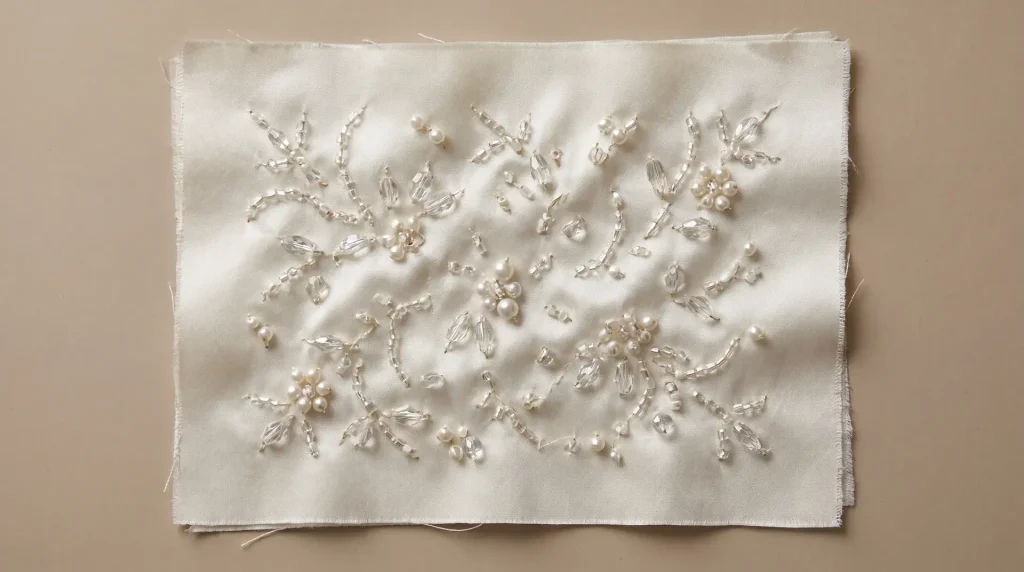
When beading or embroidery is placed by hand, each piece sits at a slightly different angle. That irregularity catches light differently across the surface. Machine embellishment lies flat. Up close, the difference is obvious.
Run your fingers across the beading. Feel whether the surface has dimension or if it feels pressed and uniform. That tells you more than any price tag.
Construction: What You’ll Never See on a Rack
Interior seams in a luxury gown are hand-finished. Boning is custom-cut to fit one torso, so the bodice holds its shape when you’re dancing, not just standing still. None of this is visible in a boutique. All of it shows up after eight hours of wear.
Here’s the part that trips people up: heavy beading is not a luxury signal. Some of the most densely embellished gowns on the market are entirely production-line work. Look at how the work is done; the edge finishing and the way the fabric moves, not how much embellishment is present.
If you want a concrete reference point before your first appointment, the luxury wedding gowns at Oksana Mukha show what these standards look like in practice.
The Three Tiers of the Luxury Bridal Market, and Why They’re Not Interchangeable
There are three distinct tiers: atelier and bespoke, designer ready-to-wear, and pre-owned designer. Each involves a different process, timeline, and alteration expectation.
Treating them as the same thing is the most consistent mistake I see brides make early in their search. It leads to wrong appointments, budget surprises, and gowns that arrive with no time left to alter.
Atelier and Bespoke
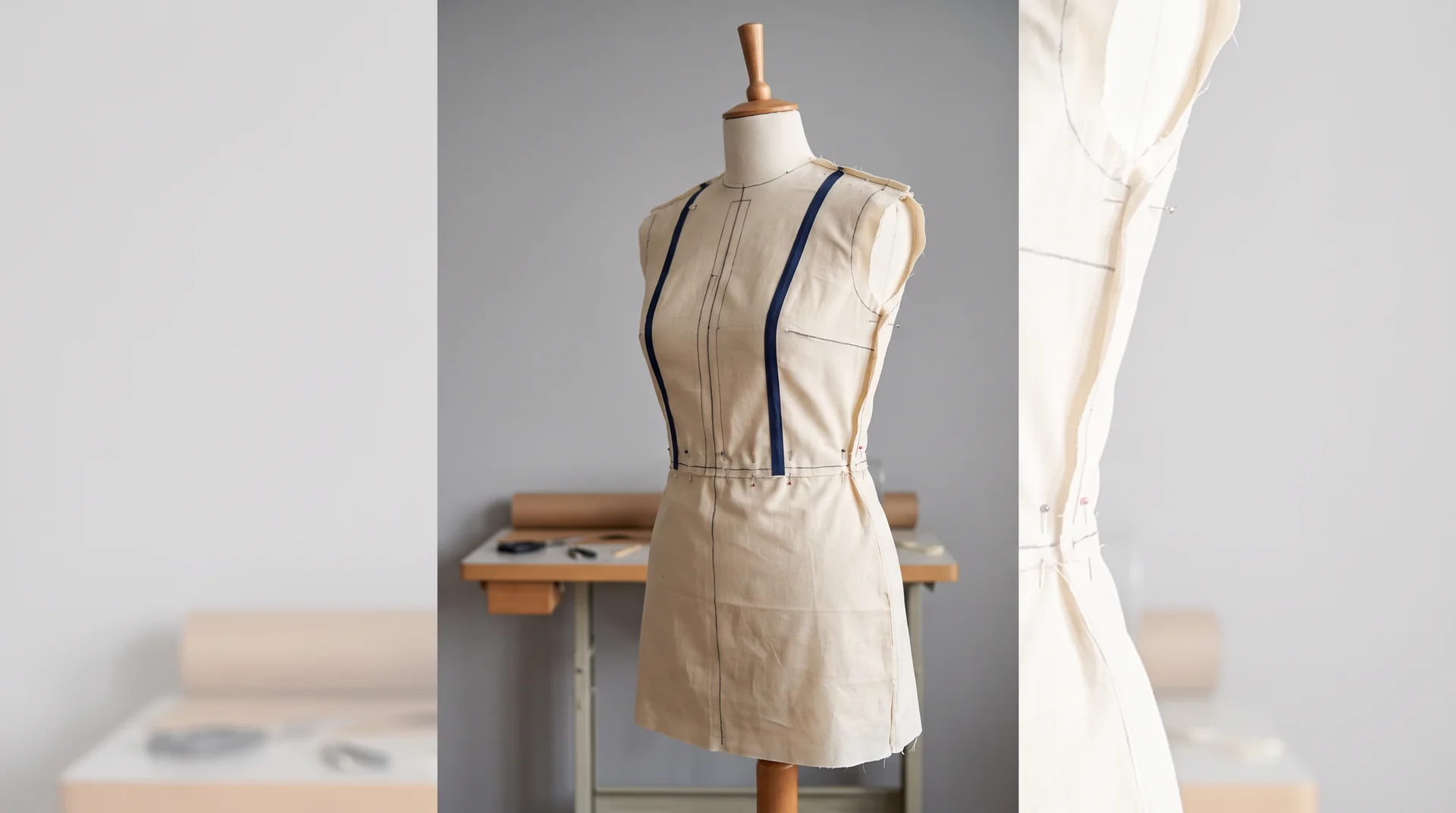
Atelier work starts before a single piece of fabric is cut. The team builds a toile; a full mock-up in inexpensive fabric fitted to your measurements. They adjust it until the shape is exactly right, then cut the final fabric. Three to five fittings later, you have a gown built for one body: yours. It doesn’t get altered to fit. It gets built to fit.
Lead times run 12 to 16 months as of 2025. If your wedding is fewer than ten months away, your atelier options narrow fast.
Worth knowing: made-to-measure is not the same as true atelier. Made-to-measure starts from an existing pattern scaled to your measurements. Better than off-the-rack, but not the same as a gown drafted from scratch for your body. Both get sold as “custom.”
Designer Ready-to-Wear
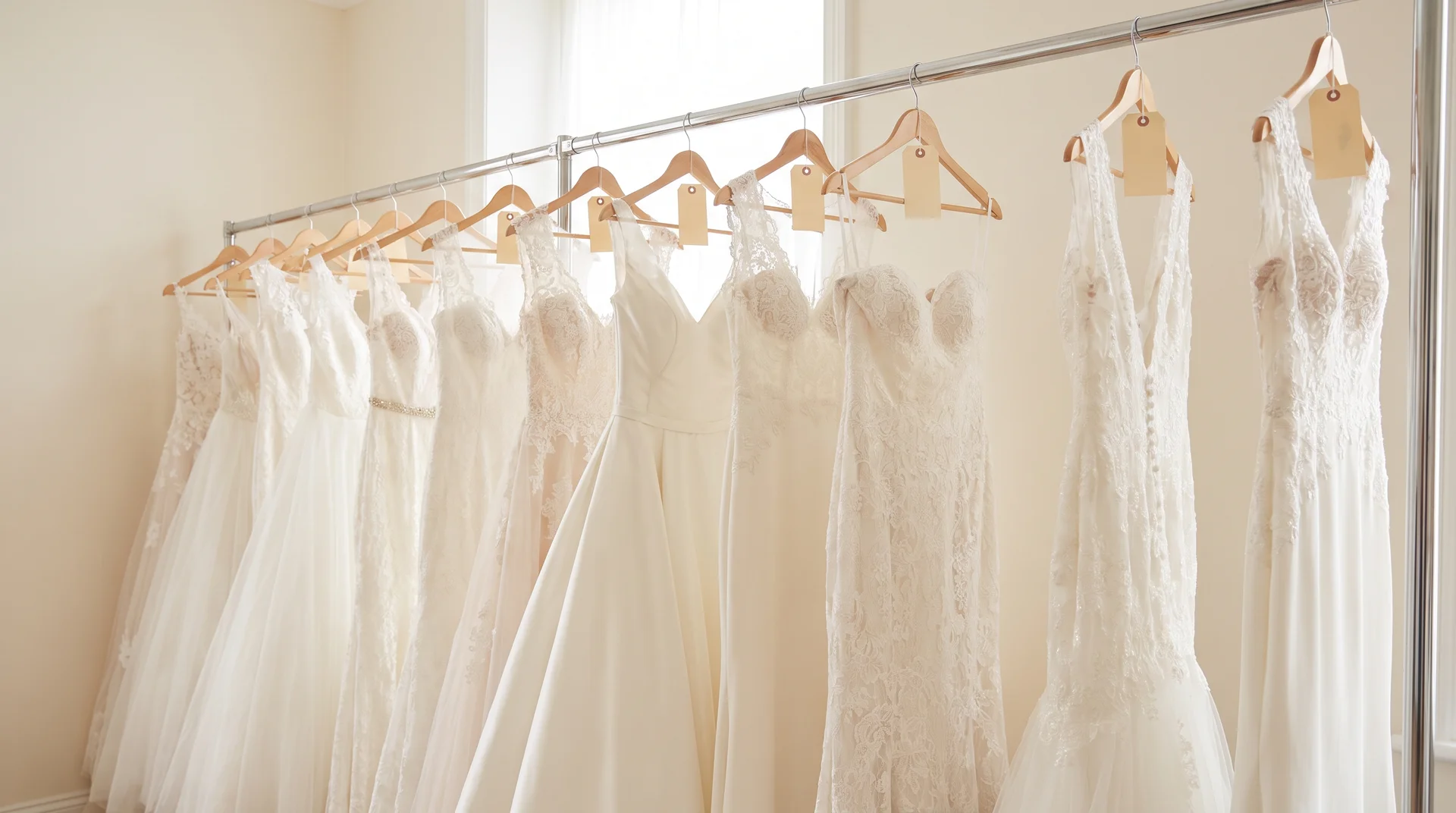
These gowns come in standard size runs and are ordered through authorized boutiques. Most samples run US 10–12. If you’re outside that range, you’ll be clipped into the sample. A good consultant can translate that accurately, but ask her to walk you through exactly what would change on your body.
Upper-end houses in this tier use fabrics and techniques close to atelier level. The difference is the gown is built to a standard size and alterations close the gap. Budget for that separately. Lead times run eight to ten months minimum.
Trunk shows are worth knowing about. When a designer ships the full collection to a boutique for two to four days. You get access to styles they don’t normally stock, sometimes with a brand rep present. Discounts of 10–15% come up occasionally. Check boutique websites four to six weeks out.
Pre-Owned Designer Gowns
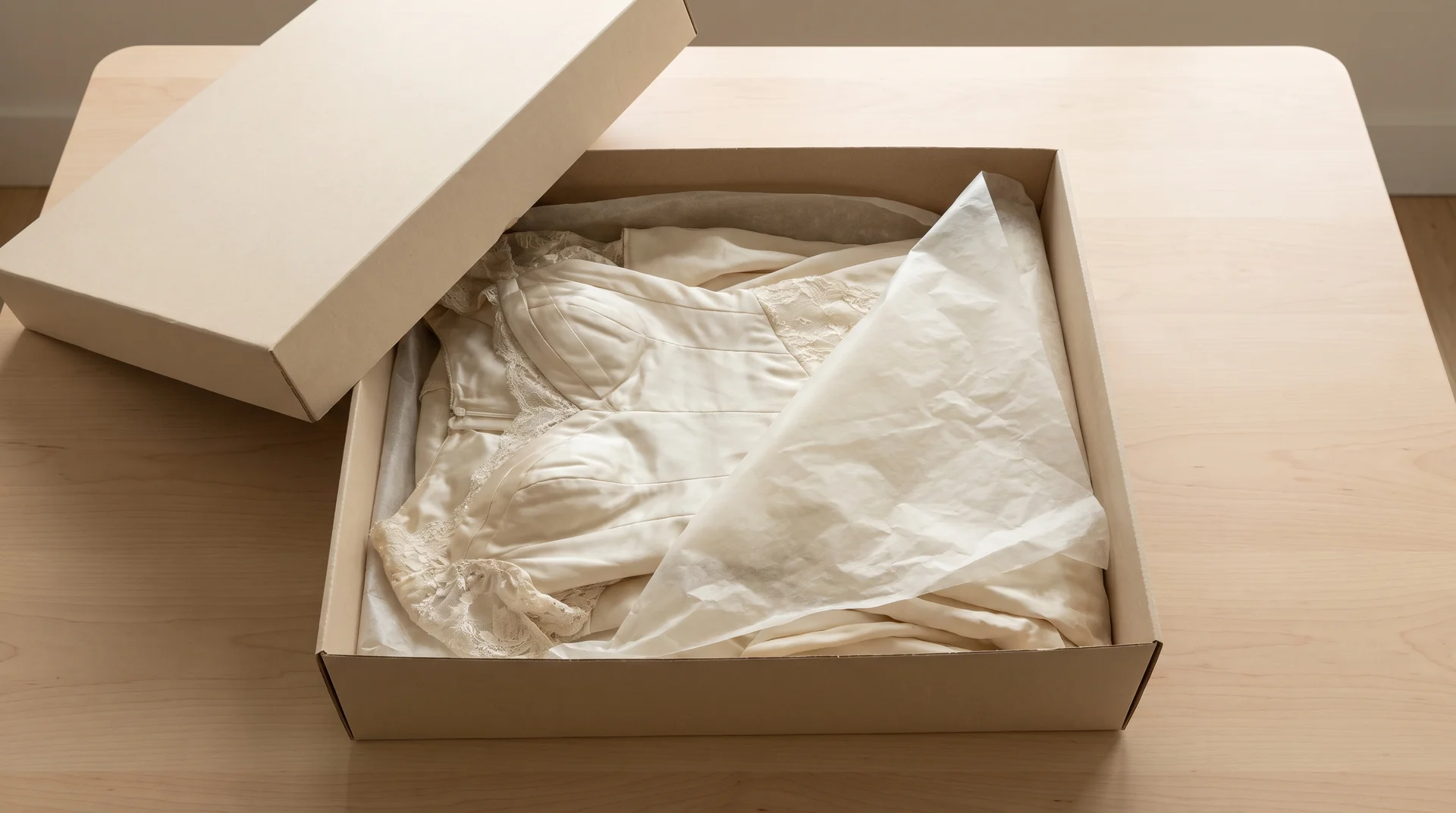
This is the most underused option in luxury bridal, and for the right bride, the smartest one.
Atelier gowns get worn once and stored carefully. A gown that retailed at $8,000–$15,000 regularly sells pre-owned for $2,500–$5,000 with no visible wear. The tradeoffs are real: alteration options are limited by existing seam allowances, and there’s no boutique experience.
But if the gown is the priority and the timeline is short, pre-owned delivers atelier-level construction at a fraction of the cost, with delivery in days, not months.
For brides mapping options across all three tiers, https://oksana-mukha.com/ shows what the atelier end of this market actually looks like.
What the Buying Process Actually Looks Like From First Appointment to Final Fitting
Buying a luxury wedding gown takes a minimum of three appointments. The timeline runs four months to over a year depending on which tier you’re buying from.
Most difficult experiences at the luxury end of bridal are predictable problems, not bad luck. Here’s what to expect:
Your First Appointment Isn’t a Buying Appointment
The first consultation is about alignment: silhouette preferences, fabric comfort, ceremony context, and budget. Your whole budget, including alterations.
This is where most people get caught out. Alterations are always separate from the gown price. On a structured luxury gown, they run $800–$1,800 in 2025. Bustle construction or bodice restructuring puts you at the higher end. Build that number in before you fall in love with a gown at the edge of your spend.
Three things to bring:
- Reference images: focused on silhouette, not just aesthetic mood
- Your shoes or heel height: hem length is measured from the floor with shoes on
- Venue details: surface type and formality affect train length more than most brides expect
Trunk Shows and the Fitting Timeline
If you have a specific designer in mind, check trunk show schedules before booking a standard appointment. You’ll get access to the full collection and, in some cases, a brand representative who can speak directly to construction.
Final fittings happen eight to twelve weeks before the wedding. Alterations need to finish at least two weeks before the date. Brides who order late are the most common source of last-minute boutique emergencies. The calendar doesn’t flex, so order on time.
Frequently Asked Questions
How Much Does a Luxury Wedding Gown Cost?
Designer ready-to-wear typically starts at $3,000–$4,000. Atelier and bespoke gowns begin at $6,000–$8,000 and go well above $15,000 for heavily embellished or custom work. Pre-owned designer gowns can bring atelier-level quality into the $2,500–$5,000 range. Figures reflect 2025 pricing; verify before planning.
What Is the Difference Between Couture and Made-to-Measure?
Couture means the gown is built from scratch to your measurements, a toile is fitted and adjusted before any final fabric is cut. Made-to-measure starts from an existing pattern scaled to fit. Both are sold as custom. Both fit better than off-the-rack. The process, number of fittings, and result are not the same.
How Far in Advance Should I Order a Luxury Wedding Gown?
Designer ready-to-wear needs eight to ten months minimum. Atelier and bespoke need twelve to sixteen. Order late and you’re paying rush fees, often 20–30% on top of the gown price, with a compressed alteration window. Pre-owned gowns arrive in days to weeks, making them the most practical option when time is short.
Are Pre-Owned Luxury Gowns Worth Considering?
For a lot of brides, yes. Gowns that retailed at $7,000–$12,000 regularly appear pre-owned for a fraction of that, often with no visible wear. The tradeoffs are limited alteration options and no boutique experience. If the gown itself is the priority, pre-owned gives you access to a tier that would otherwise be out of reach.