

Long hair gives you plenty of options, but it can also feel hard to manage when it falls flat, turns frizzy, or refuses to stay in place. I know the difference often comes down to a few small habits, not a long morning routine.
In this guide, I’ll show you how to style long hair men can wear with confidence at work, on weekends, or at special events.
I’ll also explain which products work best for straight, wavy, curly, thick, or fine hair. You’ll see easy style ideas, common mistakes to avoid, and simple care tips that support healthier length.
My goal is to give you practical advice you can use right away, with no confusing salon terms or hard-to-follow steps.
The Golden Rule of Styling Men’s Long Hair
The golden rule is to work with natural texture instead of forcing the hair into a style it cannot hold. Healthy, well-prepared hair is always easier to shape and control.
Start with clean or slightly damp hair, then use a small amount of product suited to the hair type. Straight hair often needs light cream or paste, while waves and curls usually respond better to moisture and gentle hold.
Men should also avoid heavy products at the roots, since they can make hair look greasy and flat.
Heat should stay low, and a wide-tooth comb can reduce pulling and breakage. Regular trims, proper conditioning, and simple styling habits help long hair look neat without making the routine feel complicated.
How to Style Long Hair for Men
Good styling starts with proper preparation, light product use, and a method that suits the hair’s natural texture.
These steps help keep long hair neat, controlled, and comfortable throughout the day.
1. Start With Clean or Slightly Damp Hair

Clean hair is easier to shape because excess oil and old styling products can make it look flat. Wash when needed, apply conditioner to the middle and ends, then pat the hair dry with a soft towel.
Keep these points in mind:
- Avoid rubbing the hair roughly
- Do not style hair while it is dripping wet
- Leave it slightly damp for easier control
- Use a gentle shampoo to prevent dryness
I saw better results when I stopped applying styling cream to soaking-wet hair.
2. Detangle From the Ends Upward
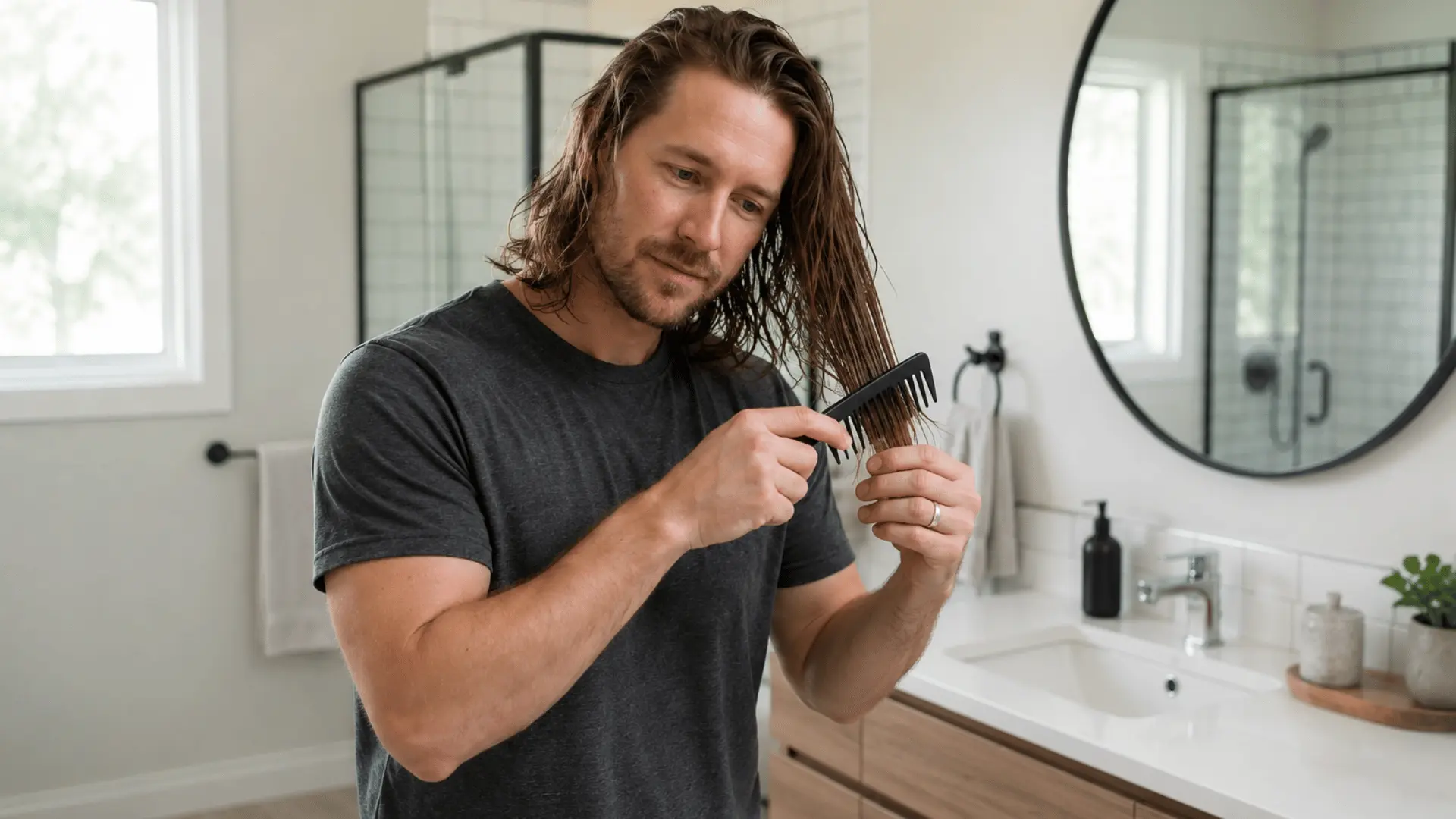
Use a wide-tooth comb or detangling brush to remove knots. Begin at the ends and slowly move toward the roots. This places less pressure on the scalp and lowers the risk of breakage.
For easier detangling:
- Hold the hair above each knot
- Work in small sections
- Apply leave-in conditioner to dry hair
- Avoid pulling the comb through large knots
Long hair often tangles near the neckline, behind the ears, and around the ends, so these areas may need extra care.
3. Match the Product to the Hair Type

The right product depends on the hair texture and preferred finish. Start with a small amount, since too much can make long hair look greasy or heavy.
Common options include:
- Styling cream for softness and light control
- Sea salt spray for texture and volume
- Pomade for a smooth, pushed-back style
- Curl cream for waves and curls
- Mousse for lightweight body
My friend replaced thick pomade with a light cream and found that his fine hair looked fuller and moved more naturally.
4. Apply Product Without Greasy Roots
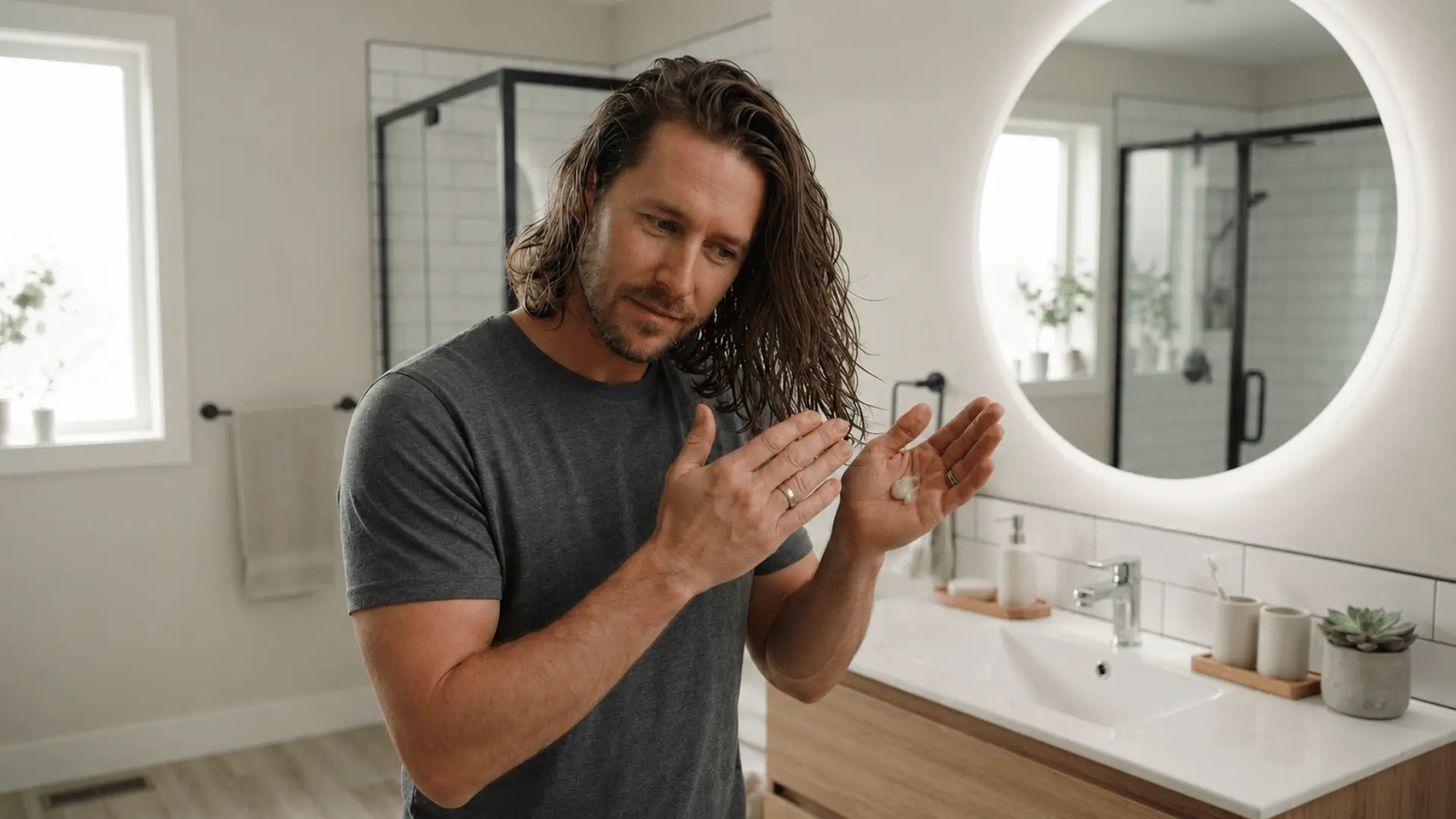
Warm the product between the palms before applying it. Begin at the middle of the hair and move toward the ends. Use only the small amount left on the hands near the roots.
A simple method is:
- Start with a pea-sized amount
- Rub it evenly between both palms
- Apply it through the middle and ends
- Add more only when needed
Placing too much product near the scalp can reduce volume and create oily patches. It is easier to add a product than remove it.
5. Shape the Hair With Its Natural Growth

Hair is easier to control when styled in the direction it naturally falls. Fighting the growth pattern can cause strands to stick out or move back into their usual position.
Try one of these simple styles:
- Middle part
- Side part
- Hair pushed behind the ears
- Low ponytail
- Loose bun
- Defined curls or waves
Anyone learning how to style long hair for men should use soft hair ties. Fabric-covered bands hold the hair without pulling or damaging the strands.
6. Use the Right Drying Method
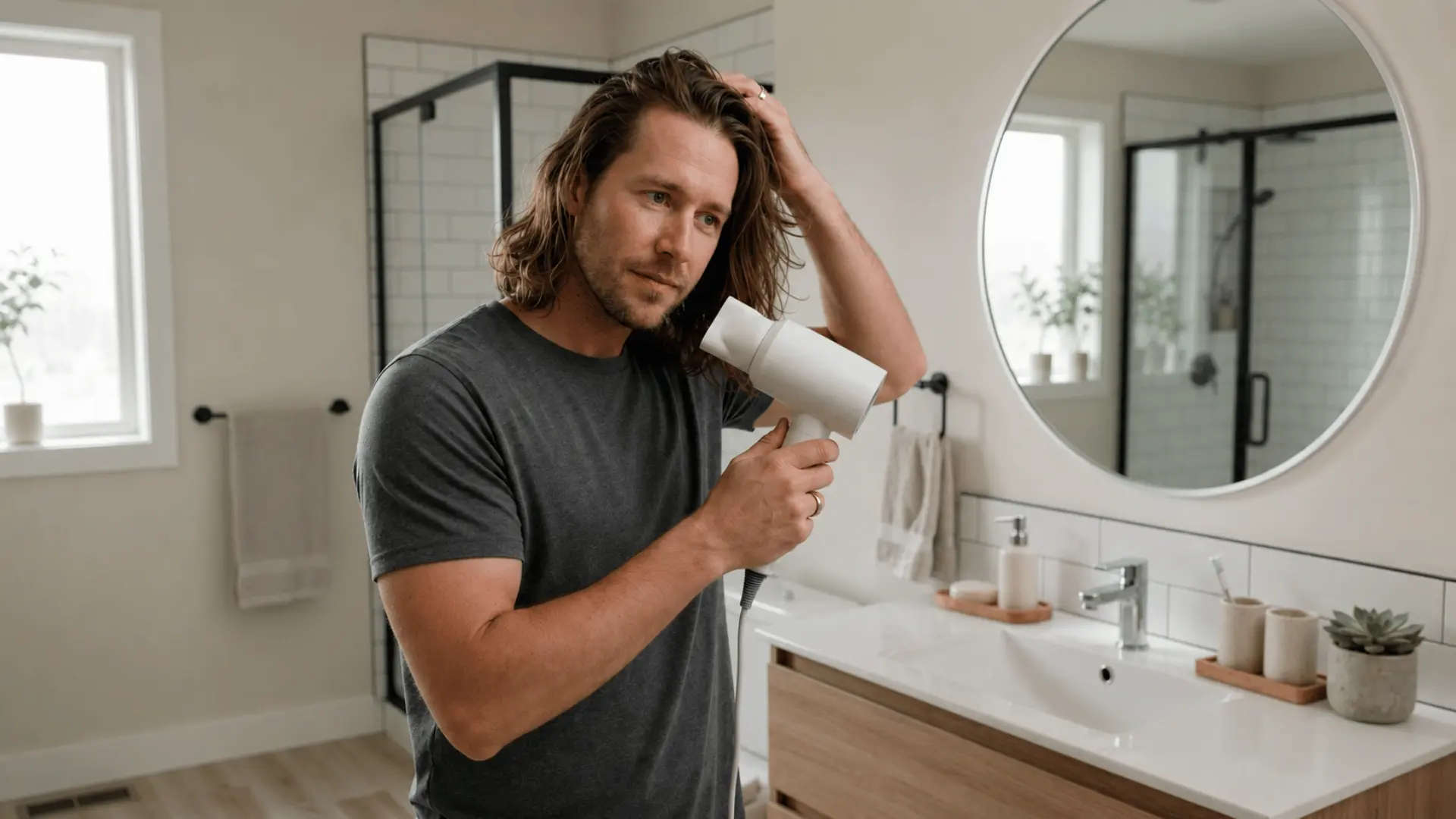
Air-drying creates a relaxed finish, while blow-drying gives more shape and control. Keep the dryer on low or medium heat and hold it several inches away from the hair.
Use the correct attachment:
- Diffuser for curly or wavy hair
- Concentrator nozzle for straighter hair
- Heat-protection spray before blow-drying
- Cool air at the end to help set the style
I did notice less dryness after lowering the heat setting. High heat used too often can weaken the ends and increase frizz.
7. Add a Light Finishing Touch
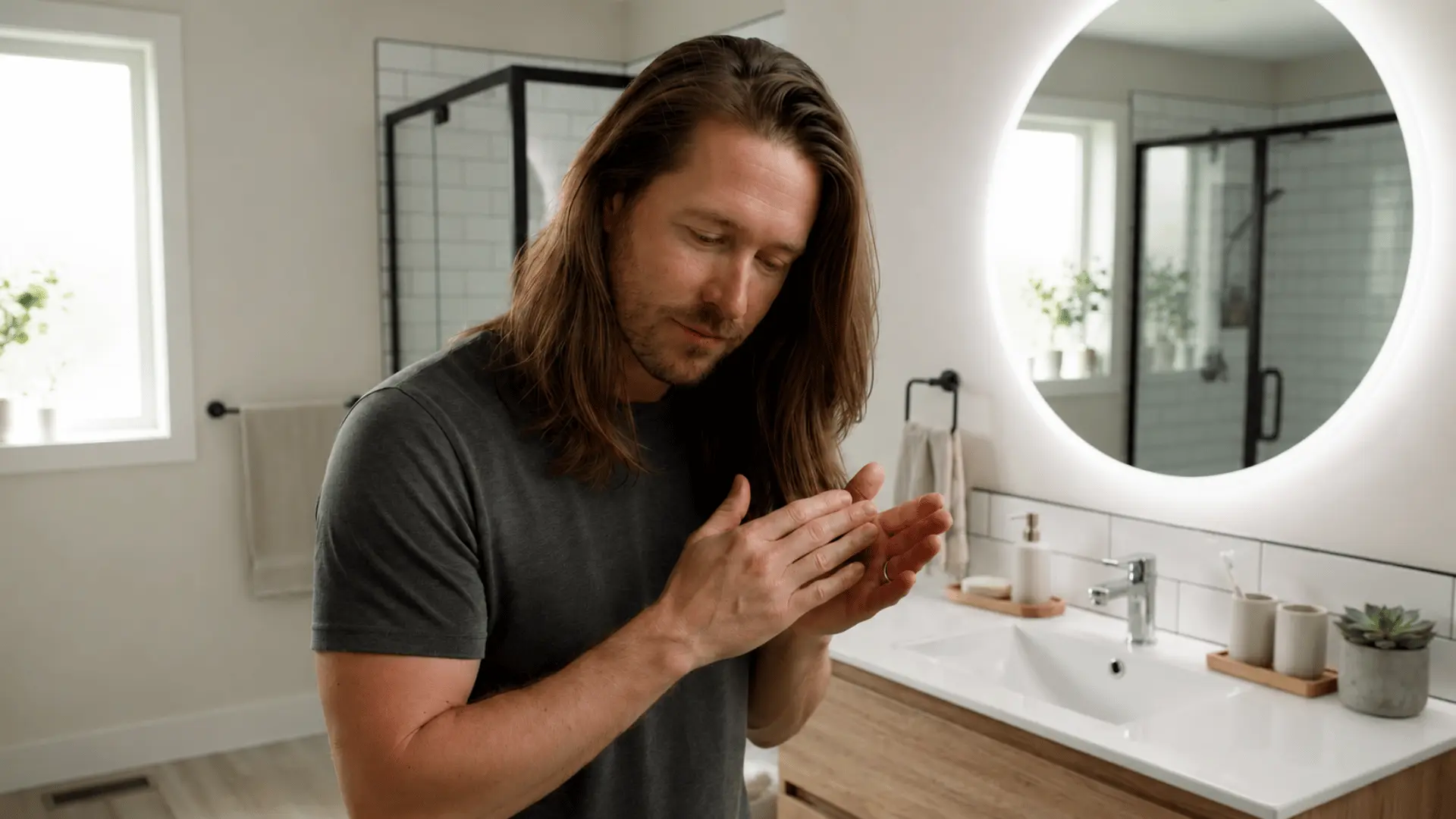
The final product should control loose strands without making the hair stiff. Use only a small amount, focusing mainly on the ends or areas that need extra hold.
Useful finishing options include:
- Hair oil for dry ends
- Serum for flyaways
- Light hairspray for hold
- Curl spray for definition
- Dry shampoo for oily roots
Check the sides and back before leaving. Small adjustments with the fingers usually yield cleaner results than adding another thick layer of product.
The Essential Long Hair Toolkit: Products and Tools You Need
The right setup makes daily styling faster and helps prevent frizz, breakage, and product buildup. This table shows which items support different hair types, finishes, and styling needs.
| Product | Hold | Finish | Amount | Apply When | Use Carefully On |
|---|---|---|---|---|---|
| Styling cream | Light | Natural | Pea-sized | Damp hair | Fine or oily hair |
| Sea salt spray | Light | Matte | 3 to 5 sprays | Damp hair | Dry or coarse hair |
| Curl cream | Medium | Soft | Dime-sized | Wet hair | Fine, straight hair |
| Pomade | Medium | Shiny | Pea-sized | Damp or dry hair | Flat or oily hair |
| Matte clay | Strong | Matte | Pea-sized | Dry hair | Curly or dry hair |
| Mousse | Medium | Natural | Golf-ball-sized | Damp hair | Very dry hair |
| Hair oil | None | Shiny | 1 to 3 drops | Damp ends or after styling | Fine or oily hair |
| Dry shampoo | Light | Matte | 2 to 4 sprays | Dry roots | Dry or coily hair |
For anyone learning how to style long hair, a few well-chosen products and gentle tools are usually more useful than a crowded shelf.
Easy Long Hairstyles for Men
Simple styles can keep long hair neat without adding much time to the morning routine. The best option depends on hair texture, length, face shape, and the level of hold needed.
1. Loose And Natural Hair

Loose hair works best when the cut has shape and the ends are healthy. Start with slightly damp hair, apply a light styling cream, and use the fingers to guide the hair into place.
A middle or side part can make the style look more planned. Avoid heavy wax near the roots, as it can reduce movement and make clean hair look oily.
- Use a light cream for soft control.
- Tuck the sides behind the ears for a cleaner look.
- Add a little serum only to dry ends.
2. Textured Waves

Textured waves suit medium-to-long hair that already has some natural bend. Spray sea salt spray through damp hair, then gently scrunch the lengths with both hands.
Let the hair air-dry or use a diffuser on low heat. This method adds grip without making the style look stiff. Straight hair may need loose braids while drying to create more shape.
The most common mistake is brushing hair after it dries, as it can separate the waves and cause frizz.
Quick tip: Apply less sea salt spray to dry or coarse hair because it may make the ends feel rough.
3. Slicked Back Long Hair
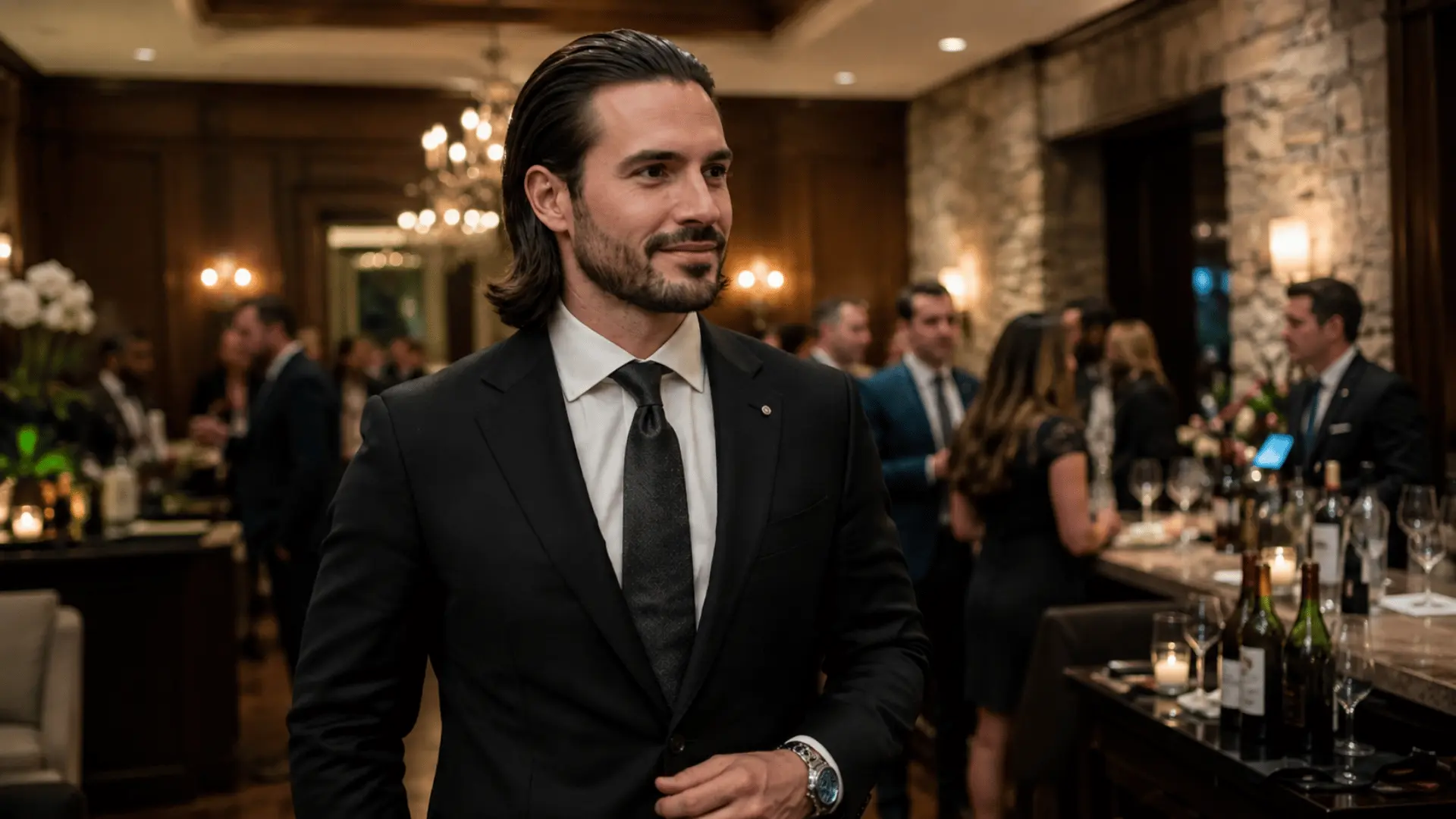
A slicked-back style gives long hair a clean and controlled finish for work, dinners, or formal events. Apply a small amount of pomade or styling cream to damp hair, then comb it away from the face.
Use the palms to smooth loose strands along the sides. For better hold, dry the hair backward first, then apply a final layer of product once the shape is set.
- Choose pomade for shine and cream for a softer finish.
- Keep the product light around the hairline.
- Use hairspray only when extra hold is needed.
4. Low Ponytail

The low ponytail is one of the quickest styles for shoulder-length hair or longer. Brush or comb the hair toward the nape, then secure it with a snag-free tie.
Keep the tension firm enough to hold the shape but not so tight that it pulls on the hairline. A small amount of cream can control flyaways near the ears.
This style works well for busy days, exercise, or professional settings. It also gives men a reliable option that requires little product.
5. Relaxed Man Bun

A relaxed man bun keeps hair off the face while leaving some natural texture around the sides. Gather the hair at the back of the head, twist it once, and wrap it into a loose bun.
Secure it with a soft elastic rather than a rubber band. I saw a barber leave a few shorter strands loose near the ears, which made the style look casual instead of overly tight.
Avoid placing the bun in the same spot every day because repeated tension may weaken the same areas.
- Place the bun lower for a relaxed look.
- Choose a higher bun for workouts.
- Never tie wet hair tightly.
6. Half-Up Half-Down Style

The half-up style gives the control of a ponytail while keeping most of the length visible. Divide the hair around the temples, pull the top section backward, and secure it with a small elastic.
This works especially well for layered, thick, or wavy hair that often falls in front of the face. Compared with a full ponytail, it places less weight on the scalp and keeps more natural movement.
Keep the section balanced on both sides so the finished shape does not look uneven.
Quick tip: Use a small clip instead of an elastic when the top section feels too short to tie.
7. Middle Part With Tucked Sides

A middle part creates a balanced shape and works well on straight, wavy, and lightly curled hair. Make the part while the hair is damp, then dry each side away from the face.
Tuck the front sections behind the ears for a simple, tidy finish. A pea-sized amount of styling cream can stop the hair from falling forward.
This style may not suit every growth pattern, so a slightly off-center part can look better when a strong cowlick makes the middle difficult to control.
How to Match a Long Hairstyle to Your Face and Lifestyle
A good long hairstyle should suit both face shape and daily routine.
Round faces often look better with height at the top and less width at the sides, while square faces can handle longer layers and softer texture around the jaw.
Oval faces work with most styles, including middle parts, loose waves, ponytails, and buns. Lifestyle matters as much.
Active men may prefer tied-back styles, while office settings may call for a neat low ponytail or slicked-back finish. Men should also consider hair thickness, natural texture, styling time, and workplace rules before choosing a look.
How to Style Long Hair Based on Hair Type
Natural texture affects which products, tools, and drying methods work best. Matching the routine to the hair type improves control while reducing frizz, flatness, and buildup.
- Straight Hair: Use a lightweight styling cream, mousse, or sea salt spray to add shape without weighing the hair down. Blow-dry the roots upward for volume, then direct the lengths backward or into a clean part.
- Wavy Hair: Apply curl cream or sea salt spray to damp hair, then gently scrunch the lengths. Air-dry for a relaxed finish or use a diffuser on low heat. Avoid brushing because it can separate the waves and create frizz.
- Curly Hair: Work leave-in conditioner or curl cream through wet or damp hair using the fingers. Scrunch upward and let the curls air-dry or diffuse them slowly.
- Coily Hair: Focus on moisture and gentle handling. Apply leave-in conditioner, curl butter, or a light oil in sections, then use finger coils, twists, or braids to create shape.
- Fine Hair: Choose light mousse, texture spray, or volumizing mist for lift and movement. Keep conditioner and styling cream away from the roots.
- Thick or Coarse Hair: Use richer creams, leave-in conditioner, or a small amount of hair oil to soften the lengths and control bulk.
A Simple Long Hair Care Routine for Men
A steady routine keeps long hair clean, soft, and easier to style without adding too many products or steps.
| Routine Step | How Often | What to Do |
|---|---|---|
| Shampoo | 2 to 3 times a week | Clean the scalp with a gentle shampoo and rinse well. |
| Condition | After every shampoo | Apply conditioner from the middle lengths to the ends. |
| Detangle | Daily or as needed | Use a wide-tooth comb and work from the ends upward. |
| Dry Gently | After washing | Blot with a soft towel and avoid rough rubbing. |
| Apply Leave-In Product | After washing | Use a small amount of leave-in conditioner or styling cream. |
| Use Heat Protection | Before heat styling | Spray heat protectant before using a dryer or straightener. |
| Trim the Ends | Every 8 to 12 weeks | Remove split, dry, or uneven ends without cutting too much length. |
| Deep Condition | Once a week | Apply a hair mask and leave it on for the recommended time. |
| Protect Hair at Night | Every night | Use a loose braid, soft tie, or satin pillowcase. |
| Clean Styling Tools | Every 1 to 2 weeks | Remove trapped hair and wash combs, brushes, and clips. |
A simple care routine makes it easier to follow any method for styling long hair for men without dealing with excess frizz, dryness, or damaged ends.
How to Survive the “Awkward Phase” When Growing Your Hair Out
The awkward phase happens when hair is too long for a short cut but not long enough to tie back. Regular shape-up trims can keep the neckline, sideburns, and damaged ends tidy without removing much length.
Light styling cream, sea salt spray, or matte paste can control sections that stick out or fall into the eyes. Headbands, clips, caps, and half-up styles also help on difficult days.
It is best to work with the natural hair texture instead of forcing every strand into place. Washing too often or using heavy products may make growing hair look dry, greasy, or flat.
Men can ask a barber for soft layers or small adjustments that improve shape while keeping the main length.
Styling Techniques That Make Long Hair Easier to Manage
Small changes in drying and product use can improve volume, hold, and second-day results without making the hair feel heavy.
- Create Root Volume: Apply mousse or volumizing spray near the scalp, then blow-dry the roots upward while lifting them with the fingers.
- Make the Style Last All Day: Style slightly damp hair, let it dry fully, and finish with a light mist of hairspray.
- Refresh Hair the Next Morning: Use dry shampoo on oily roots, add a little water or leave-in spray to the lengths, and reshape with the fingers.
- Layer Products without Buildup: Apply a light cream first, then add a small amount of pomade, clay, or serum only where extra control is needed.
- Use the Right Amount of Product: Start with a pea-sized amount for medium hair, a dime-sized amount for shoulder-length hair, and add more slowly for longer or thicker hair.
- For frizz: Apply a light leave-in conditioner or smoothing serum through the middle and ends while the hair is damp. Avoid rough towel drying, high heat, and brushing waves or curls after they dry.
- Flat roots: Need less product and more lift. Apply volumizing spray near the scalp, change the part, or blow-dry the roots upward on low heat.
- Greasy hair: Should be washed based on scalp needs, with conditioner kept away from the roots. Dry shampoo can absorb oil between washes, but product buildup should still be removed regularly.
These small changes make long hair look cleaner, fuller, and easier to manage.
Final Thoughts
Long hair becomes much easier to manage when the routine matches its natural texture, thickness, and needs.
Small habits often make the biggest difference, from using less product at the roots to drying gently and choosing styles that feel comfortable all day.
There is no single correct way to wear long hair. A loose style may work best on quiet days, while a low ponytail, bun, or slicked-back look can suit work, travel, or special plans.
The goal is to keep the hair healthy, controlled, and easy to live with. As confidence grows, styling will feel quicker and more natural. Try one change at a time, notice what works, and build a routine around it.
Share your long hair experience, favorite style, or best grooming tip in the comments below.
Frequently Asked Questions
When to Visit a Barber or Hairstylist?
Visit every 8 to 12 weeks, or sooner if split ends, uneven layers, excess bulk, or an unmanageable shape appear.
Can Men Sleep with their Hair in a Bun?
Yes, but the bun should be loose, dry, and secured with a soft tie to prevent tension and breakage.
Should Men Brush Long Hair Every Day?
Straight or wavy hair can be brushed gently as needed, while curly hair is best detangled when damp and conditioned.
Is It Better to Style Long Hair Wet or Dry?
Slightly damp hair is usually easiest to shape, while dry hair works better for finishing touches, texture, and added volume.