A crisp cucumber feels light, fresh, and easy to add to almost any plate. Still, many people wonder where it actually fits into their daily diet.
If you slice it into a salad, pair it with dip, or grab it as a quick snack, it often feels like a simple choice when you want something refreshing.
This blog breaks down cucumber calories in a clear way, along with cucumber nutrition facts and its role in everyday eating.
How Many Calories are in a Cucumber?
With just 15 calories per 100 grams, cucumber is one of the lowest-calorie vegetables you can eat.
It is one of those foods that people often associate with healthy eating, but many are unsure of its actual nutritional value.
If you are adding it to salads, sandwiches, or enjoying it as a snack, it’s helpful to know what you are getting in each serving.
You will learn how its calories, water content, fiber, and nutrients contribute to a balanced diet, making it easier to decide how it fits into your everyday meals.
Nutrition at a Glance
Cucumber looks simple, but cucumber nutrition facts explain why it feels so light and refreshing. Most of its weight comes from water, with only small amounts of carbs, cucumber fiber, vitamins, and minerals.
| Category | Amount | Notes |
|---|---|---|
| Calories | 15 kcal per 100g | About half a medium cucumber |
| 1 cup sliced | 18 calories | About 119g |
| 1 ounce | 4 calories | About 28g |
| Water | About 95% | Helps cucumber feel light and refreshing |
| Carbohydrates | 3.6g per 100g | Very low in carbs |
| Fiber | 0.5g per 100g | A cup has about 0.6g |
| Sugar | About 1.7g per 100g | Naturally occurring sugar |
| Protein | 0.7g per 100g | A very small amount |
| Fat | 0.1g per 100g | Almost fat-free |
| Vitamin C | 2.8mg per 100g | Small amount |
| Vitamin K | 16.4mcg per 100g | Higher when eaten with peel |
| Potassium | 147mg per 100g | Adds light mineral value |
What Health Benefits Come From Eating Cucumber?
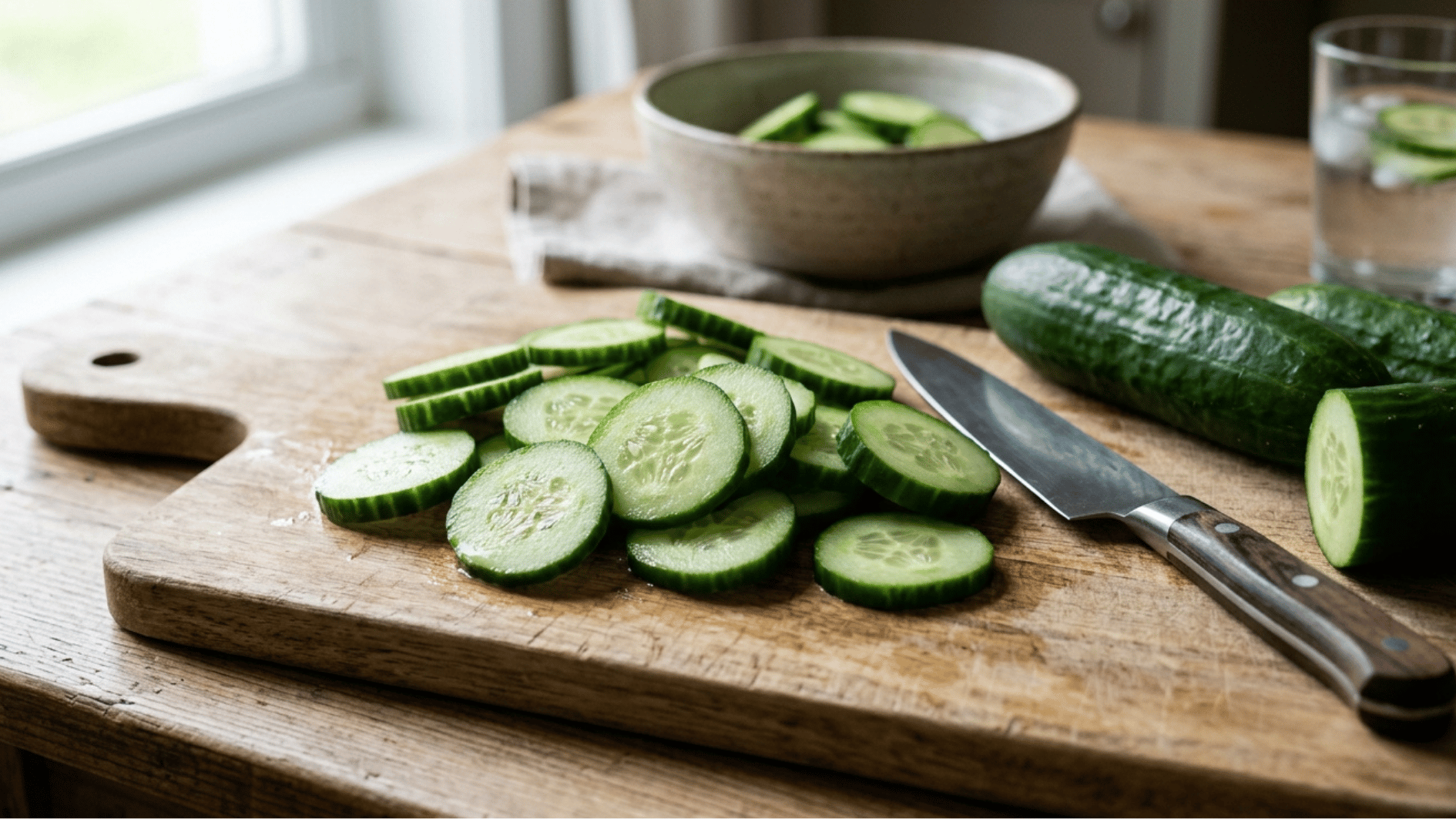
Cucumber may look simple, but it offers several benefits, especially when you eat it with the skin on. Its low calorie count, water content, and small amount of cucumber fiber make it easy to add to everyday meals.
1. Supports Hydration
Cucumber is about 95 percent water, which makes it one of the most refreshing foods to eat during hot weather or after light activity.
It should not replace drinking water, but it can support daily fluid intake while adding crunch, freshness, and very few calories to your meals.
2. Adds Very Few Calories
When people search for cucumber calories, the number is usually lower than expected. Cucumber has about 15 calories per 100 grams, so it is easy to add to meals without making them feel heavy.
It adds volume to salads, wraps, sandwiches, and snack plates, which can help you feel satisfied while keeping the overall calorie count low.
3. Provides Vitamin K
Cucumber contains vitamin K, especially when eaten with the skin on. This vitamin helps the body maintain normal blood clotting and supports bone health.
The amount is modest, but keeping the peel on helps you get more of this nutrient from each serving.
4. Offers Plant Compounds
Cucumber contains natural plant compounds that support its overall nutrition. These compounds may help the body handle everyday cellular stress, especially when cucumbers are eaten as part of a varied diet.
Pairing it with colorful fruits and vegetables adds more vitamins, minerals, and antioxidants to your meals.
5. Gives Small Amounts of Minerals
Cucumber provides small amounts of minerals such as potassium, manganese, and copper. These nutrients support normal body functions, including fluid balance, enzyme activity, and general cell health.
They are not present in large amounts, but they still add useful support when cucumber is part of a varied diet.
How Does Cucumber Compare to Other Vegetables?
Cucumber is often grouped with other light, crunchy vegetables, but its water content is what makes it stand out. Comparing it with celery, lettuce, and zucchini shows how low it sits on the calorie scale.
- Cucumber: 15 kcal per 100g, about 95% water, very light and hydrating
- Celery: 16 kcal per 100g, about 95% water, similar calories with a more fibrous bite
- Lettuce: 15 kcal per 100g, about 95% water, also very low in calories
- Zucchini: 17 kcal per 100g, about 94% water, slightly higher but still very light
Easy Cucumber Recipes for Fresh, Healthy Snacks
Fresh cucumbers make healthy snacking simple, adding crunch, hydration, and light flavor to everyday meals while pairing well with herbs, yogurt, fruits, and wholesome dips.
1. Cucumber Yogurt Salad
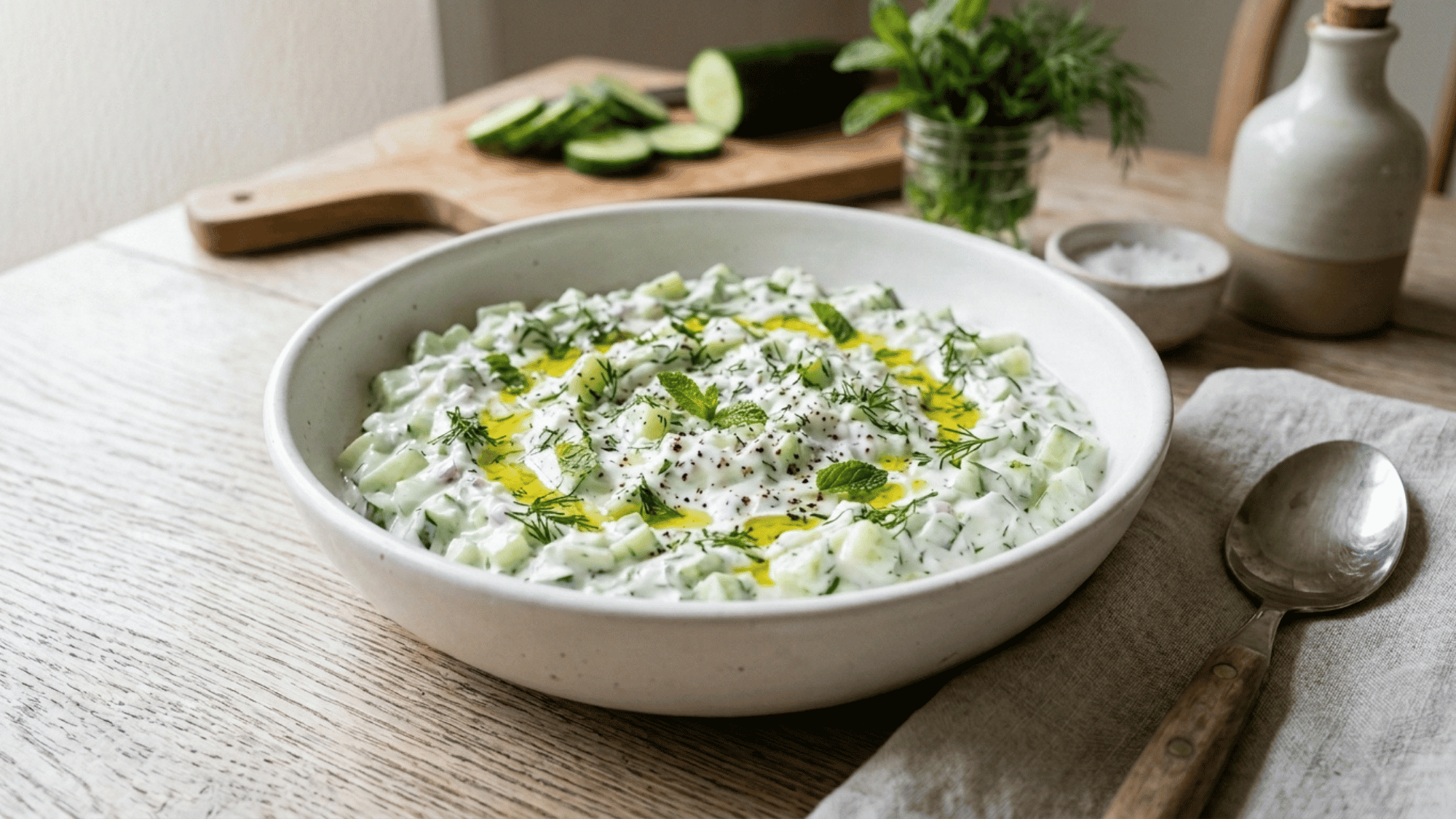
This cooling salad works well as a light snack or quick side dish. It feels refreshing, filling, and easy to enjoy on warm days.
Preparation Steps:
- Add Greek yogurt, lemon juice, salt, and pepper to a bowl.
- Mix well until smooth.
- Add the sliced cucumber.
- Toss until the cucumber is evenly coated.
- Garnish with dill or mint and serve chilled.
| Ingredients | Quantity |
|---|---|
| Sliced cucumber | 1 cup |
| Plain low-fat Greek yogurt | ¼ cup |
| Lemon juice | 1 teaspoon |
| Salt and black pepper | A pinch |
| Chopped dill or mint | Optional |
2. Cucumber Hummus Snack Cups
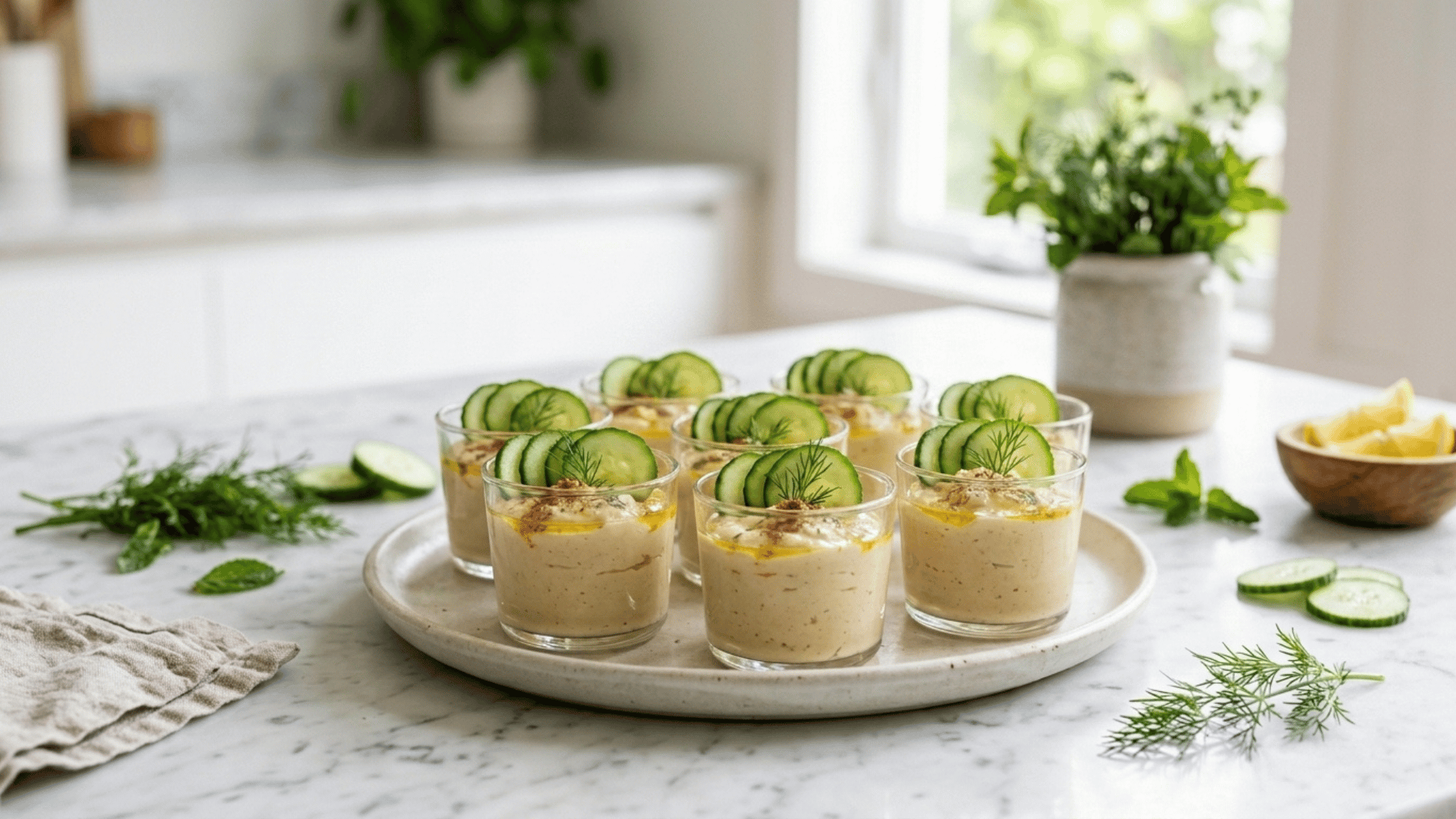
These crunchy bites are perfect when you need a quick snack between meals. They are easy to prepare, satisfying, and provide lasting energy without feeling heavy.
Preparation Steps:
- Slice the cucumber into thick rounds.
- Arrange the slices on a plate.
- Spoon a small amount of hummus onto each slice.
- Sprinkle with paprika, black pepper, or parsley.
- Serve immediately.
| Ingredients | Quantity |
|---|---|
| Medium cucumber, sliced into thick rounds | 1 |
| Hummus | 2 tablespoons |
| Paprika or black pepper | As needed |
| Chopped parsley | Optional |
3. Cucumber Tomato Salad
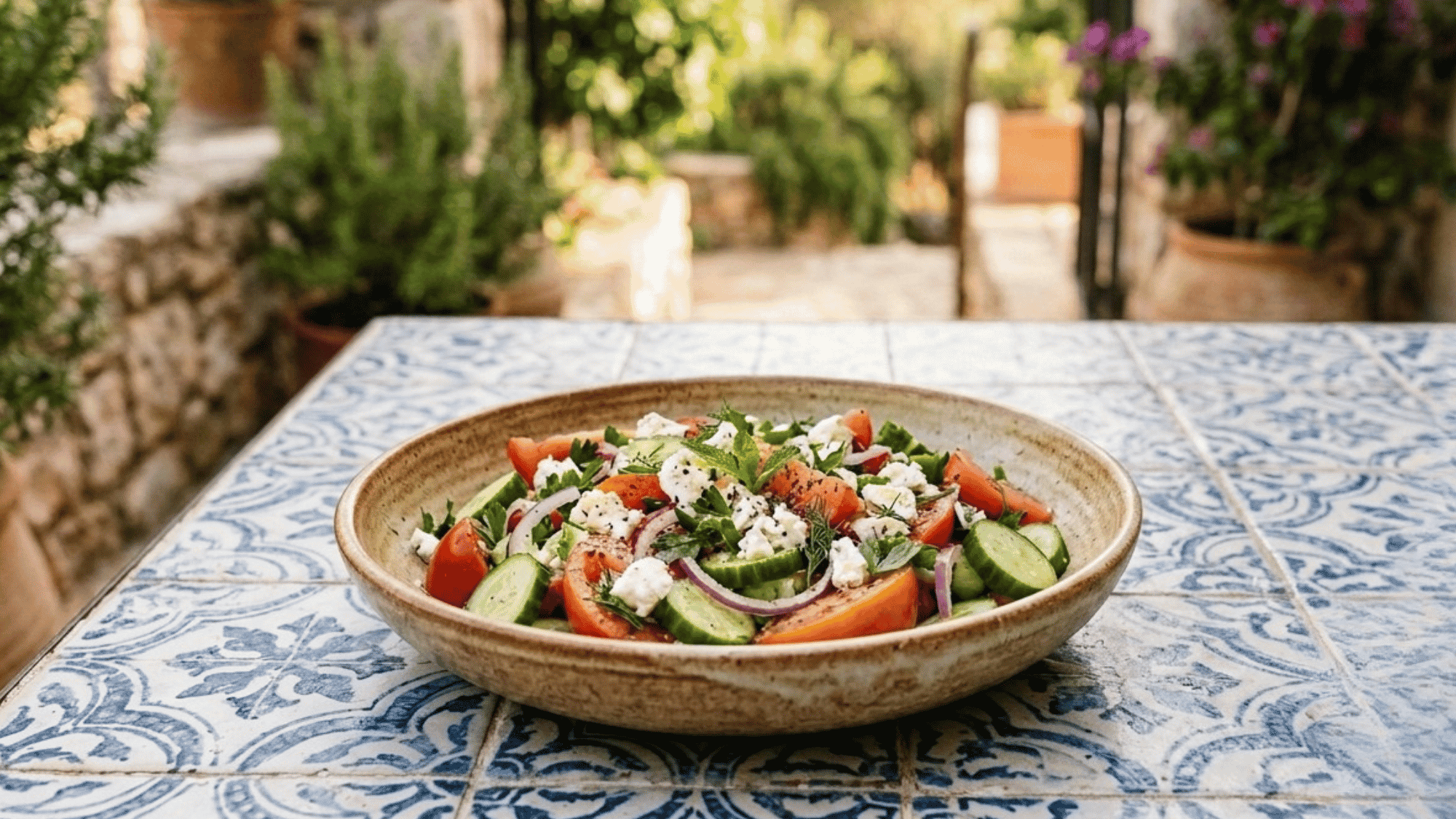
This fresh salad adds color, crunch, and freshness to any meal. It comes together in minutes and pairs well with both lunch and dinner.
Preparation Steps:
- Add the cucumber, tomatoes, and onion to a bowl.
- Drizzle with olive oil and lemon juice.
- Season with salt and black pepper.
- Toss until everything is evenly coated.
- Garnish with parsley or basil and serve chilled right away.
| Ingredients | Quantity |
|---|---|
| Sliced cucumber | 1 cup |
| Chopped tomatoes | ½ cup |
| Chopped onion | 1 tablespoon |
| Olive oil | 1 teaspoon |
| Lemon juice | 1 teaspoon |
| Salt and black pepper | To taste |
4. Cucumber Avocado Salad
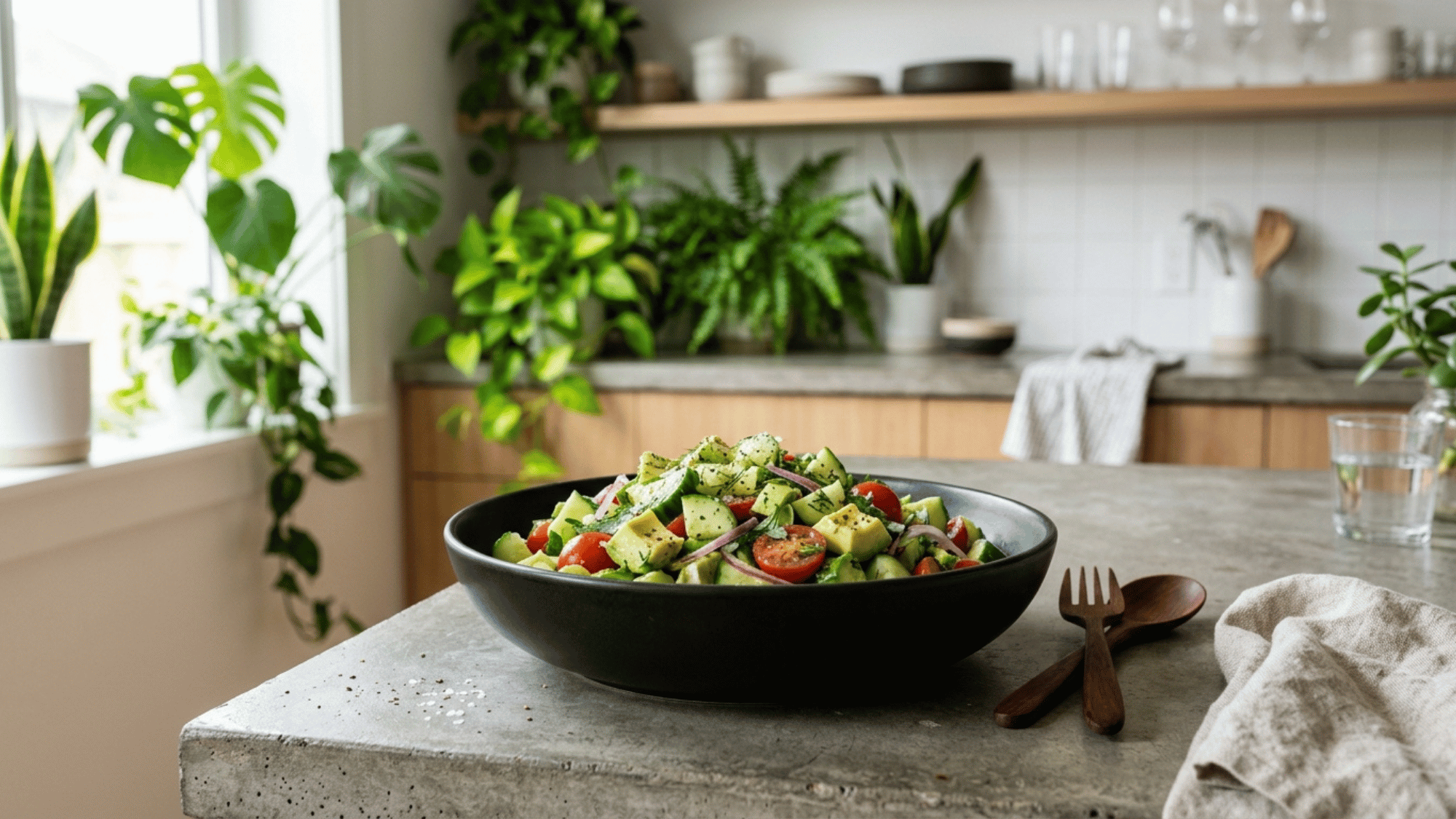
This creamy, refreshing salad makes a satisfying lunch or side dish. It combines fresh flavors with healthy fats for a light yet filling meal.
Preparation Steps
- Add the cucumber, avocado, and tomatoes to a bowl.
- Drizzle with olive oil and lemon juice.
- Season with salt and black pepper.
- Toss gently to avoid mashing the avocado.
- Garnish with herbs and serve immediately.
| Ingredients | Quantity |
|---|---|
| Sliced cucumber | 1 cup |
| Ripe avocado, diced | ½ |
| Cherry tomatoes, halved | ½ cup |
| Lemon juice | 1 tablespoon |
| Olive oil | 1 teaspoon |
| Salt and black pepper | To taste |
| Chopped cilantro or parsley | Optional |
How to Choose and Store Cucumbers?
A fresh cucumber starts with good selection and proper storage, so texture, flavor, and nutrients stay intact for longer.
- Choose cucumbers that feel firm from end to end with smooth, dark green skin.
- Avoid yellowing, soft spots, shriveled ends, or a slimy texture, which are signs of spoilage.
- Standard cucumbers usually last longer than English or Persian varieties.
- Store whole, unwashed cucumbers in the refrigerator crisper drawer, either in a produce bag or loosely wrapped in a paper towel.
- Use sliced cucumber within 2-3 days for the best texture and freshness.
Final Thoughts
Cucumber isn’t the star of the plate, and it doesn’t need to be, as its job is texture and bulk: crunch in a wrap, coolness in a salad, something to chew on that won’t wreck a calorie count.
Pick firm ones, store them properly, and eat the skin when you can; that’s where most of the fiber and vitamin K are found.
Pair it with protein or healthy fat, so it actually keeps you full, not just occupied.
Frequently Asked Questions
When is the Best Time to Eat Cucumber?
Cucumber can be eaten any time of day, but it works especially well before meals or as a light snack between meals.
How Much Cucumber Fiber Do You Get per Serving?
Cucumber has a small amount of fiber, with about 0.5g per 100g, and slightly more when eaten with the peel.
How Do Cucumber and Zucchini Compare in Calories?
Both are low-calorie vegetables, but cucumber is slightly lower, with about 15 calories per 100g compared to around 17 calories per 100g for raw zucchini.