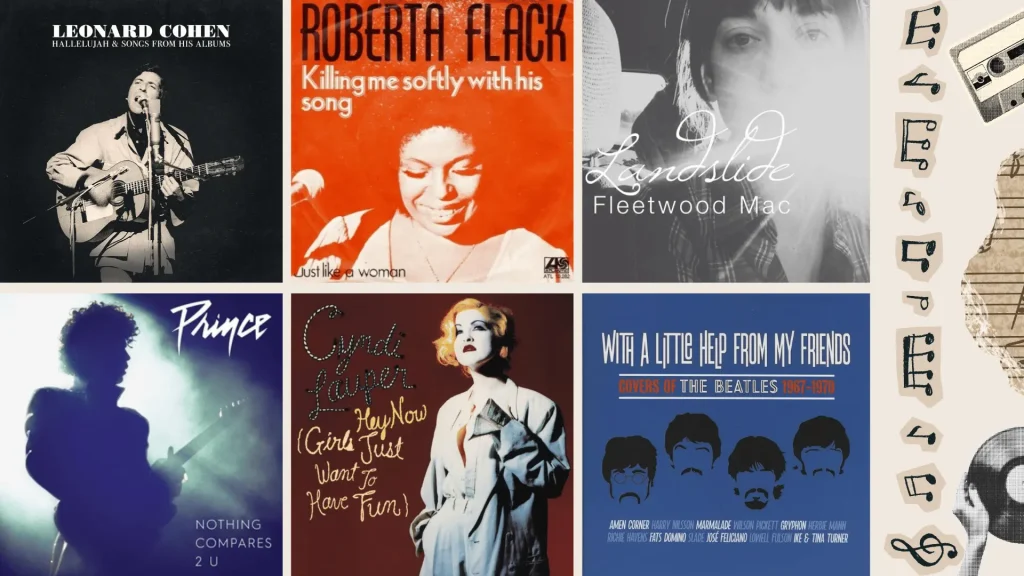
Some cover songs don’t just match the original. They bury it.
A cover, at its core, is an artist’s retelling of someone else’s story, and when it’s done right, you forget there ever was a first version.
The ones on this list earned their spot through cultural weight, genuine reinvention, and the kind of staying power that playlists and decades can’t shake.
Soul, rock, indie, country, it doesn’t matter the genre. What matters is that these covers took something already beloved and made it entirely their own.
What Makes a Cover Song Great?
A great cover never asks, “how do I sound like them?” It asks something harder: what does this song mean to me?
The difference between imitation and genuine reinterpretation is everything.
The most memorable covers shift the emotional register entirely, turning a breezy pop track into something achingly raw, or lifting a quiet folk song into something triumphant.
Genre-switching opens that door even wider. But beyond arrangement, it always comes back to vocal ownership, the moment a singer makes someone else’s words feel like a confession.
Production choices seal it, adding layers the original never imagined.
A Brief History of Cover Songs
Cover songs are almost as old as recorded music itself.
- Tin Pan Alley Era: Songs were written to be covered repeatedly by whoever could sell them. The song owned the spotlight, not the artist.
- 1950s–60s: The industry ran on covers, often with white artists repackaging Black artists’ work for mainstream radio. A complicated, important chapter.
- Rock Era: The Beatles and Led Zeppelin treated covers as honest homage, wearing their influences openly.
- MTV Era: Whitney Houston’s “I Will Always Love You” rewrote what a cover could be commercially and emotionally. Reinvention became a career move.
- Streaming Era: YouTube handed unknown artists a global stage overnight. A bedroom recording could outlive the original.
- TikTok Era: Now, fifteen seconds can go platinum. A snippet, the right moment, the right sound, and a cover enter the cultural bloodstream before the week is out.
Every era had its rules, and the best covers broke them. The ones ahead did exactly that.
Top 25 Greatest Cover Songs Ever Recorded
Not every great song belongs to the person who wrote it. These covers didn’t just borrow a melody; they claimed it, reshaped it, and in many cases, made the world forget there was ever a first version.
1. Hallelujah
Leonard Cohen wrote “Hallelujah” in 1984, and it barely made a ripple. John Cale’s version caught Buckley’s ear, and what followed was otherworldly.
Buckley recorded his version live in the studio and turned a philosophical meditation into the most emotionally devastating vocal performance in modern music history.
| Detail | Info |
|---|---|
| Cover Artist | Jeff Buckley |
| Original Artist | Leonard Cohen |
| Lyricist | Leonard Cohen |
| Year Released | 1994 |
| Chart Success / Awards | Reached number one in the UK posthumously in 2008; widely regarded as one of the greatest vocal performances ever recorded |
2. All Along the Watchtower
Bob Dylan released his original in 1967, spare and folk-driven. Hendrix heard it, flipped it inside out, and delivered a version so electric and visceral that Dylan himself admitted Hendrix had made it his own.
Dylan has performed the song in Hendrix’s arrangement ever since, which says everything.
| Detail | Info |
|---|---|
| Cover Artist | Jimi Hendrix Experience |
| Original Artist | Bob Dylan |
| Lyricist | Bob Dylan |
| Year Released | 1968 |
| Chart Success / Awards | Reached number five on the UK Singles Chart; inducted into the Grammy Hall of Fame |
3. I Will Always Love You
Dolly Parton wrote and recorded this song twice, both times reaching number one on the country charts.
Whitney Houston took it for the 1992 film “The Bodyguard,” stripped it to silence before that iconic chorus, and rewrote pop history. Parton reportedly wept the first time she heard it.
| Detail | Info |
|---|---|
| Cover Artist | Whitney Houston |
| Original Artist | Dolly Parton |
| Lyricist | Dolly Parton |
| Year Released | 1992 |
| Chart Success / Awards | Number one in over seventeen countries; spent fourteen weeks atop the Billboard Hot 100; Grammy Award for Best Female Pop Vocal Performance |
4. Respect
Otis Redding wrote “Respect” in 1965 as a man pleading for recognition at home.
Aretha Franklin took it in 1967, rewrote the context entirely, and turned it into an anthem for women, for Black America, for anyone who had ever been overlooked. The spelling out of R-E-S-P-E-C-T was entirely her addition.
| Detail | Info |
|---|---|
| Cover Artist | Aretha Franklin |
| Original Artist | Otis Redding |
| Lyricist | Otis Redding |
| Year Released | 1967 |
| Chart Success / Awards | Number one on the Billboard Hot 100; two Grammy Awards, including Best Rhythm and Blues Recording; inducted into the Grammy Hall of Fame |
5. Nothing Compares 2 U
Prince wrote this for his side project, The Family, in 1985, where it passed largely unnoticed.
Sinéad O’Connor recorded it four years later, performing before a stark white backdrop, delivering a raw and personal performance. A single tear in the music video became one of the most iconic images of the decade.
| Detail | Info |
|---|---|
| Cover Artist | Sinéad O’Connor |
| Original Artist | Prince (written for The Family) |
| Lyricist | Prince |
| Year Released | 1990 |
| Chart Success / Awards | Number one in over fifteen countries; spent four weeks at number one on the Billboard Hot 100 |
6. Johnny B. Goode
Chuck Berry’s 1958 rock-and-roll blueprint was already a classic when Hendrix got hold of it. His live renditions converted the song from a tight, propulsive rocker into something sprawling and psychedelic.
Hendrix didn’t cover the song so much as detonate it, proving rock and roll still had unexplored edges.
| Detail | Info |
|---|---|
| Cover Artist | Jimi Hendrix |
| Original Artist | Chuck Berry |
| Lyricist | Chuck Berry |
| Year Released | 1969 (live recording) |
| Chart Success / Awards | Celebrated as one of the definitive live rock performances, featured on the “Johnny B. Goode” EP |
7. Twist and Shout
Originally recorded by The Top Notes in 1961 and then by The Isley Brothers, “Twist and Shout” found its defining version with The Beatles in 1963.
John Lennon recorded his vocal in a single take at the very end of a long session, his voice already shredded, which is exactly why it sounds the way it does.
| Detail | Info |
|---|---|
| Cover Artist | The Beatles |
| Original Artist | The Isley Brothers (written by Phil Medley and Bert Berns) |
| Lyricist | Phil Medley, Bert Berns |
| Year Released | 1963 |
| Chart Success / Awards | Reached number two on the Billboard Hot 100; one of the best-selling singles of 1963 |
8. The Man Who Sold the World
David Bowie’s 1970 original was a glam-rock meditation on identity and alienation. When Nirvana performed it on MTV Unplugged in 1993, Kurt Cobain brought it somewhere quieter and far more unsettling.
Many younger listeners found Bowie through this performance, which remains one of the most haunting moments in Nirvana’s catalog.
| Detail | Info |
|---|---|
| Cover Artist | Nirvana |
| Original Artist | David Bowie |
| Lyricist | David Bowie |
| Year Released | 1994 (MTV Unplugged recording) |
| Chart Success / Awards | Part of “MTV Unplugged in New York,” which won the Grammy Award for Best Alternative Music Album |
9. Killing Me Softly
Roberta Flack’s 1973 original won her a Grammy and became a soul standard. The Fugees reimagined it in 1996 with a hip-hop scaffold, Lauryn Hill’s voice doing something that felt effortless and completely commanding.
It introduced the song to an entirely new generation and became one of the best-selling singles of the decade.
| Detail | Info |
|---|---|
| Cover Artist | Fugees |
| Original Artist | Roberta Flack (written by Charles Fox and Norman Gimbel) |
| Lyricist | Charles Fox, Norman Gimbel |
| Year Released | 1996 |
| Chart Success / Awards | Number one in over ten countries; spent six weeks at number one in the UK; Grammy Award for Best R&B Performance by a Duo or Group |
10. Tainted Love
Gloria Jones recorded the original Northern Soul track in 1964, where it found a cult following but little mainstream success.
Soft Cell’s 1981 synth-pop reinvention is almost unrecognizable in genre while preserving the emotional heartbreak entirely. It remains one of the cleanest examples of genre-switching that deepens rather than dilutes the original.
| Detail | Info |
|---|---|
| Cover Artist | Soft Cell |
| Original Artist | Gloria Jones |
| Lyricist | Ed Cobb |
| Year Released | 1981 |
| Chart Success / Awards | Reached number one in the UK; spent a record-breaking forty-three weeks on the Billboard Hot 100 |
11. Hurt
Nine Inch Nails’ Trent Reznor wrote “Hurt” in 1994 as a portrait of self-destruction. Johnny Cash recorded his version in 2002, just a year before his death, and the weight of age changed every lyric.
Reznor famously said the song no longer felt like his after hearing Cash’s version. The music video is considered one of the greatest ever made.
| Detail | Info |
|---|---|
| Cover Artist | Johnny Cash |
| Original Artist | Nine Inch Nails |
| Lyricist | Trent Reznor |
| Year Released | 2002 |
| Chart Success / Awards | Grammy Award for Best Short Form Music Video; named one of the greatest music videos of all time by Rolling Stone and MTV |
12. Girls Just Want to Have Fun
Robert Hazard wrote the original in 1979 from a male perspective, with a far less celebratory tone. Cyndi Lauper flipped the lens entirely in 1983, turning it into a joyful, unapologetic declaration of female freedom.
The conversion was so complete that most people have no idea the song wasn’t written by a woman.
| Detail | Info |
|---|---|
| Cover Artist | Cyndi Lauper |
| Original Artist | Robert Hazard |
| Lyricist | Robert Hazard |
| Year Released | 1983 |
| Chart Success / Awards | Reached number two on the Billboard Hot 100; Grammy Award for Best New Artist; one of Rolling Stone’s 500 Greatest Songs of All Time |
13. Black Magic Woman
Peter Green wrote “Black Magic Woman” for Fleetwood Mac in 1968, a cool and restrained British blues track.
Santana recorded it in 1970, layered it with Afro-Cuban percussion and Carlos Santana’s molten guitar tone, and turned it into something hypnotic and unending. The two versions share a title and little else.
| Detail | Info |
|---|---|
| Cover Artist | Santana |
| Original Artist | Fleetwood Mac (written by Peter Green) |
| Lyricist | Peter Green |
| Year Released | 1970 |
| Chart Success / Awards | Reached number four on the Billboard Hot 100; featured on the diamond-certified album “Abraxas” |
14. Proud Mary
Creedence Clearwater Revival released “Proud Mary” in 1969, a warm, rolling rock anthem. Ike and Tina Turner took it in 1971, opened with Tina’s iconic spoken-word intro, and built it into a slow-burning explosion.
Her version outsold the original and became one of the defining live performance moments of her career.
| Detail | Info |
|---|---|
| Cover Artist | Ike and Tina Turner |
| Original Artist | Creedence Clearwater Revival (written by John Fogerty) |
| Lyricist | John Fogerty |
| Year Released | 1971 |
| Chart Success / Awards | Reached number four on the Billboard Hot 100; Grammy Award for Best R&B Vocal Performance by a Duo or Group |
15. Without You
Badfinger wrote and recorded “Without You” in 1970, and Harry Nilsson’s 1971 cover brought it to mainstream attention.
Mariah Carey’s 1994 version used her five-octave range to turn an already emotional song into something operatic. Her version remains the most commercially successful interpretation of the song by a wide margin.
| Detail | Info |
|---|---|
| Cover Artist | Mariah Carey |
| Original Artist | Badfinger (written by Pete Ham and Tom Evans) |
| Lyricist | Pete Ham, Tom Evans |
| Year Released | 1994 |
| Chart Success / Awards | Number one in over twenty countries; spent three weeks atop the Billboard Hot 100 |
16. Mad World
Tears for Fears released “Mad World” in 1982 as a synth-driven new wave track with an almost bouncy energy underneath its bleak lyrics.
Gary Jules stripped it to a piano and a whisper for the “Donnie Darko” soundtrack in 2001, and the contrast between sparse arrangement and lyrical despair hit an entirely different nerve.
| Detail | Info |
|---|---|
| Cover Artist | Gary Jules |
| Original Artist | Tears for Fears |
| Lyricist | Roland Orzabal |
| Year Released | 2001 (commercial release 2003) |
| Chart Success / Awards | UK Christmas number one in 2003; one of the best-selling singles in UK chart history |
17. Valerie
The Zutons wrote and recorded “Valerie” in 2006 as a jangly indie rock track. Mark Ronson and Amy Winehouse changed it a year later into a brassy, Motown-drenched banger that sounded written specifically for her voice.
Winehouse’s slight behind-the-beat delivery gave every line a warmth the original never quite had.
| Detail | Info |
|---|---|
| Cover Artist | Amy Winehouse and Mark Ronson |
| Original Artist | The Zutons |
| Lyricist | Sean Payne, Abi Harding, Boyan Chowdhury, Russell Pritchard, David McCabe |
| Year Released | 2007 |
| Chart Success / Awards | Reached number two on the UK Singles Chart; Grammy Award for Best Pop Collaboration with Vocals |
18. Landslide
Fleetwood Mac’s “Landslide” has been covered countless times, but The Chicks’ 2002 version found something deeply personal in it.
Recorded during a period of transition for the band, their country-tinged harmonies and unhurried delivery turned Stevie Nicks’ introspective original into something that felt like a collective exhale.
| Detail | Info |
|---|---|
| Cover Artist | The Chicks (formerly Dixie Chicks) |
| Original Artist | Fleetwood Mac (written by Stevie Nicks) |
| Lyricist | Stevie Nicks |
| Year Released | 2002 |
| Chart Success / Awards | Reached number ten on the Billboard Hot 100; Grammy Award for Best Country Performance by a Duo or Group with Vocal |
19. Sound of Silence
Simon and Garfunkel’s 1964 folk classic is one of the most recognizable songs in American music. Disturbed’s 2015 cover arrived without warning, fronted by David Draiman’s operatic baritone over a slow, cinematic arrangement.
It became a viral phenomenon almost immediately, introducing the song to an entirely new rock audience.
| Detail | Info |
|---|---|
| Cover Artist | Disturbed |
| Original Artist | Simon and Garfunkel (written by Paul Simon) |
| Lyricist | Paul Simon |
| Year Released | 2015 |
| Chart Success / Awards | Reached number one on the Billboard Mainstream Rock chart; certified platinum in multiple countries; over half a billion streams on Spotify |
20. American Woman
The Guess Who wrote “American Woman” in 1970 as a hard rock protest song with a distinctly anti-American sentiment.
Lenny Kravitz reimagined it in 1999 with a heavier, funkier groove and a rawer vocal. It landed on the “Austin Powers” soundtrack and introduced the song to an audience thirty years removed from the original.
| Detail | Info |
|---|---|
| Cover Artist | Lenny Kravitz |
| Original Artist | The Guess Who |
| Lyricist | Burton Cummings, Randy Bachman, Gary Peterson, Jim Kale |
| Year Released | 1999 |
| Chart Success / Awards | Reached number one on the Billboard Mainstream Rock chart; Grammy Award for Best Male Rock Vocal Performance |
21. Smooth Criminal
Michael Jackson’s 1987 “Smooth Criminal” is a pop and funk masterclass, one of his most technically precise productions.
Alien Ant Farm’s 2001 punk-rock cover took the same melody and ran it through distortion and teenage energy, resulting in something that shouldn’t work but absolutely does.
| Detail | Info |
|---|---|
| Cover Artist | Alien Ant Farm |
| Original Artist | Michael Jackson |
| Lyricist | Michael Jackson |
| Year Released | 2001 |
| Chart Success / Awards | Reached number one in Australia and the UK; top five in over ten countries |
22. With a Little Help From My Friends
The Beatles wrote this as a gentle, slightly comedic sing-along for Ringo Starr in 1967. Joe Cocker performed it at Woodstock in 1969 and turned it into a slow, aching, gospel-drenched soul meditation.
His performance, raw and physical and completely unhinged in the best way, became one of the defining moments of the festival.
| Detail | Info |
|---|---|
| Cover Artist | Joe Cocker |
| Original Artist | The Beatles (written by John Lennon and Paul McCartney) |
| Lyricist | John Lennon, Paul McCartney |
| Year Released | 1968 |
| Chart Success / Awards | Reached number one in the UK; later used as the theme for the television series “The Wonder Years” |
23. Feeling Good
Anthony Newley and Leslie Bricusse wrote “Feeling Good” for a 1964 musical, and Nina Simone’s jazz rendition became its most celebrated version.
Muse recorded their cover in 2001, building it into a wall of orchestral rock that felt almost cinematic. It has since become one of the most licensed versions of the song in advertising and film.
| Detail | Info |
|---|---|
| Cover Artist | Muse |
| Original Artist | Written by Anthony Newley and Leslie Bricusse; popularized by Nina Simone |
| Lyricist | Anthony Newley, Leslie Bricusse |
| Year Released | 2001 |
| Chart Success / Awards | Featured on the platinum-selling album “Origin of Symmetry”; widely considered one of Muse’s signature recordings |
24. Mambo No. 5
Pérez Prado composed and recorded the original “Mambo No. 5” as an instrumental in 1949, a Cuban big band classic that became a Latin music standard.
Lou Bega rewrote it in 1999 with new lyrics and a swing-era vocal style, creating an irresistibly danceable arrangement that took over the radio globally.
| Detail | Info |
|---|---|
| Cover Artist | Lou Bega |
| Original Artist | Pérez Prado |
| Lyricist | Lou Bega (new lyrics); original composition by Pérez Prado |
| Year Released | 1999 |
| Chart Success / Awards | Number one in over twenty countries; one of the best-selling singles of 1999 |
25. Take Me to the River
Al Green and Mabon Hodges wrote “Take Me to the River” in 1974, a gospel-soaked soul track rooted in Southern R&B.
Talking Heads covered it in 1978, giving it a new wave urgency. It became their first major US chart hit and an unexpected genre pivot in cover song history.
| Detail | Info |
|---|---|
| Cover Artist | Talking Heads |
| Original Artist | Al Green |
| Lyricist | Al Green, Mabon Hodges |
| Year Released | 1978 |
| Chart Success / Awards | Reached number twenty-six on the Billboard Hot 100; one of Talking Heads’ most commercially successful early singles |
Other Popular Cover Songs You Mustn’t Miss
- “Cum on Feel the Noize” by Quiet Riot
- “Knockin’ on Heaven’s Door” by Guns N’ Roses
- “Love Hurts” by Nazareth
- “Blinded by the Light” by Manfred Mann’s Earth Band
- “Since U Been Gone” by A Day to Remember
- “Lake of Fire” by Nirvana
- “Higher Ground” by Red Hot Chili Peppers
- “You Really Got Me” by Van Halen
- “Hazy Shade of Winter” by The Bangles
- “Word Up!” by Korn
- “Dancing on My Own” by Calum Scott
- “Fast Car” by Luke Combs
- “Torn” by Natalie Imbruglia
- “I Love Rock ‘n’ Roll” by Joan Jett
- “Venus” by Bananarama
- “Red Red Wine” by UB40
- “Faith” by Limp Bizkit
- “Downtown Train” by Rod Stewart
- “If I Were a Boy” by Reba McEntire
- “Everybody Wants to Rule the World” by Lorde
- “Skinny Love” by Birdy
- “XO” by John Mayer
- “Heartbeats” by José González
- “Creep” by Scala & Kolacny Brothers
- “Jolene” by Miley Cyrus
- “Use Somebody” by Paramore
- “I Can’t Make You Love Me” by Bon Iver
- “Dreams” by The Corrs
- “Chasing Cars” by Sleeping at Last
- “Stay” by Thirty Seconds to Mars
- “Ring of Fire” by Social Distortion
- “Always on My Mind” by Willie Nelson
- “Tennessee Whiskey” by Chris Stapleton
- “You Are My Sunshine” by Johnny Cash
- “Make You Feel My Love” by Garth Brooks
- “Blue Bayou” by Linda Ronstadt
- “Amarillo by Morning” by George Strait
- “Peaceful Easy Feeling” by Jack Tempchin
- “Desperado” by Clint Black
- “Life is a Highway” by Rascal Flatts
- “At Last” by Etta James
- “Georgia on My Mind” by Ray Charles
- “A Change is Gonna Come” by Seal
- “I Heard It Through the Grapevine” by Marvin Gaye
- “Killing Me Softly With His Song” by Roberta Flack
- “Superstar” by Luther Vandross
- “Me and Mrs. Jones” by Michael Bublé
- “Don’t Know Why” by Pat Metheny
- “Bridge Over Troubled Water” by Elvis Presley
- “Natural Woman” by Aretha Franklin
- “Such Great Heights” by Iron & Wine
- “Crazy” by Violent Femmes
- “Running Up That Hill” by Placebo
- “Love Song” by 311
- “Take on Me” by Reel Big Fish
- “Bizarre Love Triangle” by Frente!
- “Enjoy the Silence” by Failure
- “Fade Into You” by Greg Laswell
- “Time After Time” by Iron & Wine
- “Heroes” by Motörhead
- “Beggin‘” by Måneskin
- “Bette Davis Eyes” by Kim Carnes
- “Unholy” acoustic covers
- “Dream On” by Postmodern Jukebox
- “Africa” by Weezer
- “Stand by Me” by Playing for Change
- “Wagon Wheel” by Darius Rucker
- “Pony” by Ginuwine covers across TikTok
- “Empire State of Mind” by Alicia Keys covers
- “Pursuit of Happiness” live EDM covers
- “Immigrant Song” by Trent Reznor and Atticus Ross
- “Nothing Else Matters” by Miley Cyrus
- “Personal Jesus” by Marilyn Manson
- “Paint It Black” by Ciara
- “House of the Rising Sun” by The Animals
- “Behind Blue Eyes” by Limp Bizkit
- “Fortunate Son” by Foo Fighters
- “Helter Skelter” by Aerosmith
- “Born to Be Wild” by Springsteen live versions
- “I Fought the Law” by The Clash
- “Creep” by TLC
- “Total Eclipse of the Heart” by Hurts
- “Wicked Game” by HIM
- “Chandelier” by Pentatonix
- “Mad About You” by Hooverphonic
- “Roxanne” by Moulin Rouge cast
- “Toxic” by Yael Naim
- “Wonderwall” by Ryan Adams
- “The Scientist” by Willie Nelson
- “Fast Car” by Boyce Avenue
- “Liability” by Lorde piano versions
- “Breathe” by Anna Nalick covers
- “Take Me Home, Country Roads” by Toots and the Maytals
- “Friend of the Devil” by Emmylou Harris
- “Seven Spanish Angels” by Willie Nelson and Ray Charles
- “Stand by Your Man” by Lyle Lovett
- “Whiskey in the Jar” by Metallica
- “The House That Built Me” by Miranda Lambert covers
- “Strange Fruit” by Nina Simone
- “The Thrill is Gone” by B.B. King
- “Ain’t No Sunshine” by Michael Jackson
- “Summertime” by Janis Joplin
- “What’s Going On” by Cyndi Lauper
- “Fever” by Peggy Lee
- “Don’t You Forget About Me” by Nouvelle Vague
- “Blue Monday” by Orgy
The Psychology Behind Why People Love Cover Songs
Cover songs hit differently, and there’s actual science behind why.
Familiarity triggers comfort; the brain rewards recognition, which is why hearing a known melody in a new arrangement feels like running into an old friend in an unexpected city.
Hearing a classic through a newer artist creates a personal entry point into music history.
When the emotional register shifts, a sad song turned defiant or a love song turned mournful, it mirrors our own shifting relationship with memory.
And when genres cross, country meets hip-hop, folk meets electronic, the friction itself becomes the feeling.
Press Play on That
The best cover songs do something quietly radical; they remind us that great music was never meant to belong to just one voice, one era, or one feeling.
Every reinterpretation is an invitation, a conversation between artists across time.
If a song on this list sent you reaching for a playlist or pulled up an old memory, that’s exactly the point.
Drop your all-time favorite cover in the comments, the ones we missed, the ones that wrecked you, the ones that surprised you most. This list has room to grow.
Frequently Asked Questions (FAQs)
Can a Cover Song Be Better Than the Original?
Absolutely, and history proves it repeatedly. Jeff Buckley’s “Hallelujah,” Whitney Houston’s “I Will Always Love You,” and Aretha Franklin’s “Respect” are all covers that permanently overshadowed the songs they were built from.
Why Do Artists Choose to Record Cover Songs?
Artists cover songs to pay homage to their influences, introduce classic material to new audiences, or find a fresh emotional angle on a lyric that personally resonates with them.
What Makes a Cover Song Go Viral Today?
A striking reimagination of a recognizable melody travels fast on TikTok and streaming platforms. When a cover shifts the genre or mood dramatically enough to feel like a completely new experience, listeners instinctively share it.