


Minnesota winters test a home’s insulation harder than almost anywhere in the country. If you are choosing between spray foam and fiberglass, the cold climate should shape the call. Here is a side-by-side comparison on the points that decide comfort and cost in a true winter state.
The Climate Context
First, the setting. The Department of Energy places Minnesota in climate zones 6 and 7, among the coldest in the country, and recommends attic insulation of R-49 to R-60, as covered in its guidance on where to insulate a home. A large share of a home’s heat escapes through the roof, so the bar for insulation here is high. Both materials can work, but they reach that bar differently.
Round 1: R-Value Per Inch
Closed-cell spray foam leads at about R-6 to R-7 per inch. Open-cell foam runs about R-3.5 to R-3.8. Fiberglass batts give about R-2.9 to R-3.8. To reach R-49, you need roughly 7 to 8 inches of closed-cell foam or 14 to 16 inches of fiberglass. In tight spaces, foam’s higher R-value per inch is an advantage. Winner for cold climates: closed-cell spray foam.
Round 2: Air Sealing
Minnesota cold finds every gap. Fiberglass slows heat but does not stop air movement, so it needs separate air sealing to perform. Spray foam seals as it expands, closing leaks in one step. The EPA estimates homeowners save an average of 15 percent on heating and cooling by air sealing and insulating together, according to ENERGY STAR. Winner: spray foam.
Round 3: Moisture and Ice
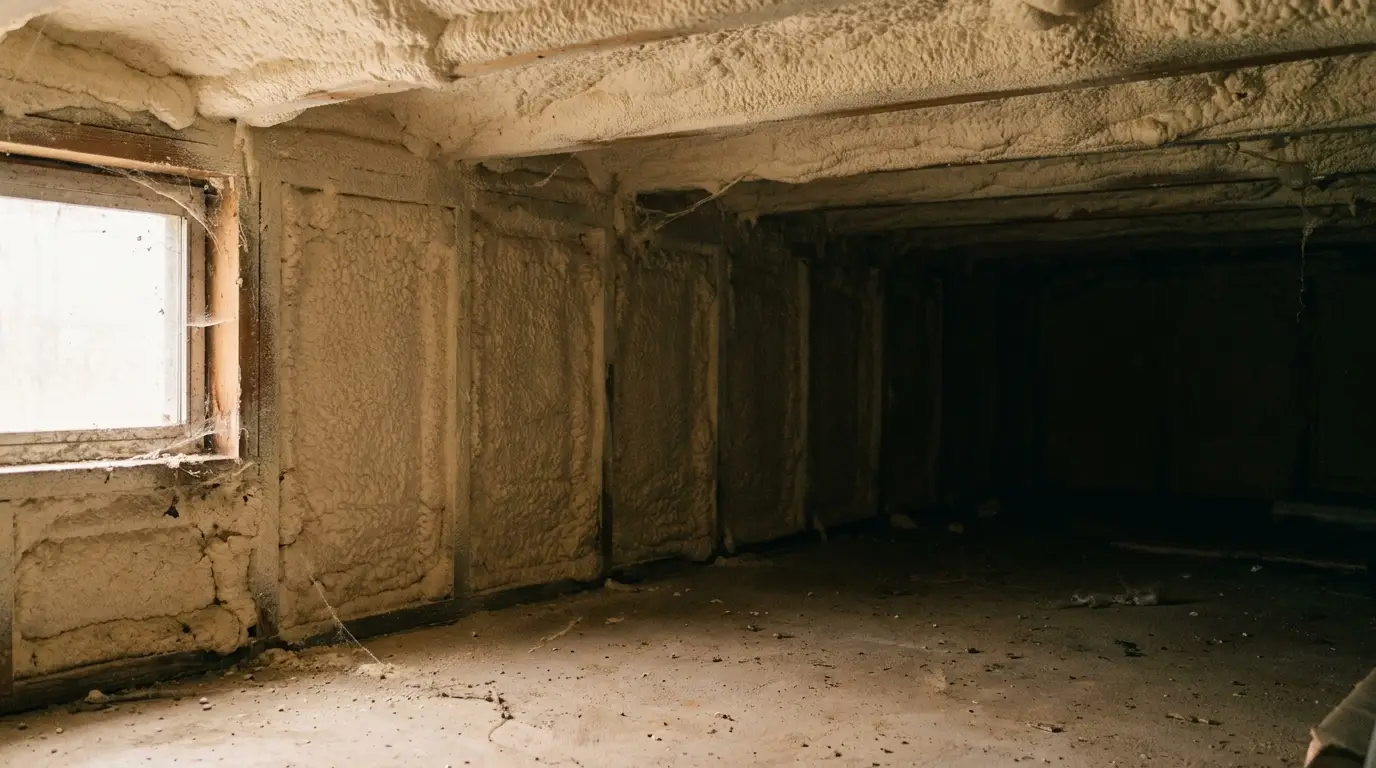
Winter brings snow melt and condensation. Closed-cell foam resists moisture and can serve as a vapor barrier, which helps in basements, crawl spaces, and rim joists. Fiberglass holds moisture, which lowers performance and can feed mold. A tight, well-insulated attic also reduces the warm-air leaks that cause ice dams on the roof. Winner: closed-cell spray foam.
Round 4: Cost
Fiberglass wins on upfront price. It is widely available and cheaper to install, which is why many homeowners start there. Spray foam costs more at install, and closed-cell costs more than open-cell. The payback comes over time through lower heating bills. Winner upfront: fiberglass. Winner over the life of the home: spray foam.
The Verdict for Minnesota
For Minnesota’s cold, closed-cell spray foam is the stronger performer where it counts: R-value, air sealing, and moisture control. Fiberglass still earns a place in open, dry, easy-to-reach spaces on a budget. Many homes use both, matched to each area. The smart move is to match the material to the spot. Homeowners in the Brainerd lakes area ask a contractor like Northland Companies about spray foam insulation in Minnesota for attics, rim joists, and crawl spaces, and use fiberglass where it fits. For more practical home improvement tips, plan the upgrade before the next deep freeze.