Coming across Hyunoh Chang’s work felt like a coincidence, much like the work itself. While wandering through Echo Park one afternoon in late fall, past a stretch of thrift shops, wine bars, and corner cafés, I stumbled into his solo exhibition ‘Told You Twice’, tucked quietly between storefronts. In the middle of a neighborhood humming with different lives and routines, the space felt intimate, yet slightly off.
Inside, the details slowly drew me in. The way the drawings were hung, the scattered photographs, the tiny book placed inside an eggshell. Nothing announced itself too loudly, yet everything seemed to follow its own quiet logic.
Originally trained in architecture, Chang now works across film, design, and visual storytelling, constructing narratives through image, sound, and environment. The conversation gradually became an opportunity to hear more about the background behind his creative practice
From Play to Structure : Film Work in Los Angeles
Looking through Chang’s earlier works, there is a sense of playfulness that runs throughout them. Not as something accidental, but as a way of closely observing everyday moments. In the music video Kitschy Vision, Chang appears on screen himself, wearing a robot headpiece and wandering through Chinatown in search of something as trivial as the “perfect piece of bread.”
“It was very instinctive,” he recalls. “At that time, it was all about executing. Running through different places, reacting to unexpected things we encountered along the way, and simply capturing them.” While the project carries a light, almost absurd tone, it also reveals an early tendency that continues throughout his later work: approaching ordinary situations from slightly unfamiliar angles.
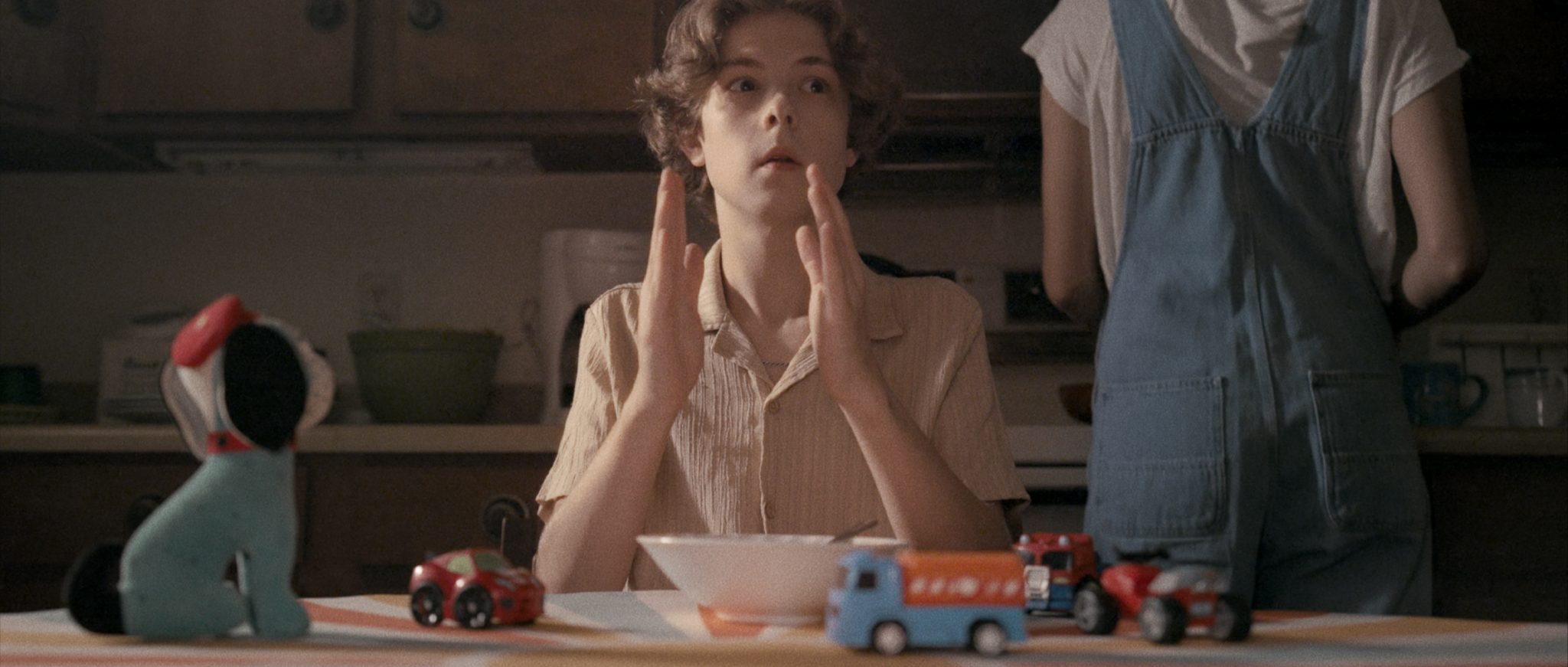
That instinct gradually evolves into a more defined structure in his award-winning short film, The Man Who Couldn’t Clap. Rather than relying on dialogue, the film builds its world around a single behavior: the inability to perform a common social gesture, clapping.
The idea originated from a personal moment when Chang found himself stopping in the middle of a prolonged applause, suddenly becoming the only person not participating. In that moment of isolation, the absence carried a strange sense of liberation, something that quietly stood apart from the collective social rhythm.
That experience eventually evolved into a fictional persona. Presented as a music-driven montage following the life of a man unable to clap, the film traces his quiet emotional tension through the inevitable absence of a simple social gesture.
Whether by choice or inability, Chang explores how people continue carrying those absences and live with them. The film reflects Chang’s strength as both creative director and producer, translating a minimal concept into a visually structured narrative through cinematic rhythm, emotional pacing, and carefully observed imagery, while executing the entire creative process from pre to post production.
Objects That Carry Meaning
Among the works in the exhibition, one piece that immediately caught my attention was the tiny book series titled Life is Egg. Small enough to fit inside an eggshell, each volume contains a short fictional story centered around a different character and situation.
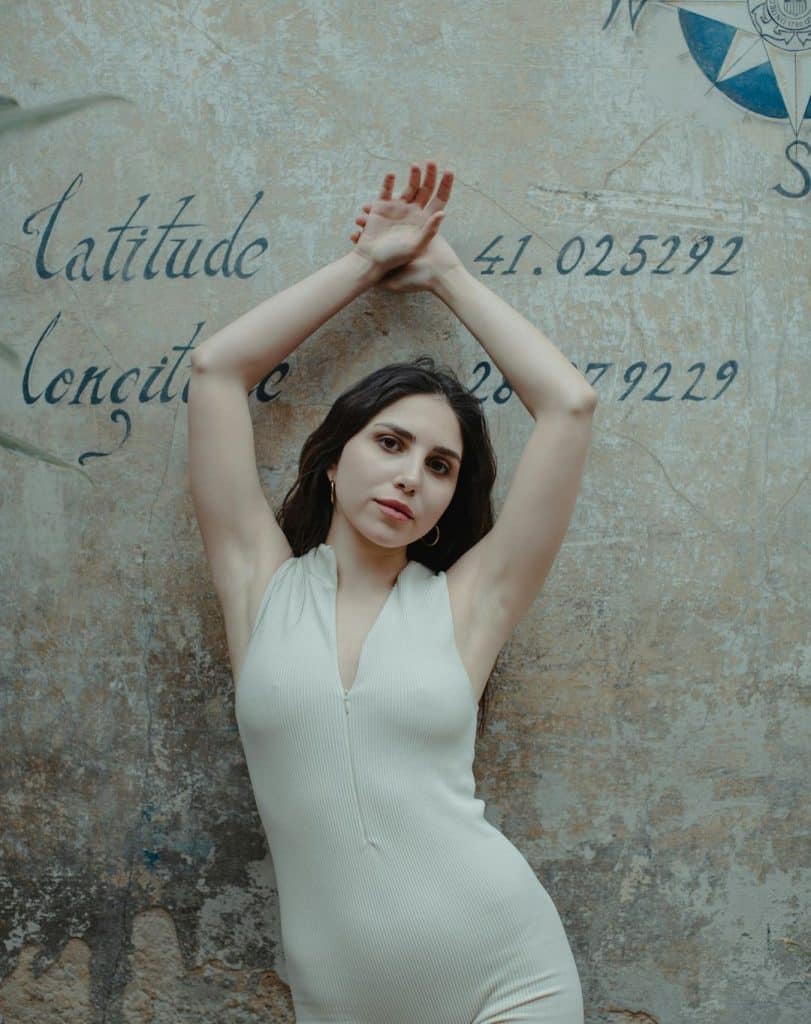
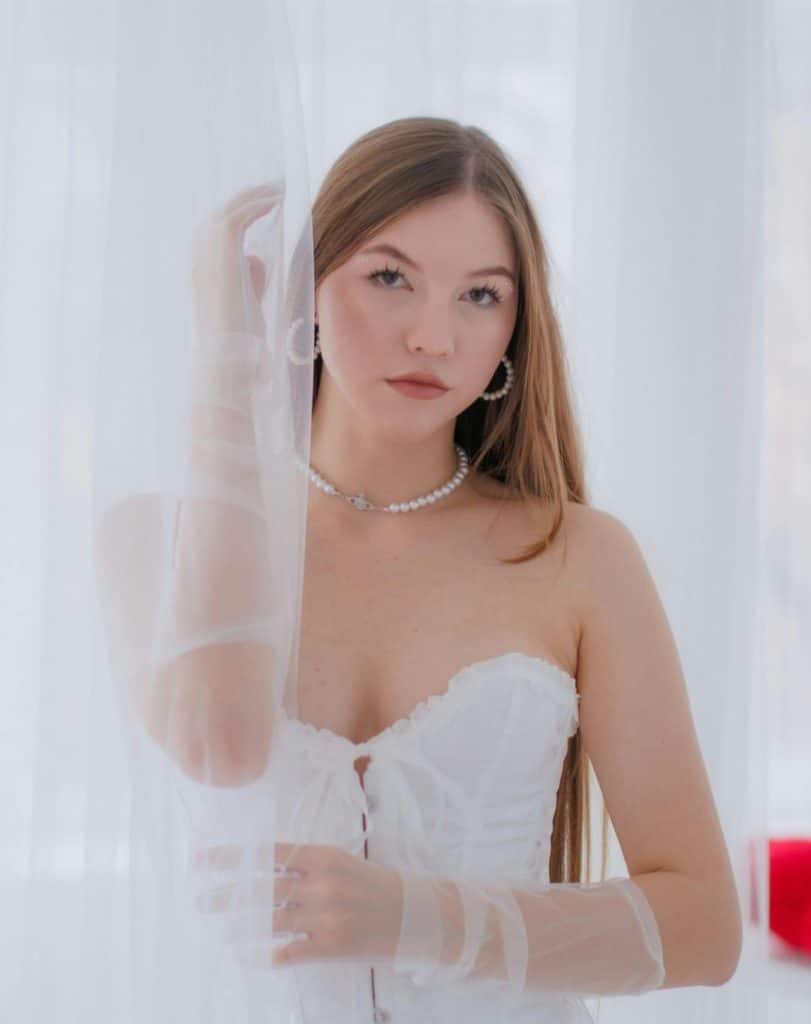
From a bride walking down the aisle to a photographer in the Arctic, the ten stories are loosely defined through each character’s monologue, balancing reality with imagination. None of them arrive at a clear conclusion. Instead, the characters linger in the reader’s mind, quietly awakening emotions and memories that become reshaped through one’s own experiences and perspective.
“Books have a certain kind of power that no other format really has,” Chang says. “When something moves from the computer onto paper, it transforms from something untouchable into something you can physically hold. I think that physical interaction blurs the boundary between reality and fantasy and allows us to open up our own world.”
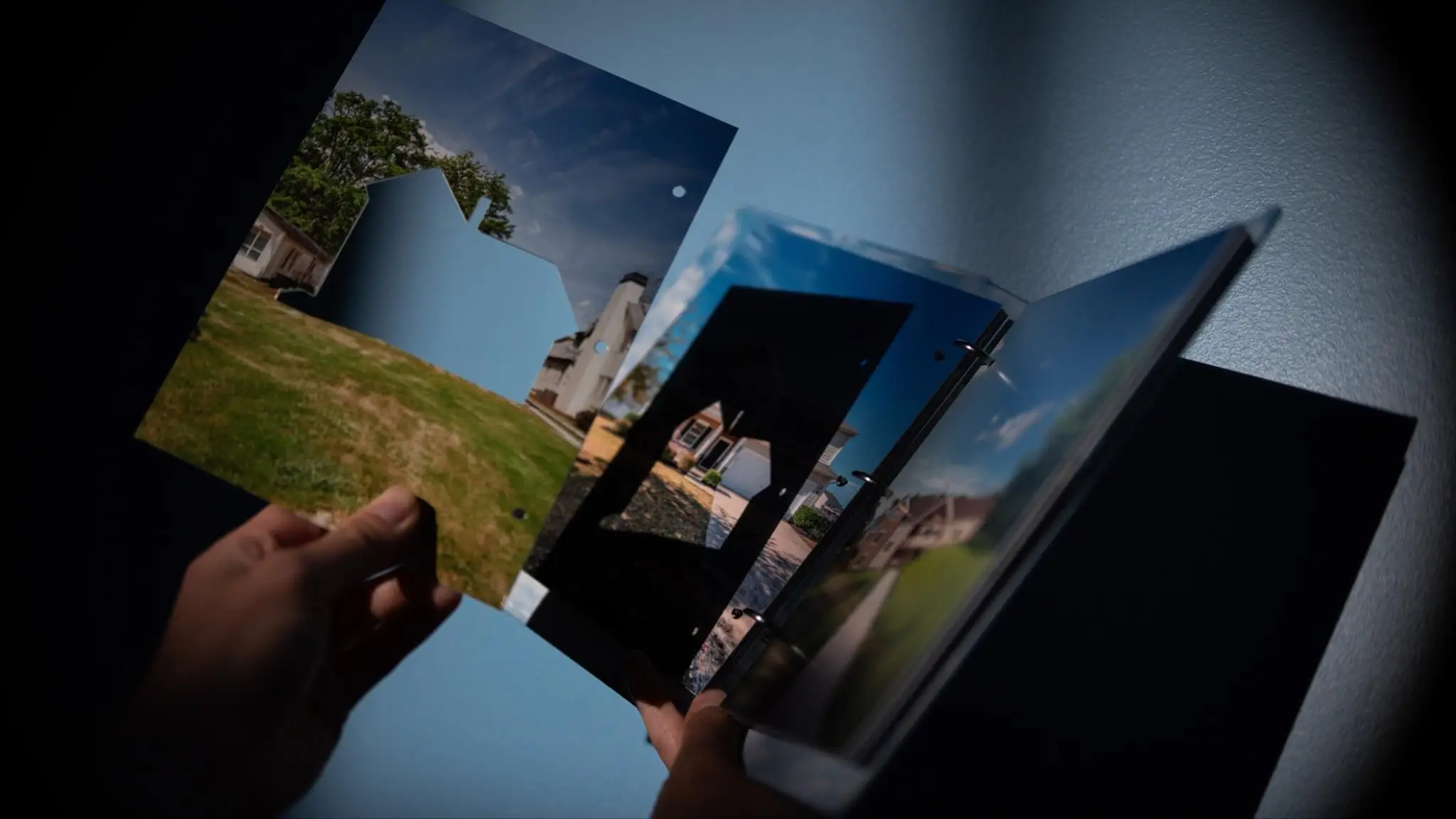
That same sensibility continues in The Shape, an interactive art book first presented during LA Design Week. The pages, visualizing different forms of homes, are divided into two components: filled backgrounds and void masks. Each page can be removed, rearranged, and recombined by the reader to create entirely new compositions. Every interaction produces a new house form portal, never fixed, but constantly shifting.
When Chang and his friend first came up with the idea, the project gradually unfolded into a chain of questions about what actually defines form. If architectural components like windows, doors, and roofs are randomly rearranged, does it still remain a house? Then is it the silhouette or the individual elements that define its meaning? How far can those elements be abstracted while still allowing us to recognize the form as a house?
“Won and I always joke about our beef with architecture. We spent years questioning it, and somehow both ended up working in completely different fields,” he laughs. “I think we just wanted to see architecture through a different lens, one that was a little more playful and artistic. To let go of the rules for a moment and find some kind of fun in it. Sometimes these nonsensical ideas ironically lead us closer to the deepest essence of things.”
Balancing Work: Personal and Commercial
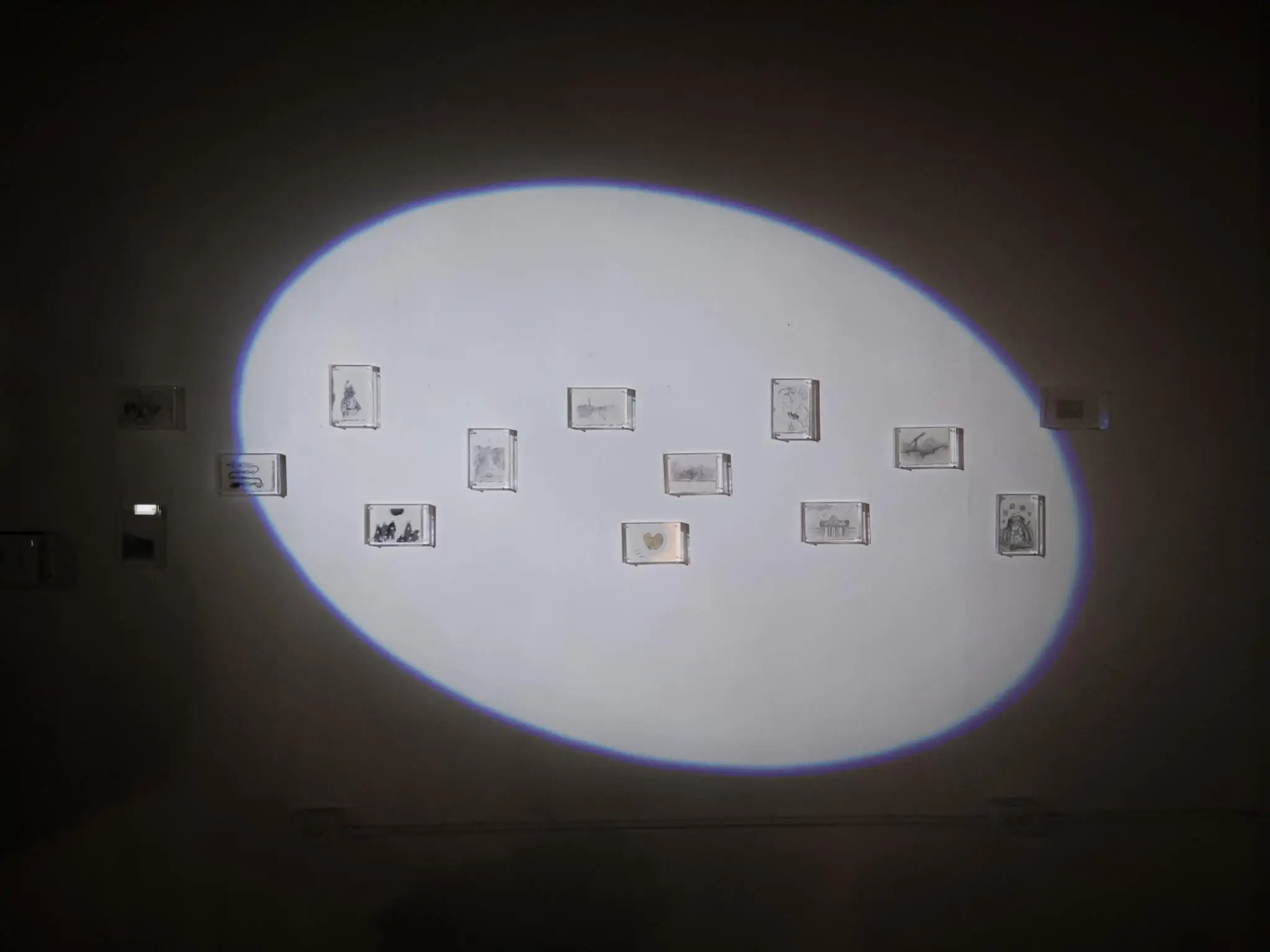
Chang’s solo exhibition Told You Twice presents a collection of drawings, texts, photographs, and objects gathered from different periods of his life. Rather than displaying them as a straightforward archive, he rearranges these fragments into new relationships, allowing familiar images and narratives to take on different meanings when viewed through the present.
Recognized through the Future Forward Award, Told You Twice captures one of the most immediate and raw reflections of Chang’s artistic direction within a particular moment in time. Rather than existing as a fixed exhibition, the project continues to expand through new iterations, functioning as an ongoing process of observation, reinterpretation, and self-examination.
At the same time, a different side of Chang’s creative perspective can be observed throughout his broader commercial practice. Working across product branding, contents for K-pop artists, fashion campaigns, and experiential projects for companies such as Nike and Netflix, Chang operates as a creative director who translates abstract ideas into cohesive visual systems, carrying them from early concepts through both physical and digital execution.
In these projects, the role shifts from expressing an entirely personal narrative to aligning with the vision of an artist or brand. Yet even within commercial contexts, traces of the same sensibility remain present. Whether through spatial design, moving image, or visual identity, his work consistently explores how ideas can be experienced, reinterpreted, and emotionally carried across different formats.
Across his multi-format, story-driven projects, one idea repeatedly surfaces: collaboration. Many of the works are developed through ongoing exchanges — responding to music, experimenting across mediums, and working alongside fellow artists and creative directors. Each collaboration introduces a new perspective, creating opportunities for ideas to evolve while remaining grounded in Chang’s own creative vision.
It’s difficult to reduce Chang’s practice to a single definition. Moving between film, publications, spatial work, and commercial projects, his work consistently explores how ordinary experiences can be re-seen in unfamiliar ways. Rooted in his architectural background, he continues to experiment with how spaces, objects, and narratives are represented and understood. Through these explorations, Chang has developed a creative practice that moves fluidly across disciplines while remaining grounded in a singular curiosity: how small shifts in perspective can transform the way we experience the world.