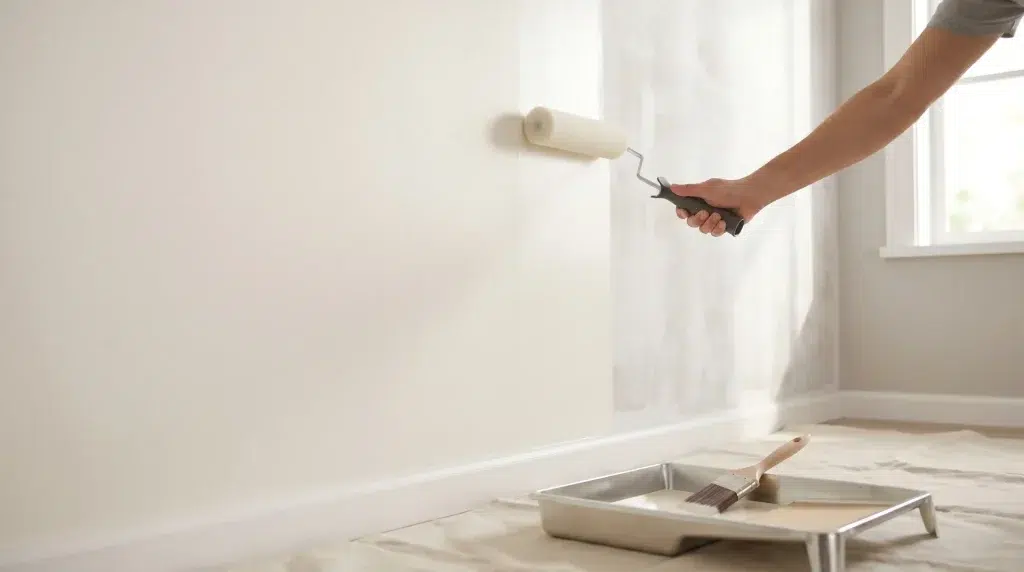
You finish painting a room and feel really good about it. But then the light hits the wall, and you see it: roller marks, uneven edges, and a couple of lines where one section dried before you got to the next. The color and coverage look fine, but something just seems off.
That “off” feeling usually has nothing to do with the paint itself. It comes down to a handful of small habits, the kind that can turn a decent job into one that looks professional. None of them requires special skills or much time. But skip them, and you’ll keep getting rough results, no matter how much you invest in paint and tools.
The good news? Once you know what to watch for, achieving perfect walls is actually pretty doable. The habits in this article come fromdrywall repair Naperville Il pros who prep and paint walls for a living. Here are five worth building into your own routine.
Sand and Dust Between Coats
Most people prep before painting, but not many bother between coats. That’s a missed opportunity.
Do this: after your first coat dries, run your hand across the wall. You’ll likely feel tiny bumps, dust nibs, bits of roller fuzz stuck in the paint. They’re small, but if you don’t fix them under the second coat, they get locked in permanently.
The fix is fast:
- Lightly sand the surface with 220-grit sandpaper. Just a few passes to smooth things out.
- Wipe the dust off with a damp cloth or tack cloth before you apply the next coat.
That’s it. It’ll take you no more than two minutes, but you’ll get a second coat that bonds better, lies flatter, and feels smooth to the touch.
Cut in Clean Lines Before You Roll
By “cutting in,” we mean brushing a 2-3 inch strip along edges, corners, and trim lines before the roller goes anywhere near the wall. This is what gives your wall crisp transitions instead of wobbly ones.
A few things that help:
- Use a quality 2.5″ angled brush. Cheap brushes shed bristles and leave streaks, so it’s worth the extra few dollars.
- Dip the brush halfway into the paint, then tap it against the side of the bucket. Don’t wipe it across the rim: it removes too much paint and makes you work harder on the surface.
- Work in sections small enough that the cut-in line stays wet when you roll up to it. This is quite important for the next habit.
Keep a Wet Edge to Prevent Lap Marks
Lap marks are the faint lines where dry paint overlaps fresh paint. They show up worst in flat and matte finishes, especially when light hits the wall from the side. And once they’re dry, there’s no way of fixing them without repainting.
The rule is simple: always paint into a wet edge. Don’t let one section dry before you blend the next stroke into it.
In practice, this means: work in continuous vertical sections from top to bottom, wall to wall. Don’t bounce around the room. Don’t take a 20-minute break mid-wall. If the room is hot and dry, paint dries faster, so keep that in mind and move accordingly.
Master Consistent Roller Technique
There’s no way around it: if you want your painted room to look polished, you need to perfect your roller skills. Here are a few basics that go a long way:
- Load the roller evenly. Roll it back and forth in the tray until the paint covers the full sleeve. An unevenly loaded roller will end up creating thick and thin spots in the same stroke.
- Ease up on pressure. Let the roller do the work. Pressing hard squeezes paint to the edges, leaving visible track marks you don’t want to deal with.
- Use a W pattern first, then smooth out with light, parallel passes from top to bottom. Overlap each pass slightly, keeping the same speed and rhythm.
It’s simple: when your technique is consistent, the finish stays consistent.
Pull Tape Before the Paint Fully Cures
You do all this careful work, let everything dry, peel the tape off… and chunks of dried paint come with it. Ragged edges everywhere!
The trick: remove the tape while the final coat is still slightly tacky. Usually, 30 to 60 minutes after application, depending on the paint. Pull it slowly at a 45-degree angle.
If you have already waited too long, score the tape line with a utility knife before pulling. That’ll give you a cleaner break.
It Adds Up
None of these habits is difficult, nor do they require much time. But when stacked together, they can make one paint job look like a weekend project, while another looks as if it were done by someone who does this for a living.
Pick up even two or three of these next time you paint, and you’ll see the difference before you even put the roller down.