

Noam Lamdan frames the idea of a well-lived life through the same lens he brings to design, that of structure, intention, and a willingness to engage fully with both discipline and exploration.
Known for his work in graphic design and shaped by architectural thinking, Lamdan applies those principles into daily living. A life worth sustaining, in his view, is not assembled through extremes but rather through deliberate balance between creative expression, physical challenge, and consistent routine.
Structure as the Foundation of a Meaningful Life
Design relies on structure to support clarity. Without it, even the most compelling ideas lose coherence. The same holds true for life outside the studio as structure provides a framework that allows creativity to develop without fragmentation.
Lamdan applies structure to his work and everyday living through consistent habits. Physical training, regular work cycles, and personal challenges form a baseline that stabilizes each day. These elements create conditions for focus and energy to remain available over time.
“Structure gives you something to build on,” Noam Lamdan explains. “Without it, even strong ideas start to drift.”
That grounding allows creative thinking to unfold with greater confidence. Decisions feel anchored over reactive. Routine, when approached with intention, becomes a form of support reducing unnecessary friction, making space for deeper engagement with work and personal pursuits.
Adventure as a Necessary Counterbalance
While structure provides stability, it does not generate growth on its own. Exploration introduces variability, which keeps perception active and responsive. Lamdan incorporates new experiences regularly, often through physical or creative challenges that push well past familiar patterns.
Cold plunging in Lake Ontario, taking on new creative formats, and engaging in unfamiliar environments all serve his purpose. These experiences, not the isolated events they may seem, function as ongoing inputs that refresh his perspective.
“Doing something new each week keeps your thinking from becoming automatic,” Lamdan notes, pointing out how exposure to unfamiliar situations disrupts routine in a constructive way.
Such disruption prevents stagnation without dismantling the underlying structure that supports Lamdan’s consistency. Adventure, in this sense focuses less on scale and embodies intention. Small shifts in environment or activity can recalibrate attention and introduce new ways of seeing.
The Intersection of Art and Daily Practice
Creative work often carries the expectation of spontaneity, but sustained output depends on discipline. Art becomes more consistent when it is integrated into daily practice as opposed to being reserved for moments of inspiration.
Lamdan’s approach to life prioritizes this integration. Creative thinking cannot be confined to designated work sessions but must instead be influenced by movement, observation, and engagement with the surrounding environment. Design becomes part of a broader rhythm instead of an isolated task.
Creativity is cumulative, so each experience contributes to a larger body of insight. Over time, patterns appear that inform more refined decision making. Art as a daily practice now gains depth as it evolves alongside the individual. No longer is art static, and the evolution strengthens both technical skill and conceptual clarity.
Physical Discipline and Mental Clarity
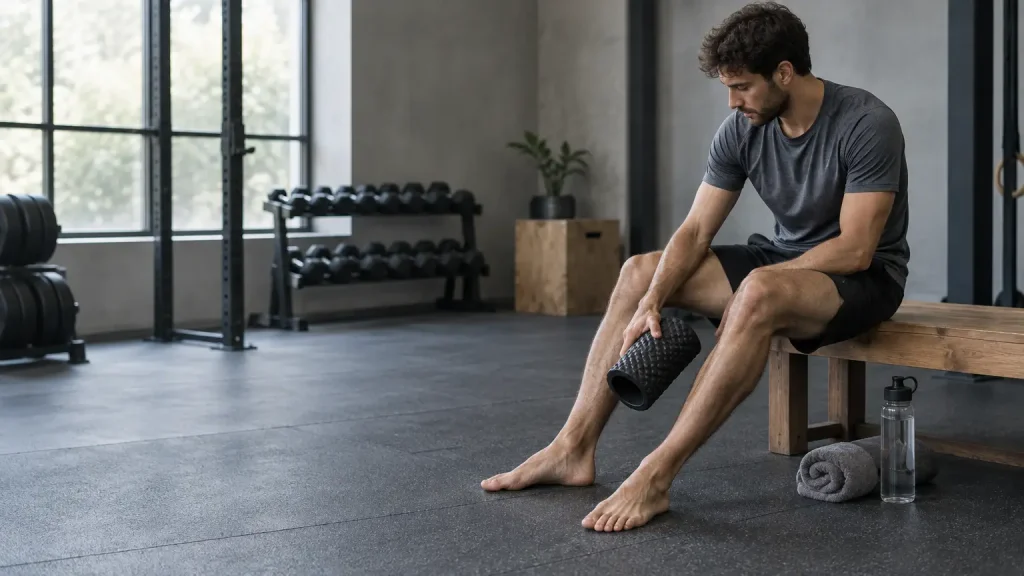
Fitness plays a central role in maintaining creative capacity for Lamdan. He is quick to point out how physical training has supported his focus, energy, and resilience. Further, it reinforces discipline, which carries into other areas of life.
Regular movement, whether through biking, swimming, or structured workouts, creates a consistent point of engagement with the body, and that engagement sharpens awareness and stabilizes attention. Creative work directly benefits from such stability.
The connection between physical and mental states directly correlates so when the body is consistent, thinking becomes more reliable. That reliability supports sustained effort, particularly in projects that require long periods of concentration.
Physical discipline also provides a way to process stress so that, rather than allowing tension to accumulate, movement creates a channel for release. By doing so, the process protects clarity and supports better decision making.
Designing Balance Without Compromise
Balance is often described as a trade-off between competing priorities. Lamdan sees it differently. For him, balance comes through alignment, and each element of daily life supports the others when structured intentionally.
Routine supports adventure by providing a stable base. Adventure supports routine by preventing stagnation. Creative work benefits from both. Physical practice reinforces the capacity to sustain each element over time, reducing the need for constant adjustment.
Energy is directed toward meaningful activity as opposed to focused on managing imbalance. The result is a more cohesive approach to everyday living.
“Balance cannot simply mean dividing your time evenly but must instead be about making sure each part of your life strengthens the others,” says Lamdan, shifting the focus from limitation to integration.
The Role of Curiosity in Long-Term Growth
Curiosity drives exploration, and without it, routine becomes mechanical. Lamdan maintains curiosity through continuous experimentation, often introducing new challenges that require learning and adaptation.
A curious approach keeps creative thinking active and prevents reliance on familiar solutions by encouraging ongoing development. Curiosity also supports resilience, and when challenges are considered opportunities to learn, setbacks lose their weight.
Maintaining curiosity in everyday life requires effort. It involves seeking out new inputs and remaining open to change. Over time, this practice builds a mindset that supports both personal and professional growth.
Curiosity, combined with structure, creates a dynamic balance. One provides direction, the other provides movement.
Wisdom Through Repetition and Reflection
Experience alone cannot produce insight, but rather reflection transforms experience into understanding. Lamdan incorporates both repetition and evaluation into his practices, allowing lessons to accumulate over time.
Routine provides the repetition necessary for progress, while reflection ensures that progress remains aligned with intention. Together, they create a cycle of continuous improvement.
Just as importantly, wisdom begins to grow gradually and is not the result of a single breakthrough. Instead, gaining wisdom requires consistent attention to process through which decisions become more informed and priorities become clearer.
This way, the work gains depth. A measured approach to change and growth avoids extremes by valuing steady development over rapid change. Over time, the result is a life that feels structured as well as expansive.
Sustaining a Life That Continues to Evolve
Lamdan knows firsthand that no design is ever static. Instead, it evolves in response to new information and changing conditions. A well-lived life follows the same pattern as it requires adjustment without losing coherence.
Noam Lamdan’s philosophy embraces adaptability as a foundational tenet. He values structure always but is never rigid. For him, exploration is continuous without being unfocused, and each element of his life’s design contributes to an ongoing process of refinement.
A life worth living, in this sense, must not be defined by a single outcome but instead by the ability to sustain engagement, curiosity, and clarity over time. Through deliberate practice and thoughtful exploration, creative and personal growth move forward together.