
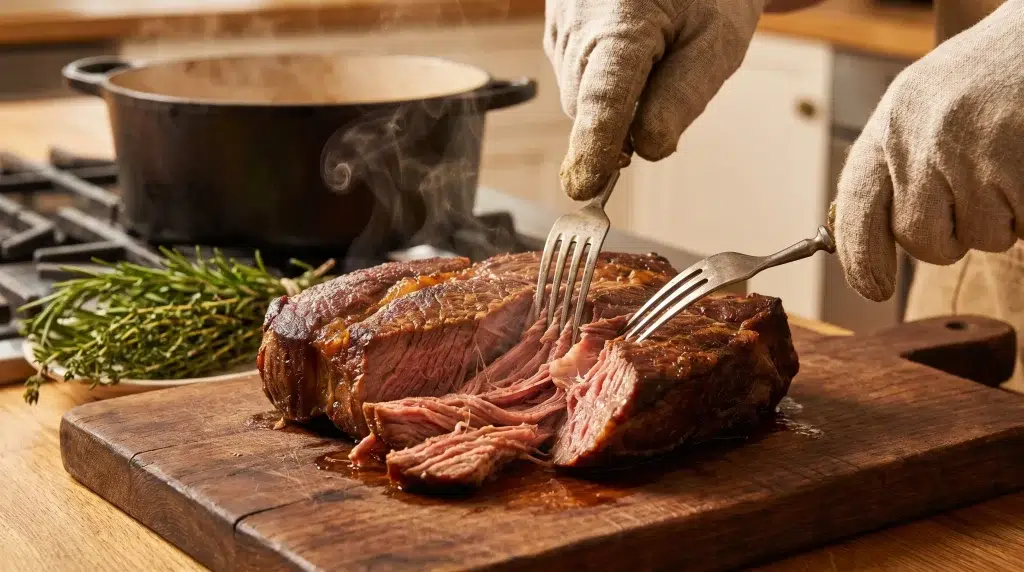
There’s a particular satisfaction you get from tearing apart a piece of meat with virtually no effort. No knife required. No tugging. Just a fork. Maybe even using your hands.
It falls apart. That’s the goal. And most folks believe you require an extended cooking time in a slow cooker (8 hours) and a great deal of patience. You don’t. You simply need to understand what is occurring within the meat itself.
Why Fall-Apart Tender Really Occurs
Meat does not become tender by chance. It happens through a transformation. Tough pieces of meat such as chuck, brisket, etc. contain a large quantity of collagen (connective tissue). As you correctly cook that collagen, it converts into gelatin. This is what causes the meat to:
- Have a soft texture
- Be moist upon biting
- Have that “falls apart” characteristic.
However, there’s the problem. That transformation will occur at only a limited temperature.
The Temperature Zone Where All The Magic Happens
Most individuals assume that when you’re cooking meat, all that matters is getting to a final temperature. That is not correct. To achieve a tender and pull-apart type of meat, you must remain in a specific temperature zone:
160°F – 205°F.
This is where:
- Collagen breaks down.
- Fat melts.
- Texture becomes softer.
Under this temperature range, meat remains tough. Above this temperature range, it dries out. Thus, it is not merely a question of achieving a given temperature. It is a question of remaining within that temperature range for a sufficient amount of time.
Why a Slow Cooker Is Unnecessary
While a slow cooker is one method to remain in that temperature zone, it is certainly not the only method.
One may achieve the same results using:
- An oven.
- A grill (using indirect heat).
- A smoker.
- Or even a pan with a cover.
What matters most are the appliance and control.
The Two Essential Variables for Achieving Fall-Apart Meat
Don’t Complicate Recipes. Regardless of the complexity of your recipe, both of these variables will be the sole determinants of whether or not you succeed in achieving fall-apart meat:
- Temperature.
- Amount of time spent in that temperature zone.
That is it. If you successfully manage these two variables, the remainder of the process will be predictable.
The Most Common Place Where People Go Wrong
Here is where most people go wrong. Individuals who cook tougher cuts of meat, such as chuck or brisket, often treat them as if they were steaks.
They typically use:
- High heat.
- Fast cooking times.
- Early removal of the product.
Then they ask themselves why their meat is still tough. Since the collagen has not been allowed to break down sufficiently.
The “Stall” at 170°F
If you’ve ever cooked a brisket or pork shoulder, you likely have experienced this phenomenon. The temperature begins to rise…and then levels off. It will remain stuck at 165–175°F for an extended period. This is referred to as the “stall.” And it’s good news.
It indicates:
- Moisture is being released from the surface.
- The collagen is beginning to break down.
- The meat is undergoing a transformation.
Most people panic at this point and raise the temperature. This is incorrect. Just be patient. Wait it out.
Why You Mustn’t Rush Your Meat
You cannot rush the tenderization of meat.
If you increase the heat to “speed things up,” you will receive:
- Dry exterior.
- Tough interior.
- Ununiform texture.
Low and Steady Wins Here.
The “Easy” Way to Use the TempSpike Pro to Make Cooking Easier
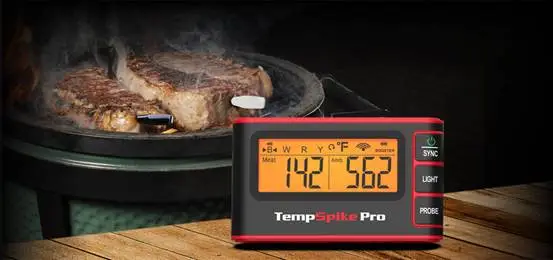
Cooking like this demands awareness. Not constant checking. Not guessing. Simply knowing what stage of the cooking process you are in. That’s where the TempSpike Pro Truly wireless meat thermometer makes this so much easier.
Why It Really Matters
- Dual Connectivity (Bluetooth + Wi-Fi): You don’t have to be tethered to the grill. Take a walk. Relax. Check the status from anywhere.
- Multi-sensor capabilities (3 Internal Sensors + 1 Ambient Sensor): You are not just relying on your food internal reading. You are aware of your complete cooking environment.
- High Accuracy (+/−0.5°F): At this level of detail, the difference of 1° F is a significant factor.
- Waterproof & Heat-resistant Probes (Up to 1050°F): Your probes will handle all cooking methods, from low-and-slow to high-heat finishing.
- Real-Time Tracking App: You won’t have to babysit your cook. It will let you know if anything occurs while the product is cooking.
- Color-coded probes: With up to 4 color-coded probes, you can cook several different products simultaneously and avoid confusion.
- Modular Design + Long Battery Life: Designed for prolonged cooking sessions. 20+ hours of base operation; 36+ hours of probe operation.
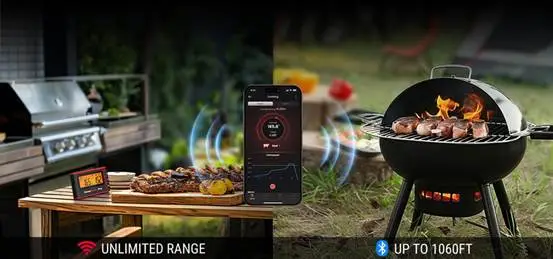
This is not about making cooking more difficult. This is about eliminating uncertainty.
The Basic Technique That Actually Works
Here is the basic technique for producing fall-apart meat without making it overly complex:
Step 1: Select a suitable piece of meat.
Choose a piece of meat with a great deal of collagen.
Some examples include:
- Chuck Roast
- Pork Shoulder
- Brisket
All three types of meat are designed for slow conversion.
Step 2: Cook Low and Steady
Target a lower cooking temperature: 225°F – 275°F
Step 3: Monitor the internal temperature.
Be aware of the various phases of the internal temperature readings:
- 160°F – Entering Breakdown Phase
- 170-180°F – Stall
- 195-205°F – Tender Zone
Step 4: Do Not Remove Too Early.
This is the largest error made.
At 170°F, it is not yet ready.
At 185°F, it is close, but not quite.
At 200°F+ … Now you are there.
Step 5: Rest It.
Just as you would with a steak, resting the meat after it has been removed from the heat is essential.
It permits:
- Juices to settle.
- Texture to finish.
If you do not allow the meat to rest, you are losing a portion of the ultimate texture.
How to Know When It Has Truly Reached Completion
Temperature gets you near.
But tenderness tells you when it is complete.
At completion:
- A probe will be able to enter with minimal resistance.
- The meat feels soft.
- It pulls apart easily.
Now you know.
Most Common Missteps Which Prevent Meats From Becoming Tender
- Cooking at excessive temperatures.
- Prior to the collagen converting into gelatin, moisture escapes.
- Removing prior to completion.
- The transformation of the collagen is incomplete.
- Not Monitoring Temperature.
- Lack of control of the process.
- Panic During the Stall.
- Excessive heating ruins the outcome.
Why This Will Change the Way You Cook
Once you comprehend this, everything will shift.
You cease:
- Rushing.
- Guessing.
- Overcooking.
And you begin:
- Managing temperature.
- Permitting the process to occur.
- Achieving uniformity.
FAQ
Q1. What temperature makes meat fall apart?
Around 195-205°F internal temperature.
Q2. Why is my meat still tough at 180°F?
Collagen hasn’t fully broken down yet.
Q3. Can you cook tender meat without a slow cooker?
Yes. Oven, grill, or smoker all work with proper temperature control.
Q4. What is the stall in cooking?
A phase where temperature stops rising as moisture evaporates and collagen breaks down.
Q5. Do I need a wireless meat thermometer for this?
If you want consistent results, have a wireless meat thermometer to measure the meat temperature would be better.
The Final Thoughts
Fall-apart meat is not a function of expensive or specialized appliances.
It is based on:
- Patience.
- Temperature.
You don’t need a slow cooker.
You don’t need a complicated recipe.
You only need to:
- Remain in the appropriate temperature zone.
- Allow the process to occur.
- Know when it is complete.