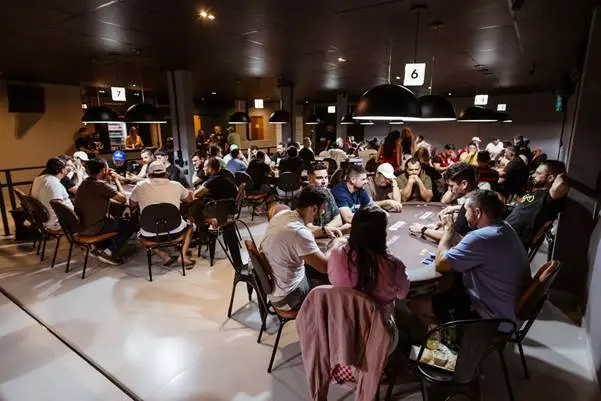
Australian poker culture still feels social online because the social part was never only about sitting in the same room. It was always about rhythm, recognition, and the little rituals around the hand itself. People return for the pause before the river, the familiar tempo of a table, and the shared tension that turns a private decision into a public moment. Moving that experience onto a screen changed the setting, but it did not erase the culture that made the game worth returning to. That mix of structure and spontaneity is what gives the game its staying power across generations, formats, and routines.
That helps explain why poker has adapted so well to digital life. Research published in PLOS ONE on secular rituals and social bonding found that repeated shared rituals can strengthen connection and have a positive effect, even outside formal institutions. Poker works in a similarly ritualized way. The cards change, the table changes, and the players change, but the repeated structure stays familiar.
In Australia, that continuity matters. The game still gives people a recognizable social pattern that they can step back into, even when the gathering now happens through laptops and phones, rather than across the felt.
The Social Thread Is Easier to See Than People Think
The commonest mistake people make is assuming that online poker became less social because it became less physical. Physical presence is only one layer. Another layer is continuity. A person plays the same formats, develops the same habits, recognizes the same rhythms, and keeps returning to a setting that rewards attention rather than noise. That is why online poker still feels surprisingly personal when it is organized well. It preserves the cadence of turn-taking and the quiet pleasure of reading a situation in real time.
One useful example is IgnitionCasino Australia, an Australian-facing poker and casino site that presents online poker as a core part of the experience and links readers to familiar formats, including Texas Hold’em, Omaha, and Omaha Hi-Lo. That variety matters because the social atmosphere in poker is often shaped by format. Hold’em tends to create one pace of table conversation and expectation. Omaha changes how players think through possibility, pressure, and timing.
Even when people are not speaking aloud, the structure creates the same sense of shared attention that has always defined the game. In that sense, IgnitionCasino Australia is not interesting because it replaces traditional poker culture; it is interesting because it shows how traditional poker culture now lives in a different format. If a reader wants to test whether that culture still feels recognizable in practice, the platform offers a direct context for seeing how the social side of poker survives through format, repetition, and tempo, rather than through physical proximity alone.
The same idea carries smoothly into this Instagram post, which notes that poker in Australia has changed significantly over the years, while the heart of the game has remained the same. The outward form evolved, but the core experience did not.
Why the Online Version Still Feels Human

What gives poker its social charge is not nonstop interaction. It is selective interaction. A hand gathers everyone around the same moment, then releases them. There is room for tension, then room to think. That pattern matters in an era where so much online entertainment is built for constant stimulation. Poker still respects silence. It still allows observation to feel meaningful. It still makes timing part of the experience, rather than an inconvenience to be removed.
That is also why poker remains a better fit for social leisure than people sometimes assume. It does not ask for the performance style of social media, where everyone is always broadcasting. It asks for presence. You pay attention, you read the pace, and you recognize the emotional atmosphere of the table. Even online, that creates a sense of company. The screen does not flatten the experience as much as critics imagine. In some ways, it sharpens the essentials by stripping away everything that was never central in the first place.
The Ritual Endured Because the Rhythm Endured
Australian poker culture lasted online because the human pattern underneath it lasted online. The venue changed from pubs, back rooms, and casino tables to devices and digital platforms, but the draw stayed remarkably consistent.
People still want an activity built on repetition, suspense, and readable behavior. They still want a pastime that can feel focused without feeling sterile. And they still want leisure that leaves room for both competition and connection. Research on live-stream interaction and real-time audience engagement helps underline that point: shared attention and real-time response remain powerful even when the setting is fully digital. Poker understood that before many other forms of online entertainment did, which is one reason its social identity has traveled so well.