Managing household expenses while maintaining a well-stocked kitchen has become a major focus for Australian families. With grocery prices fluctuating and electricity tariffs remaining high, finding practical ways to stretch food budgets makes a noticeable difference. Meal prepping in bulk, buying wholesale meat portions, and batch-cooking weekly dinners can reduce household food bills significantly, but standard kitchen fridge-freezers rarely offer enough storage capacity.
Adding dedicated freezing power to your garage, laundry, or pantry transforms how you handle meal planning. Understanding the physics of cold air retention, calculating annual running costs, and choosing the right capacity ensures you build a reliable long-term food storage setup without wasting electricity.
Image Suggestion: A clean, organized Australian home garage corner featuring a sleek white horizontal chest freezer, surrounded by neatly stacked storage shelves and timber flooring.
Text Overlay: Cold Storage Solutions: Smart bulk freezing options for Australian households.
The Thermodynamic Advantage of Top-Opening Freezers
Standard upright refrigerators lose significant amounts of cold air every time the front door swings open. Because cold air is denser than warm air, it naturally flows downward out of an upright cabinet, forcing the compressor to kick on at full power to restore internal temperatures.
Top-opening chest units function on a completely different principle. Because cold air stays trapped inside the deep tub even when the top lid lifts, thermal loss remains minimal during everyday use.
This structural design offers several key practical advantages:
- Superior cold retention: Cold air stays trapped at the bottom, keeping temperatures stable even during brief power outages.
- Lower running costs: The compressor works less frequently, consuming roughly 30 to 40 percent less electricity than a vertical freezer of identical volume.
- Maximum usable volume: Without fixed vertical shelving or door compartments taking up space, you can fit large, irregular items like whole turkeys, bulk meat boxes, and large prep containers.
- Better seal endurance: Gravity helps keep the top lid gasket compressed tightly against the rim, maintaining a reliable thermal seal over many years.
Why Australian Households Are Adding Dedicated Freezing Capacity
For growing families, shift workers, and home cooks, a primary refrigerator freezer compartment fills up fast. A typical 400-litre top-mount or bottom-mount fridge provides only 80 to 120 litres of freezer space, which fills completely after a single bulk shopping trip.
Expanding your cold storage allows you to take full advantage of seasonal produce gluts, weekly butcher specials, and clearance markdowns. Buying proteins and frozen staples in bulk often yields savings of 20 to 30 percent per kilogram, allowing a dedicated freezer to pay for its own purchase price within a single year of regular use.
When looking to expand your home storage capacity, investing in a robust deep freezer from a trusted retailer like Bi-Rite Home Appliances gives you access to reliable global brands alongside local Australian customer service and warranty support. With over 65 store locations across regional and metro centers, independent local dealers offer tailored advice on choosing models rated specifically for Australian summer temperatures.
Comparing Capacity Tiers and Estimated Running Costs
Understanding how much electricity a chest unit uses helps you select an appropriate size for your household without overpaying on quarterly power bills:
|
Storage Capacity (Litres) |
Ideal Household Size |
Average Annual Usage (kWh) |
Estimated Running Cost ($/Year at $0.38/kWh) |
|
100L – 150L |
1 – 2 Persons / Small Apartments |
140 – 180 kWh |
$53 – $68 |
|
200L – 300L |
3 – 4 Persons / Standard Homes |
200 – 260 kWh |
$76 – $99 |
|
350L – 500L+ |
5+ Persons / Bulk Buyers & Farms |
310 – 420 kWh |
$118 – $160 |
Image Suggestion: An interior view of an open chest freezer with clean hanging wire baskets holding neatly organized vacuum-sealed meal prep containers and frozen berries.
Text Overlay: Maximize Space: Removable wire baskets for effortless food organisation.
Expert Advice on Ambient Placement and Temperature Control
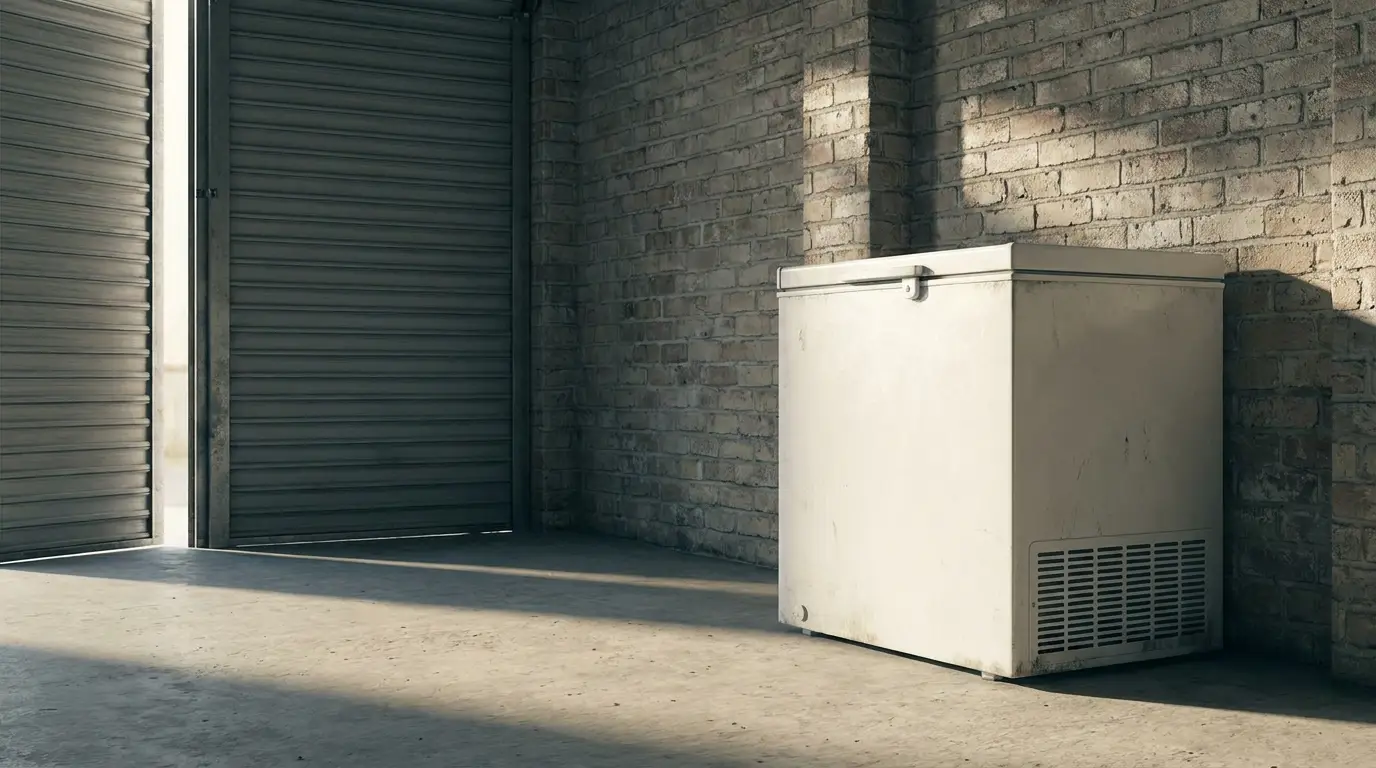
Installing a freezer in an unconditioned garage or outdoor shed requires attention to ambient climate ratings. David Miller, a Senior Refrigeration Engineer based in Brisbane, explains how ambient heat affects cooling efficiency:
“Many people place extra freezers in hot tin garages or covered carports without realizing that external heat drastically increases compressor strain. Standard domestic freezers are rated for climate class T or ST, meaning they perform reliably up to ambient temperatures of 38 to 43 degrees Celsius. Always ensure your unit has at least 100 millimetres of clearance around the side vents so the condenser coils can dissipate heat efficiently. Keeping the compressor cool extends motor lifespan and lowers annual power consumption.”
Practical Engineering Features to Look for Before Buying
When comparing individual models, evaluate these key physical specifications:
- Removable Hanging Baskets: Wire baskets rest on the upper rim, keeping frequently accessed items like frozen veggies, ice cream, and daily meal portions within reach without digging through the bottom layer.
- Front-Facing Water Drain Plug: Defrosting manual freezers requires draining melted frost. A front-located drain outlet allows you to attach a hose or place a shallow pan directly underneath, making maintenance quick and clean.
- Counterbalanced Lid Hinges: Quality hinges hold the lid open at a 45 to 90-degree angle automatically, keeping both hands free while loading heavy grocery bags.
- Mechanical vs. Digital Thermostats: Mechanical dials offer long-term reliability in high-humidity areas, while digital external displays let you verify internal temperatures without opening the lid.
- Interior LED Lighting: Bright, low-wattage LED strip lights illuminate the deep corners of the tub, making it easy to identify items during evening trips to the garage.
Simple Maintenance Routines for Long-Term Reliability
Keeping your appliance running at peak efficiency requires basic periodic maintenance:
- Defrost when frost hits 5mm: Excessive frost accumulation acts as an insulator, forcing the compressor to run longer to maintain freezing temperatures.
- Clean door gaskets quarterly: Wipe down the rubber lid seals with warm soapy water to remove dust particles and maintain an airtight compression seal.
- Vacuum condenser grilles: Dust buildup on exterior ventilation grilles prevents heat exchange. A quick vacuum every six months restores airflow and lowers power draw.
- Keep the tub reasonably filled: Thermal mass helps maintain cold temperatures. If your freezer is half empty, fill empty spaces with plastic water bottles to act as thermal ice bricks.
Image Suggestion: A home cook organizing frozen vacuum-sealed meal packages into labelled containers inside a modern utility room freezer setup.
Text Overlay: Smart Meal Prep: Efficient food management for lower weekly grocery bills.
Choosing the right extra freezing capacity is one of the most effective ways to lower weekly food expenses and streamline household meal preparation. By matching storage volume to your household size, checking climate ratings for garage placement, and sourcing through trusted local appliance specialists like Bi-Rite Home Appliances, you get a dependable food preservation system built to handle Australian conditions for years to come.