


Companies often own more furniture, equipment and technology than workplace teams realize. Knowing what is available and where to find it makes it easier to plan spaces, control spending and prepare for renovations or moves.
An office may look fully equipped at first glance. Look closer, and extra desks are wedged into storage upstairs while another department orders replacements downstairs, unaware those desks even exist. Quiet conference rooms become holding areas for forgotten equipment. Chairs left behind after a move are easy to lose track of, and before long, they disappear from the budget conversation too.
The real issue is visibility, since no one has an accurate record of what the company owns.
A workplace inventory brings those overlooked assets back into view. Each record captures an item’s location and condition, along with whether another team can use it. Procurement can find the spare desks before ordering more.
What asset inventory management actually covers
An inventory starts as a list. Its usefulness depends on what happens after that list is created.
Asset inventory management tracks workplace assets throughout their time with an organization, including when they are purchased, moved, stored, assigned, repaired, reused or removed. Depending on the workplace, the inventory might cover desks, chairs, monitors, printers, audiovisual equipment, appliances and specialized tools.
A count alone leaves plenty unanswered. Where is the item? How old is it? Will it fit? Is it still usable? The record should answer those questions and show whether the asset is in use, available, awaiting repair or ready for removal.
A list of 40 chairs does little good if no one knows how many are usable. Some may be damaged, mismatched or missing altogether. Planners need those details before deciding what to keep, move or replace.
Better visibility changes space planning
Floor plans show how much space is available. Then come the desks, screens and storage cabinets. They reveal where valuable space is quietly going to waste.
Maybe a business wants to create a new collaboration area. Buying tables, screens and seating may seem like the obvious first step. Yet a quick inventory check might uncover suitable furniture in storage, an unused screen in a quiet meeting room or chairs from an area scheduled for renovation. Suddenly, the shopping list is much shorter.
The same review may uncover space being used as unofficial storage. A room filled with items that have no likely use may be taking up space that could serve employees. Equipment stored in several corners of the office might fit in one organized location. Furniture needed at another site could be sent there instead of sitting unused.
Now planners have something concrete to work with. They can compare available assets with employee counts, work habits and the intended use of each area.
Underused resources become easier to spot
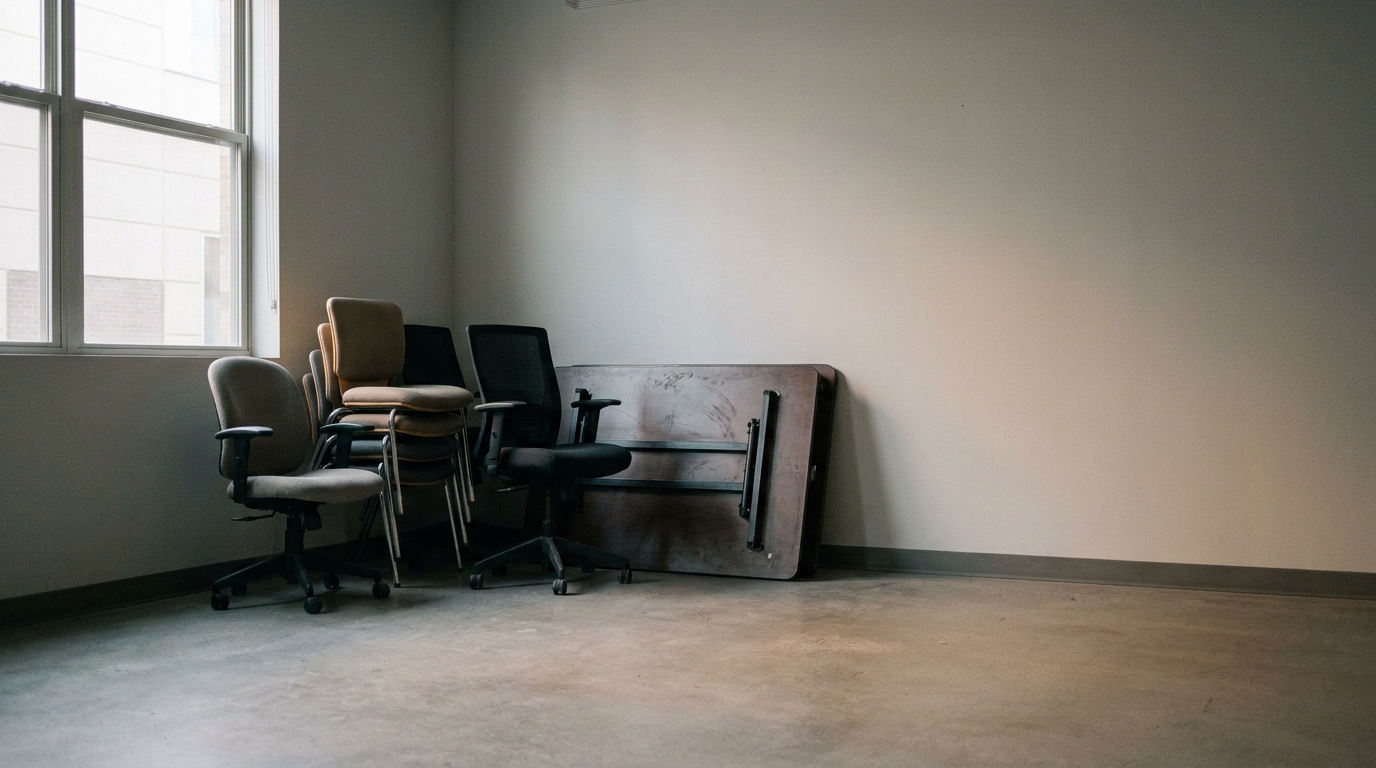
An item can be in good condition and still be underused. It may be in the wrong location, assigned to a team that no longer needs it or stored because no one knows it is available.
Good records bring those items back into view. If a department has more monitors than employees, some can be reassigned. Equipment gathering dust in a quiet meeting room may get more use elsewhere. Desks that have remained in storage through several planning cycles may be ready for a new location or a final decision.
Keeping everything is not the point. Each item should have a reason for staying, moving or leaving.
Periodic reviews keep those decisions from piling up. Teams can look specifically at assets marked as stored, idle, damaged or unassigned. They may find that a supposedly stored chair is missing, a damaged desk is repairable or an unassigned monitor can go back into use.
Reuse can reduce unnecessary purchases
Imagine a scenario where a manager requests new chairs because the department needs them. Procurement sees no record of usable chairs elsewhere and places the order. Meanwhile, the same type of chair sits in storage or at another location.
Checking the inventory before placing an order can prevent that duplication. It may also get the needed item to the department sooner since there is no manufacturer or delivery lead time to consider.
Of course, finding an available item is only the beginning. Teams need to know whether it is in suitable condition, compatible with the intended space and practical to move. A few photos and measurements may be all it takes to rule an item in or out, saving someone a trip to the storage site.
Renovations and relocations become more predictable
Every office renovation or move comes with the same basic questions. What should stay? What needs to move? What can go into storage? What has reached the end of its use? If the inventory is incomplete, those choices often happen late in the project, when time is limited and changes are more expensive.
An updated inventory helps teams settle those questions sooner. They can identify which assets fit the new layout and current workplace standards, along with those that are no longer needed. Movers and installers now have an actual list to plan around.
Asset records keep projects with several stages organized. If only part of a workplace is under construction, the records track items moved into temporary space and flag those that need to return later. They also prevent mix-ups when several departments move on different dates.
The move itself offers a chance to check the inventory against what is physically present. Items can be verified as they leave one location and arrive at the next. Anything damaged, obsolete or no longer needed can be addressed before it settles into the new space.
Asset data can support changing workplace needs
Office needs can change quickly. A growing team may run out of desks, while a reorganization leaves another area half-empty. New technology and hybrid schedules add their own demands to meeting rooms and shared spaces.
Current inventory records track exact tool locations right now. Before converting assigned desks into shared work areas, they can check how many desks are available and which types will work in the new setup. Three conference rooms may already have cameras and screens that work together. Only the fourth needs an upgrade.
Past logs reveal identical equipment issues over time. Certain gear moves constantly from site to site without seeing actual use. Meanwhile, one department places non-stop requests for the same tools, making a permanent assignment cheaper than constant transport. Priorities shift daily. Current inventory records track exact tool locations right now.
Building an inventory that stays useful
Even a thorough inventory becomes unreliable if no one updates it. Asset records need to follow items as they move, change condition or leave the organization.
Clear categories and consistent names make that process easier. Employees should be able to tell the difference between similar items without relying on vague descriptions. Asset tags, photos and location details can make records easier to verify.
One person or team should own the inventory process. Without clear ownership, a few missed changes can quickly turn into dozens of inaccurate records.
Physical checks are still important. Records can be reviewed on a schedule or alongside events such as department moves, renovation planning and budget preparation. High-value technology may need more frequent checks than basic furniture.
There is no need to collect every possible detail on the first day. Organizations can start with the information needed for planning, then add new fields when those details serve a clear purpose.
A clearer view of the workplace
Decisions about office space can be made months after furniture has been hauled away or equipment has gone into storage. By that point, memories are unreliable. The employees involved in the original move may no longer manage those assets.
A current inventory helps to ensure that the information will not be lost. When the next renovation or relocation comes around, space planners can make more informed purchase decisions.
Sometimes the answer is already sitting in a storage room, waiting for someone to remember it is there.