


Few dishes feel as simple as a baked potato, yet that simplicity raises a real question: are baked potatoes healthy, or just empty carbs?
This post breaks down baked potato calories by size, compares them with a plain russet, and shows how the numbers shift when you eat the skin versus peel it away.
We’ll also walk through a few easy recipes and answer the questions people ask most, so you can enjoy one without any second-guessing.
What is the Nutritional Value of A Baked Potato?
Here’s what a plain baked potato provides per 100g. Eating the skin adds extra fiber and several nutrients beyond these numbers.
| Category | Amount | Notes |
|---|---|---|
| Calories | 93 kcal | Plain baked potato |
| Carbohydrates | 21g | Main source of energy |
| Fiber | 2.2g | Higher with skin |
| Protein | 2.5g | Small amount |
| Fat | 0.1g | Naturally very low |
| Potassium | 535mg | Supports fluid balance |
| Vitamin C | 9.6mg | Naturally present |
| Vitamin B6 | 0.3mg | Supports metabolism |
Are Baked Potatoes Healthy?
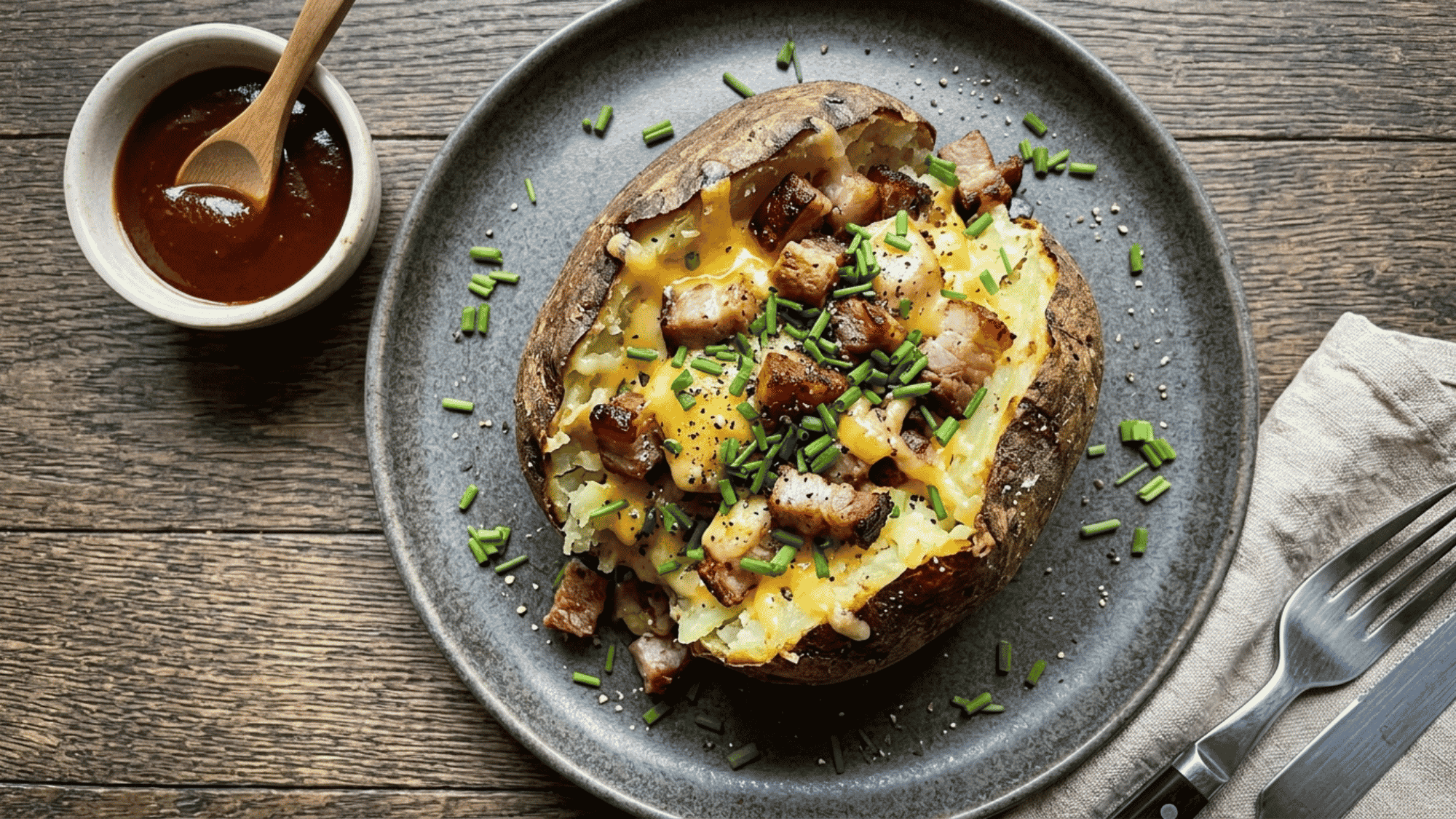
Yes, a baked potato can be a healthy choice when it’s kept simple and served as part of a balanced meal.
It naturally provides carbohydrates for energy, along with potassium, vitamin B6, vitamin C, and fiber, especially when the skin is eaten.
Calories only climb when toppings like butter, cheese, bacon, or creamy sauces enter the picture. Keep portions reasonable and toppings balanced, and a baked potato fits easily into a healthy diet.
Baked Potato Calories by Serving Size and Variant
Different potato sizes can vary quite a bit in calories and carbohydrates, even when they’re prepared the same way. Knowing these common serving sizes makes it easier to estimate portions and plan meals.
- 100g baked potato: About 93 calories, 21g carbs, 2.2g fiber
- Small baked potato: About 130 calories, 30g carbs, 2g fiber
- Medium baked potato: About 161 calories, 37g carbs, 4g fiber
- Large baked potato: About 278 calories, 63g carbs, 7g fiber
According to Preparation:
- Plain baked with skin: About 161 calories, higher fiber, and more nutrients
- Plain baked without skin: Slightly lower calories, lower fiber, and a softer texture
- Loaded baked potato: Much higher calories, fiber varies, and depends on toppings
- Sweet baked potato: Similar calories, higher vitamin A, and a different nutrition profile
What Health Benefits Do Baked Potatoes Offer?
A plain baked potato provides more than carbohydrates. It also contains vitamins, minerals, and fiber that support overall health when eaten as part of a balanced diet.
1. Provides Long-Lasting Energy
Potatoes are naturally rich in carbohydrates, giving your body fuel for everyday activities. Pairing them with protein and vegetables creates a more balanced meal.
They can work well as a filling for lunch or dinner. The key is keeping portions and toppings balanced.
2. Rich in Potassium
Baked potatoes provide more potassium than many people expect. Potassium helps support normal muscle function, fluid balance, and healthy blood pressure.
It also plays a role in nerve signaling and muscle contraction. Eating the skin can help you get more of this mineral.
3. Good Source of Vitamin B6
Vitamin B6 helps the body convert food into energy. It also supports normal brain function and healthy nerve activity.
This vitamin also helps with protein metabolism. A baked potato can add a useful amount to your daily intake.
4. More Fiber With the Skin
Most of the fiber sits just beneath the potato skin. Eating the peel helps increase fullness and supports healthy digestion.
Keeping the skin on also helps reduce food waste. Just scrub the potato well before baking.
5. Naturally Low in Fat
A plain baked potato is naturally very low in fat. Most extra calories usually come from toppings like butter, cheese, bacon, or creamy sauces.
Choosing lighter toppings can keep the meal balanced. Greek yogurt, herbs, or vegetables can add flavor without making it too heavy.
Difference Between a Baked Potato and a Russet Potato
A baked potato is a cooking method, while a russet potato is a potato variety. Any potato can be baked, but russet potatoes are often used because they turn fluffy inside and develop a thicker, crispier skin.
Nutritionally, there’s no real difference between “a baked potato” and “a baked russet,” since a russet is simply the most common variety people bake.
The calorie and nutrient values for a plain baked potato are essentially the same as those for a plain baked russet.
When people search for russet potato calories, they usually mean a plain baked russet potato without toppings, which is the same as a standard plain baked potato.
Other potatoes, such as Yukon Gold, red, and sweet potatoes, can also be baked, but their texture, flavor, and nutritional value may vary slightly from those of russets.
Easy Baked Potato Recipes to Try
Baked potatoes work well as a meal or side dish. These simple recipes add flavor without making preparation complicated.
1. Classic Herb Baked Potato
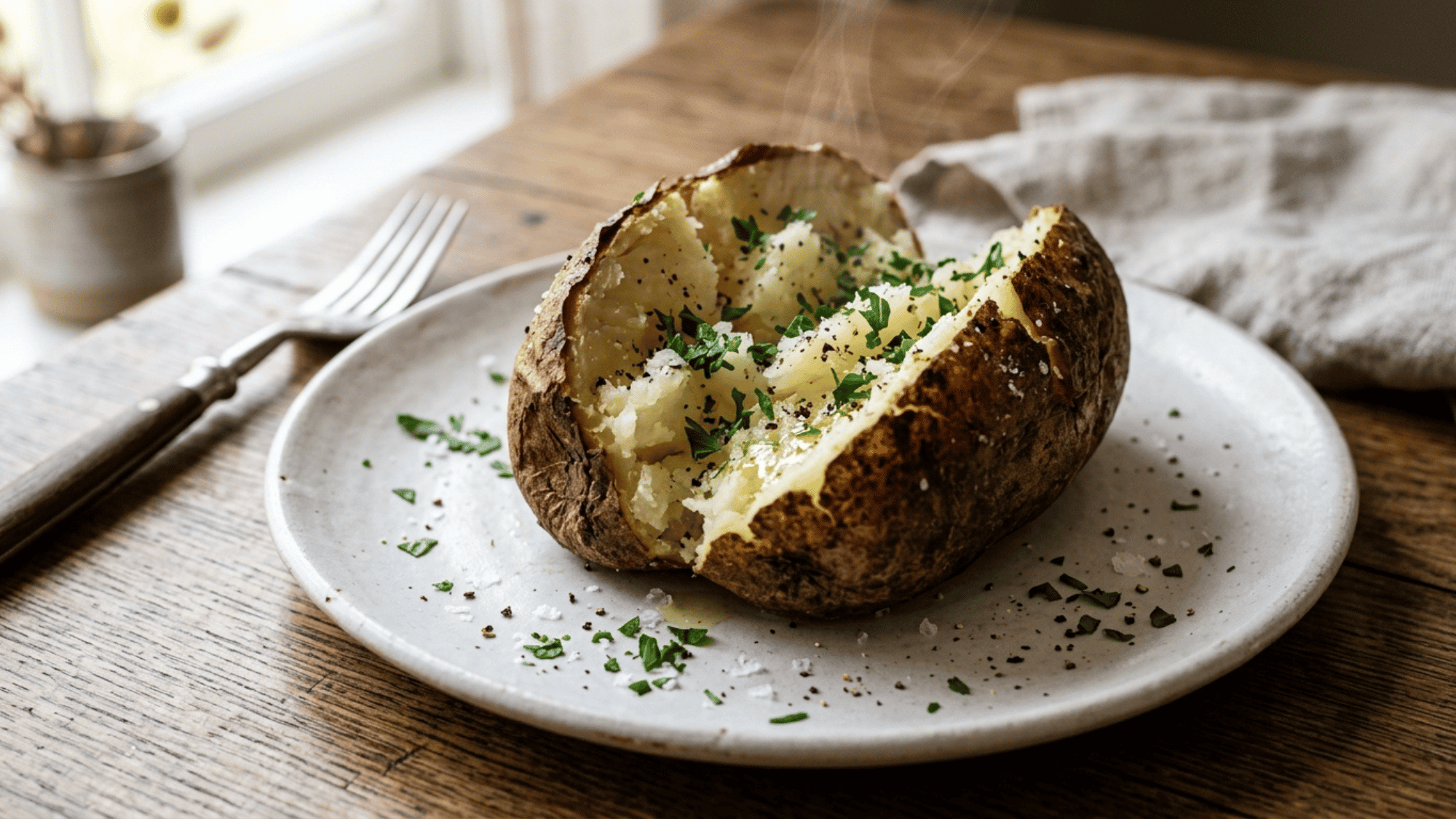
This recipe keeps things simple while letting the potato remain the star of the meal. It is warm, filling, and easy to serve as a side or light meal.
Preparation Steps:
- Preheat the oven to 400°F (200°C).
- Wash and scrub the potato thoroughly, then pat it dry.
- Rub the potato with olive oil and season evenly with salt and black pepper.
- Place it directly on the oven rack or a baking tray and bake for 45 to 60 minutes, until tender.
- Slice the potato open, fluff the inside with a fork, garnish with parsley, and serve warm.
| Ingredients | Quantity |
|---|---|
| Russet potato | 1 |
| Olive oil | 1 teaspoon |
| Salt | A pinch |
| Black pepper | As needed |
| Parsley | Optional |
2. Greek Yogurt Loaded Potato
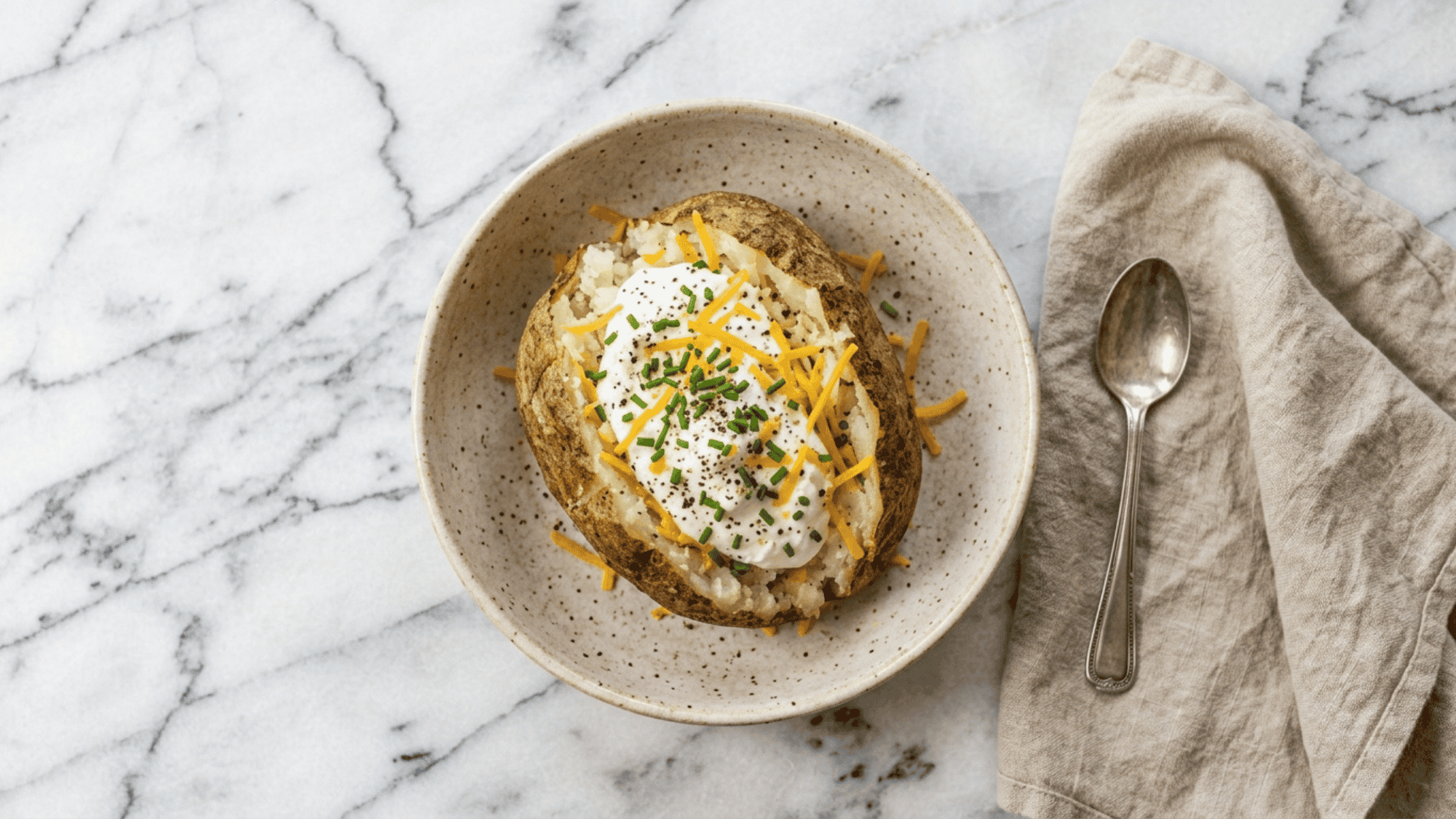
This lighter version gives the potato a creamy topping without making it feel too heavy. It works well for lunch, dinner, or a filling snack.
Preparation Steps:
- Bake the potato until it is soft and easily pierced with a fork.
- Cut a lengthwise slit across the top and gently fluff the inside.
- Spoon Greek yogurt over the hot potato.
- Sprinkle with shredded cheese, chopped chives, and black pepper.
- Serve immediately while warm.
| Ingredients | Quantity |
|---|---|
| Baked potato | 1 |
| Greek yogurt | ¼ cup |
| Chives | 1 tablespoon |
| Black pepper | As needed |
| Shredded cheese | 2 tablespoons |
3. Broccoli Cheese Potato
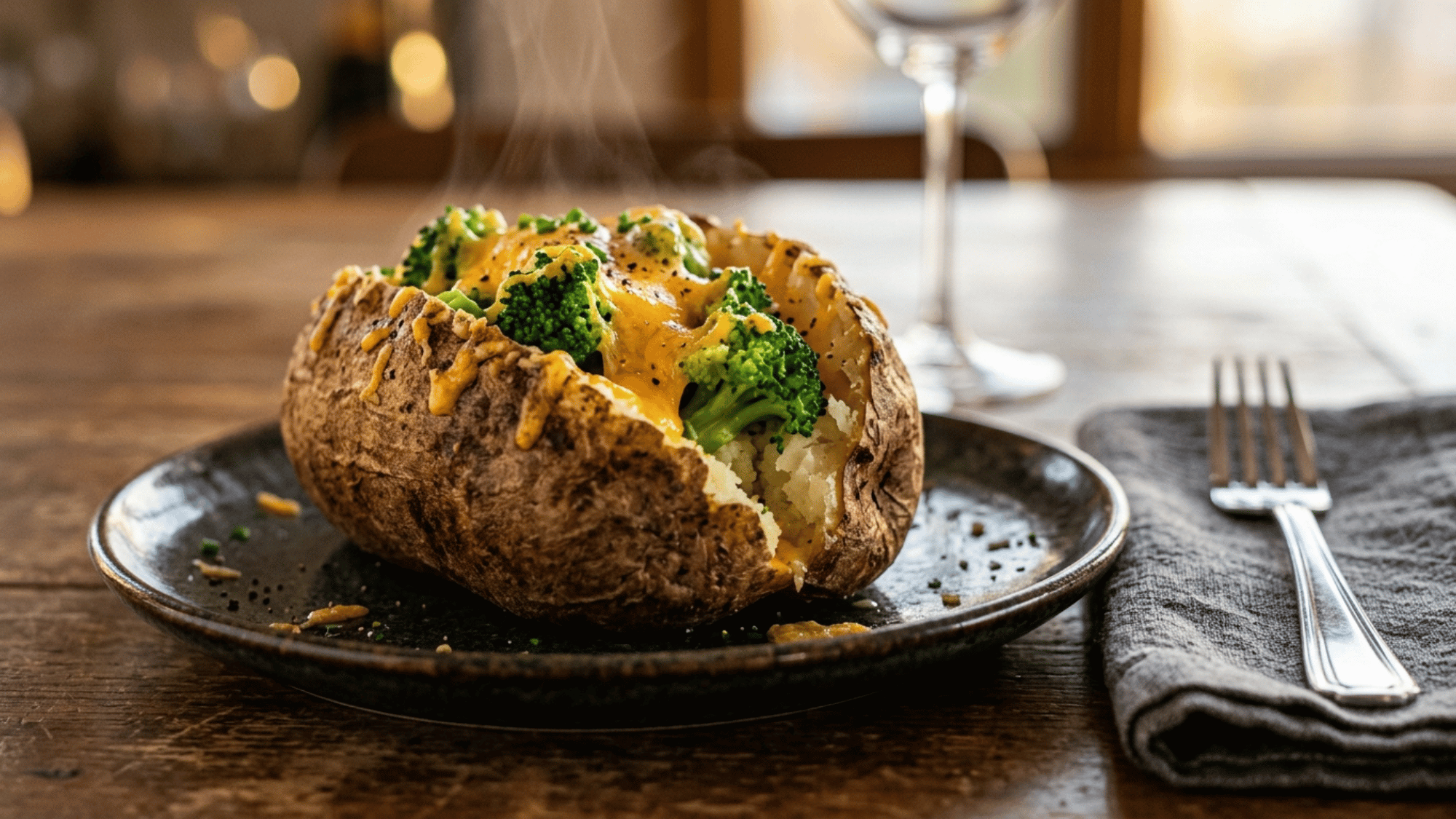
This recipe adds vegetables and a little cheese for extra flavor. It feels hearty, simple, and easy to make with everyday ingredients.
Preparation Steps:
- Bake the potato until fully cooked and tender.
- Steam the broccoli until crisp-tender.
- Cut the potato open and lightly fluff the inside.
- Fill the potato with steamed broccoli and top with shredded cheddar cheese.
- Return it to the oven for 2 to 3 minutes, just until the cheese melts, then serve hot.
| Ingredients | Quantity |
|---|---|
| Baked potato | 1 |
| Broccoli | ½ cup |
| Cheddar cheese | 2 tablespoons |
| Black pepper | As needed |
Final Thoughts
Baked potatoes fit easily into a healthy diet, as long as you watch the portion and go light on toppings.
A plain potato brings steady carbs, potassium, vitamin B6, and fiber, especially with the skin on, all without much fat.
If you’re comparing russet potato calories or just wondering whether baked potatoes are healthy, the answer is yes.
Keep it simple, and it’s one of the easiest healthy meals you can make.
Frequently Asked Questions
What is the Best Way to Bake a Potato?
Bake it at 400°F (200°C) until tender, usually 45 to 60 minutes depending on size.
Should I Poke Holes in Potatoes Before Baking?
Yes. Piercing the skin with a fork allows steam to escape and helps prevent splitting.
Do Potatoes Bake Faster if Wrapped in Foil?
Foil softens the skin but does not significantly reduce baking time. Baking without foil produces a crispier skin.
















