


Loneliness has risen sharply over the past two decades, with nearly half of U.S. adults affected. In 2023, it was declared a public health epidemic.
The issue isn’t just connection, but its quality. Modern companionship fills this gap, going beyond romance to include any meaningful emotional bond, from friendships to AI-assisted support.
This blog explores what it means and why it matters today.
What Is Modern Companionship?
Modern companionship is a close, supportive bond built on mutual care, respect, and presence. It goes beyond labels and focuses on emotional connection, personal choice, and consistent support that grows over time.
- Personal choice over obligation
- Emotional connection over formal roles
- Consistent support that grows over time
You can share modern companionship with a romantic partner, a longtime friend, a co-parent, or a digital connection. The type matters less than the quality of care behind it.
How Modern Companionship Differs From Traditional Relationships
Traditional and modern approaches to connection differ across nearly every dimension. Here is how they compare:
|
Area |
Traditional Relationships |
Modern Companionship |
|---|---|---|
|
Commitment |
Marriage is the expected milestone |
Emotional compatibility comes first |
|
Roles |
Fixed, often based on gender |
Equal input from both parties |
|
Structure |
Lifelong commitment as the default |
Flexible, grows with personal needs |
|
Independence |
Limited personal space expected |
Closeness and autonomy can coexist |
|
Primary goal |
Meet social or family expectations |
Meet personal emotional needs |
Why Modern Companionship Is Becoming More Popular
Several real-life changes explain why modern companionship is growing:
- Changing social norms: Society now accepts a wider range of relationship types. People feel more free to build bonds that suit them personally.
- Delayed marriage: More adults are marrying later or choosing not to marry at all. They still want a close connection, but not necessarily through a formal commitment.
- Economic factors: Financial pressures make traditional family structures harder to maintain. Companionship can offer support without shared legal or financial ties.
- Mental health awareness: More people understand that emotional connection has direct value. A trusted companion reduces stress and supports well-being.
- Technology’s role: Digital platforms make it easier to meet people, maintain long-distance bonds, and find community online.
Types of Modern Companionship
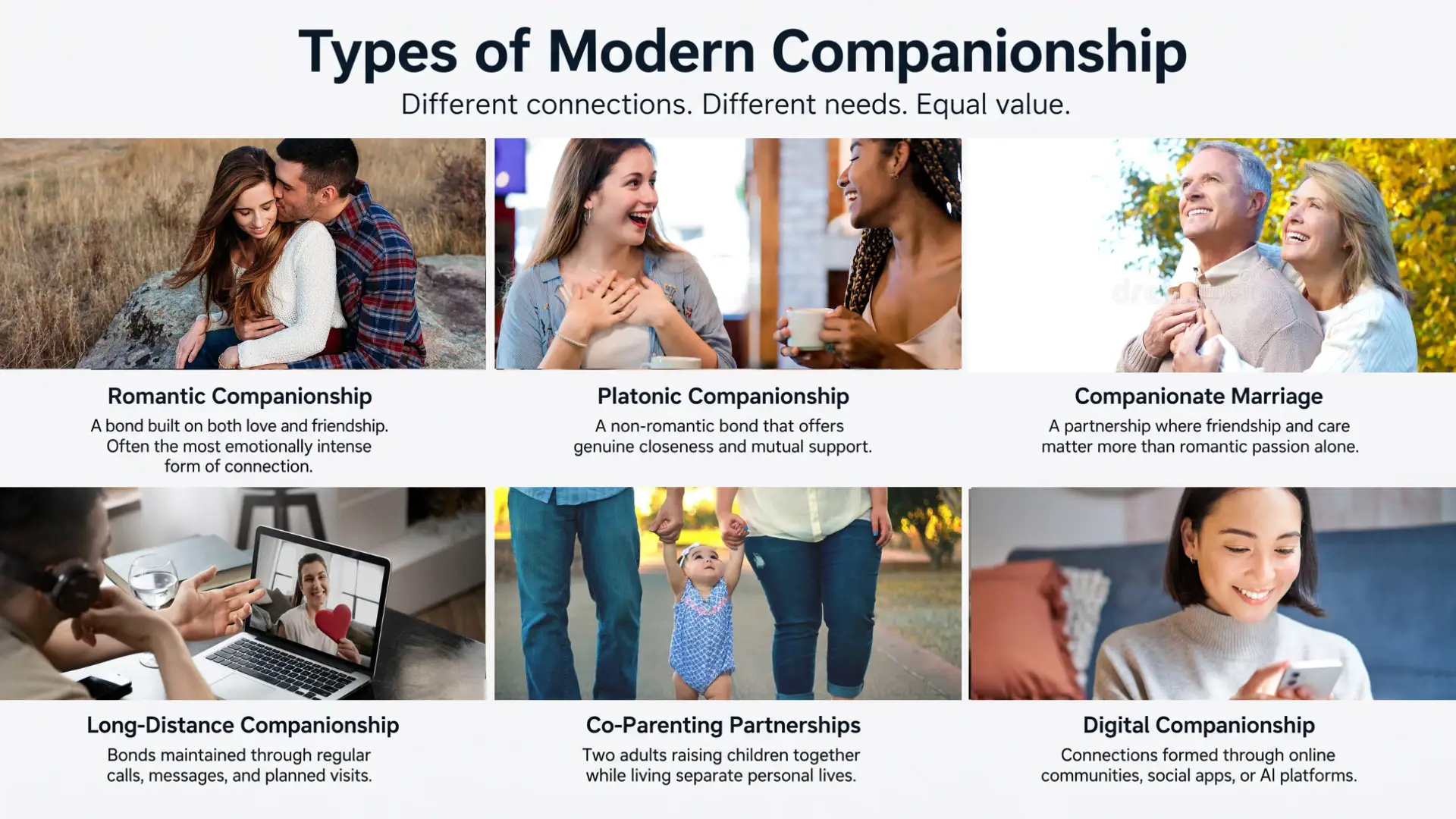
Modern companionship does not look the same for everyone. Here are the most common forms:
- Romantic companionship: A bond built on both love and friendship. Often the most emotionally intense form of connection.
- Platonic companionship: A non-romantic bond that offers genuine closeness and mutual support.
- Companionate marriage: A partnership where friendship and care matter more than romantic passion alone.
- Long-distance companionship: Bonds maintained through regular calls, messages, and planned visits.
- Co-parenting partnerships: Two adults raising children together while living separate personal lives.
- Digital companionship: Connections formed through online communities, social apps, or AI platforms. Some people also explore dedicated AI girlfriend experiences through services like HeraHaven AI GF, where conversations are designed to become more personalized with continued interaction.
The Psychology Behind Modern Companionship
Companionship has deep roots in human psychology. These five factors explain why close bonds affect us so strongly:
- Attachment styles: How we bonded with caregivers in early life shapes how we connect as adults. Secure attachment leads to steadier, more trusting relationships.
- Emotional security: A trusted companion creates a space where you can be honest without fear of judgment.
- Belonging: Feeling truly known by another person meets one of the strongest human needs.
- Trust: Consistent behavior builds trust over time. Without it, even close bonds can break down.
- Emotional intelligence: People who understand and manage their own feelings tend to build more balanced, lasting connections.
Benefits of Modern Companionship
Strong companionship has a real effect on your overall well-being:
- Lower stress: Talking to someone you trust helps ease daily mental and physical tension.
- Better mental health: Regular emotional connection reduces feelings of anxiety and isolation.
- Greater life satisfaction: People with close companions report higher levels of happiness and a stronger sense of personal purpose.
- Healthier daily habits: A trusted companion often encourages better choices around sleep, food, and exercise.
- Stronger self-awareness: Being accepted by another person helps you understand yourself more clearly.
Challenges and Misconceptions of Modern Companionship
Modern companionship comes with real challenges. These are the ones that come up most often:
- Undefined expectations: When two people want different things from the bond, conflict follows. Clarity early on prevents this.
- Emotional dependency: Relying too heavily on one person strains the bond. Balance matters.
- Communication issues: Assuming someone will understand your needs without saying them leads to resentment.
- Technology overload: Too much digital interaction can replace face-to-face connection rather than support it.
- Fear of commitment: Some people avoid forming close bonds for fear out being hurt or of losing personal freedom.
How to Build Strong and Healthy Companionship

Good companionship takes consistent effort. These habits make it work:
- Communication habits: Talk openly and regularly. Share how you feel. Ask how the other person feels.
- Shared values: You do not need to agree on everything. But your core values should point in the same direction.
- Conflict resolution: Disagreements will happen. Handle them with calm, honest conversations. Silence or avoidance makes things worse.
- Respecting boundaries: Each person has limits. Respect them, even when it takes effort.
- Maintaining independence: Healthy companionship does not take over your whole identity. Keep your own goals, interests, and social life.
Companionship vs. Love, Friendship, and Partnership
These terms are often used interchangeably. They are related but not the same.
|
Concept |
Core Focus |
Emotional Depth |
Typical Duration |
|---|---|---|---|
|
Companionship |
Mutual support and steady presence |
Moderate to high |
Long-term |
|
Love |
Deep romantic or emotional attachment |
Very high |
Variable |
|
Friendship |
Shared interests and trust |
Moderate |
Often long-term |
|
Partnership |
Shared goals and responsibilities |
High |
Goal-dependent |
AI Companions and the Future of Modern Companionship
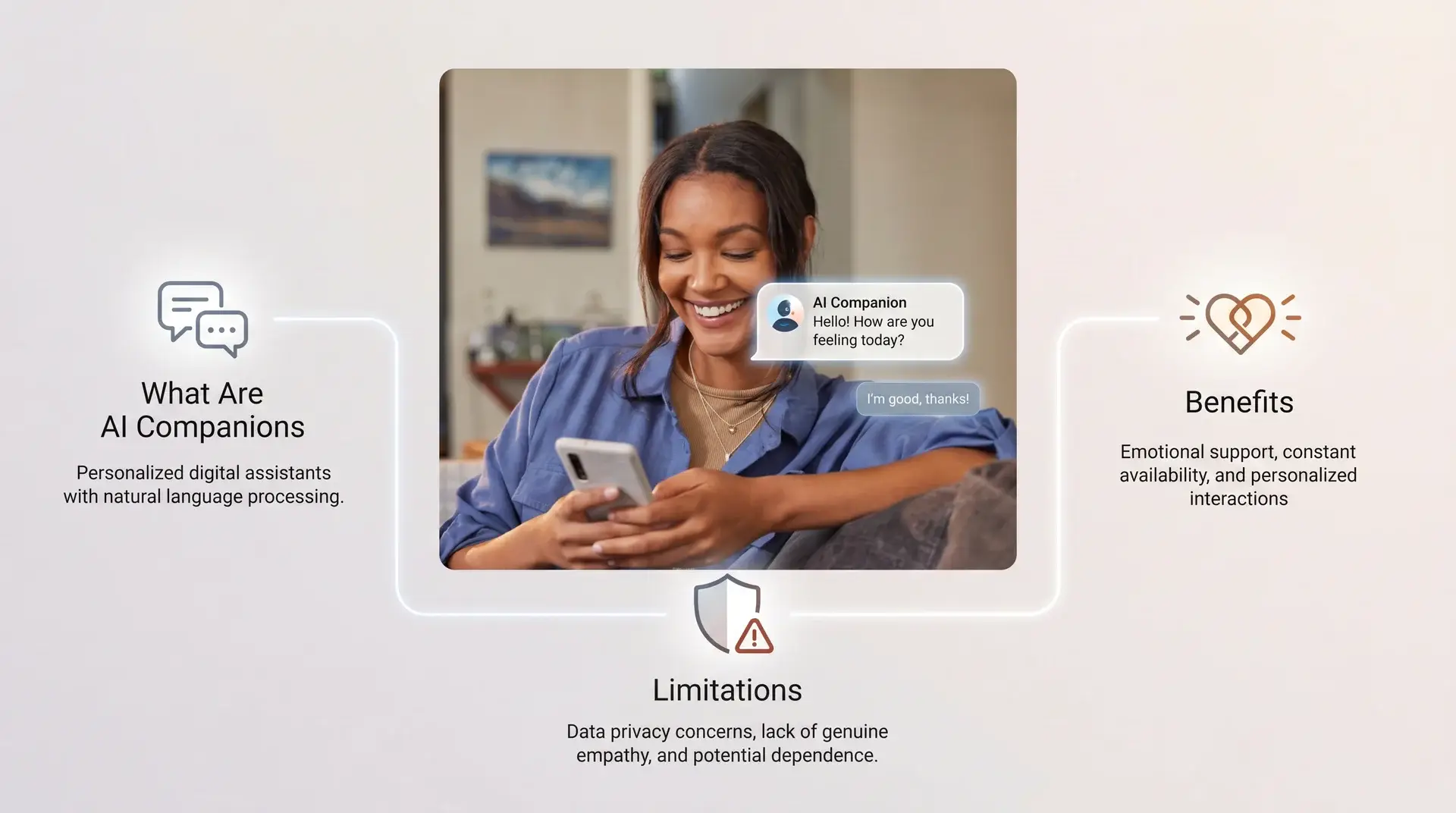
AI companions are changing how people cope with loneliness and seek emotional support, becoming a supplement, not a replacement, for human connection.
What Are AI Companions?
An AI companion is a software program that holds ongoing, context-aware conversations. Unlike a chatbot, it adapts over time based on your patterns and emotional responses. People looking for a more personalized virtual girlfriend experience often turn to HeraHaven AI GF, which is designed around long-term, evolving conversations.
Why People Are Turning to AI Companions
The main draw is availability with no social risk. For people dealing with anxiety, isolation, or limited mobility, AI offers consistent, low-barrier interaction any time of day. Many platforms also prompt users to reflect on habits, goals, and feelings through regular conversation.
Benefits of AI Companionship
AI companions are always available, judgment-free, and ask consistent questions about your mood. For people building social confidence, practicing conversation with AI before real social situations can be genuinely valuable.
Limitations and Ethical Concerns
AI does not feel. It mirrors language, and that distinction matters. Over-reliance can make it harder to build real human bonds. Privacy is also a concern since stored conversations carry data risks and policies vary widely across platforms.
Can AI Replace Human Companionship?
No, AI can support human interaction by offering availability, patience, and a safe space to talk, but it cannot feel, grow, or share real-life experiences.
Human companionship is built on mutual influence, shared moments, and emotional depth that develops over time. AI only reflects conversation; it does not truly participate in life.
Can Companionship Become Love?
Yes. And it often does.
Many lasting romantic relationships begin as close friendships. Over time, shared life and consistent care can grow into something deeper. Psychologists call this “companionate love.” It is built on trust and mutual respect rather than early passion.
This form of love tends to be steady and long-lasting. It holds many relationships together long after the first rush of romance settles.
When companionship deepens over time, love frequently follows.
The Future of Modern Relationships
The future of modern relationships is shifting toward a mix of human connection, digital spaces, and AI-assisted interaction. Relationships are becoming more flexible, with people forming bonds through partners, friendships, co-parenting, and virtual or AI support systems.
Even with these changes, the need to feel seen, understood, and emotionally connected to another human remains constant. Technology may change how people connect, but not why they connect.
Modern companionship will continue to evolve, but strong relationships, built on trust, boundaries, and respect, remain essential for mental health and emotional well-being.